Why minimalist interiors often fail in everyday living
(And what actually works instead)
Minimalist interiors are everywhere.
Clean lines. Neutral colors. Calm spaces that promise clarity and peace.
And yet, many people who choose minimalism end up feeling disappointed.
Their home looks “right” — but doesn’t feel right.
The space feels cold, unfinished, or strangely uncomfortable to live in.
This article explains why minimalist interiors so often fail in everyday life, and more importantly, what actually works instead.
Not from a trend perspective.
But from the reality of how people live.

The promise of minimalism — and where it goes wrong
Minimalism promises a lot:
- Less visual noise
- More calm
- A sense of order
- A timeless interior
And in theory, that promise makes sense.
But minimalism is often misunderstood as:
- fewer items
- neutral colors
- empty surfaces
In real life, that interpretation creates interiors that look good in photos but feel wrong when you live in them.
The issue isn’t minimalism itself.
It’s how it’s applied.
Problem 1: Minimalism is treated as a visual style, not a living system
One of the biggest reasons minimalist interiors fail is that they’re treated as an aesthetic, not a system.
People copy:
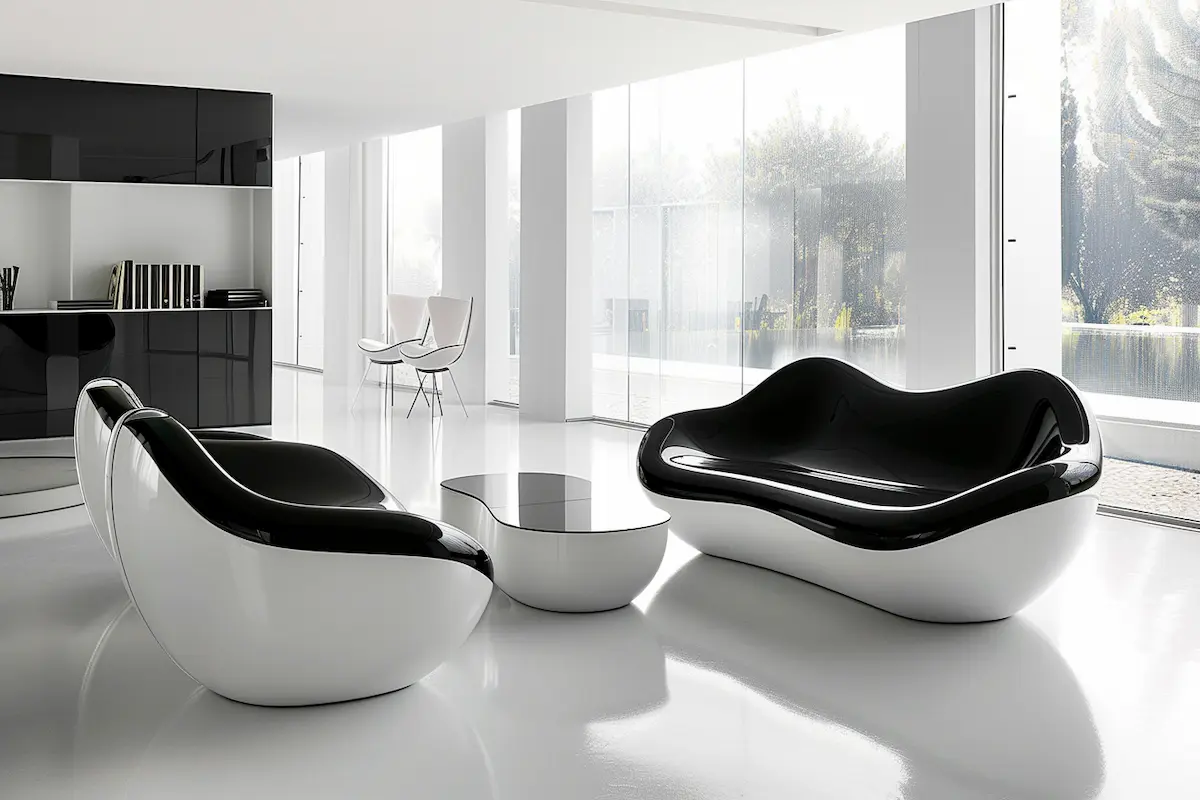
- white walls
- black accents
- sleek furniture
Without asking:
- How does this space need to function?
- How many people live here?
- How much visual input do I tolerate?
- What materials do I actually enjoy touching?
Minimalism that ignores daily life becomes fragile.
A home isn’t a showroom.
It’s a system that needs to support routines, movement, and imperfection.
When minimalism focuses only on how things look, it stops working the moment real life enters the room.

Problem 2: Too much emptiness creates discomfort, not calm
There’s a common belief that:
“Less always feels calmer.”
In practice, that’s not always true.
Too much emptiness can create:
- a feeling of coldness
- a lack of grounding
- discomfort rather than rest
Humans need visual anchors.
A completely empty space gives the eye nothing to rest on.
Instead of calm, it can create tension — especially for people who are sensitive to their environment.
Calm doesn’t come from emptiness.
It comes from balance.

Problem 3: Minimalism without warmth feels sterile
Many minimalist interiors rely heavily on:
- white
- grey
- black
- hard surfaces
Without enough texture or warmth, these spaces feel sterile rather than soothing.
In everyday life, this shows up as:
- rooms that echo
- furniture that feels uncomfortable
- spaces people don’t naturally relax in
Warmth is not the opposite of minimalism.
It’s a requirement for it to work.
Without warmth, minimalism becomes emotionally distant.

Problem 4: Real life creates clutter — and minimalism doesn’t forgive it
Minimalist interiors often leave no room for:
- daily objects
- hobbies
- shared living
- children or pets
Because everything is supposed to be “clean”, any sign of life feels like failure.
This creates constant pressure:
- tidying becomes stressful
- objects feel intrusive
- the home never feels “finished”
A system that only works when everything is perfect will always fail in real life.
Good minimalism anticipates mess.
Bad minimalism punishes it.
Problem 5: Trend-driven minimalism ages faster than expected
Minimalism is often marketed as timeless — but many minimalist interiors are deeply trend-driven.
Think of:
- ultra-thin furniture
- extreme contrasts
- overly sleek finishes
These trends age quickly because they’re visual statements, not foundational choices.
What looks refined today can feel dated within a few years.
True timelessness doesn’t come from style restraint alone.
It comes from material quality, proportion, and intention.

What actually works instead
Minimalism doesn’t fail because it’s minimal.
It fails because it lacks depth.
Minimalism works when it becomes:
- material-driven
- function-first
- emotionally aware
Here’s what makes the difference.
1. Function before form
Minimalist interiors work best when they’re designed from the inside out.
This means:
- understanding daily routines
- designing around movement
- accepting that life creates objects
When function comes first:
- layouts feel natural
- storage becomes intentional
- calm is sustainable
A minimalist home should make life easier — not more controlled.

2. Material richness replaces decoration
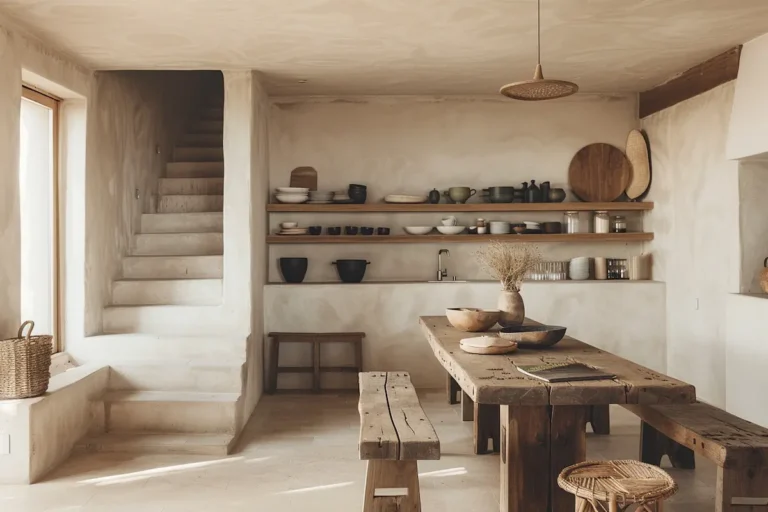
Instead of adding more objects, successful minimalism adds depth through materials.
Think:
- wood with visible grain
- stone with variation
- linen, wool, or textured fabrics
These materials:
- add warmth
- create visual interest
- age beautifully
They prevent a space from feeling empty without adding clutter.

3. Fewer decisions, not fewer things
Calm comes from reducing decision fatigue, not from removing everything.
A space feels calm when:
- choices are limited
- visual hierarchy is clear
- the eye knows where to rest
This can exist in a space that still contains:
- books
- personal items
- functional objects
Minimalism works when it simplifies thinking, not when it eliminates life.

4. Soft boundaries instead of hard rules
Successful minimalist interiors allow flexibility.
This means:
- defined zones
- clear surfaces and lived-in areas
- restraint without rigidity
Hard rules eventually break.
Soft boundaries adapt.

The difference between failing minimalism and Crafted Minimalism
Where many minimalist interiors focus on reduction, Crafted Minimalism focuses on intention.
It’s not about:
- how little you own
- how empty a room looks
It’s about:
- what deserves to stay
- how materials interact
- how a space supports life
Crafted Minimalism acknowledges that:
- calm requires warmth
- restraint needs grounding
- life leaves traces
That’s why it works better in everyday living.

When minimalism might not be the right choice
Minimalism isn’t for everyone.
If you:
- enjoy visual abundance
- feel inspired by layers and color
- don’t feel stressed by objects
Then strict minimalism may never feel right.
That doesn’t mean your home can’t be calm — it just means calm needs to come from a different direction.
Understanding this early prevents frustration.
Also read: Interior Style Decision Guide: find the direction that fits your life
Final thoughts
Minimalism fails when it’s copied without context.
It succeeds when it’s adapted to:
- real life
- real habits
- real people
If your minimalist interior feels off, the solution is rarely “less”.
More often, it’s better choices, deeper materials, and clearer priorities.
Calm isn’t created by subtraction alone.
It’s created by intention.
Where to go next
If this article resonated, the next logical step is understanding how to design for calm intentionally.
→ Designing for calm: how interiors influence how you feel