10 Styling Mistakes That Ruin Crafted Minimalism (And How to Fix Them)
Crafted minimalism looks effortless — but in reality, it’s one of the hardest interior styles to get right. It sits in that delicate space between simplicity and richness, where every choice matters just a little bit more.
That’s exactly where things often go wrong. Many interiors lean too far into minimalism and end up feeling cold or empty. Others try to compensate by adding more texture and decor, only to lose the calm and clarity that defines the style in the first place. The result? A space that feels almost right, but never quite balanced.
The challenge with crafted minimalism is that it’s not about how much you add or remove — it’s about how intentional each piece feels. Materials, proportions, and subtle contrasts do the heavy lifting here. When those elements are off, the entire room can feel flat, even if everything looks “beautiful” on the surface.
In this guide, we’ll break down the most common styling mistakes that quietly undermine a crafted minimalist interior — and more importantly, how to fix them.
If you want a deeper understanding of what defines this style at its core, start here: How to Recognize a True Crafted Minimalist Interior.
Disclaimer: This post may contain affiliate links. This means that if you click on one of these links and make a purchase, we may earn a small commission—at no extra cost to you.
All images featured in this article are AI-generated to illustrate the aesthetic and mood of the interior style. The products linked are carefully selected items that, in our view, most closely match the look and feel of these designs.
As an Etsy affiliate and Amazon Associate, we earn from qualifying purchases. We only recommend products we genuinely believe align with the style and atmosphere presented in our AI-created interiors.
Mistake #1: Choosing “Minimal” Over “Meaningful”
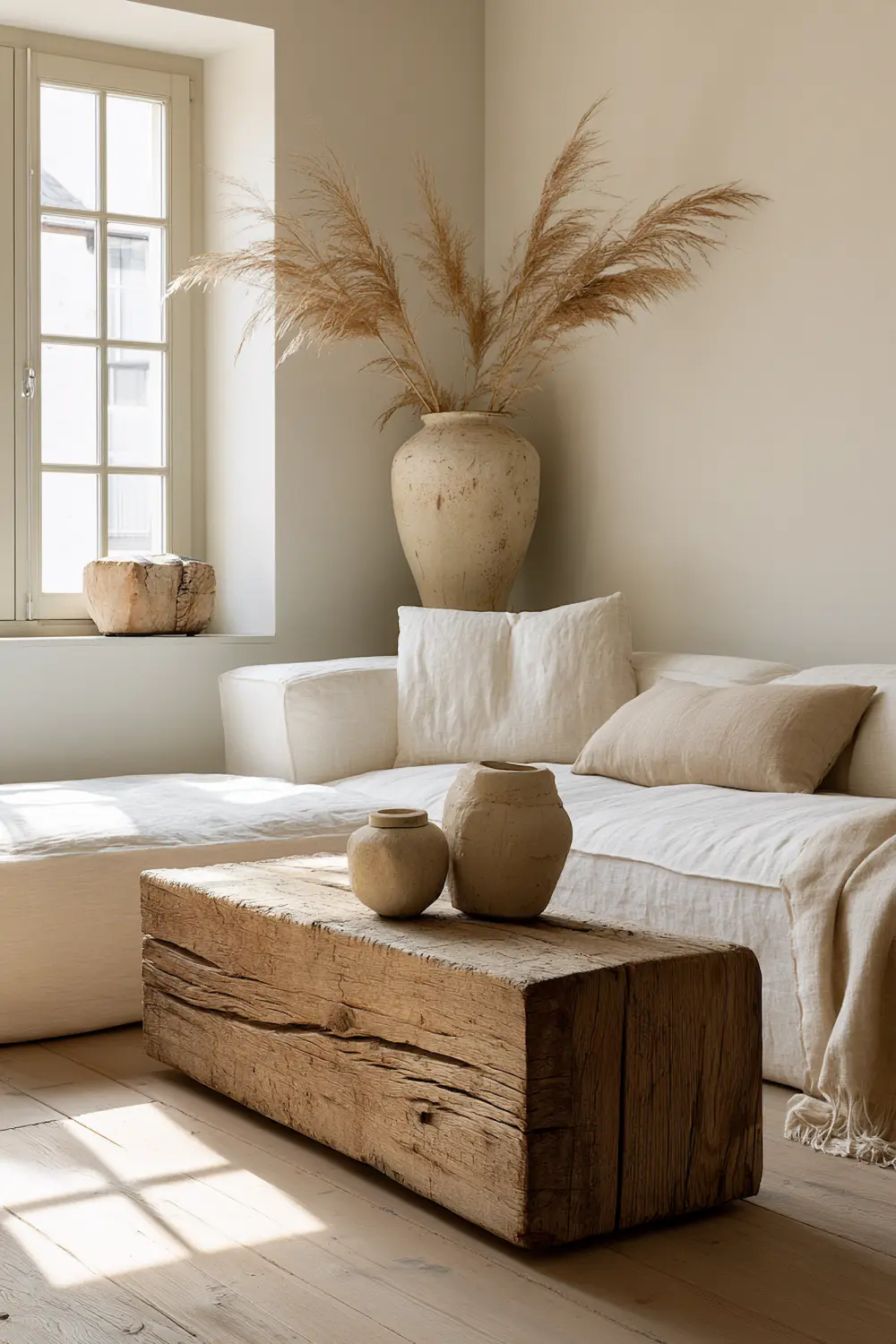
One of the most common mistakes in crafted minimalism is confusing less with nothing. Many interiors strip everything back in an attempt to feel calm and minimal, but end up feeling empty, cold, and oddly unfinished.
True crafted minimalism is not about removing personality — it’s about refining it. When a space lacks meaningful pieces, there’s nothing for the eye to land on. No texture to explore. No subtle imperfections that make a room feel lived-in rather than staged.
This often happens when people lean too heavily on generic minimal furniture or overly “perfect” items. Smooth surfaces, uniform colors, and identical materials may look clean at first, but they remove the depth that defines this style.
The fix is not to add more — but to choose better. Instead of filling a room, focus on selecting a few pieces that carry visual and tactile weight. Think of a solid wood coffee table with visible grain, a handmade ceramic object with slight irregularities, or a linen-upholstered chair that softens the space without overwhelming it.
If you’re unsure what truly qualifies as “meaningful” within this style, it helps to first understand the deeper characteristics of the aesthetic. (You can explore that here: How to Recognize a True Crafted Minimalist Interior.)
In crafted minimalism, every piece should feel intentional — not just present.
Mistake #2: Ignoring Material Contrast
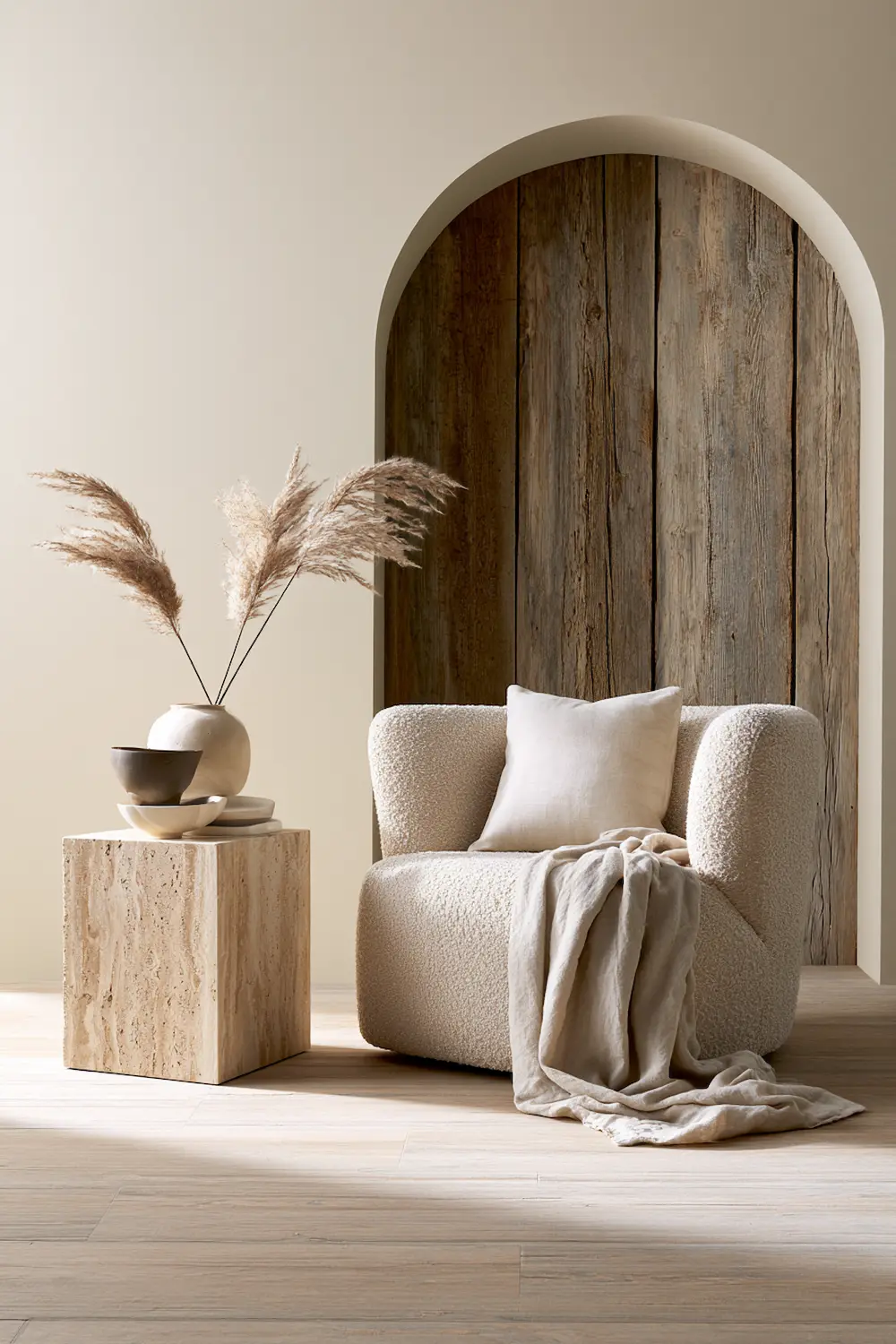
Another subtle but impactful mistake in crafted minimalism is relying too heavily on one type of material or finish. At first glance, a space filled with soft neutrals, light wood, and matte textures can feel cohesive — but without contrast, it quickly becomes flat and visually forgettable.
Crafted minimalism thrives on tension. Not loud or dramatic contrast, but a quiet interplay between opposites. When everything feels equally soft, equally light, or equally smooth, the room lacks depth. Your eye doesn’t know where to go, and nothing stands out — even if every individual piece is beautiful on its own.
This often happens in spaces that are overly “safe” in their palette. Think of a room with only beige fabrics, pale wood, and muted tones. While it may feel calm, it also risks becoming one-dimensional.
The solution is to introduce contrast in a refined, intentional way. Pair a soft bouclé chair with a solid stone side table. Combine raw wood with smoother finishes. Add a slightly darker element to ground the space, or a tactile piece that breaks the uniformity.
The goal isn’t to disrupt the calm — but to support it. When materials complement rather than blend into each other, the entire space gains richness without losing its minimal feel.
Mistake #3: Overstyling With Accessories
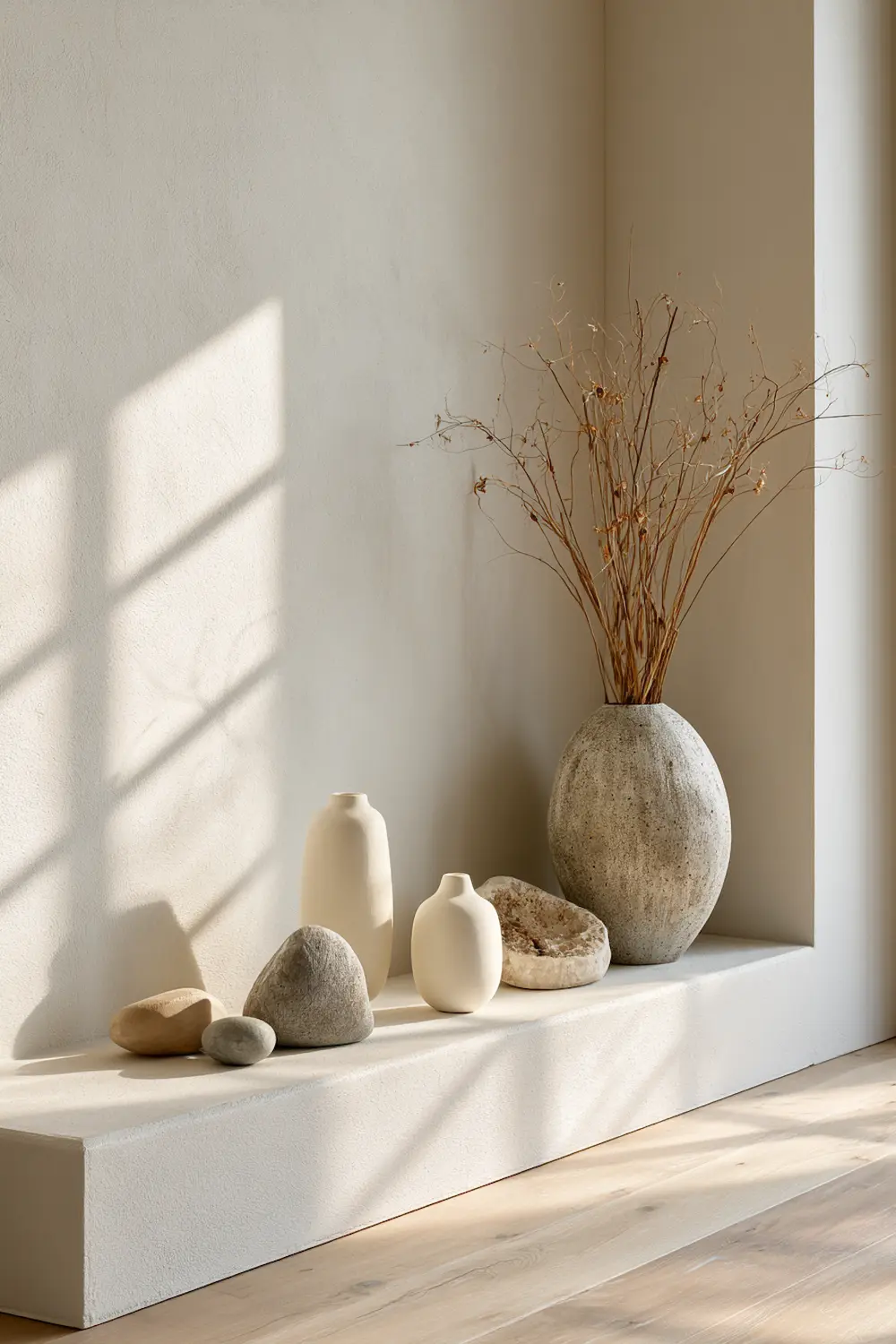
In an effort to make a space feel “finished,” many people fall into the trap of adding too many accessories. What starts as a few decorative objects quickly turns into layered shelves, filled surfaces, and carefully arranged — but ultimately overwhelming — compositions.
In crafted minimalism, this is where the calm disappears. Too many small items compete for attention, breaking the visual flow of the room. Instead of highlighting materials and form, the space becomes about things. Even if each object is beautiful on its own, together they create noise.
This mistake is especially common when taking inspiration from highly styled interiors online. What looks balanced in a photo often involves much more editing and restraint than it seems. Recreating that look without understanding the underlying structure leads to clutter disguised as styling.
The solution is counterintuitive: use less, but choose better. Rather than filling every surface, focus on a few sculptural, high-impact pieces. A single handmade vase, a stone object, or a carefully chosen bowl can carry more visual weight than five smaller items combined.
Think in terms of composition, not decoration. Give objects space to breathe. Let negative space become part of the design — not something you need to fill.
If you want to go deeper into how to choose the right pieces, this guide on Accessories in Crafted Minimalism breaks it down further.
Mistake #4: Choosing the Wrong Furniture Scale
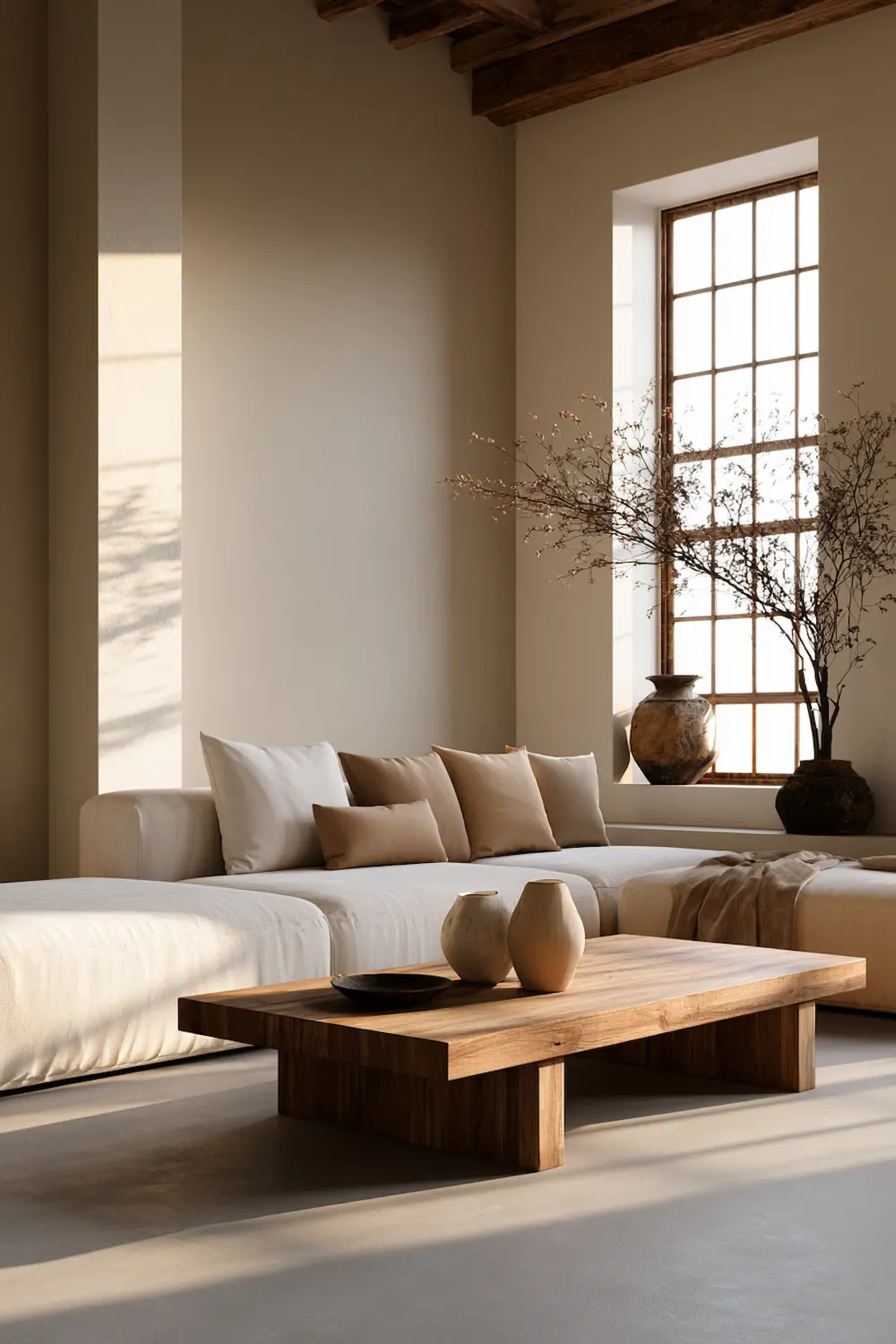
Even with the right materials and colors, a crafted minimalist interior can feel “off” when the scale of the furniture isn’t right. This is one of those mistakes that’s hard to pinpoint — but immediately noticeable when you walk into a space.
When furniture is too small, the room feels empty and disconnected. Pieces float without grounding the space, making everything appear less intentional. On the other hand, oversized furniture can make a room feel heavy and restrictive, disrupting the calm openness that defines crafted minimalism.
The key here is not just size, but visual weight. A low-profile sofa with a solid presence can anchor a room beautifully, while a bulky piece with no material richness can feel overwhelming. Similarly, a compact chair can still feel substantial if it has texture, depth, or sculptural form.
To fix this, start by looking at how each piece relates to the room — and to each other. Combine lower, wider elements with slightly taller accents to create balance. Use fewer pieces, but ensure each one holds its own visually.
In crafted minimalism, furniture isn’t just functional — it defines the architecture of the space. When the scale is right, everything else falls into place more naturally.
Mistake #5: Lack of Visual Anchors
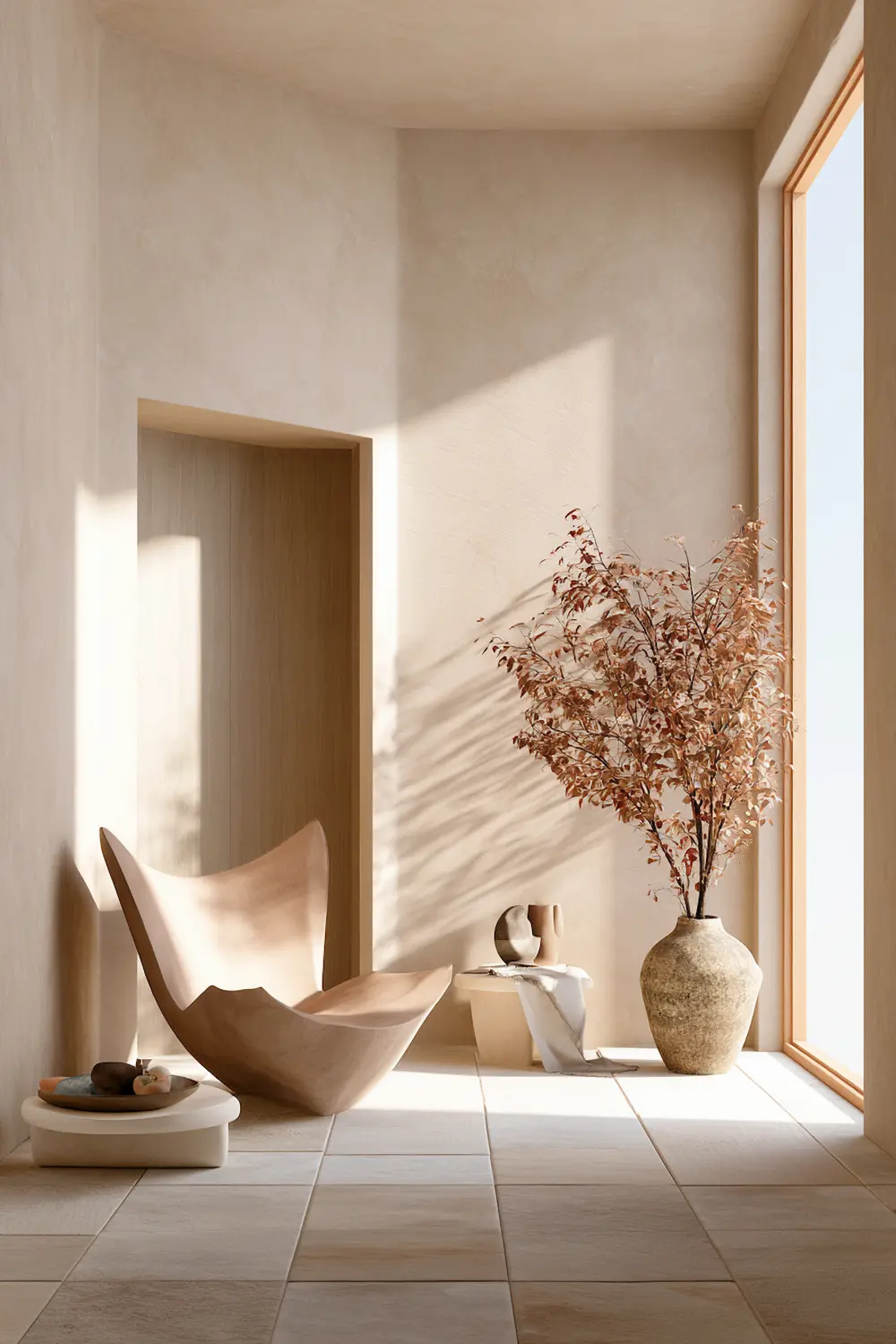
A crafted minimalist space can have beautiful materials, a calm color palette, and well-chosen furniture — and still feel unfinished. Often, the missing piece is something less obvious: a clear visual anchor.
Without a focal point, the eye has nowhere to rest. Everything blends together, and the room starts to feel directionless. This is especially common in minimal interiors, where the intention is to keep things subtle. But subtle doesn’t mean invisible.
A visual anchor doesn’t have to be bold or oversized. In fact, in crafted minimalism, it’s often quite understated. It could be a sculptural lounge chair, a solid stone coffee table, or even a single piece of wall art with strong presence. What matters is that it quietly draws attention and gives the space structure.
When a room lacks this, people often try to fix it by adding more decor — which only creates clutter. The better approach is to choose one element that carries the composition. Let that piece define the space, and allow everything else to support it.
Think of it as the center of gravity in your interior. Once it’s in place, the rest of the room naturally feels more cohesive and intentional.
Shop the Look: Recreating This Balance
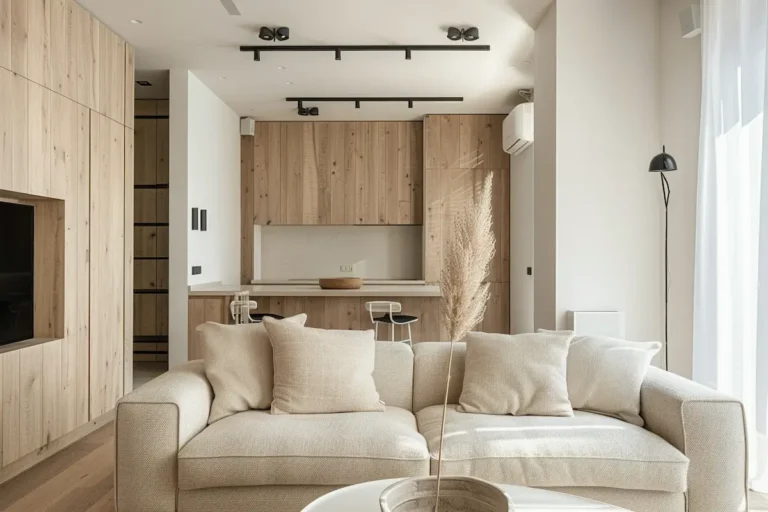
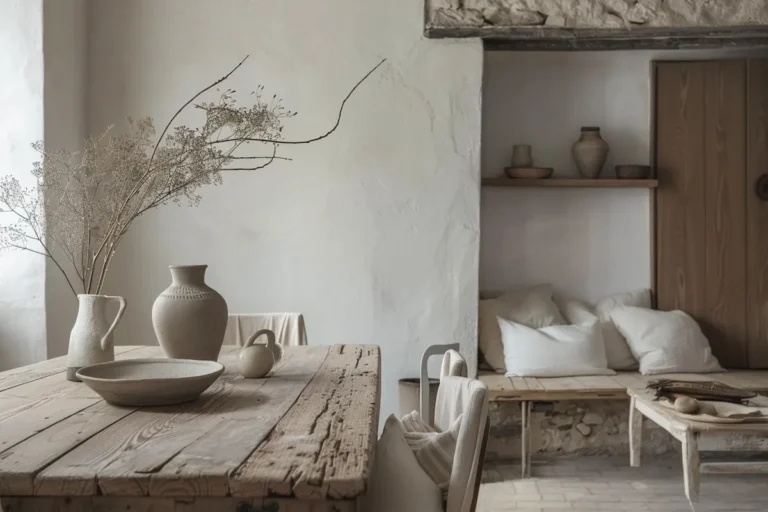
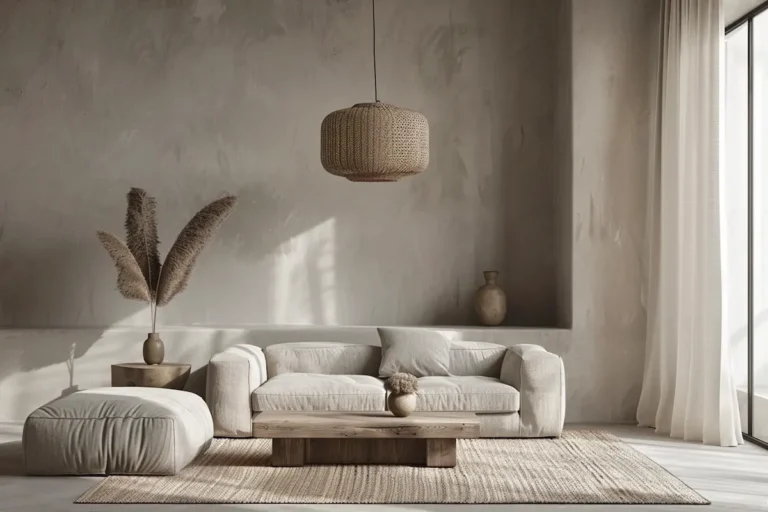
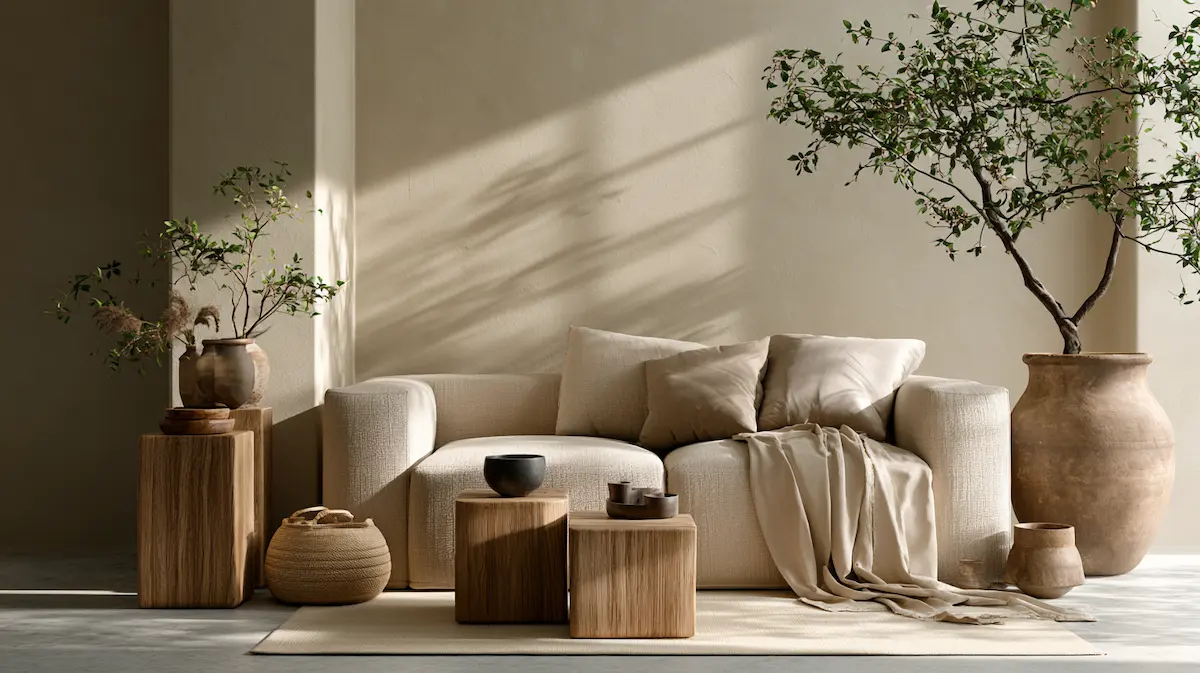
The interiors shown above are AI-generated interpretations of crafted minimalism. They’re designed to capture a certain feeling — a balance between calm, texture, and intention.
To help you recreate a similar look in your own space, I’ve selected a few pieces that closely match the materials, shapes, and visual weight you see here. These are not exact replicas, but carefully chosen alternatives that bring the same atmosphere into a real interior.
1. A Sculptural Lounge Chair – Pacha Chair (fixes emptiness + lack of anchor)
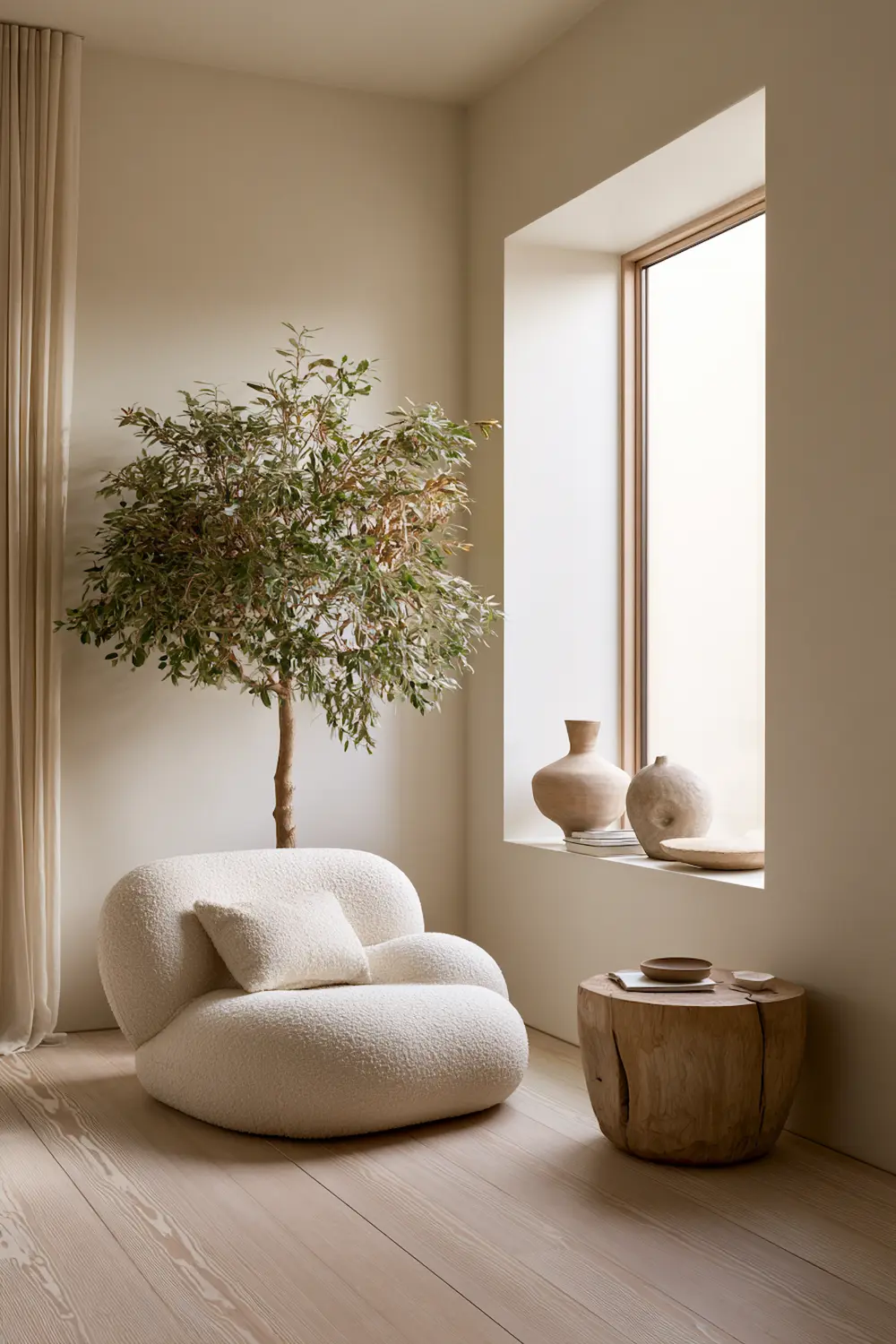
If a space feels slightly empty or undefined, it’s often missing a piece that quietly anchors everything. The Pacha Chair captures that same soft, rounded presence you see in crafted minimalist interiors. Its low, sculptural form adds visual weight without heaviness — making it ideal for creating a focal point that still feels calm and integrated.
2. A Stone Side Table – GUBI Pietra Side Table (fixes lack of material contrast)
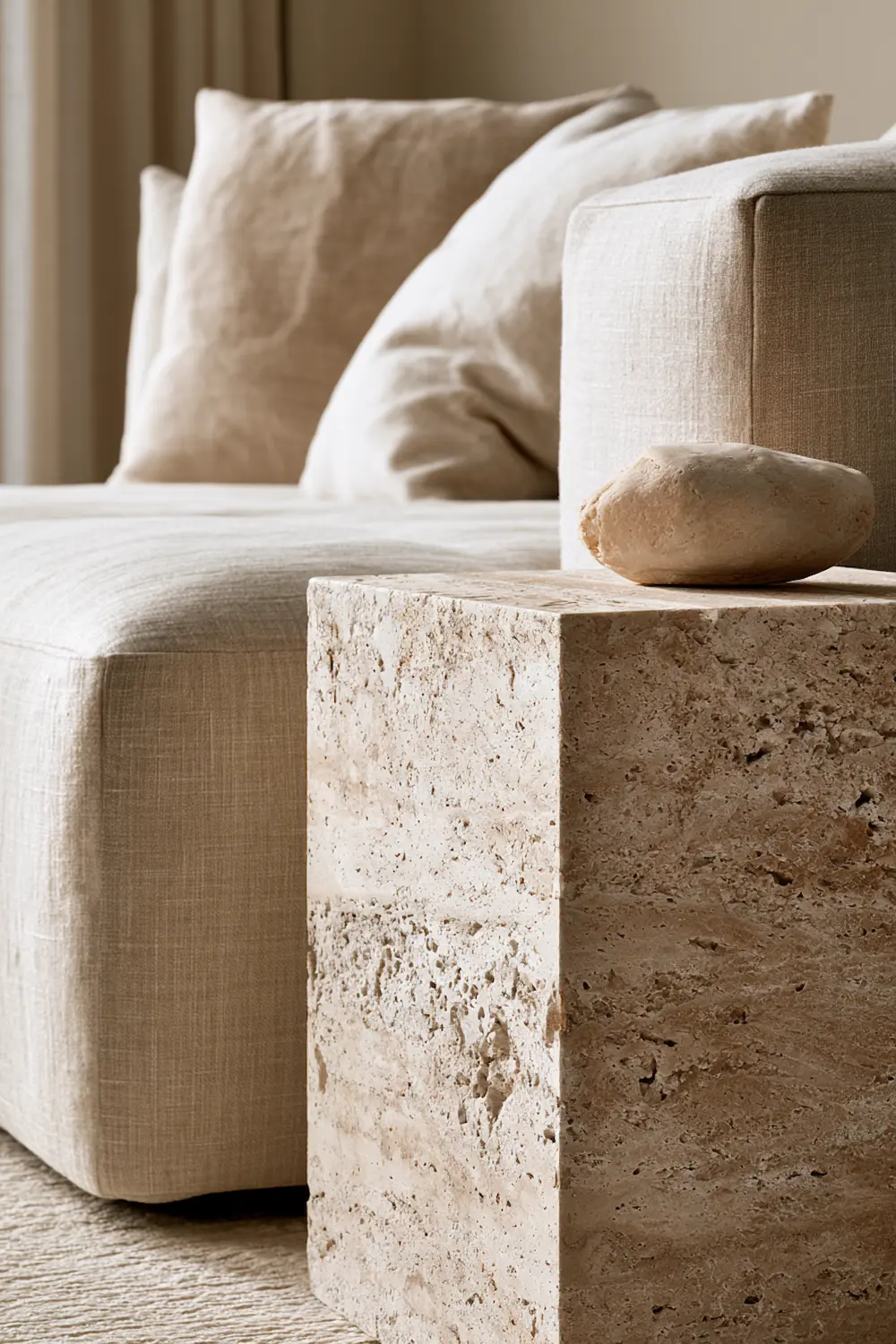
Many spaces feel flat because everything sits within the same material range. The GUBI Pietra Side Table introduces that subtle contrast crafted minimalism relies on. The stone surface brings texture and weight, balancing softer elements like fabric and wood while maintaining a cohesive, neutral palette.
3. A Handmade Ceramic Object – (fixes overstyling)
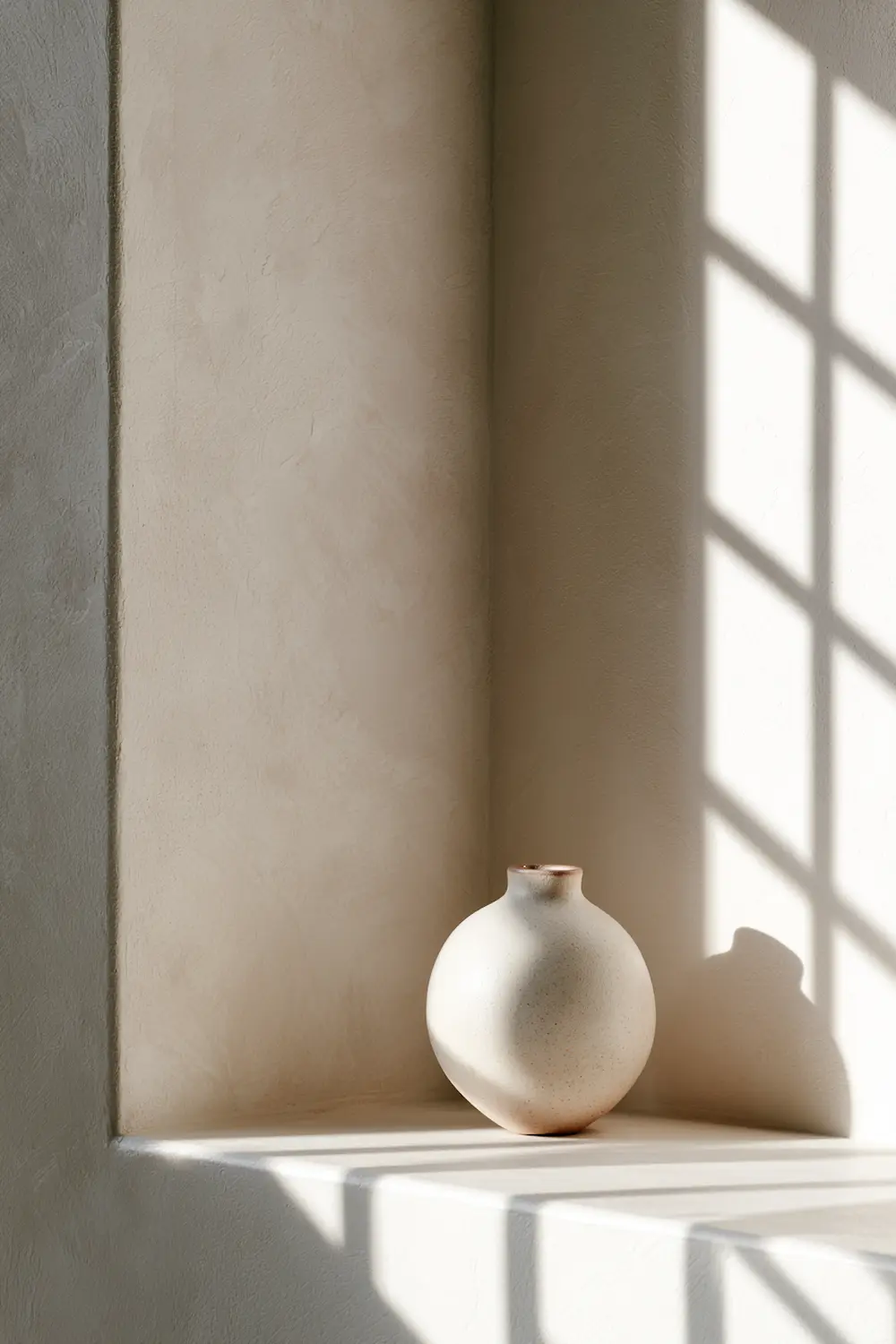
Instead of filling surfaces with multiple items, one well-chosen object can say more. The Lindform Bari Vase brings that handcrafted imperfection that crafted minimalism thrives on. Its organic shape and muted tone allow it to stand alone — creating impact without clutter.
4. Layered Textiles – Decorative Cushion Covers & Sofa Throw Blanket (fixes flatness + coldness)
If a space feels a bit too clean or minimal, softness is often what’s missing. These decorative cushion covers and linen cotton throw blanket bring that subtle layering effect you see in crafted minimalist styling. They don’t overpower the space, but gently add warmth, texture, and a more lived-in feel.
In crafted minimalism, it’s not about copying a look exactly — it’s about understanding the balance behind it. These pieces help you recreate that balance in a way that feels natural, intentional, and entirely your own.
How to Fix Your Space Without Starting Over
Once you understand where things go wrong, the instinct is often to replace furniture or buy new pieces. But in crafted minimalism, the most powerful changes usually come from editing your space — not rebuilding it.
Start by removing anything that doesn’t actively contribute to the composition. This is especially true for smaller decorative items. If an object doesn’t add texture, contrast, or meaning, it’s likely creating subtle visual noise. Clearing these elements often brings immediate calm back into the room.
Next, look at how your existing pieces are positioned. Many spaces feel “off” simply because everything is spread out or lacks intention. Try grouping objects more deliberately or shifting furniture to create a clearer focal point. Even small adjustments — like moving a chair closer to a coffee table or redefining a seating area — can restore balance.
You can also work with contrast using what you already have. Redistribute materials across the space: place heavier or darker elements where the room feels too light, and introduce softer textures where it feels too rigid.
Crafted minimalism isn’t about starting over. It’s about learning to see what’s already there — and refining it until everything feels intentional.
A Quick Checklist to Refine Your Space
If your space feels “almost right” but not quite balanced, it often comes down to a few subtle details. Use this quick checklist to evaluate your interior through the lens of crafted minimalism:
- Does the room have a clear focal point?
Is there one piece that quietly anchors the space, or does your eye keep searching for where to land? - Is there enough material contrast?
Do you see a mix of textures — like soft fabrics against stone or wood — or does everything feel too similar? - Are there too many small objects?
Could fewer, more impactful pieces create a calmer and more intentional look? - Does the furniture feel balanced in scale?
Are pieces grounding the space, or do they feel too small, too large, or disconnected? - Is there enough warmth?
Does the space feel inviting, or slightly cold and flat? - Is there enough negative space?
Do objects have room to breathe, or does everything compete for attention?
This kind of evaluation helps you move beyond “styling” and start seeing your space more like a composition — where every element plays a role.
Conclusion – Crafted Minimalism Is About Intentionality
Crafted minimalism isn’t about having less — it’s about choosing better. The difference between a space that feels calm and one that feels unfinished often comes down to a few subtle decisions: the right balance of materials, a clear focal point, and the restraint to stop before adding too much.
Most styling mistakes don’t happen because something is obviously wrong, but because something is slightly off. A lack of contrast, too many small objects, or furniture that doesn’t quite anchor the room can quietly disrupt the entire composition.
The good news is that once you start seeing these patterns, they become much easier to fix. You don’t need to follow strict rules or recreate a perfect image — you just need to develop an eye for balance, texture, and intention.
That’s where crafted minimalism truly comes to life: not in perfection, but in thoughtful, deliberate choices.