Crafted Minimalist Furniture Essentials: 6 Styles You Can Recreate at Home
Why Furniture Defines the Crafted Minimalist Look
Crafted Minimalism is not about empty rooms or perfect symmetry. It’s about intentional furniture choices that carry weight, texture, and quiet character. In this style, furniture is never filler — it is the design.
Where classic minimalism often strips a space down to sleek, anonymous pieces, Crafted Minimalism takes a different approach. Here, every table, chair, or sofa earns its place through material honesty, subtle imperfection, and tactile presence. Think solid wood with visible grain, stone surfaces that feel almost sculpted by hand, and seating that prioritizes form just as much as comfort.
The material choices behind each furniture decision are rooted in a broader design philosophy. Crafted Minimalism Design Principles gives you the full foundation.
Furniture plays a central role because it sets the emotional tone of the space. A carefully chosen dining table can make a room feel grounded and warm. A sculptural chair can function as both seating and art. Even storage pieces — when thoughtfully designed — contribute to the calm, layered aesthetic that defines Crafted Minimalism.
In this article, I focus on must-have furniture pieces that truly embody the style. Instead of overwhelming you with endless options, I’ve curated six distinct Crafted Minimalist furniture styles, each with a clear identity. For every style, I explain the design philosophy behind it and share 3 to 4 carefully selected furniture pieces that visually appear in the accompanying images — so you can realistically recreate the look in your own home.
This approach reflects how Crafted Minimalism works best:
not by copying trends, but by choosing fewer, better pieces that feel timeless, grounded, and deeply intentional.
Style 1 — Warm Wood Minimalism Lounge
Warmth, material honesty, calm through continuity
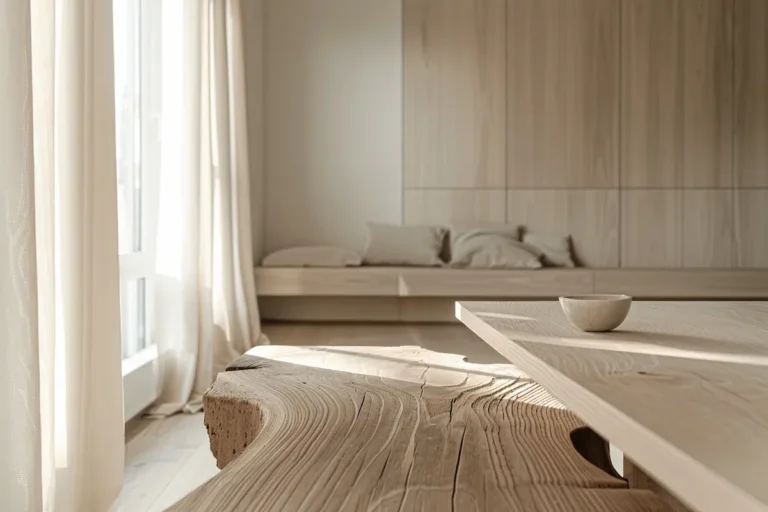
Warm Wood Minimalism is built on a simple but often underestimated principle: warmth creates calm when it feels structurally grounded. In many minimalist living rooms, warmth is added through accessories — throws, cushions, decor — rather than through the furniture itself. This style reverses that logic.
Within Crafted Minimalism, wood is not an accent material. It is the structural backbone. Warm Wood Minimalism uses solid wood furniture to create visual continuity across the space, allowing the eye to move slowly and without interruption. Instead of contrast-driven focal points, this style relies on repetition of tone, grain, and mass to establish order.
What makes this approach especially effective in living rooms is its ability to feel inviting without becoming decorative. The warmth comes from material integrity, not from styling layers. When wood carries enough presence, the room doesn’t need visual “help.”
Warm Wood Minimalism works best in living rooms that risk feeling cold, echoing, or emotionally flat — especially modern homes with neutral palettes, large windows, or open-plan layouts. Rather than softening the space with color or ornament, this style grounds it through honest material weight and quiet craftsmanship.
Curated Product Selection (Shop the Look)
1. Pesca One-Seater
Why this piece works:
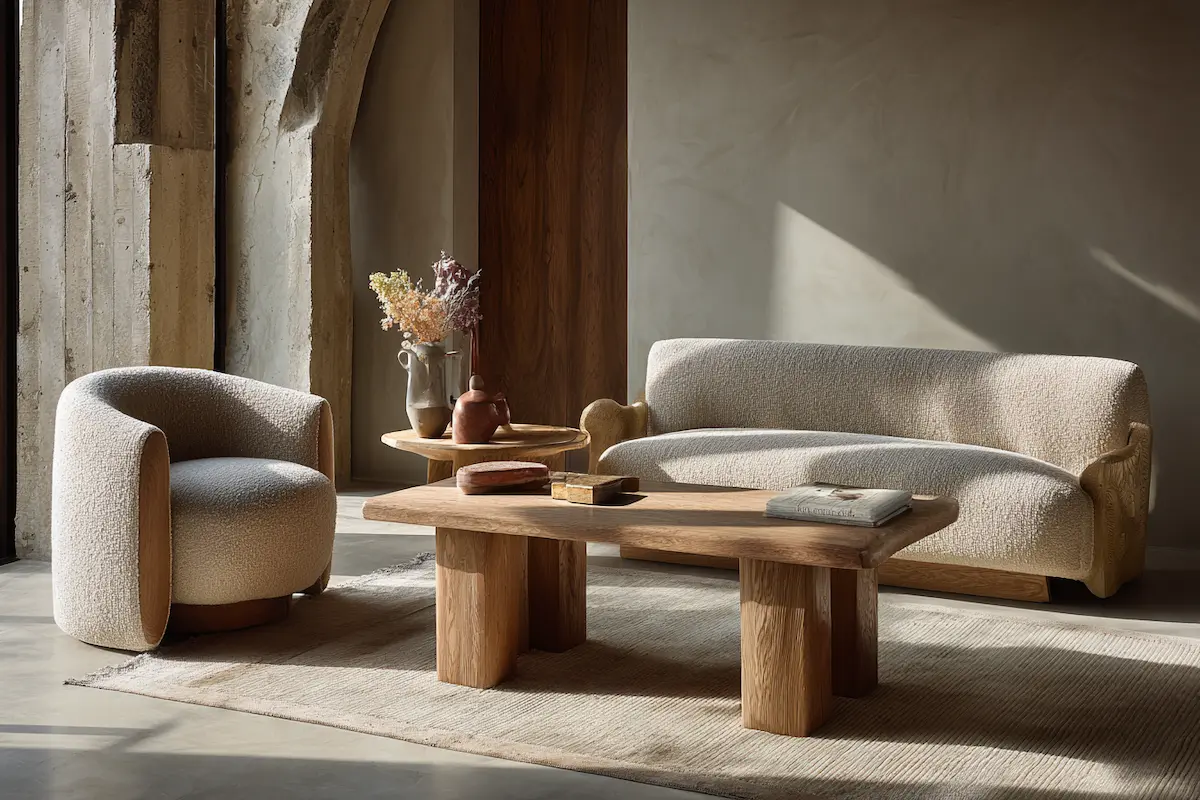
In Warm Wood Minimalism, seating should feel anchored, not lightweight. The Pesca One-Seater works because it combines sculptural restraint with material warmth. Its wooden frame is clearly visible, which immediately signals craftsmanship rather than upholstery-first design.
I chose this chair because it introduces structure without sharpness. The curved wood softens the geometry, allowing it to act as a visual counterbalance rather than a focal distraction. Unlike fully upholstered lounge chairs, it doesn’t dissolve into the background — it holds its form.
This piece replaces the need for accent chairs or decorative seating. It already carries enough identity to justify its place.
2. Solid Oak Minimalist Coffee Table
Why this piece works:
The coffee table is the stabilizing element of this lounge. This solid oak table works because it introduces weight without visual noise. Its simplicity allows the wood itself to do the work.
I chose this piece specifically because it doesn’t rely on sculptural exaggeration. In Warm Wood Minimalism, excess shaping can feel forced. This table feels inevitable — as if it belongs there by default.
It replaces the need for trays, books, or decorative centerpieces. Its mass and material presence are enough to define the seating zone.
3. RH Wood-Framed Sofa
Why this piece works:
Sofas in this style must support continuity, not dominate the room. This RH sofa works because the wood frame subtly echoes the other wooden elements without drawing attention to itself.
I chose this sofa over fully upholstered alternatives because it visually connects the seating to the surrounding furniture. The eye doesn’t jump — it flows. The upholstery remains calm, while the frame quietly reinforces the material narrative.
It replaces layered textiles and cushions. Comfort is built into the proportions, not added afterward.
The fabric covering a sofa or chair matters as much as its form. Natural Fabrics for Crafted Minimalist Furniture explains what to look for.
4. Livorno Lounge 2-Seater
Why this piece works:
This piece adds secondary seating while maintaining visual cohesion. Its proportions are low and horizontal, which supports the grounded feel of the room.
I chose the Livorno Lounge because it doesn’t introduce a new design language. Many secondary sofas disrupt crafted spaces by adding softness without structure. This one does both.
It replaces the need for benches or poufs that often feel temporary or decorative.
Why This Style Works So Well in Living Rooms
- Wood creates warmth without relying on decor
- Repetition of material calms the visual field
- Furniture carries the emotional tone of the room
- Fewer pieces create stronger spatial coherence
Warm Wood Minimalism doesn’t decorate a living room.
It builds calm into the structure, allowing warmth to emerge naturally through material honesty and restraint.
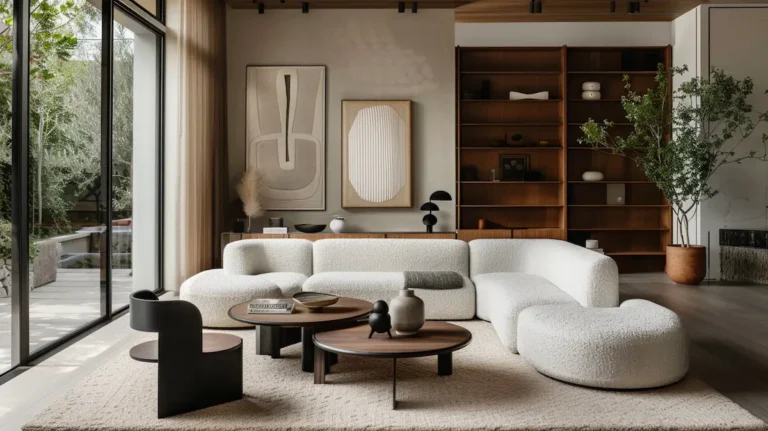
Style 2 — Stone & Soft Architecture Lounge

Visual gravity, spatial order, calm through weight
Stone & Soft Architecture Lounge is built around a principle that many minimalist living rooms overlook: openness needs gravity. When a space lacks visual weight, the eye keeps moving — scanning, drifting, searching for structure. This style introduces calm not by adding more elements, but by giving the eye something substantial to rest on.
Within Crafted Minimalism, stone is not used as decoration. It functions as spatial ballast. A single stone element, placed deliberately, slows perception and anchors the room. Instead of layering accessories or adding contrast, Stone & Soft Architecture Lounge relies on mass and material to organize the space.
What makes this style especially effective is the dialogue between solidity and softness. Stone establishes order and permanence; upholstered seating ensures the room remains livable and human. The balance prevents the space from becoming cold or severe, while still maintaining a composed, architectural feel.
Stone & Soft Architecture Lounge works best in contemporary living rooms, apartments with clean lines, or spaces that feel visually “floaty.” Rather than warming the room through color or decorative layers, it grounds the interior through material presence and restrained composition.
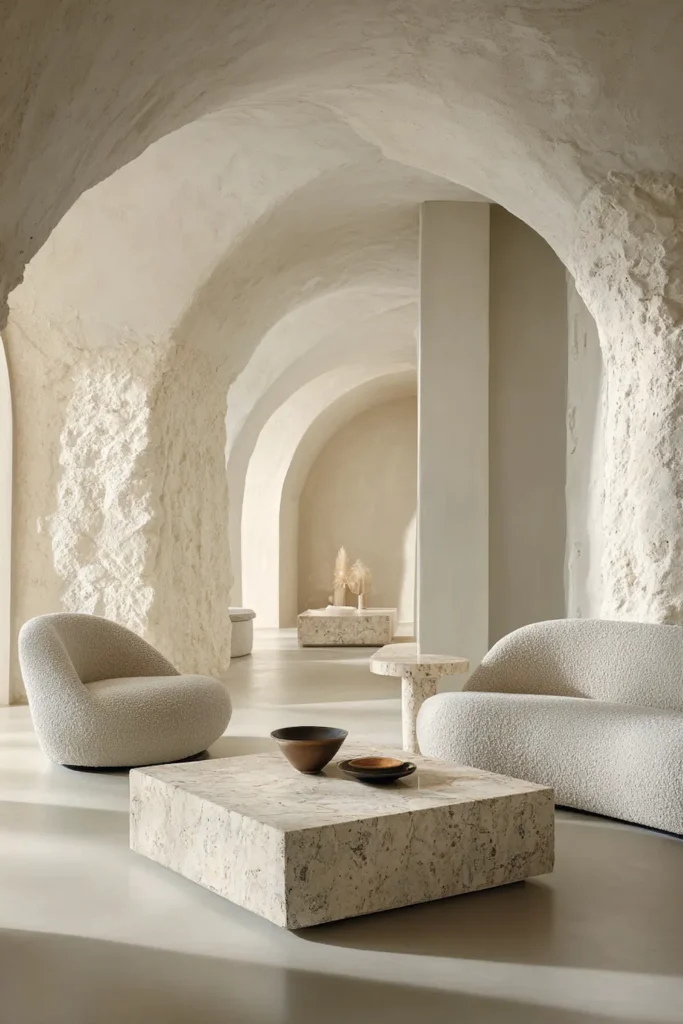
Curated Product Selection (Shop the Look)
1. Swivel Accent Chair
Why this piece works:
Stone-heavy interiors need softness that doesn’t visually collapse the space. This swivel accent chair works because it introduces volume without fragmentation. Its rounded form absorbs the hardness of stone while maintaining a clean, uninterrupted silhouette.
I chose this chair because it supports movement without visual disruption. The swivel base adds functional flexibility, but the design remains calm and grounded. Unlike expressive lounge chairs, it doesn’t pull focus — it stabilizes the composition.
It replaces the need for decorative armchairs or layered cushions. Comfort is embedded in the form, not added afterward.
2. Nordic Oval Coffee Table — Travertine
Why this piece works:
In this style, the coffee table acts as the center of gravity. This travertine table works because its material presence is immediate yet understated. The oval shape softens the weight of the stone, preventing it from feeling imposing.
I chose this table because it organizes the room on its own. A lighter table would require rugs, decor, or visual framing to feel grounded. This one doesn’t. Its mass and surface texture establish order without additional styling.
It replaces multiple stabilizing elements with a single, deliberate anchor.
Stone works best when paired with the right counterpart. Combining Wood and Stone explores exactly how these two materials balance each other.
3. Nerva Coffee Table
Why this piece works:
The Nerva Coffee Table offers an alternative expression of stone within the same architectural logic. Its sculptural profile introduces variation while maintaining visual restraint.
I chose this piece because it demonstrates how stone can feel refined rather than heavy-handed. The form feels intentional, not decorative. It allows stone to remain the dominant material language without overwhelming the space.
It replaces sculptural decor objects by functioning as both surface and form.
Why This Style Works So Well in Living Rooms
- Stone introduces visual gravity without enclosing the space
- Soft seating balances weight without adding clutter
- Fewer objects create clearer spatial order
- The room feels grounded, not staged or styled
Stone & Soft Architecture Lounge doesn’t decorate a living room.
It organizes perception, allowing calm to emerge through mass, balance, and restraint.
Style 3 — Vintage-Infused Crafted Minimalism
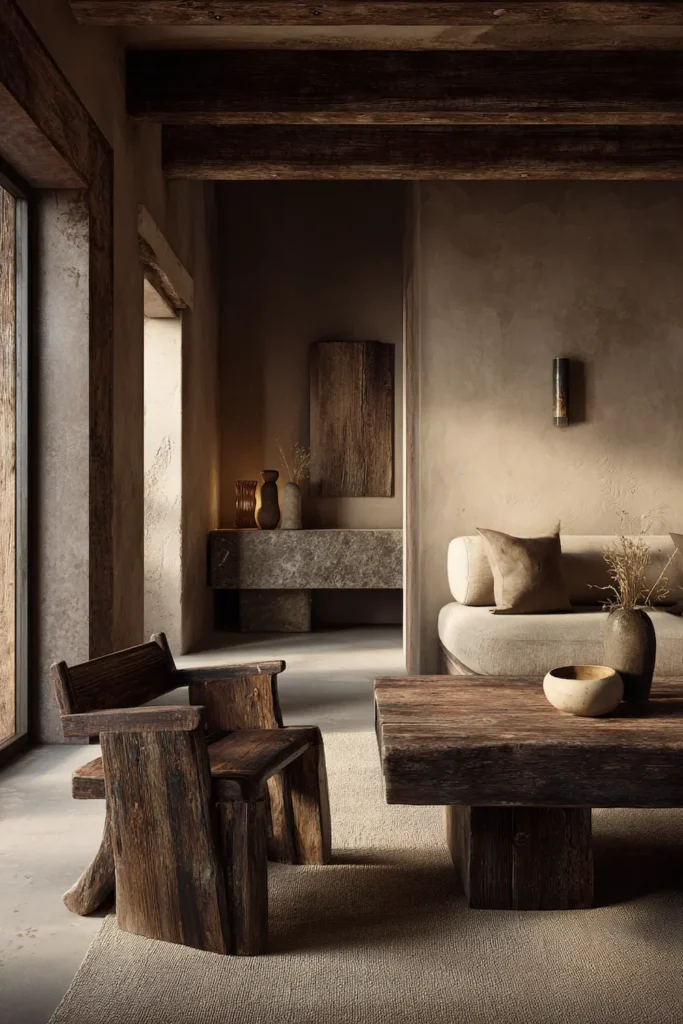
Patina, contrast, calm through history
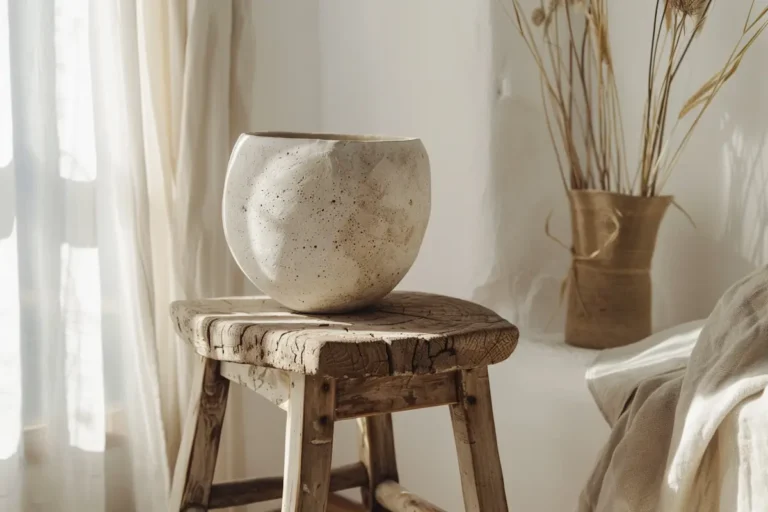
Vintage-Infused Crafted Minimalism is built on a quiet tension: the balance between restraint and memory. Where many minimalist interiors aim to feel new, clean, and untouched, this style introduces calm through age, wear, and material history.
Within Crafted Minimalism, vintage is never nostalgic decoration. It functions as an emotional counterweight. A single aged piece — when chosen deliberately — adds depth without complexity. Instead of layering decor to create character, this style lets time itself do the work.
What makes this approach especially effective in living rooms is its ability to humanize minimalism. Clean lines and neutral palettes can feel distant when they lack reference points. Vintage furniture introduces visual softness not through fabric or color, but through imperfection. The eye slows down when it encounters patina, irregular grain, or subtle wear.
Vintage-Infused Crafted Minimalism works best in living rooms that feel too pristine, too controlled, or emotionally flat. Rather than warming the space with accessories, it grounds it by introducing objects that feel lived with — not styled.
For a deeper exploration of how vintage pieces integrate into this style, How to Use Vintage Pieces in Crafted Minimalism covers five distinct approaches in detail.
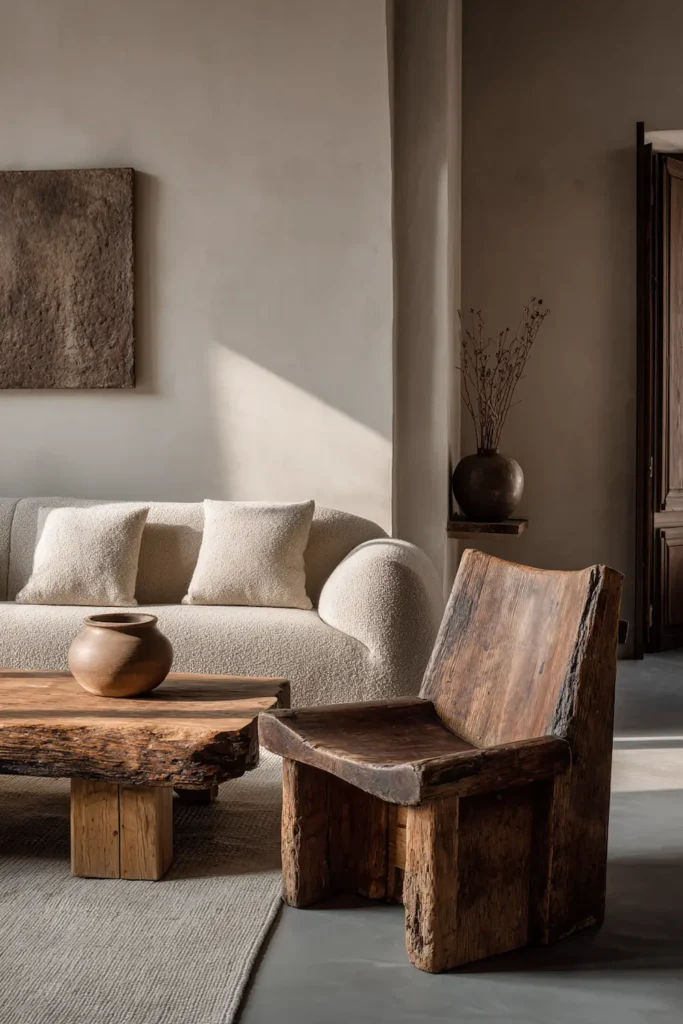
Curated Product Selection (Shop the Look)
1. Bjorn Markus Scheffler Chair C-01
via Claude Home
Why this piece works:
This chair embodies everything Vintage-Infused Crafted Minimalism stands for: presence without performance. Its form feels sculptural, but not expressive; aged, but not decorative.
I chose this piece because it introduces history through material rather than narrative. The patina and proportions slow the eye immediately. Unlike lighter accent chairs, it doesn’t ask for attention — it earns it.
It replaces the need for multiple “character pieces.” One chair carries the emotional weight of the room.
2. Lowtide Coffee Table
Why this piece works:
In a vintage-infused space, the coffee table must act as a stabilizer rather than a focal point. The Lowtide Coffee Table works because it feels grounded and inevitable.
I chose this table for its low profile and solid presence. Its proportions keep the room calm, while the material adds quiet depth. It doesn’t compete with vintage seating; it supports it.
It replaces the need for decorative centerpieces or layered styling — the table itself does the grounding.
3. Large Abstract Black & Brown Minimalist Wall Art
Why this piece works:
Wall art in Crafted Minimalism should never feel illustrative. This abstract piece works because it echoes the tonal depth of vintage materials without introducing narrative.
I chose this artwork because it extends the room’s material language vertically. The dark, earthy tones visually anchor the wall without overwhelming it. Unlike framed prints or figurative art, it doesn’t pull the eye forward — it holds it in place.
It replaces gallery walls or layered frames with a single, grounding gesture.
4. Alyna Sofa
Why this piece works:
Vintage elements need contemporary restraint to prevent the room from feeling dated. The Alyna Sofa provides that balance. Its clean lines and calm upholstery allow the vintage pieces to lead.
I chose this sofa because it acts as a neutral field. It doesn’t introduce trend-driven shapes or excessive softness. Instead, it supports the composition by staying visually quiet.
It replaces the need for mixing multiple seating styles. One contemporary anchor is enough.
Why This Style Works So Well in Living Rooms
- Vintage introduces depth without visual clutter
- Patina slows perception and softens minimalism
- Contrast between old and new creates balance
- Fewer pieces carry more emotional weight
Vintage-Infused Crafted Minimalism doesn’t romanticize the past.
It uses history as structure, allowing calm to emerge through contrast, restraint, and material memory.
Style 4 — Sculptural Seating Focus
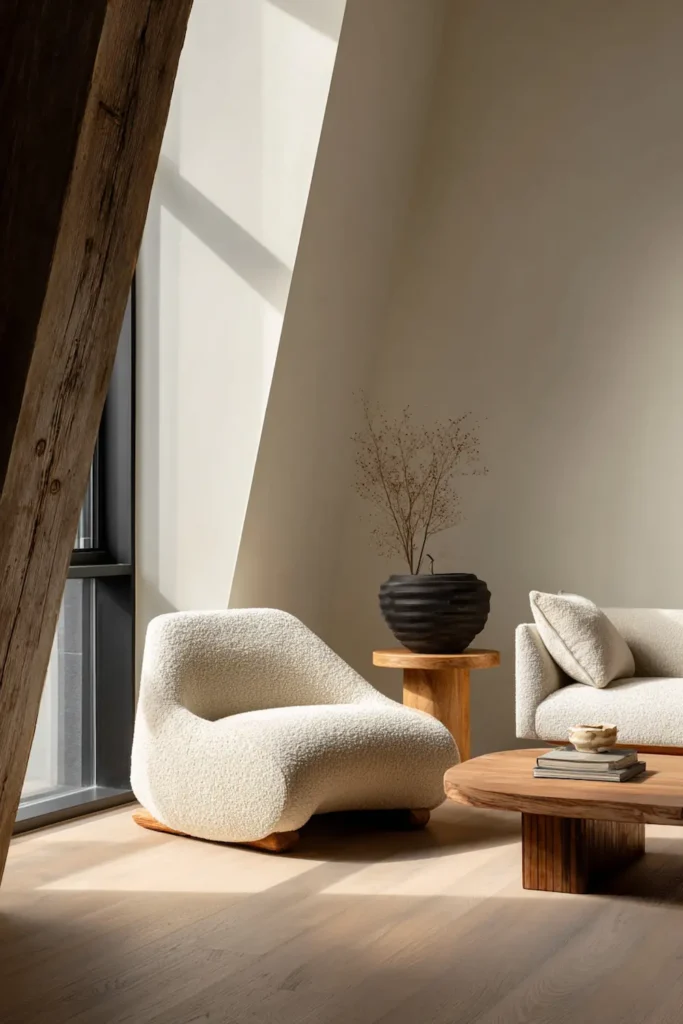
Presence, form, calm through singular dominance
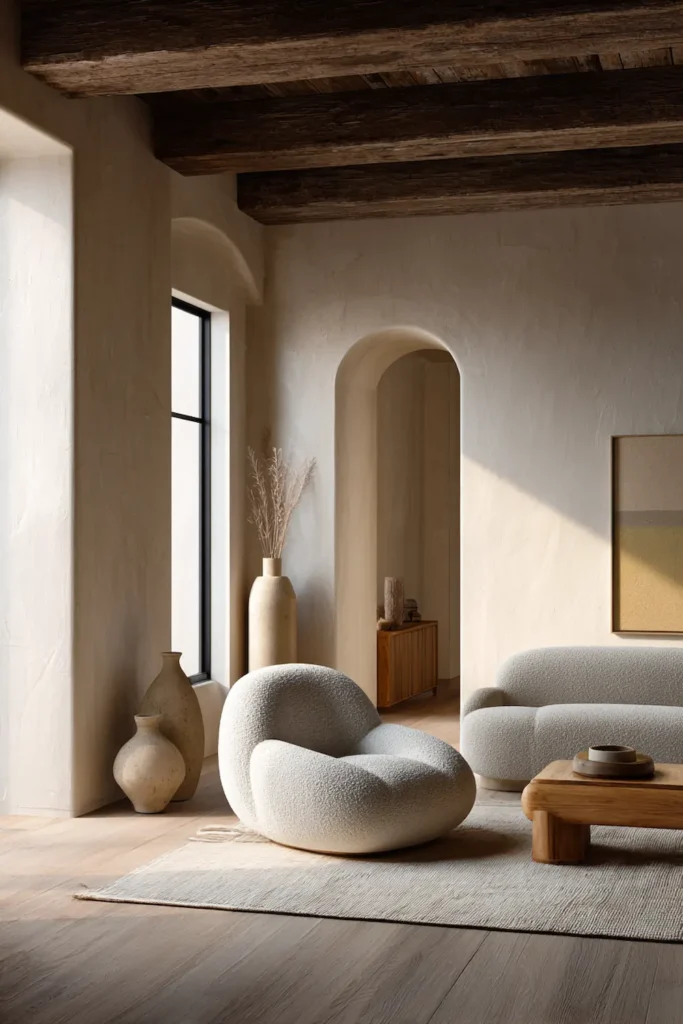
Sculptural Seating Focus is built around a counterintuitive idea: a living room needs a clear hierarchy to feel calm. When multiple elements compete for attention, the space feels restless — even when everything is neutral or minimal. This style restores order by allowing one seating piece to dominate the visual field.
Within Crafted Minimalism, sculptural seating is not about statement for statement’s sake. It functions as the room’s organizing principle. One clearly defined form anchors the space, allowing everything else to step back into a supporting role.
What makes this approach especially effective is its restraint. Instead of layering character through decor, this style concentrates visual interest into a single object. The eye lands, rests, and stops searching. Calm emerges not from emptiness, but from clarity.
Sculptural Seating Focus works best in living rooms that feel visually busy despite minimal styling, or spaces where furniture feels interchangeable. By committing to one dominant seating piece, the room gains structure, intention, and quiet authority.
Curated Product Selection (Shop the Look)
1. Terracotta Sculptural Centerpiece
Why this piece works:
In a seating-focused interior, secondary objects must reinforce the main form — not distract from it. This terracotta centerpiece works because it echoes sculptural language without competing in scale.
I chose this piece because it introduces earthy weight at a low visual level. Its matte finish and organic shape quietly support the dominant chair, adding depth without narrative.
It replaces decorative clutter on tables or shelves. One grounded object is enough.
2. Lounge Chair
Why this piece works:
This chair is the heart of the style. The Margas LC1 works because it holds visual authority without aggression. Its volume is generous, but its form remains controlled.
I chose this chair because it creates hierarchy instantly. Once placed, everything else in the room knows its role. The eye returns to it naturally, eliminating the need for competing focal points.
It replaces the need for multiple accent chairs or layered seating zones. One dominant form defines the room.
3. Tall Cream Nordic Vase (Matte)
Why this piece works:
Vertical balance is essential when seating carries strong horizontal weight. This vase works because it introduces height without ornament.
I chose this piece for its restraint. Its matte finish and neutral tone prevent it from becoming decorative. Instead, it stabilizes the composition vertically, supporting the chair rather than competing with it.
It replaces plants, sculptural lamps, or layered accessories that would fracture attention.
4. Montana Collection Cream Rug
Why this piece works:
In Sculptural Seating Focus, the rug’s role is not decoration — it’s containment. This rug works because it defines the seating zone without introducing pattern or contrast.
I chose this rug because it allows the chair to remain dominant. A patterned rug would pull the eye downward; a flat weave would disappear. This one creates subtle friction through texture alone.
It replaces visual zoning tricks with something quieter and more durable.
Why This Style Works So Well in Living Rooms
- One dominant piece creates visual hierarchy
- Sculptural seating anchors the entire composition
- Supporting elements stay quiet and intentional
- The room feels resolved, not under-styled
Sculptural Seating Focus doesn’t decorate a living room.
It clarifies it, allowing calm to emerge through dominance, restraint, and deliberate form.
How to Combine These Pieces into One Cohesive Crafted Minimalist Interior
Clarity through limitation, calm through consistency
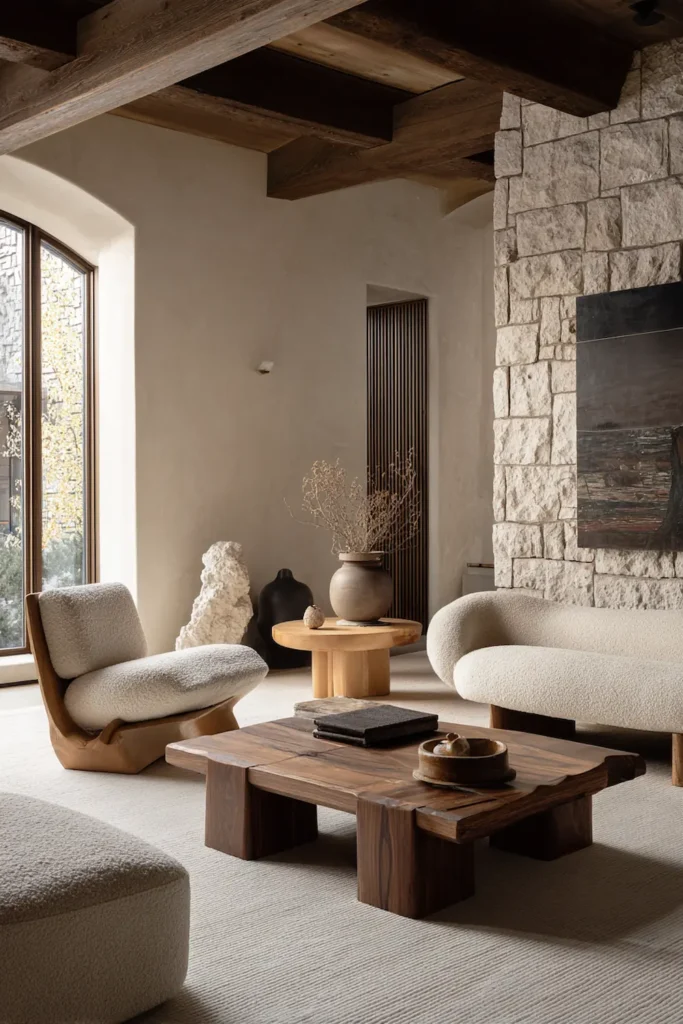
Crafted Minimalism doesn’t come together by collecting beautiful furniture. It comes together by limiting choices. The fastest way to lose calm is to mix too many styles at once. Each of the styles in this guide is strong enough to stand on its own — combining all of them dilutes their effect.
A good rule is to work with one dominant style and one supporting style. For example, Warm Wood Minimalism pairs naturally with Sculptural Seating Focus, as long as the seating doesn’t introduce a competing material language. Stone & Soft Architecture Lounge can be softened with one vintage element — but never the other way around.
Material consistency matters more than matching shapes. If wood is your anchor, repeat it in at least two major furniture pieces. If stone is present, let it appear once — maybe twice — but always with intention. Too much repetition turns weight into heaviness.
Color discipline is what holds everything together. Stay within a restrained palette and let texture do the work. When materials feel related, the room reads as composed even when styles subtly overlap.
Crafted Minimalism isn’t about perfect harmony.
It’s about controlled coherence.
Common Mistakes in Crafted Minimalist Furniture Choices
When restraint turns into visual noise
The most common mistake in Crafted Minimalism is assuming that minimal furniture automatically creates calm. It doesn’t. Calm comes from hierarchy, not reduction alone.
One frequent error is using too many statement pieces. When every chair, table, or lamp demands attention, the eye has nowhere to rest. The result feels busy — even if the room is technically minimal.
Another pitfall is choosing furniture that’s too smooth or too perfect. Ultra-polished surfaces, thin profiles, and flawless finishes erase material presence. Crafted Minimalism needs texture, weight, and subtle imperfection to feel grounded.
Finally, many interiors rely too heavily on accessories to add character. In this style, furniture should do the heavy lifting. When decor replaces structure, the space feels styled rather than lived in.
Crafted Minimalism fails not when there’s too little —
but when intention disappears.
Conclusion — Choosing Furniture with Meaning
Crafted Minimalism doesn’t start with color palettes or decor.
It starts with furniture.
The pieces you choose define how a space feels, how the eye moves, and whether calm is sustained or constantly interrupted. When furniture carries material honesty, weight, and intention, the room no longer needs explanation.
This is why fewer pieces matter more than perfect coordination. One chair with presence will always do more than five interchangeable ones. One table with material depth creates more calm than layers of styling ever could.
If you take one principle from this guide, let it be this:
Choose furniture that earns its place.