Crafted Minimalism, Room by Room: Principles for a Cohesive Home
How the principles translate throughout the home
Crafted Minimalism is not a one-size-fits-all style. While the core principles remain the same — restraint, material honesty, craftsmanship and calm — their expression subtly changes from room to room.
Each space in a home has its own function, rhythm and emotional role. A crafted minimalist bedroom should not feel the same as a kitchen or a home office. The strength of this style lies in its adaptability without losing coherence.
Open-plan spaces like lofts require a slightly different approach — Crafted Minimalism Loft explores how the principles hold up without walls to define each zone.
This article explains how Crafted Minimalism translates throughout the home, room by room, and what to pay attention to in each space before diving into specific design ideas or products.
Living Room: calm, grounded and human
The living room is often the emotional center of the home. In Crafted Minimalism, this space balances openness with warmth.
Rather than filling the room, the focus is on anchoring elements:
- A solid sofa with a low profile
- One or two sculptural chairs
- A grounding rug made of wool or jute
- Natural materials that age beautifully
Visual calm is achieved through spacing, not emptiness. Objects are allowed to exist, but they are chosen carefully and given room to breathe.
If your living room connects directly to the kitchen or dining area, Crafted Minimalism Open Living Space covers how to maintain visual calm across an open floor plan.
Texture plays a crucial role here. Plaster walls, raw wood, linen upholstery and soft lighting prevent the space from feeling cold or sparse.
For a deeper look at furniture choices, layout, and styling, see Crafted Minimalism Living Room.

Kitchen: functional minimalism with tactile depth
In the kitchen, Crafted Minimalism leans more toward functionality, but never at the expense of atmosphere.
Key principles include:
- Simple cabinetry with minimal hardware
- Natural or matte finishes instead of high gloss
- Stone, wood or composite worktops with subtle variation
- Open shelving used sparingly
Unlike ultra-modern minimalist kitchens, crafted minimalist kitchens often show signs of use. Wood may develop patina, stone may show natural markings.
The goal is not perfection, but quiet durability.

Dining Area: simplicity with presence
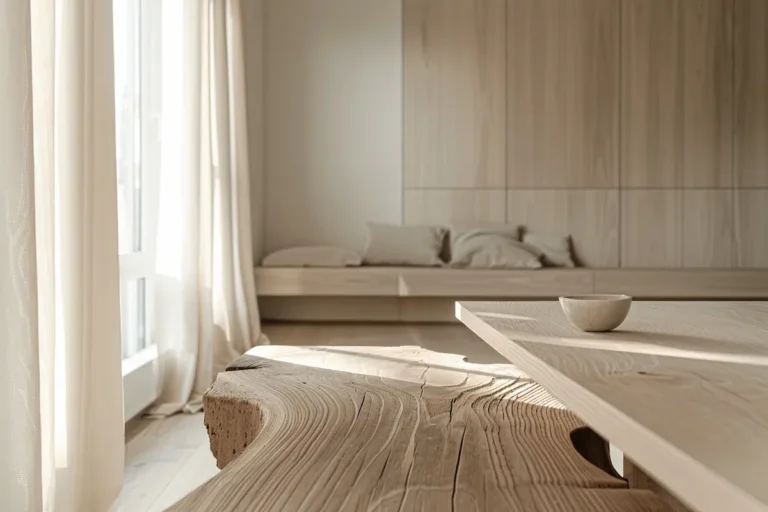
The dining area is where craftsmanship often takes center stage. A single strong element — usually the table — anchors the space.
Design focus:
- A solid wood or stone dining table
- Simple chairs with visible construction
- Minimal overhead lighting with warm tones
Decor is restrained, often limited to:
- One ceramic bowl
- A linen table runner
- Seasonal branches or dried florals
This keeps the space adaptable and timeless, suitable for both everyday use and gatherings.

Bedroom: softness, silence and material calm
In the bedroom, Crafted Minimalism becomes more sensory and intimate. Visual quietness supports rest, while textures add comfort.
Key elements:
- Soft, layered bedding in linen or cotton
- Muted, earthy color palette
- Minimal furniture with low visual weight
- Soft wall finishes or textured paint
Clutter is especially disruptive here, so storage is integrated and discreet. Decorative elements are kept to a minimum, often limited to:
- One artwork
- A bedside ceramic lamp
- Natural textiles
The result is a space that feels cocooning rather than bare.

Bathroom: restraint meets organic texture
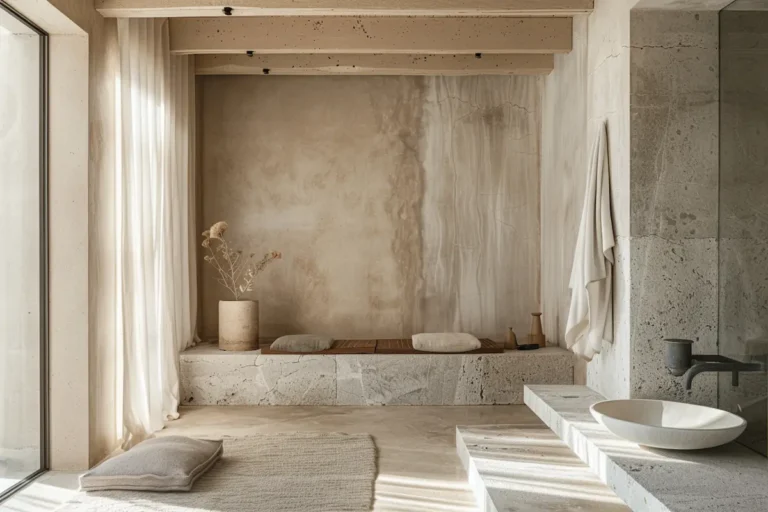
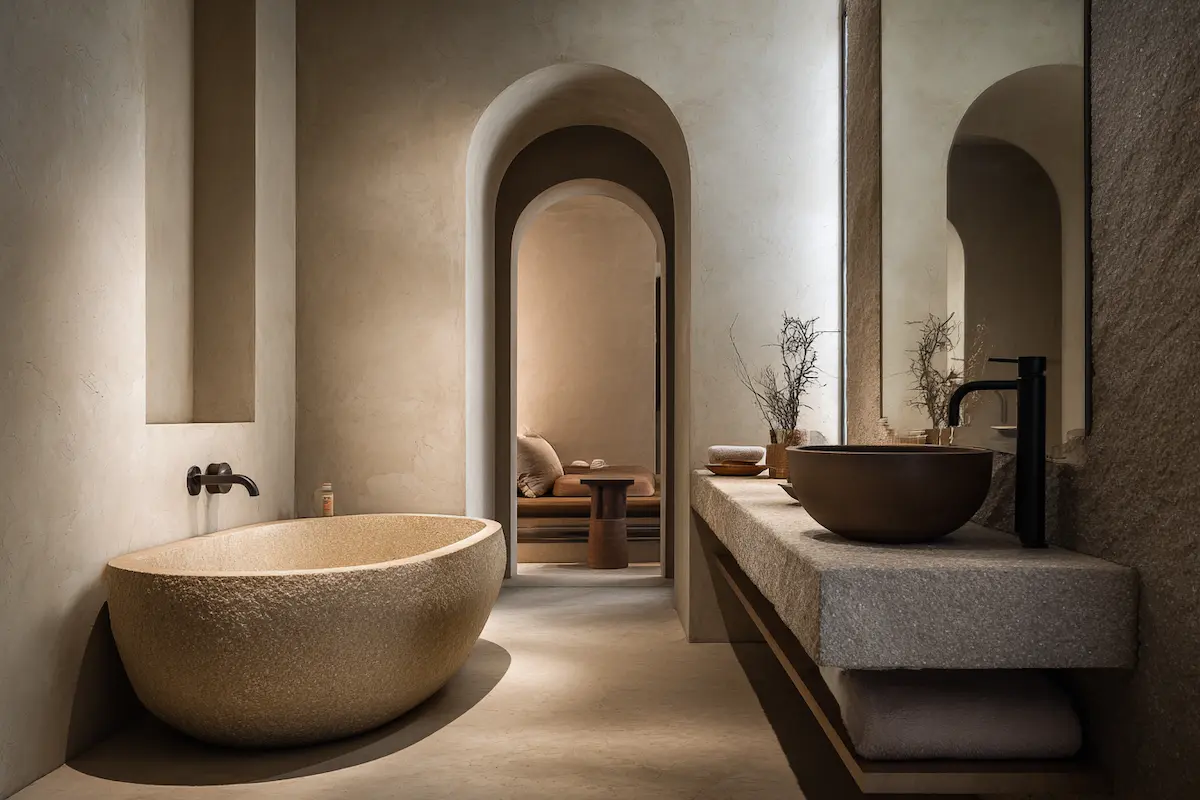
Bathrooms in Crafted Minimalism are quiet, spa-like spaces without feeling clinical.
Rather than glossy tiles and chrome finishes, the focus shifts to:
- Stone or concrete textures
- Matte fixtures in brushed metal
- Neutral, earthy tones
- Simple, sculptural basins
Storage is concealed to maintain visual calm. Accessories are minimal and functional, often limited to wood, ceramic or glass.
The emphasis is on material continuity rather than decoration.

Home Office: focus through simplicity
In a crafted minimalist home office, visual clarity supports mental clarity.
Design principles include:
- A simple desk in wood or metal
- Minimal storage, preferably closed
- One comfortable, understated chair
- Natural light as the primary illumination
Decor is restrained and purposeful. Instead of motivational quotes or busy decor, the space relies on:
- Material quality
- Proportions
- Light
This creates an environment that supports deep work without distraction.

Children’s Room: calm without sterility
Crafted Minimalism works surprisingly well in children’s spaces when adapted thoughtfully.
The focus shifts to:
- Natural materials
- Muted, soft colors
- Open floor space for play
- Simple, flexible furniture
Rather than overly themed rooms, the design grows with the child. Toys become part of the visual language when curated and stored intentionally.
This approach avoids visual overload while still feeling warm and playful.

Hallways and transitional spaces: continuity and calm
Often overlooked, hallways and entryways play a key role in setting the tone of the home.
In Crafted Minimalism, these spaces emphasize:
- Clear pathways
- Minimal furniture
- Material continuity with adjacent rooms
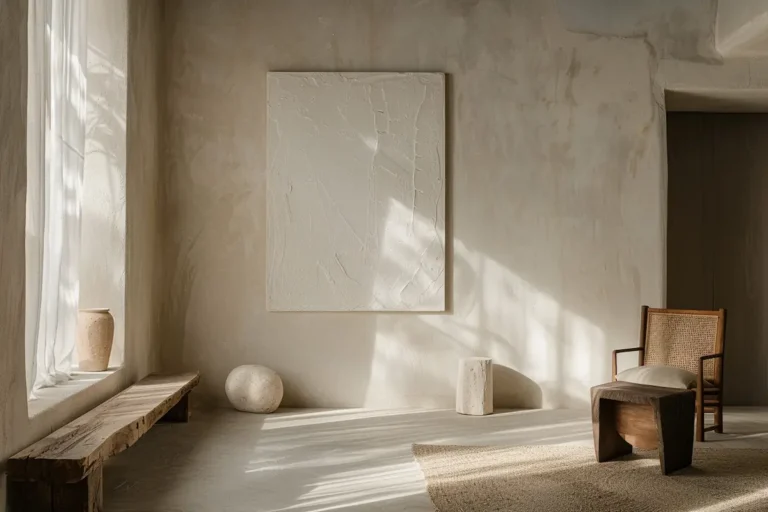
A single bench, a ceramic bowl or a subtle wall texture is often enough.
These spaces act as visual pauses, allowing the home to feel cohesive rather than fragmented.
The same material logic extends beyond the home’s interior. Crafted Minimalism Patio explores how calm and craftsmanship translate to outdoor spaces.

Why room-by-room understanding matters
Understanding Crafted Minimalism by room prevents common mistakes, such as:
- Applying the same styling everywhere
- Over-minimalizing functional spaces
- Treating minimalism as decoration rather than structure
Working with limited space? Crafted Minimalism for Small Homes shows how the same principles apply when every square metre counts.
Each room interprets the same principles differently, but together they form a cohesive whole.
This room-by-room framework helps readers move naturally from concept → application → inspiration, making it a perfect bridge between foundational content and deeper, room-specific articles.