
Crafted Minimalism Living Room: 4 Timeless Styles Built on Material and Calm
The living room is where Crafted Minimalism truly proves itself. It’s the space where comfort, daily life, and visual calm have to coexist — without compromise. Unlike other rooms, the living room is rarely styled for a single purpose. It’s where you rest, gather, read, work, and unwind. Every object is visible. Every choice carries weight.
That’s exactly why a crafted minimalist approach works so well here.
Rather than relying on decoration, Crafted Minimalism builds atmosphere through material, proportion, and restraint. In a living room, this means furniture becomes the primary carrier of mood. A sofa sets the tone. A table anchors the space. Materials repeat quietly instead of competing for attention.
What separates a crafted minimalist living room from a standard minimalist one is intention. It’s not about reducing for the sake of emptiness, but about choosing fewer pieces that do more — visually, emotionally, and functionally. Comfort is never sacrificed, but excess is edited out.
In this guide, you’ll explore four carefully selected Crafted Minimalism living room styles, each built around a distinct material logic. Every style is illustrated with a clear visual concept and paired with 3–4 thoughtfully chosen products you can use to recreate the look at home. Each recommendation is deliberate — selected for scale, visual weight, and how it contributes to calm rather than clutter.
For a broader foundation, start with Crafted Minimalism by Room Overview or explore essential pieces in Must-Have Crafted Minimalist Furniture.
This article translates those principles into practical, shoppable living room styles designed for real homes.
What Defines a Crafted Minimalist Living Room?

A minimalist living room is often defined by what’s missing. Fewer objects. Neutral colors. Clean surfaces. While this can create visual calm, it can also feel flat, unfinished, or overly restrained.
A crafted minimalist living room works differently. Instead of focusing on reduction alone, it focuses on intention and material presence. The goal isn’t emptiness — it’s balance.
The most important difference lies in what carries the atmosphere. In a standard minimalist space, accessories are often used sparingly to add character: a vase here, a throw there. In a crafted minimalist living room, atmosphere is built through materials themselves. Wood, stone, linen, wool, and ceramics replace decoration by offering texture, weight, and depth.
Visual weight is distributed carefully. A sofa anchors the space horizontally. A coffee table introduces gravity at the center. A single side chair or lamp balances the composition without competing for attention. Nothing floats. Nothing feels incidental.
Comfort is essential — but never excessive. Cushions, throws, and soft surfaces are chosen for their material quality rather than quantity. Instead of layering, crafted minimalism relies on fewer, better elements that invite use without overwhelming the room.
This is why furniture matters more than styling. Furniture defines proportion, flow, and presence. Styling is secondary — often unnecessary — when the core pieces are well chosen.
The following styles show how these principles translate into real living rooms.
Overview: Crafted Minimalism Living Room Styles

A crafted minimalist living room doesn’t rely on one fixed look — it relies on clear logic. The four styles in this guide each approach that logic differently, yet they all serve the same purpose: creating calm, comfort, and cohesion in a space that’s used every day.
Some styles build atmosphere through repetition and warmth, others through material weight or restraint. One lowers visual intensity by reducing height and detail, while another introduces character through patina and age. Each style solves the same challenge — how to make a living room feel grounded and inviting — but does so using a different material strategy.
All four styles are deliberately chosen because they work exceptionally well in living rooms. They prioritize comfort without excess, rely on material consistency instead of decoration, and translate easily into real, shoppable furniture and objects. This makes them not only visually calm, but also practical and achievable.
Below is an overview of the styles explored in this article. Use it as a quick reference, or jump directly to the approach that best fits your space and preferences.
Styles in This Guide
- Warm Wood Living Calm
- Stone & Soft Architecture Lounge
- Japanese-Inspired Living Room
- Vintage European Living Flow
Each style shows a distinct way to apply Crafted Minimalism — without compromising livability.
Style 1 — Warm Wood Living Calm

Material continuity, perceptual stability, everyday grounding
Warm Wood Living Calm is not about making a living room feel “warm” in the cosy sense. It’s about creating perceptual stability — a space where the eye doesn’t need to constantly re-orient itself. In a living room that’s used daily, this stability is what creates calm over time, not styling or softness.
Within Crafted Minimalism, wood functions here as a continuous visual frequency. Not as an accent material, but as a repeated structural presence. When similar wood tones appear across the coffee table, side surfaces, and seating context, the brain reads the space as coherent before it reads it as furnished. That’s the difference between a room that looks calm and one that feels calm.
This style deliberately avoids contrast-driven interest. Instead, interest comes from micro-variation: grain direction, surface texture, slight shifts in tone. These variations are slow to register, which is exactly what makes the space restful. Nothing interrupts the eye; everything invites it to linger.
Warm Wood Living Calm works exceptionally well in living rooms that are actively used — where people sit, move, leave objects behind. The material story absorbs daily life instead of fighting it. Over time, the room doesn’t degrade visually; it settles.

Curated Product Selection (Shop the Look)
1. Lewes Wooden Coffee Table
via Jaime la Déco
Why this piece works:
In a crafted minimalist living room, the coffee table is not a surface — it’s a visual stabiliser. This table works because its mass sits low and wide, creating a horizontal anchor that the rest of the room can orient around.
I chose this piece because the wood grain does the work that styling normally does. A smoother or lacquered surface would require objects to give it presence. A darker or sculptural table would pull attention too aggressively. This one sits in the middle: present, but never dominant.
It replaces trays, centrepieces, and layered decor entirely. The surface itself provides enough visual information.
2. Neutral Decorative Books
Why this piece works:
These books are not chosen for content or colour, but for scale modulation. In a room dominated by horizontal furniture, a small vertical element helps the eye recalibrate without introducing contrast.
I chose these specifically because their muted tone prevents narrative interruption. Bright spines, text-heavy covers, or glossy finishes create micro-distractions. These recede visually while still contributing structure.
They replace decorative stacks, candles, and small objects — one controlled gesture instead of many.
3. Wide-Seated Corner Sofa
via Cottonfy
Why this piece works:
Comfort in Crafted Minimalism is not softness — it’s spatial generosity. This sofa works because of its depth and width, not because of cushions or styling.
I chose this sofa because it visually grounds the room without enclosing it. Tall backs and segmented seating break sightlines; this one stays low and continuous. It allows the room to breathe while still anchoring daily use.
It replaces the need for additional chairs, ottomans, or layered seating solutions. One object absorbs multiple functions.
4. Ceramic Decorative Objects
via Amazon
Why this piece works:
Ceramics in Warm Wood Living Calm act as material punctuation, not decoration. These pieces introduce a different tactile language without shifting the colour or visual rhythm of the room.
I chose them because of their matte finish and restrained form. Glossy ceramics reflect light unpredictably, creating visual noise over time. These absorb light, supporting calm rather than competing with it.
They replace art objects, sculptures, and seasonal decor with something quieter and more durable.
Why This Style Works So Well in Living Rooms
- Material repetition stabilises the visual field
- Micro-variation replaces contrast as interest
- Furniture absorbs daily life instead of fighting it
- Fewer objects age better over time
Warm Wood Living Calm doesn’t aim to look composed.
It becomes composed through use, which is exactly what a living room needs.
Style 2 — Stone & Soft Architecture Lounge

Visual gravity, spatial order, calm through weight
Stone & Soft Architecture Lounge is built around a principle that many living rooms miss: openness needs gravity. In spaces without enough visual weight, the eye keeps drifting, scanning, searching for structure. This style introduces calm by giving the eye something to land on.
Within Crafted Minimalism, stone is not used as a decorative statement. It functions as spatial ballast. A single stone element — placed deliberately — slows perception and stabilizes the room. Instead of adding more furniture or decor, this style relies on fewer, heavier anchors to organize the space.
What makes this approach especially effective in living rooms is the balance between solidity and softness. Stone provides order; soft upholstery ensures the room remains inviting. The result is a lounge that feels composed without being rigid, modern without being cold.
Stone & Soft Architecture Lounge works best in contemporary living rooms, apartments with clean lines, or spaces that feel visually “floaty.” Rather than warming the room through color or layers, it grounds it through mass.

Curated Product Selection (Shop the Look)
1. Pine Pause Table
via Scales Designs
Why this piece works:
In this style, the coffee table is the center of gravity. The Pine Pause Table works because its material presence is felt immediately — not through shine or contrast, but through mass and restraint.
I chose this piece because it replaces multiple stabilizing elements at once. A lighter table would require rugs, trays, or decorative weight to feel grounded. This one doesn’t. Its solid surface and quiet geometry give the living room an instant sense of order.
It removes the need for centerpieces or layered styling. One object does the structural work of many.
2. Pea Sofa
via Elysium
Why this piece works:
Stone alone can feel severe. This sofa counterbalances that by introducing soft volume without visual clutter. Its rounded forms absorb the hardness of stone while maintaining a calm silhouette.
I chose this sofa because it distributes comfort horizontally rather than vertically. Tall backs and segmented cushions fragment the visual field; this form stays continuous. The eye moves across it slowly, which reinforces the sense of calm.
It replaces the need for accent cushions or layered throws — the comfort is already built into the form.
3. Minimalist Accent Chair
Why this piece works:
I chose this piece because it sits exactly between presence and restraint. Many accent chairs either disappear completely or become sculptural focal points. This one does neither. Its upholstered mass absorbs light and softens the surrounding stone elements, but its shape remains calm and predictable.
What’s important here is proportion. The chair is substantial enough to balance a stone coffee table, yet low and contained enough to preserve open sightlines. It doesn’t interrupt the visual flow of the living room — it stabilizes it.
This chair replaces the need for multiple lighter seating options. Instead of adding stools, poufs, or decorative chairs, one softly grounded piece completes the seating composition without fragmenting the space.
4. Textured Neutral Area Rug
Why this piece works:
In Stone & Soft Architecture Lounge, the rug isn’t decoration — it’s friction control. Texture slows the eye and defines the seating zone without introducing pattern or contrast.
I chose this rug because it supports the stone table rather than competing with it. A patterned rug would fracture attention; a flat weave would disappear. This one sits in between, reinforcing calm through texture alone.
It replaces visual zoning tricks with something quieter and more durable.
Why This Style Works So Well in Living Rooms
- Stone introduces visual gravity without enclosure
- Soft forms balance weight without clutter
- Fewer objects create clearer spatial order
- The room feels grounded, not staged
Stone & Soft Architecture Lounge doesn’t decorate a living room.
It organizes perception, allowing calm to emerge through weight, balance, and restraint.
Style 3 — Japanese-Inspired Living Room

Lowered perception, controlled emptiness, calm through absence.
A Japanese-Inspired Living Room is built on a counter-intuitive idea: calm doesn’t come from what you add, but from what you deliberately refuse to add. In a living room — a space that is almost always visually busy — this approach radically changes how the room is perceived and experienced over time.
Within Crafted Minimalism, this style uses lowered visual mass as its primary tool. Furniture sits closer to the floor, light is diffused rather than directed, and surfaces remain intentionally sparse. The result is not emptiness, but visual breathing room. The eye encounters fewer interruptions, which immediately lowers cognitive load.
What makes this style especially effective in living rooms is how it protects sightlines. High backs, tall cabinets, and vertical accents constantly interrupt perception. By keeping furniture low and forms simple, the room feels larger, quieter, and more stable — even when the actual square meters don’t change.
This style works exceptionally well in living rooms that feel overstimulating or clutter-prone. Instead of organizing the room through anchors or weight, Japanese-Inspired Living Rooms organize space through absence and proportion. Objects don’t compete; they coexist.

Curated Product Selection (Shop the Look)
1. Chōchin Pendant Light
via POJ Studio
Why this piece works:
Lighting is critical in this style, because light defines space when objects are absent. This pendant works because it diffuses light evenly, without creating focal points or shadows that divide the room.
I chose this piece because it replaces multiple light sources. Spotlights, floor lamps, and accent lighting fragment space; this pendant unifies it. Its paper form softens perception and supports openness rather than direction.
It does the work of several fixtures while remaining visually light.
2. Arabic Desert Wall Finish
via LAB Colour
Why this piece works:
In Japanese-Inspired interiors, walls are not backgrounds — they are active surfaces. This finish introduces subtle texture without pattern or color contrast.
I chose this because flat painted walls become visually dead when decoration is removed. This surface adds depth slowly, only noticeable when light moves across it. That slowness is key to long-term calm.
It replaces artwork, gallery walls, and decorative paint entirely.
3. Salta Sofa
via Momu
Why this piece works:
This sofa works because it lowers the visual horizon of the room. Its low back and wide seat allow the eye to travel across the space uninterrupted.
I chose it because tall sofas act like walls. This one doesn’t enclose — it grounds. It supports comfort without asserting dominance.
It replaces the need for extra seating or layered cushions. One low form is enough.
4. Taupe Porcelain Floor Tiles
via Tile Outlets
Why this piece works:
Floor continuity is essential when furniture is minimal. These tiles work because they extend visual calm across the entire room.
I chose them because rugs would reintroduce boundaries. This surface allows the space to remain uninterrupted, reinforcing openness.
It replaces zoning tricks with material continuity.
Why This Style Works So Well in Living Rooms
- Lower furniture preserves long sightlines
- Negative space reduces mental and visual load
- Surfaces replace decoration as atmosphere carriers
- Calm increases over time instead of fading
A Japanese-Inspired Living Room doesn’t try to fill space.
It trusts space to do the work — through proportion, restraint, and intentional absence.
Style 4 — Vintage European Living Flow

Patina as structure, memory as cohesion, warmth without decoration
Vintage European Living Flow approaches the living room from a fundamentally different angle than the other styles. Where Warm Wood relies on repetition, Stone on gravity, and Japanese design on absence, this style creates calm through shared age and material memory. It’s not about matching finishes or controlling form — it’s about letting time do the organizing.
Within Crafted Minimalism, this is the style where patina replaces intention. Surfaces don’t need to be perfected or unified; they need to feel related. Wood carries marks of use. Ceramics show irregularity. Textiles soften edges rather than define them. The eye reads these elements as belonging together because they share the same temporal language.
This approach is particularly effective in living rooms that risk feeling sterile, overdesigned, or emotionally flat. New builds, large apartments, or carefully renovated spaces often lack friction — everything is too smooth, too resolved. Vintage European Flow reintroduces resistance, which paradoxically creates comfort. The room feels inhabited even when it’s quiet.
What makes this style powerful over time is that it doesn’t degrade visually. As objects age, the room becomes more coherent, not less. You don’t need to add layers or refresh styling. The living room settles into itself.

Curated Product Selection (Shop the Look)
1. Artisanal Cross-Leg Table
via Etsy
Why this piece works:
In this style, one handcrafted piece can replace an entire styling concept. This table works because its construction is visible. The cross-legs, joints, and proportions tell a story without needing explanation.
I chose this piece because it introduces structural character without visual noise. A more refined table would require decorative compensation. This one doesn’t. Its irregularities already provide depth.
It replaces side tables, decorative surfaces, and even wall elements. One object carries the room.
2. Hand-Painted Rustic Ceramic Vase
via Etsy
Why this piece works:
Ceramics in Vintage European Flow should feel handled, not styled. This vase introduces imperfection at a human scale — essential in a room dominated by larger forms.
I chose this piece because its hand-painted surface breaks uniformity without drawing attention. Glossy or sculptural vases interrupt perception; this one blends into the rhythm of the space.
Used empty or with a single branch, it adds life without decoration.
3. Translucent Linen Textile
via Zara Home
Why this piece works:
Textiles here don’t define zones — they soften transitions. This linen works because it filters light rather than blocking it.
I chose this piece because opaque textiles create visual stops. This one allows light and movement to pass through, maintaining openness while adding warmth.
It replaces heavy curtains, layered throws, and window styling.
4. Avanos Ceramic Vase
via Olive Ateliers
Why this piece works:
This object functions as quiet punctuation. It doesn’t anchor the room, but it completes it.
I chose it because of its weight and matte surface. It holds space without asserting itself. In a room built on memory and patina, this kind of object supports the narrative rather than competing with it.
It replaces decorative sculptures and seasonal accents with something timeless.
Why This Style Works So Well in Living Rooms
- Patina creates cohesion without repetition
- Fewer objects carry deeper emotional weight
- Materials replace decoration as atmosphere
- The room improves with time instead of requiring updates
Vintage European Living Flow doesn’t try to control a living room.
It allows the room to become itself — through age, use, and restraint.
How to Build a Crafted Minimalist Living Room Step by Step
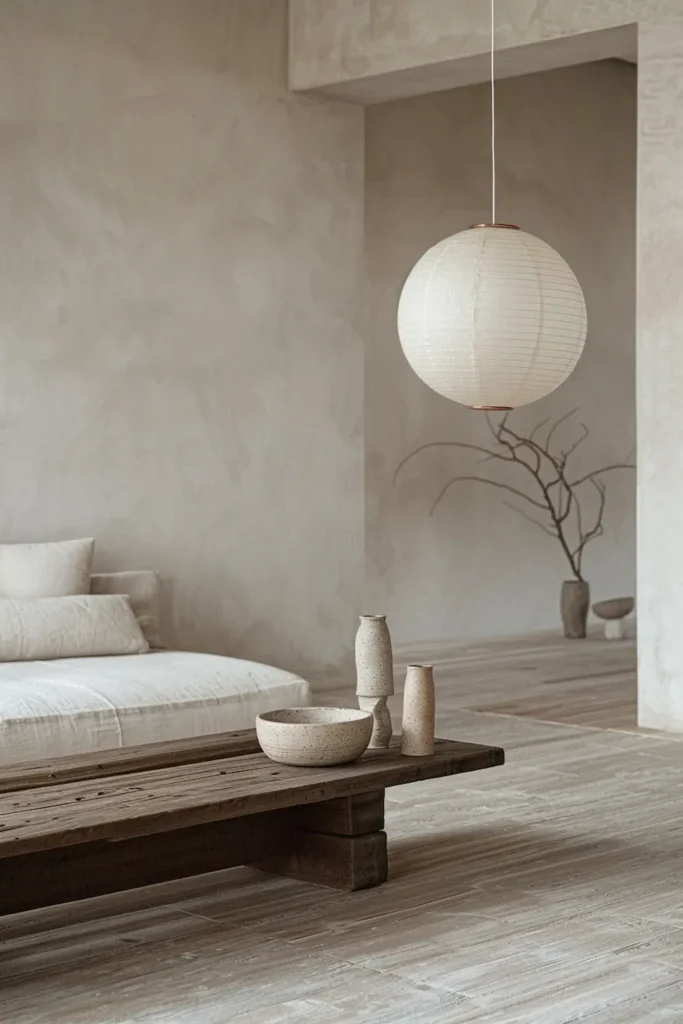
Building a crafted minimalist living room isn’t about assembling a look — it’s about making decisions in the right order. When the sequence klopt, ontstaat rust vanzelf.
Start with the sofa.
The sofa defines scale, comfort, and visual height. Choose it first, because everything else reacts to it. A low, wide sofa lowers the visual horizon; a bulky or segmented one fragments the space before you’ve even begun. If the sofa is right, half the room is already solved.
Choose one dominant material.
Wood, stone, or textile — but only one as the leading voice. This material should appear in at least two or three key elements, so the room reads as coherent rather than composed. This is where material knowledge matters more than styling. (See Best Materials for Crafted Minimalism.)
Add one clear anchor.
Every living room needs a point of gravity: a coffee table, a stone surface, or a substantial chair. This anchor gives the eye somewhere to rest. Without it, the space feels visually unstable, no matter how minimal it is.
Let emptiness exist on purpose.
Empty surfaces are not unfinished — they’re functional pauses. Resist the urge to fill them. In Crafted Minimalism, absence is an active design choice, not a lack of ideas.
When these steps are followed, the living room doesn’t need decoration to feel complete.
Common Mistakes in Crafted Minimalist Living Rooms
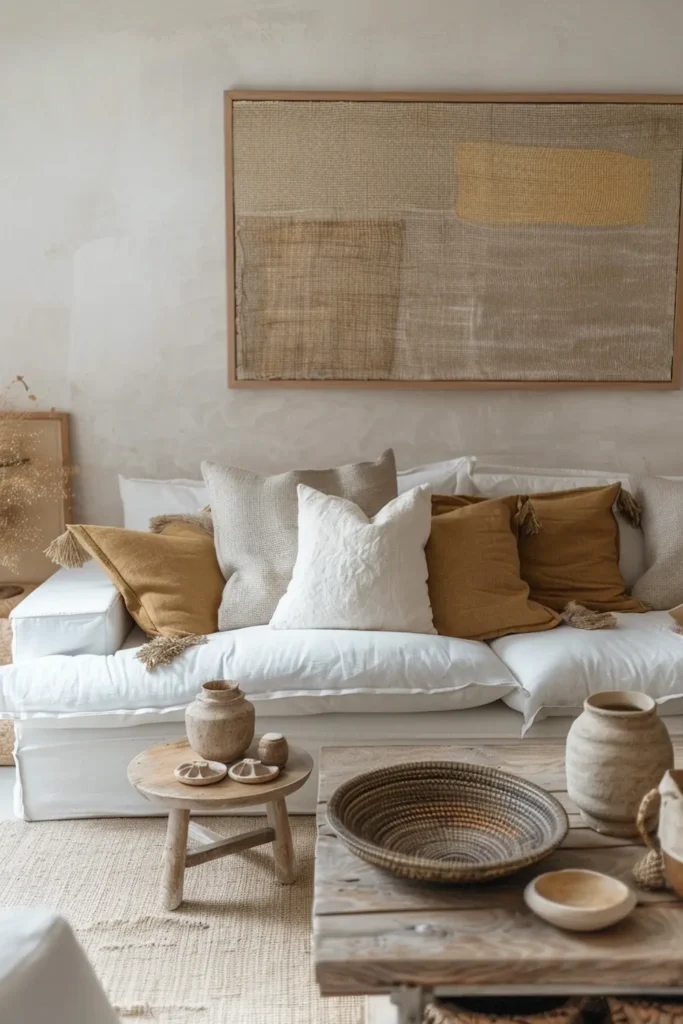
Most living rooms don’t fail because they have too much — they fail because choices cancel each other out.
Too many cushions or accessories.
Layering often replaces decision-making. When comfort is added through objects instead of form, the room becomes visually noisy very quickly.
Furniture without visual weight.
Light, narrow, or overly refined pieces tend to float. Without at least one grounded element, the living room never settles — even if it looks minimal.
Too much contrast.
Strong contrasts fragment attention. Crafted Minimalism relies on continuity and micro-variation, not sharp visual breaks.
Styling instead of material choices.
When materials are weak, styling is used as compensation. In a crafted minimalist living room, materials are the styling. Accessories become optional.
These mistakes often stem from good intentions — but calm requires restraint, not addition.
Closing Thoughts
Living rooms ask more from us than any other space. They have to hold daily life, movement, rest, and presence — often all at once. That’s why they demand clarity more than creativity.
Crafted Minimalism offers that clarity. Not by reducing everything to emptiness, but by giving structure to choice. Materials replace decoration. Furniture replaces styling. Fewer objects carry more responsibility — and more meaning.
If you’re working with an open layout, Crafted Minimalism Open Living Space explores how these principles scale beyond one room. For a deeper look at foundational pieces, Must-Have Crafted Minimalist Furniture breaks down the elements that do the real work.
A crafted living room isn’t styled — it’s considered.