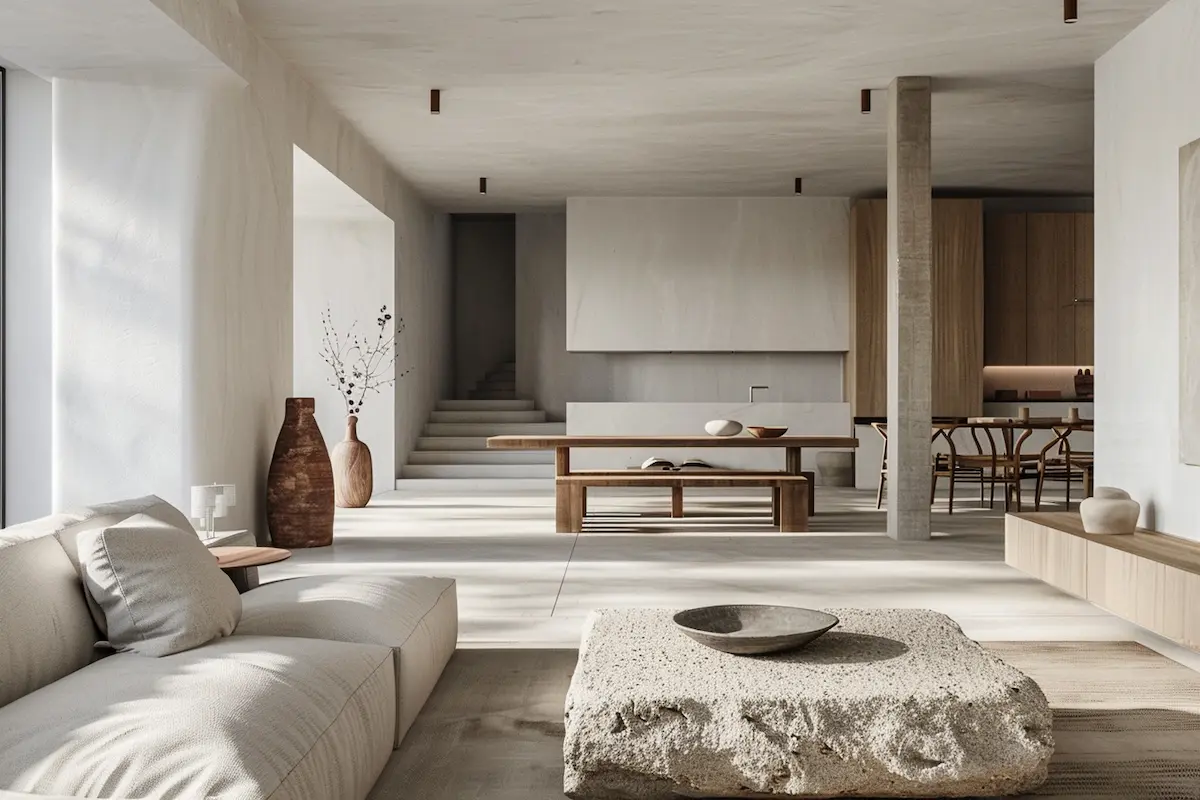
Crafted Minimalism for Open Living Spaces: 6 Styles That Create Calm and Cohesion
Open living spaces promise freedom — light, flow, and flexibility — but they also come with a challenge. Without walls, everything is visible at once. Furniture, materials, and objects have to work together continuously, not room by room. When that balance is off, an open space quickly feels noisy, unfinished, or visually fragmented.
That’s where Crafted Minimalism becomes especially powerful.
Rather than relying on decoration or hard boundaries, Crafted Minimalism creates structure through material continuity, proportion, and restraint. In an open living space, this approach allows different functions — living, dining, sometimes even working — to coexist without competing for attention.
Instead of dividing the space, Crafted Minimalism connects it. A repeated wood tone, a shared textile texture, or a single stone element can quietly guide the eye from one zone to the next. Furniture becomes an anchor rather than a filler, and objects earn their place through craftsmanship and material presence.
In this guide, I’ll walk you through six distinct Crafted Minimalism styles designed specifically for open living spaces. Each style is illustrated with a clear visual concept and paired with carefully selected products you can use to recreate the look. Every piece is chosen intentionally — based on scale, material, and how it contributes to calm and cohesion in an open plan.
For a broader foundation, explore Crafted Minimalism by Room Overview or dive deeper into seating and layout in Crafted Minimalism Living Room.
This article translates those principles into practical, shoppable styles for real open living spaces.
Disclaimer: This post may contain affiliate links. This means that if you click on one of these links and make a purchase, we may earn a small commission—at no extra cost to you.
All images featured in this article are AI-generated to illustrate the aesthetic and mood of the interior style. The products linked are carefully selected items that, in our view, most closely match the look and feel of these designs.
As an Etsy affiliate and Amazon Associate, we earn from qualifying purchases. We only recommend products we genuinely believe align with the style and atmosphere presented in our AI-created interiors.
What Defines a Crafted Minimalist Open Living Space?
An open living space doesn’t automatically feel open. In fact, many open-plan interiors feel visually overwhelming because everything is competing for attention at the same time. This is the difference between open plan living and open but intentional.
Traditional open plan living focuses on removing walls. Crafted Minimalism goes further. It focuses on creating cohesion without separation, using material, proportion, and placement instead of physical boundaries.
In an open but intentional space, the eye is guided rather than distracted. A single material story runs through the entire interior — wood tones repeat, stone appears consistently, textiles share a similar texture or weight. This continuity allows different functions to coexist without fragmenting the space.
Zones are defined without walls. A dining area might be anchored by a heavier table material, while the living zone is grounded by a low sofa and rug — not to divide, but to subtly signal purpose. These transitions remain soft, allowing the space to breathe as one whole.
Furniture plays a central role here. In Crafted Minimalism, furniture acts as an anchor, not a filler. Each piece establishes rhythm and balance, giving the room structure without visual noise.
This is why style consistency matters more than thinking in separate rooms. In an open living space, you’re not styling a living room and a dining room — you’re shaping one continuous environment.
The following styles show different ways to bring structure into openness.
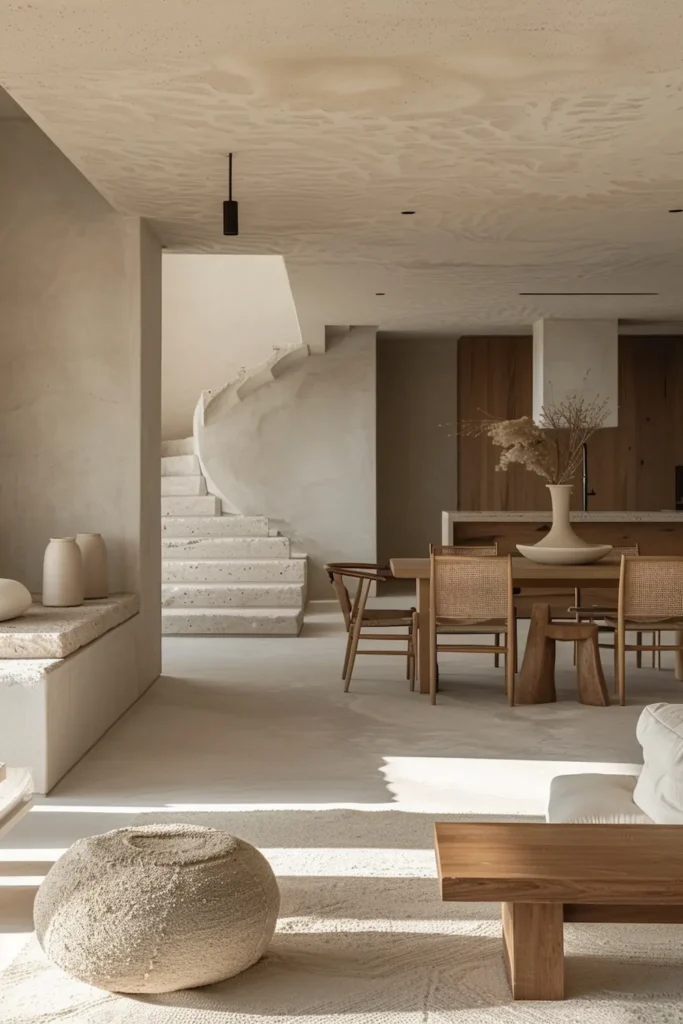
Overview: Crafted Minimalism Styles for Open Living Spaces
Open living spaces don’t demand a single aesthetic — they demand clarity and continuity. The four styles in this guide each offer a distinct way to bring structure to openness, without relying on walls, partitions, or decorative excess.
Rather than treating living and dining areas as separate rooms, these styles approach the open plan as one continuous environment. Each style solves the same challenge in a different way: how to guide the eye, define zones, and create calm across a shared space.
Some rely on material repetition to visually connect zones, others use subtle contrast or lowered furniture profiles to maintain open sightlines. What they all share is a focus on material honesty, proportion, and restraint — the core principles of Crafted Minimalism.
All four styles are suited for open layouts of varying sizes, from compact apartments to larger open-plan homes. The difference lies not in whether they work, but in how they structure openness.
Use the overview below to navigate directly to the style that fits your space, or read through each approach to understand how different design decisions shape the same open foundation.
Styles in This Guide
- Warm Wood Continuity
- Stone & Soft Architecture
- Japanese-Inspired Open Calm
- Vintage European Flow
Each style demonstrates a practical, repeatable way to bring balance and cohesion to an open living space — without compromising the sense of openness itself.
Style 1 — Warm Wood Continuity

The sofa is often the most consequential decision in an open living space. Choosing the Right Sofa for Crafted Minimalism helps you understand what to look for.
Material repetition, visual grounding, uninterrupted flow
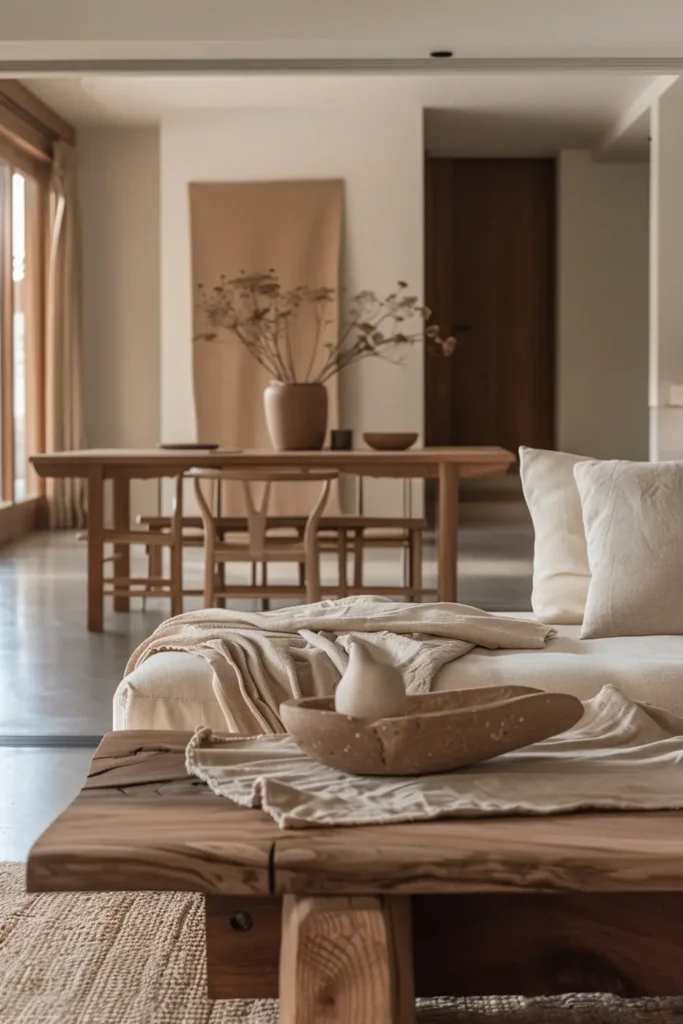
Warm Wood Continuity is about using material repetition to create structure in an open living space — without dividing it. Instead of thinking in rooms, this style treats the entire space as one visual field, where wood acts as the connective element that quietly guides the eye.
Within Crafted Minimalism, this approach relies on consistency rather than contrast. Warm wood tones repeat across furniture pieces, allowing different functions — seating, dining, resting — to coexist without visual friction. Nothing feels accidental, and nothing needs to stand out to be noticed.
What makes this style particularly effective in open living spaces is its ability to anchor zones without isolating them. Each wooden element contributes weight and presence, but because the material language stays consistent, the space reads as calm rather than busy.
This style works best in open layouts where you want flow, softness, and cohesion — especially when the space lacks architectural separation.
Curated Product Selection (Shop the Look)
1. Reclaimed Wood Rustic Coffee Table
Why this piece works:
In an open living space, a coffee table does more than fill a seating area — it becomes a visual anchor. This reclaimed wood table works because it carries enough material presence to ground the living zone without introducing sharp lines or contrast that would break the flow.
I chose this piece specifically because reclaimed wood absorbs attention instead of demanding it. The visible grain, wear, and tonal variation create depth, which means the table holds its own even when the surrounding space is visually open. A smoother or more refined table would disappear; a darker or more sculptural one would dominate.
This table replaces the need for decorative objects. Its surface texture already provides visual interest, allowing you to keep it mostly clear — a key principle in Crafted Minimalism.
2. Ceramic Blossom Vase (Sand)
via Urban Natural
Why this piece works:
In a wood-dominant space, you need moments of material contrast — but they must remain quiet. This ceramic vase introduces a soft interruption without breaking continuity.
I selected this vase because its scale is intentionally modest and its finish matte rather than glossy. In an open living space, reflective surfaces create visual noise as light moves through the room. This piece absorbs light instead, keeping the atmosphere calm.
More decorative vases would compete with furniture; smaller objects would get lost. This one sits exactly in between — present enough to be felt, restrained enough to fade back when needed.
3. Cottage-Style Coffee Table with Shelf
Why this piece works:
Open living spaces often require secondary surfaces — but adding more furniture can quickly clutter the visual field. This cottage-style coffee table works because it introduces functional layering without visual bulk.
I chose this piece over sleeker alternatives because the lower shelf creates depth rather than distraction. It allows for practical storage (books, textiles) while keeping the top surface visually light. In Crafted Minimalism, this means one piece can replace several smaller items.
Its proportions are also important: not too low, not too tall. That balance allows it to sit comfortably between living and dining zones without pulling attention toward itself.
4. Lightweight Linen Throw
Why this piece works:
In an open living space, textiles are not decoration — they are emotional connectors. This linen throw softens the transition between zones by adding movement and tactility where furniture remains static.
I chose this specific throw because of its weight and weave. Heavier throws create visual blocks; synthetic blends look flat under daylight. Linen behaves differently — it folds naturally, catches light softly, and never looks staged.
Used sparingly, it replaces the need for cushions or layered styling. One textile, well chosen, is enough.
Why This Style Works So Well in Open Living Spaces
- Material repetition creates unity without sameness
- Visual weight is distributed evenly across zones
- Furniture replaces decoration as the main design tool
- Fewer objects carry more responsibility — and do it well
Warm Wood Continuity doesn’t decorate an open space.
It organizes it quietly, through material logic and restraint — exactly what Crafted Minimalism is meant to do.
Style 2 — Stone & Soft Architecture
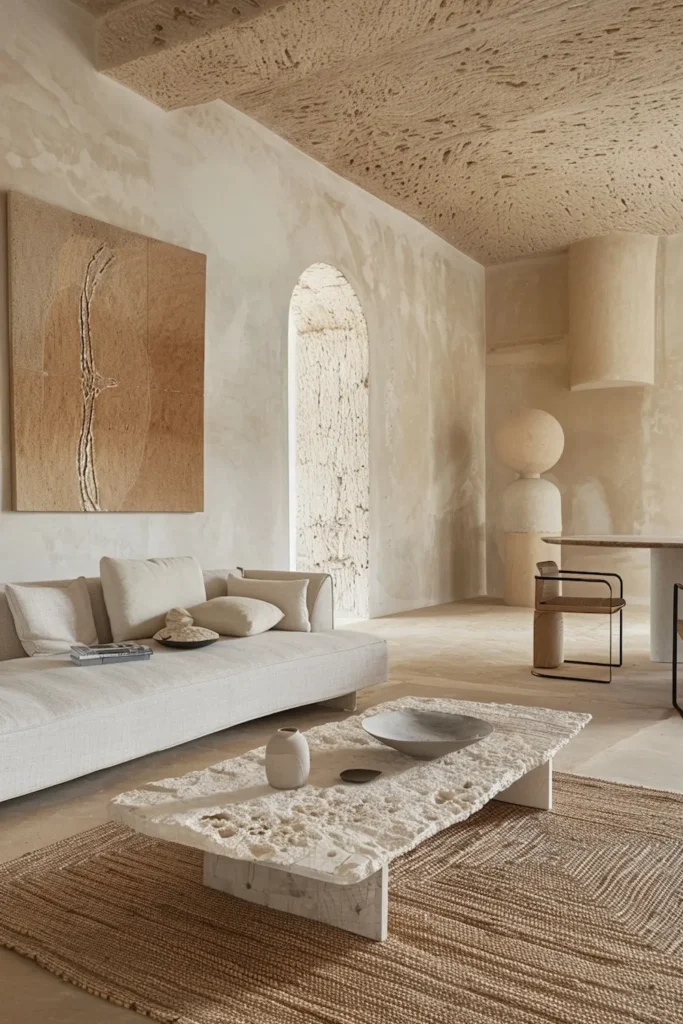
Weight as calm, structure without division
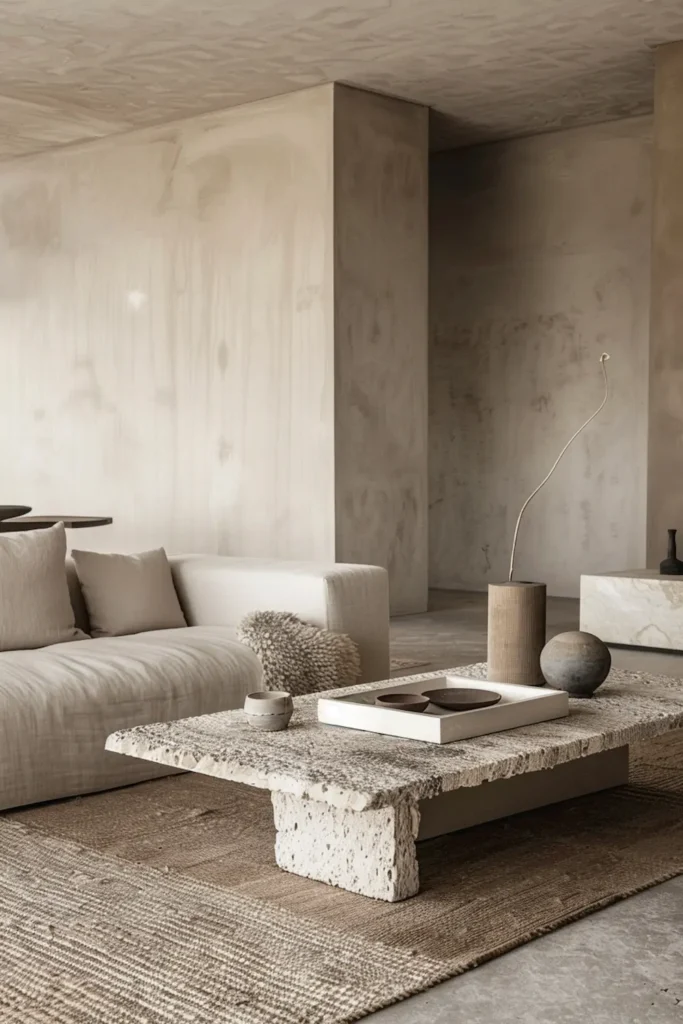
Stone & Soft Architecture is about using material weight to bring order into an open living space — not through separation, but through gravity. Where Warm Wood Continuity connects zones through repetition, this style introduces visual anchors that stabilize the space as a whole.
Within Crafted Minimalism, stone is never decorative. It functions as a grounding force. In an open living space, where sightlines are long and transitions are fluid, heavier materials prevent the interior from feeling unfinished or visually adrift. Stone, concrete, and mineral textures absorb attention and slow the eye down.
What makes this approach especially effective is the balance between solidity and softness. Architectural materials are paired with restrained forms and tactile accents, so the space feels calm rather than severe. Instead of dividing zones, stone elements quietly hold them together.
This style works particularly well in modern open plans, loft-like spaces, or homes with minimal architectural detail — places where structure needs to be introduced without adding walls.
Curated Product Selection (Shop the Look)
1. Sofita Marble Coffee Table
via Claude Home
Why this piece works:
In an open living space, you need at least one object that carries enough weight to visually anchor the seating area. This marble coffee table does exactly that. Its mass creates a clear center of gravity without relying on color or contrast.
I chose this piece because of its restrained geometry. Many marble tables lean sculptural or expressive, which can fragment an open plan by pulling focus too strongly. This table stays calm. The stone surface provides depth and permanence, allowing the surrounding furniture to remain soft and understated.
Importantly, this table replaces multiple decorative elements. Its material presence is enough — no styling required.
2. Sculptural Lighting (Trend Reference)
via The Zoe Report
Why this piece works:
Lighting is one of the most overlooked tools in open living spaces. In Stone & Soft Architecture, lighting doesn’t define zones — it softens transitions.
I included this reference because sculptural lighting works best when it diffuses light rather than directing it. In open plans, directional lighting can unintentionally divide areas. Sculptural, ambient fixtures allow light to spread evenly, reinforcing cohesion.
This type of lighting introduces vertical presence without visual weight, balancing the heaviness of stone below.
3. Concrete Tea Light Holder
via Sarus Originals
Why this piece works:
Small concrete objects echo larger stone elements at a human scale. This tea light holder reinforces the material language of the space without adding visual noise.
I chose this piece specifically because of its simplicity. Many concrete accessories are overly industrial or decorative. This one remains quiet — matte, tactile, and proportional.
Used alone or in a small group, it adds depth to surfaces without competing with the coffee table or furniture.
4. Stone Organizer Tray
Why this piece works:
In an open living space, clutter travels. Everyday items easily migrate across zones, breaking visual calm. This stone tray introduces contained order.
I chose this tray because it’s functional first and aesthetic second. Its weight keeps it grounded, while its neutral stone finish blends seamlessly into the material palette.
Instead of hiding objects away, it allows them to exist — but within boundaries. That’s essential in Crafted Minimalism.
Why This Style Works So Well in Open Living Spaces
- Stone introduces visual gravity without division
- Heavy materials stabilize long sightlines
- Fewer objects are needed to create structure
- Architecture is suggested, not imposed
Stone & Soft Architecture doesn’t fill an open living space — it holds it in place. Through weight, restraint, and material honesty, it brings clarity to openness without ever closing it off.
Style 3 — Japanese-Inspired Open Calm
Lowered visual weight, negative space, intentional breathing room
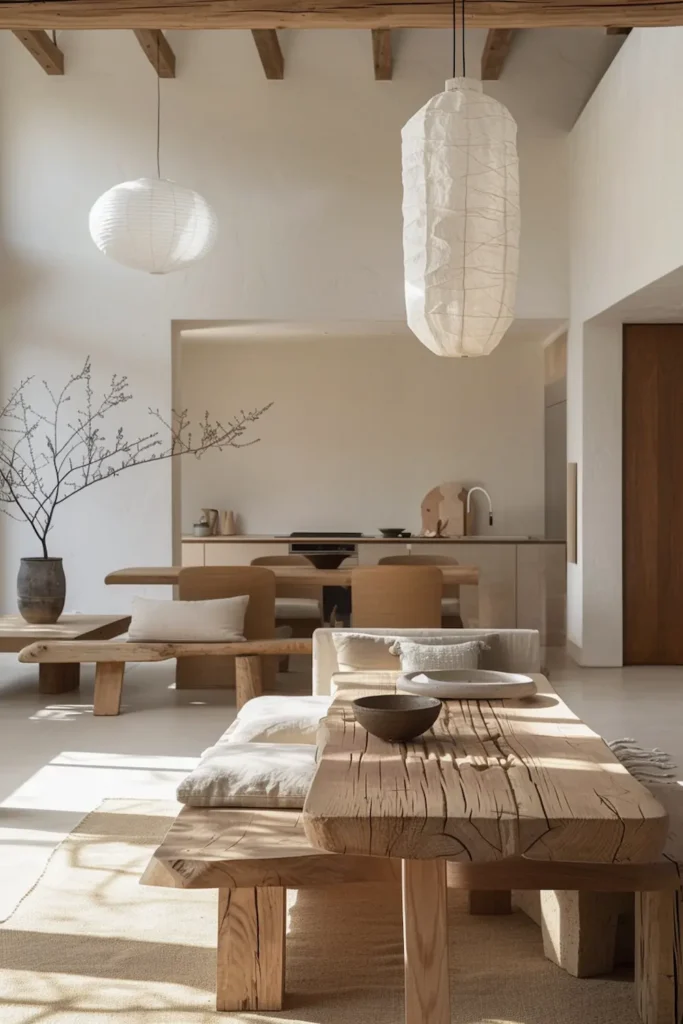
Japanese-Inspired Open Calm is built around one core idea: calm is created by what you leave out, not by what you add. In an open living space — where multiple functions share one visual field — this approach is especially powerful. Instead of structuring space through material weight or repetition, it structures it through absence, proportion, and lowered visual gravity.
Within Crafted Minimalism, this style is not about traditional Japanese aesthetics or literal references. It’s about applying the underlying logic: furniture sits lower, objects are fewer, and negative space is treated as a design element rather than leftover emptiness.
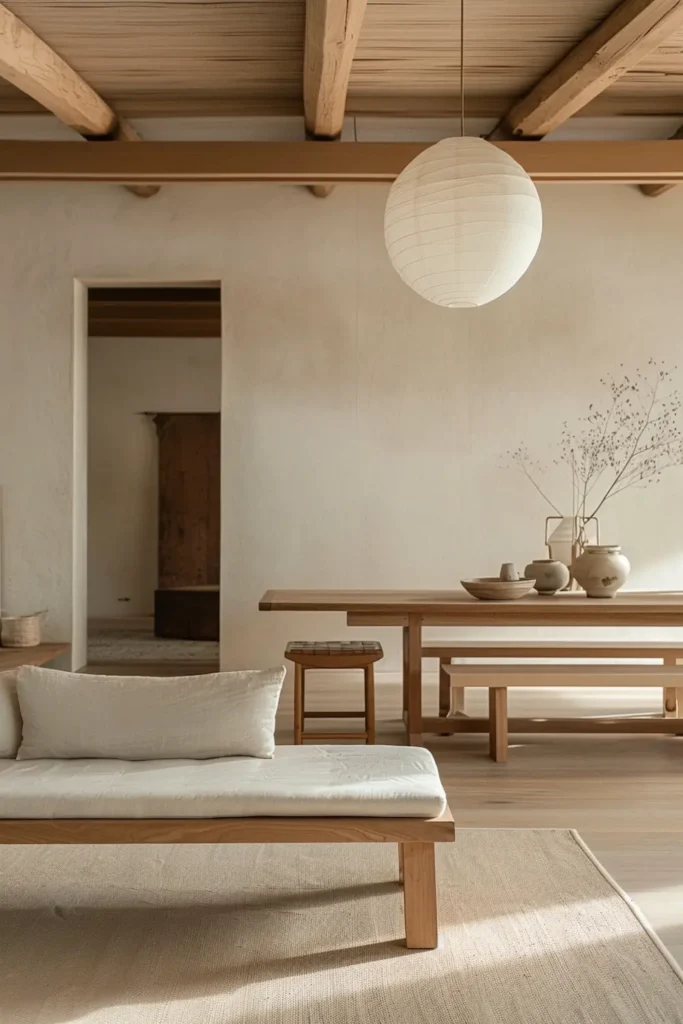
What makes this style so effective in open plans is that it protects sightlines. By keeping seating low and lighting soft, the eye can travel uninterrupted across the space. Zones exist, but they are suggested rather than defined. Nothing blocks the view, nothing demands attention.
This approach works particularly well in open living spaces that easily feel overstimulating — especially when living, dining, and working happen in one shared area. Instead of adding structure, Japanese-Inspired Open Calm removes friction.
Curated Product Selection (Shop the Look)
1. Float Lamp
via Studio Kaytar
Why this piece works:
In an open living space, vertical elements can easily interrupt flow. This floor lamp avoids that by creating light without visual interruption. Its floating form adds presence while remaining visually light.
I chose this piece because it introduces height without mass. Many floor lamps visually divide a space by creating strong vertical lines. This one does the opposite — it diffuses light gently, reinforcing openness instead of segmentation.
It replaces the need for multiple light sources by softening the entire area rather than spotlighting a zone.
Lighting in open spaces needs careful thought. How Light Shapes Crafted Minimalism explores how to use it to connect zones rather than divide them.
2. Minimal Boho Dining Influence
via MarbleWish
Why this piece works:
While this is an inspiration reference rather than a single product, it represents an important principle: softness through texture, not decoration.
I included this because open living spaces often struggle at the dining boundary. Subtle woven materials — light wood, natural fibers — allow the dining area to exist without asserting itself visually.
This approach avoids chairs or tables that visually “cut” the space, keeping transitions fluid and calm.
3. The Muir Sofa
via Maiden Home
Why this piece works:
Low seating is essential in this style. This sofa works because it anchors the living zone while keeping sightlines open across the room.
I chose this sofa specifically for its horizontal emphasis. Many sofas dominate open plans by being too tall or bulky. This one spreads visually rather than rising, stabilizing the space without enclosing it.
It replaces the need for additional chairs or ottomans by offering generous seating in a single, calm form.
4. Japanese Lantern Pendant
Why this piece works:
Lighting in Japanese-Inspired Open Calm should never define borders. This lantern pendant diffuses light softly across zones, reinforcing cohesion instead of separation.
I chose this piece because it avoids hard edges and directional glare. In open spaces, sharp lighting creates unintended divisions. This lantern keeps the atmosphere even and balanced.
Hung centrally, it supports the entire space rather than serving one area.
Why This Style Works So Well in Open Living Spaces
- Low furniture preserves long sightlines
- Negative space reduces sensory overload
- Soft lighting connects zones emotionally
- Fewer objects result in stronger calm
Japanese-Inspired Open Calm doesn’t try to organize an open living space.
It lets the space organize itself, by removing obstacles, lowering visual weight, and allowing air, light, and proportion to do the work.
Style 4 — Vintage European Flow
Patina as structure, character without clutter, continuity through age
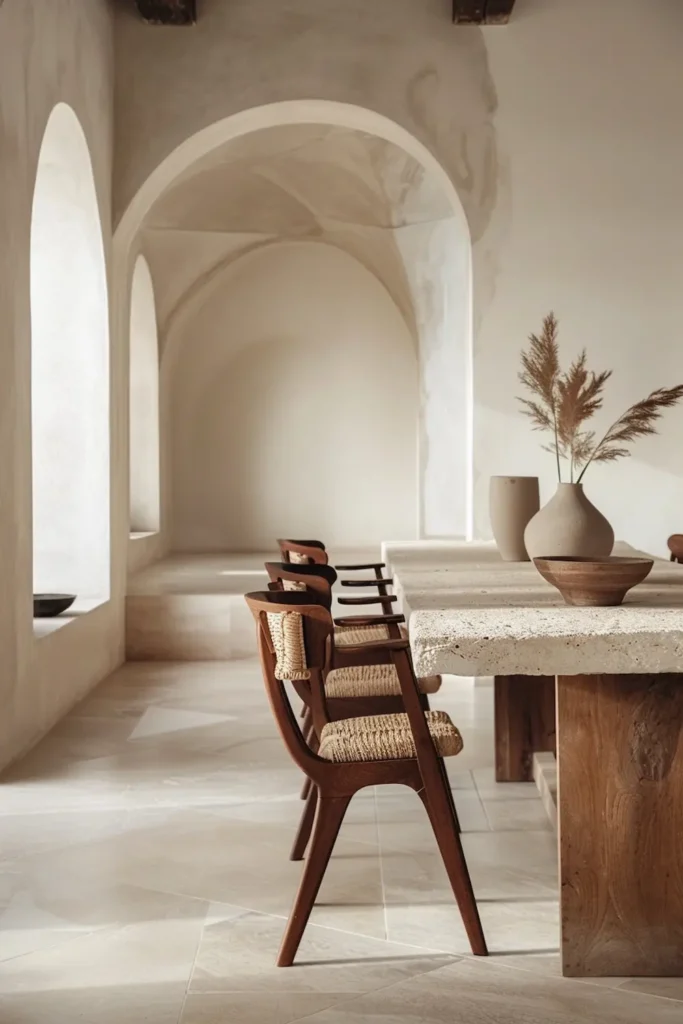
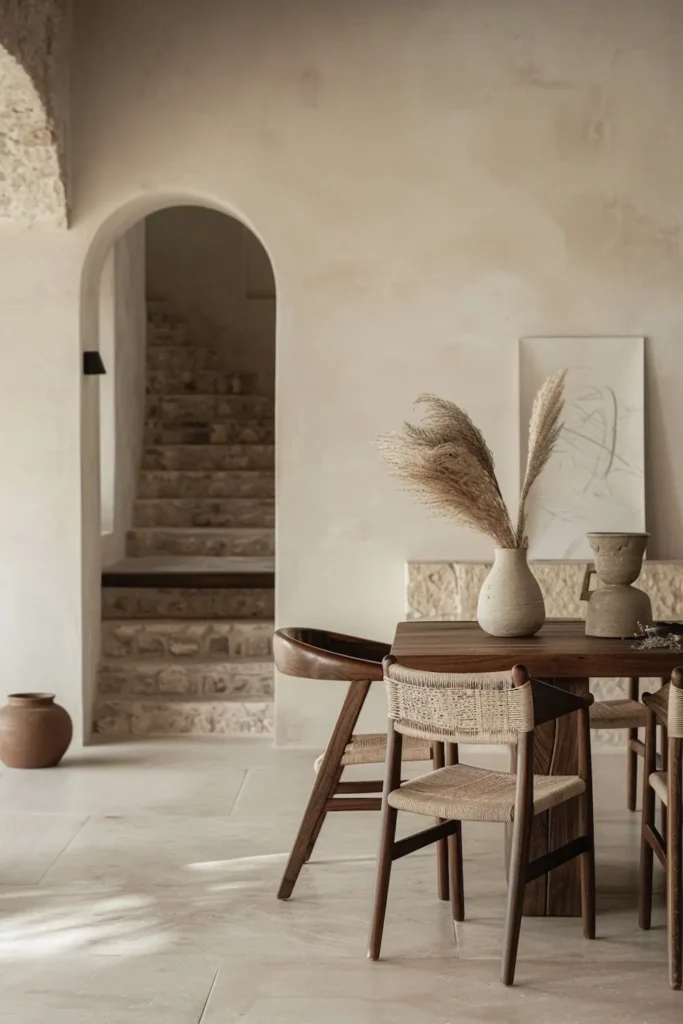
Vintage European Flow brings cohesion to an open living space not by repetition or weight, but by shared age and material memory. Instead of matching finishes or forms, this style connects zones through surfaces and objects that feel lived-in, time-softened, and emotionally grounded.
Within Crafted Minimalism, this is the style where patina replaces decoration. Wood shows wear, stone feels matte rather than polished, and walls become material surfaces instead of neutral backdrops. In an open living space, this creates a quiet continuity — the eye understands that everything belongs to the same story, even when functions differ.
What makes this approach particularly effective in open layouts is that character carries the space. You don’t need many objects. One chair with history, one textured wall finish, or one grounding surface can hold an entire zone. This reduces visual noise while increasing depth.
Vintage European Flow works especially well in open living spaces that risk feeling too clean or undefined — new builds, large apartments, or open plans where warmth needs to be introduced without adding layers of decor.
Curated Product Selection (Shop the Look)
1. J.L. Møller Model 55 Chair
via Artilleriet
Why this piece works:
In an open living space, one well-chosen chair can do more than a full seating set. This chair works because it carries presence through proportion and craft, not size.
I chose this piece because the woven rope seat introduces texture without bulk, while the walnut frame adds warmth and visual gravity. Many vintage-style chairs lean decorative or fragile; this one feels functional and grounded. It can sit at a dining table, against a wall, or slightly angled in the living zone — always contributing, never floating.
It replaces the need for accent chairs, decorative stools, or layered styling. One piece, clearly intentional.
2. Ceramic Floral Vase
Why this piece works:
Ceramics in this style should feel familiar, not curated. This vase introduces softness and human scale into an open living space dominated by larger surfaces.
I selected this piece because of its restrained form and matte finish. Glossy or sculptural vases draw attention; this one absorbs it. In an open plan, that matters — the object supports the atmosphere without creating a visual stop.
Used with simple flowers or left empty, it adds life without becoming decor.
3. Concrete-Effect Floor Tiles
Why this piece works:
Flooring is one of the most overlooked tools in open living spaces. These tiles work because they connect every zone physically and visually.
I chose this finish because concrete-effect surfaces provide weight without shine. Glossy floors reflect light unevenly across open plans, creating visual disruption. This matte surface grounds the space and allows furniture and objects to sit quietly on top of it.
It replaces the need for rugs to define zones — the continuity becomes the structure.
4. Roman Clay Wall Finish
via Portola Paints
Why this piece works:
Walls are often treated as neutral backdrops in open spaces. Roman clay changes that by turning walls into material participants.
I chose this finish because its subtle texture adds depth without pattern or color contrast. In an open living space, textured walls prevent the room from feeling flat without introducing visual clutter.
This surface replaces artwork, wall decor, and accent paint. One material choice does the work of many objects — exactly the logic of Crafted Minimalism.
Why This Style Works So Well in Open Living Spaces
- Patina creates cohesion without repetition
- Fewer objects carry more emotional weight
- Material surfaces replace decorative layers
- The space feels settled rather than styled
Vintage European Flow doesn’t try to organize openness.
It anchors it through time, texture, and restraint, allowing an open living space to feel complete without ever feeling finished.
How to Zone an Open Living Space Without Walls
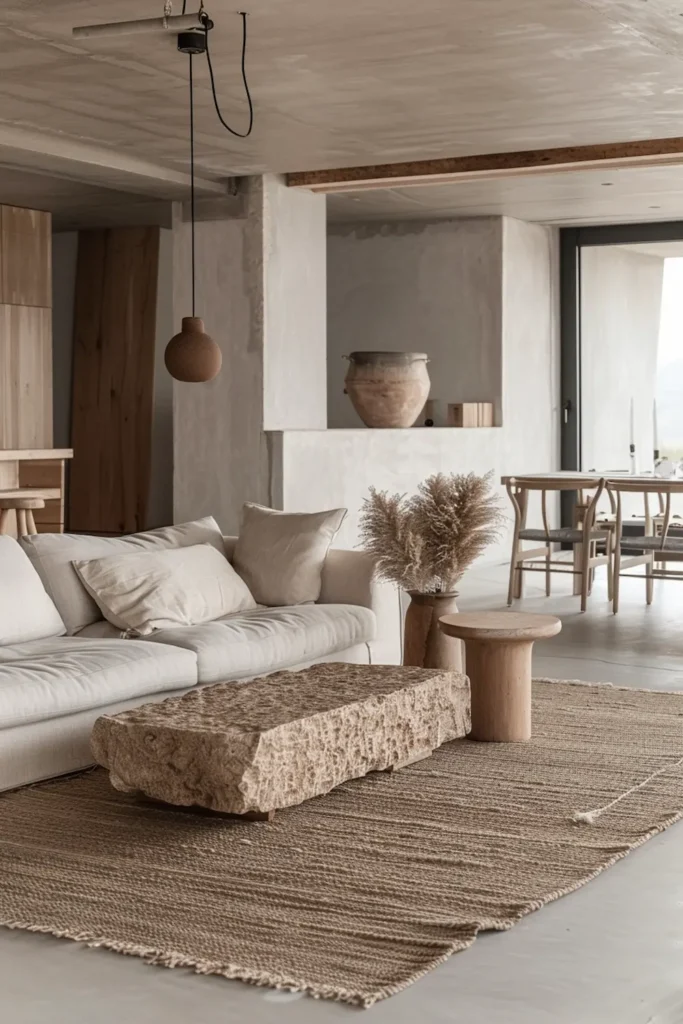
Zoning in an open living space isn’t about creating separation — it’s about introducing clarity without interruption. In Crafted Minimalism, zones are suggested through placement, material, and repetition rather than physical barriers.
Furniture acts as the primary boundary.
A sofa doesn’t just provide seating; it establishes the edge of the living area. A dining table anchors the eating zone through weight and proportion. When furniture is placed with intention, it naturally defines function without cutting the space apart.
Rugs create zones without enclosure.
A rug under the seating area visually slows the eye, signaling a shift in purpose while keeping the floor continuous. In open spaces, rugs should feel grounded and restrained — more about texture and scale than pattern.
Material changes work better than dividers.
Instead of screens or shelving units, subtle material shifts do the work. A stone coffee table against a wood-dominant space, or a woven textile near seating, marks transition without stopping flow.
Repetition creates cohesion.
When the same wood tone, stone finish, or textile texture appears across zones, the space reads as one environment. This repetition is what allows openness to feel calm rather than chaotic.
In an open living space, zoning succeeds not by dividing — but by guiding.
Common Mistakes in Open Living Spaces
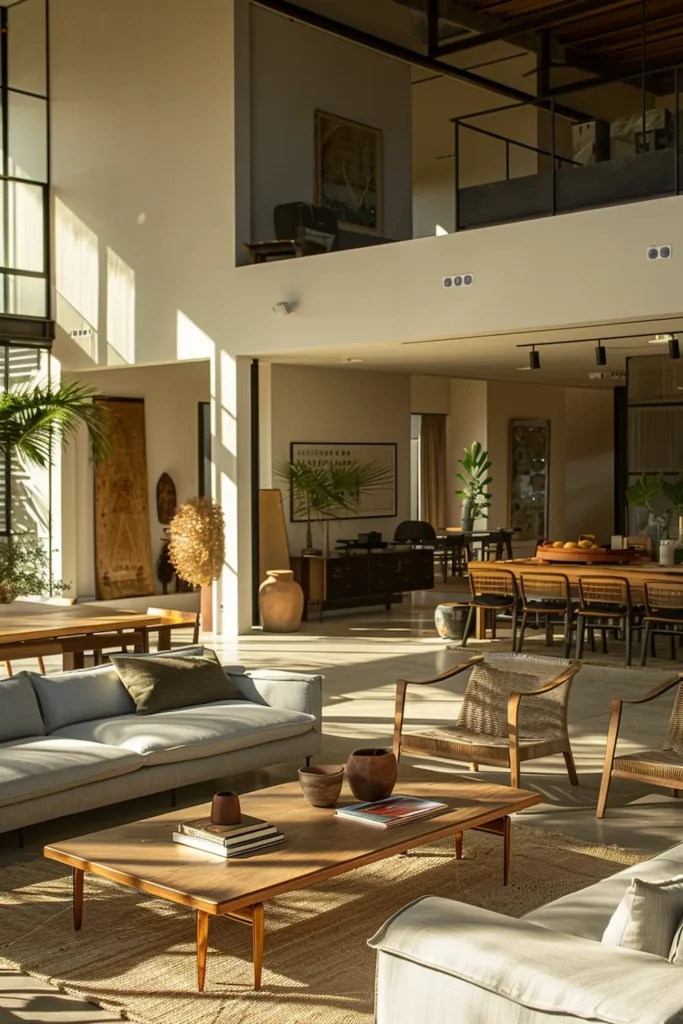
Even well-intended open interiors often lose their calm through a few recurring mistakes.
Combining too many styles.
Open spaces amplify inconsistency. Mixing multiple aesthetics fragments the visual field, making the space feel unsettled rather than layered. One clear direction always works better than variety.
Using loose furniture without anchors.
Small tables, scattered chairs, and lightweight pieces drift visually in open plans. Without at least one grounding element per zone, the space lacks structure.
Pushing everything against the walls.
This leaves the center undefined and makes zones blur unintentionally. Furniture should create internal structure, not orbit the perimeter.
Relying on decoration instead of materials.
Decor objects add noise quickly in open layouts. Materials — wood, stone, textiles — should carry the atmosphere. Decoration becomes optional when materials do the work.
Most open-plan issues aren’t about lack of space, but lack of intention.
Texture is one of the fastest ways to introduce visual noise in an open space. Using Texture Without Clutter helps you draw that line clearly.
Closing Thoughts
Open living spaces don’t need more objects — they need clear decisions.
Without walls, every choice carries more weight. Materials repeat, furniture anchors, and negative space becomes just as important as what fills it.
Crafted Minimalism offers structure without enclosure. Through restraint, material honesty, and intentional placement, it turns openness into calm rather than chaos.
If you want to explore how these principles translate across different rooms, start with Crafted Minimalism by Room Overview. For deeper guidance on seating, layout, and anchoring zones, Crafted Minimalism Living Room expands on the ideas used throughout this article.
In an open space, intention matters more than square meters.