5 Wall Art Styles That Elevate Crafted Minimalism (With Shop the Look)
Why Wall Art Feels Different in Crafted Minimalism
In most interiors, wall art is treated as the final layer — something you add once everything else is in place. A way to fill empty walls, bring in color, or make a space feel “finished.” But in Crafted Minimalism, wall art plays a completely different role.
It isn’t decoration. It’s structure.
Instead of acting as an extra, wall art becomes an extension of the materials already present in the room. A plaster piece echoes the wall itself. A wooden panel reinforces the warmth of the furniture. A ceramic object adds depth in the same way a sculptural element would. The result is subtle, but powerful: the space feels intentional, grounded, and calm.
This also means that less truly becomes more. One carefully chosen piece can carry the entire wall, while multiple smaller artworks often dilute the effect. The focus shifts from filling space to creating presence.
What makes this approach so effective is how it works with light, texture, and scale. A single artwork can change how shadows fall, how surfaces feel, and how your eye moves through the room — without ever overwhelming it.
In this article, you’ll discover five wall art styles that perfectly align with Crafted Minimalism, each with a distinct material story and a curated “shop the look” approach so you can recreate the feeling in your own space.
What Makes Wall Art “Crafted Minimalist”?

Not all minimal wall art fits within the world of Crafted Minimalism. In fact, many pieces that are labeled “minimalist” feel too flat, too perfect, or too disconnected from the space they’re placed in. Crafted Minimalist wall art follows a different set of rules — ones that are less about aesthetics alone, and more about material presence.
The first thing to look at is texture. In this style, texture often matters more than the image itself. A piece should catch light, create subtle shadows, and reveal depth as you move through the space. This is why materials like plaster, linen, clay, and raw wood work so well — they bring a tactile quality that printed posters simply can’t replicate.
There’s also a sense of imperfection that defines this look. Clean lines are still present, but they’re softened by irregularities: uneven edges, visible brush strokes, or natural grain patterns. This gives the artwork a quiet authenticity, making it feel like it belongs in the space rather than sitting on top of it.
Color plays a supporting role. Instead of bold contrasts, you’ll typically see tonal palettes — warm beiges, soft browns, muted greys, and earthy undertones. This keeps the focus on form and material, rather than pulling attention outward.
Finally, scale is key. Crafted Minimalist interiors often rely on fewer pieces, which means each one needs to carry more visual weight. Choosing artwork that’s slightly larger than you’re comfortable with usually creates the right balance.
If a piece feels calm, tactile, and grounded in material, you’re on the right track.
Style 1: Textured Plaster & Limewash Art
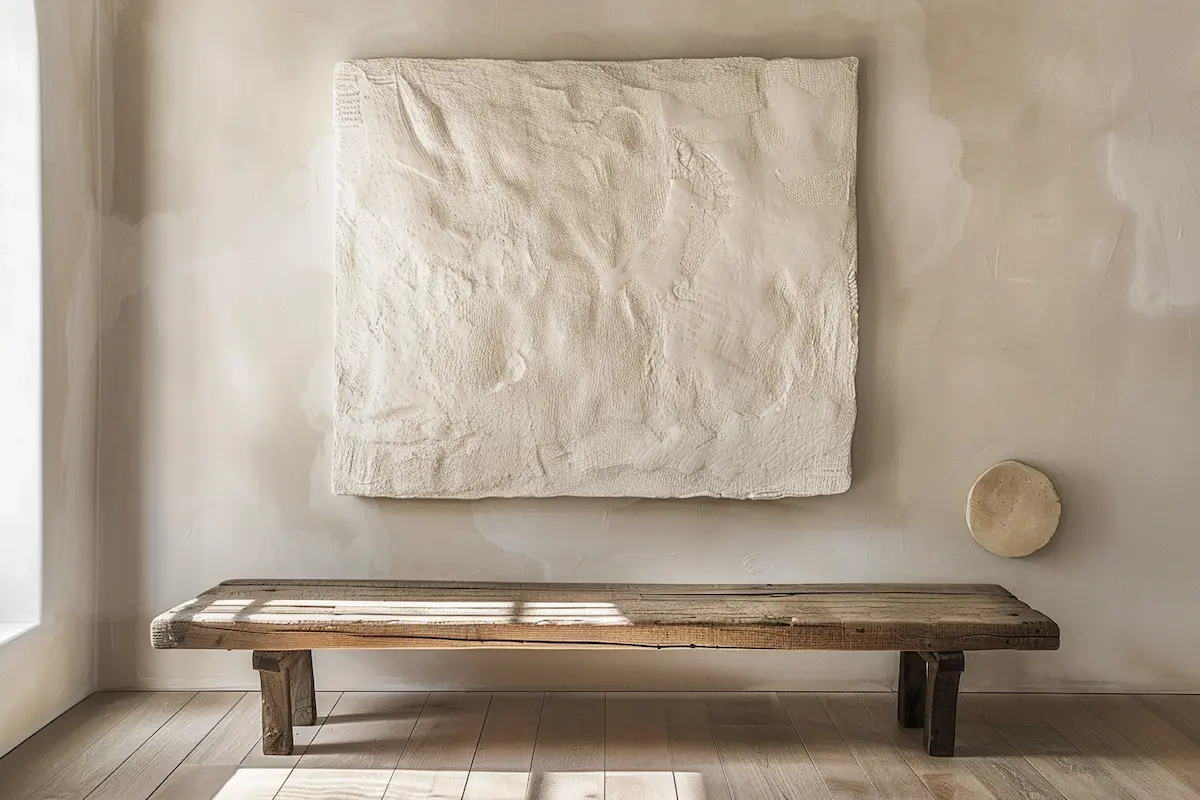
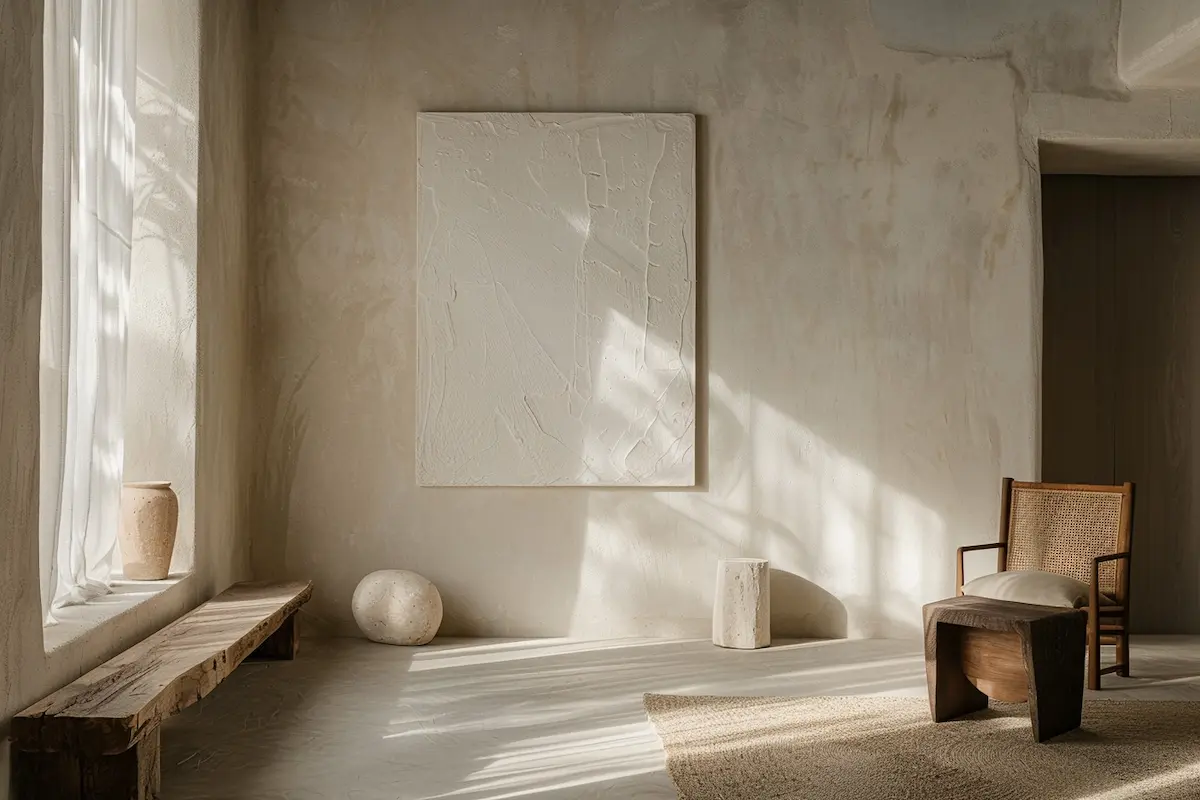
If there’s one wall art style that perfectly captures the essence of Crafted Minimalism, it’s textured plaster and limewash art. These pieces don’t just hang on the wall — they feel like a natural extension of it.
What makes this style so powerful is its subtlety. At first glance, it may look simple or even understated. But as light moves across the surface, the texture begins to reveal itself: soft variations, gentle cracks, layered brush strokes. This interaction with light creates a quiet depth that changes throughout the day, giving the space a sense of movement without adding visual noise.
This is exactly why plaster art works so well in calm, tonal interiors. Instead of introducing contrast, it builds on what’s already there. A beige-on-beige palette might sound flat, but with the right texture, it becomes rich and dimensional. It’s not about adding more — it’s about adding the right kind of detail.
Another reason this style stands out is its imperfect finish. Unlike printed artwork, no two plaster pieces are exactly the same. Slight irregularities in texture or color make it feel more organic, which aligns perfectly with the crafted, tactile nature of the space.
When choosing a piece, scale matters. This style works best when it’s large enough to anchor the wall — think above a sofa, a bed, or a low console. Smaller pieces often lose their impact, while one oversized artwork creates that calm, grounded focal point you’re looking for.
A piece like this 3D Textured Plaster Art Canvas Boho is a perfect example. The soft tonal layering and handcrafted texture allow it to merge effortlessly with the wall, while still adding subtle depth. It doesn’t compete with the space — it completes it, making it ideal as a calm but defining focal point in a crafted minimalist interior.
Why I recommend this style:
It’s one of the easiest ways to add depth without disrupting the calm. It blends in, yet elevates everything around it.
Style 2: Raw Wood Wall Panels

Raw wood wall art brings something into a space that no print or canvas ever truly can: weight. Not just physical weight, but visual and emotional presence. It immediately grounds a room and connects it back to one of the core materials of Crafted Minimalism — wood in its most honest form.
What makes this style so effective is the natural variation in the material. No two panels are the same. Grain patterns, knots, subtle color shifts — they all contribute to a layered look that feels rich without being overwhelming. This kind of detail doesn’t scream for attention, but it keeps your eye engaged in a quiet, almost meditative way.
Unlike more polished or treated finishes, raw or reclaimed wood has a slightly imperfect quality. Edges might feel less defined, surfaces less uniform. And that’s exactly the point. It introduces a sense of authenticity that aligns with the “crafted” aspect of the style — something that feels made, not manufactured.
This type of wall art works especially well in spaces that already feature wood in furniture or flooring. Instead of adding contrast, it reinforces a cohesive material story. Think of a low wooden console, a linen sofa, and then a wooden wall panel above it — everything speaks the same language, just in different forms.
You can also play with shape here. Some pieces are clean and rectangular, while others lean more sculptural or organic. Both can work, as long as the finish remains calm and the tones stay within a natural range.
A piece like this Reclaimed Wood Mosaic Wall Art Handmade shows exactly why raw wood works so well in this style. The variation in tone and grain creates natural depth, while the mosaic structure adds just enough visual interest without breaking the calm. It feels substantial and grounded — the kind of piece that quietly anchors the entire wall.
Why I recommend this style:
It adds warmth and depth in the most natural way possible, without introducing visual clutter. If your space feels a bit too “flat,” this is often the missing layer.
Style 3: Minimalist Line Art on Natural Canvas

Minimalist line art introduces a slightly more graphic element into a Crafted Minimalist interior — but when done right, it never feels harsh or overpowering. The key difference lies in the material and execution. Instead of sharp black prints on bright white paper, this style works best when softened through natural textures and muted tones.
Think of line art on linen or raw cotton canvas, where the background isn’t perfectly flat, and the lines aren’t overly crisp. The result feels warmer, more integrated into the space, and far less “designed” in the traditional sense. It keeps the simplicity of minimal art, but adds just enough imperfection to align with the crafted aesthetic.
This style is especially effective if your interior already leans light and neutral, but you still want a subtle focal point. The gentle contrast of a soft brown or charcoal line against a textured canvas draws the eye without disrupting the calm. It creates structure, but in a very restrained way.
Composition also plays an important role here. A single oversized piece often works better than multiple smaller ones, as it maintains that sense of quiet confidence. However, a carefully balanced duo can also work — as long as spacing and scale are intentional.
Compared to more tactile styles like plaster or wood, this approach feels slightly lighter and more refined. It doesn’t rely on depth as much, but rather on composition and negative space.
A piece like this Noé & Noah Combi shows how line art can feel soft instead of graphic. The warm, muted tones and natural canvas texture take away the harshness you often see in black-and-white prints, making it blend effortlessly into a calm interior while still adding just enough definition to the wall.
Why I recommend this style:
It’s perfect when you want a bit more definition on your walls, without losing the softness and calm that define Crafted Minimalism.
Style 4: Wabi-Sabi Ceramic Wall Pieces

Wabi-sabi ceramic wall art shifts the focus from image to object. These pieces aren’t just something you look at — they exist in the space almost like small sculptures mounted on the wall. That subtle difference completely changes the feel of a room.
What makes ceramic wall pieces so powerful within Crafted Minimalism is their imperfect nature. Uneven edges, slight warping, visible fingerprints or glaze variations — these details create a sense of authenticity that perfectly aligns with the “crafted” philosophy. Nothing feels mass-produced or overly polished, and that’s exactly why it works.
Another key element is how these pieces interact with light. Unlike flat artwork, ceramics cast soft shadows that change throughout the day. This adds a layer of depth that isn’t immediately obvious, but becomes more noticeable the longer you’re in the space. It’s a quiet kind of richness — one that doesn’t rely on color or contrast.
Because these pieces already have so much presence, restraint is important. In many cases, a single ceramic object is enough to anchor a wall. Alternatively, a small, asymmetrical grouping can work beautifully, as long as there’s enough breathing room around it. Overstyling quickly takes away the calm and makes it feel cluttered.
This style works especially well in interiors that already feature natural materials like wood, linen, or stone. The matte, earthy quality of ceramics ties everything together without introducing anything that feels out of place.
A piece like this Shell Wall Piece captures that sculptural, wabi-sabi feel perfectly. The organic shape and soft, imperfect finish give it a quiet presence, while the way it interacts with light and shadow adds depth that flat artwork simply can’t achieve. It feels less like decoration and more like a natural extension of the space.
Why I recommend this style:
It brings a sculptural, almost gallery-like quality into your home — without losing the warmth and softness that define Crafted Minimalism.
Style 5: Oversized Neutral Photography (Muted & Grainy)
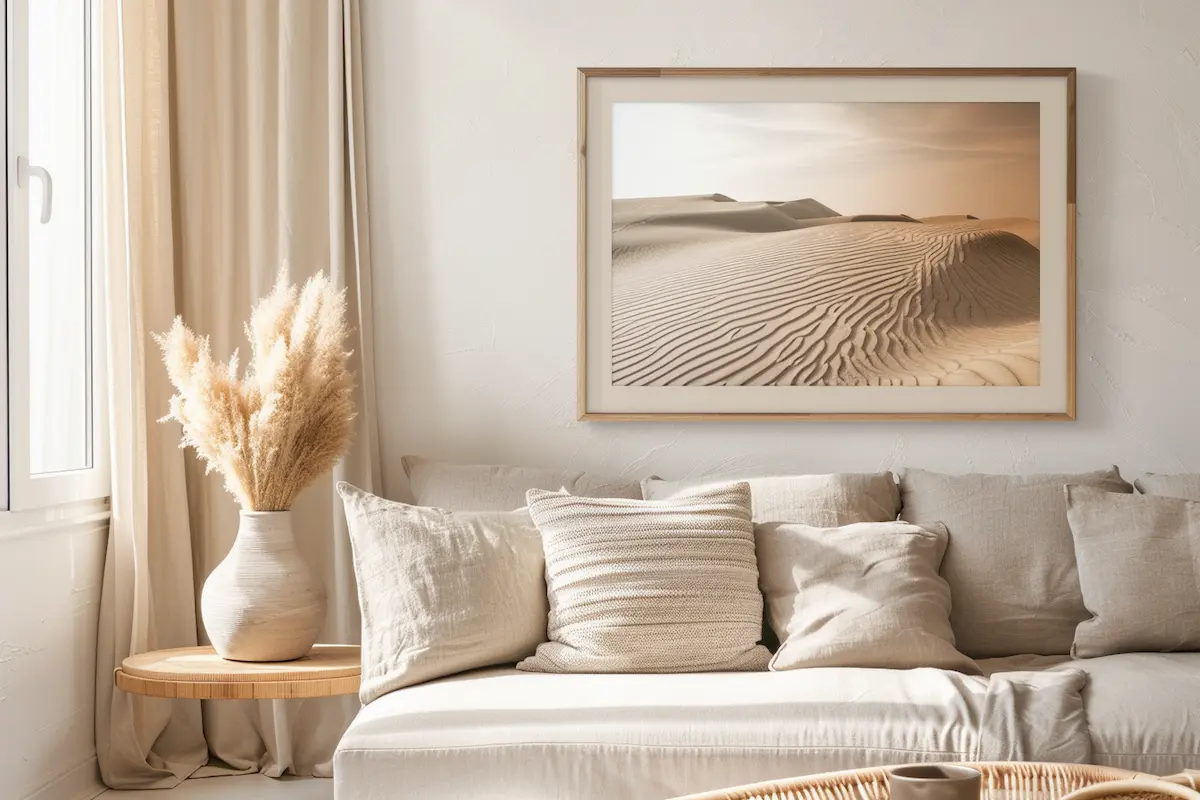
Oversized photography might seem like a more modern or editorial choice, but when approached the right way, it fits seamlessly within Crafted Minimalism. The key lies in restraint — both in color and composition.
Instead of sharp, high-contrast images, this style works best with muted, almost faded photography. Think soft desert landscapes, quiet architectural details, or abstract natural scenes. The tones are gentle, often leaning toward warm neutrals, dusty browns, and subtle greys. Nothing feels overly crisp or saturated.
What sets this apart from typical wall prints is the atmosphere. A slight grain or film-like texture softens the image, making it feel less digital and more tactile. It almost mimics the imperfection you’d find in natural materials, which is why it integrates so well into a crafted space.
Scale plays a huge role here. These pieces are meant to be large — often wide enough to anchor a sofa or span a significant portion of the wall. The size allows the image to breathe and creates a calm focal point without needing additional styling around it.
Framing should stay minimal. Thin wood frames or even frameless mounting work best, keeping the focus on the image while still tying into the material palette of the room.
This style is ideal if you want to introduce a sense of place or subtle storytelling into your interior, without disrupting the overall calm. It adds depth, but in a more visual and atmospheric way compared to material-driven pieces.
A piece like this SIGNLEADER Southwest Landscape Photography Wall Art shows how powerful muted photography can be at a larger scale. The soft desert tones and subtle grain create a calm, atmospheric feel, while the wide composition makes it strong enough to anchor an entire wall without needing anything else around it.
Why I recommend this style:
It brings in softness and narrative, while still respecting the quiet, grounded feeling that defines Crafted Minimalism.
How to Choose the Right Wall Art for Your Space
Choosing the right wall art in a Crafted Minimalist interior isn’t about what you like in isolation — it’s about what your space needs. The most successful pieces don’t stand apart from the room; they feel like a natural continuation of it.
A good starting point is your material palette. Look at what’s already present: wood tones, fabrics, wall finishes. If your space leans warm and tactile, something like wood or ceramic will reinforce that feeling. If it feels light and soft, plaster or linen-based art will blend more seamlessly. The goal is cohesion, not contrast.
Next comes scale. One of the most common mistakes is choosing artwork that’s too small. In this style, a single larger piece often creates more calm than multiple smaller ones. It gives the eye a clear place to rest and avoids visual fragmentation.
It also helps to choose one dominant direction. Mixing too many styles — for example combining graphic line art with heavy wood panels — can break the quiet balance you’re trying to create. Instead, let one material or aesthetic lead, and keep everything else supportive.
Finally, don’t underestimate empty space. A wall doesn’t need to be filled to feel complete. In fact, leaving parts of it untouched often makes the artwork you do choose feel stronger and more intentional.
Common Mistakes with Wall Art in Crafted Minimalism
Even though Crafted Minimalism is all about simplicity, wall art is often where things go wrong. Small decisions can quickly disrupt the calm, especially when the focus shifts from intention to decoration.
One of the most common mistakes is choosing artwork that’s too small. A piece that doesn’t carry enough visual weight gets lost on the wall, making the space feel unfinished rather than minimal. In this style, it’s almost always better to go slightly bigger than you think.
Another mistake is mixing too many styles. Combining different types of wall art — like graphic prints, wood panels, and ceramics — can create visual tension instead of harmony. Crafted Minimalism relies on consistency, where materials and textures support each other rather than compete.
There’s also the tendency to choose pieces that are too “perfect.” Flat prints with sharp lines and no texture often feel disconnected from the rest of the space. They lack the depth and tactility that define this aesthetic.
Finally, overfilling the wall is a common trap. Adding multiple pieces to “complete” the space usually does the opposite. The wall loses its breathing room, and the artwork loses its impact.
Conclusion: Let Your Walls Breathe
In Crafted Minimalism, wall art isn’t about filling space — it’s about defining it. The right piece doesn’t compete for attention; it quietly anchors the room and enhances everything around it.
Whether you choose textured plaster, raw wood, soft line art, ceramic sculpture, or muted photography, the principle stays the same: fewer pieces, more intention. When you focus on material, scale, and subtle depth, even a single artwork can completely transform how a space feels.
Instead of asking what your wall is missing, start asking what it already has — and choose a piece that builds on that.