
How to Choose Lighting in Crafted Minimalism (5 Styles You Can Actually Shop)
Why Lighting Is the Soul of Crafted Minimalism
In most interiors, lighting is treated as a finishing touch — something you add once everything else is in place. In Crafted Minimalism, it works the other way around. Lighting is not decoration. It’s structure.
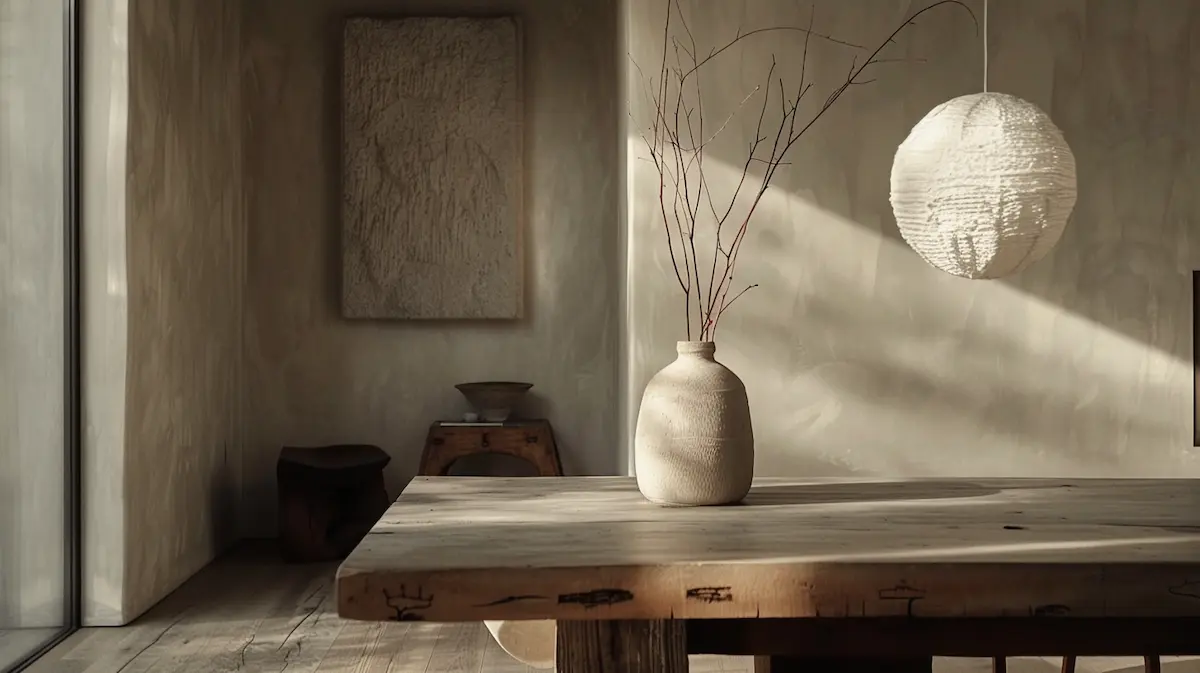
The way light interacts with materials — wood, linen, ceramic, stone — is what gives this style its depth. Without the right lighting, even the most beautiful materials fall flat. With the right lighting, a simple space suddenly feels layered, calm, and intentional.
What makes this approach different from standard minimalism is that light is allowed to be visible. Lamps are not hidden or purely functional. They act as sculptural objects that carry weight in the room, both visually and atmospherically.
Instead of relying on multiple small light sources, Crafted Minimalism focuses on fewer, stronger choices. Each lamp contributes to the mood, the material story, and the overall composition of the space.
If you want to understand the philosophy behind this in more depth, I recommend reading → How Light Shapes Crafted Minimalism.
In this guide, I’ll show you five lighting styles that don’t just illuminate a space — they define it.
Disclaimer: This post may contain affiliate links. That means if you click and purchase through one of these links, we may earn a small commission — at no extra cost to you. As an Etsy affiliate and Amazon Associate, I earn from qualifying purchases. We only recommend products we truly love or believe fit the style of our AI-generated designs.
What Defines Crafted Minimalist Lighting?
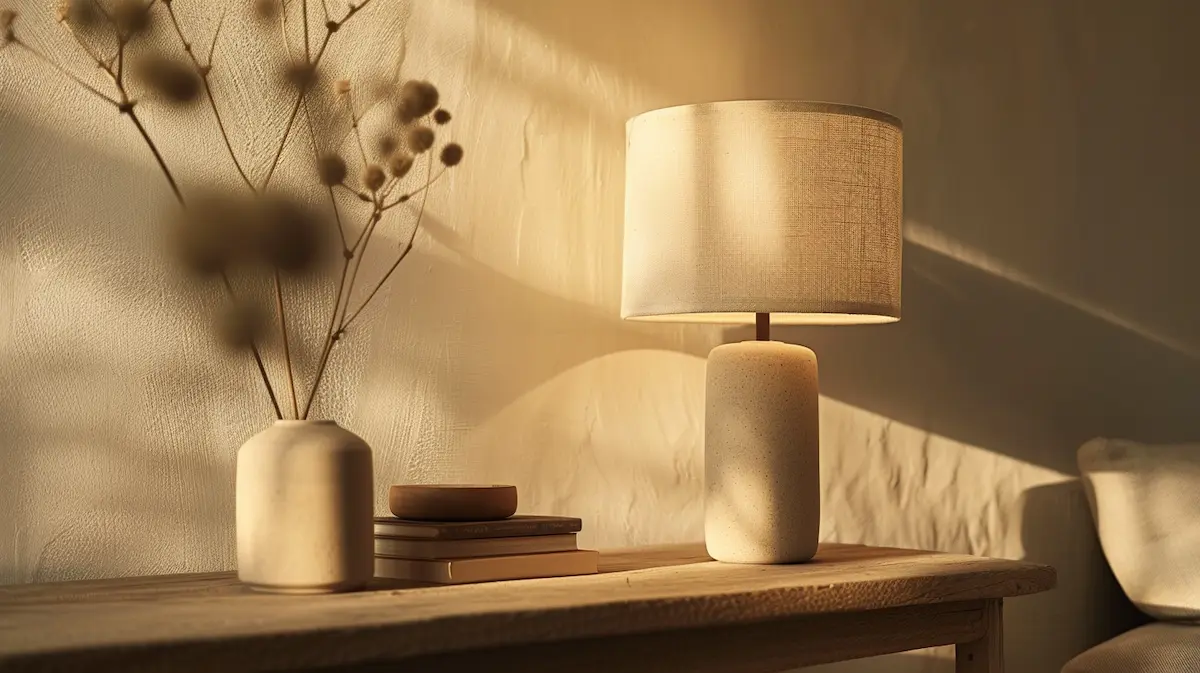
Crafted Minimalist lighting is not about brightness — it’s about presence. Instead of flooding a space with light, it carefully shapes how light exists within the room.
The first defining element is materiality. Light is never separated from the object that produces it. A ceramic base, a linen shade, a carved wooden structure — these materials don’t just hold the light, they soften, filter, and transform it. The result is a glow that feels warm, tactile, and grounded.
The second element is light quality. Harsh, white lighting has no place here. Crafted Minimalism favors warm tones with subtle diffusion, allowing shadows to exist. These soft shadows create depth, making even the simplest space feel layered and calm.
Third is form. Lighting is treated as a sculptural object. This doesn’t mean bold or oversized — it means intentional. A lamp should have a clear shape, a sense of weight, and a visual role in the space. It should feel like it belongs, even when turned off.
Finally, there is restraint. Instead of multiple light sources competing for attention, each lamp is chosen with purpose. Often, one strong piece does more for a space than several smaller ones ever could.
This is what defines Crafted Minimalist lighting: fewer elements, but each one matters.
How to Choose the Right Lighting for Your Space

Start with function. Ask yourself what the space needs to feel like. Is it a place to unwind, to focus, or to gather? In most cases, you’ll lean toward ambient lighting that creates warmth rather than harsh functional brightness. Task lighting can exist, but it should still align with the overall mood.
Choosing lighting in Crafted Minimalism isn’t about filling a room with enough light — it’s about making a few intentional decisions that shape the entire atmosphere.
Next, limit the number of light sources. In this style, 2 to 3 carefully chosen lamps per space is often enough. This forces you to choose pieces that actually matter, instead of relying on quantity.
Then look at material consistency. Your lighting should echo the materials already present in the room. If your space features wood and linen, choose lamps that reinforce that story. If stone or plaster dominates, let your lighting reflect that same tactile quality. This creates visual calm without needing extra decoration.
Think in layers — but keep them subtle. A combination of:
- one ambient light
- one accent or sculptural piece
- optional soft secondary light
is more than enough.
Most importantly, choose lighting that can stand on its own. Each piece should feel intentional, even when it’s the only light turned on.
Instead of mixing randomly, the styles below will help you choose a clear direction.
Style 1 — Raw Ceramic Lighting (Earthy & Imperfect)
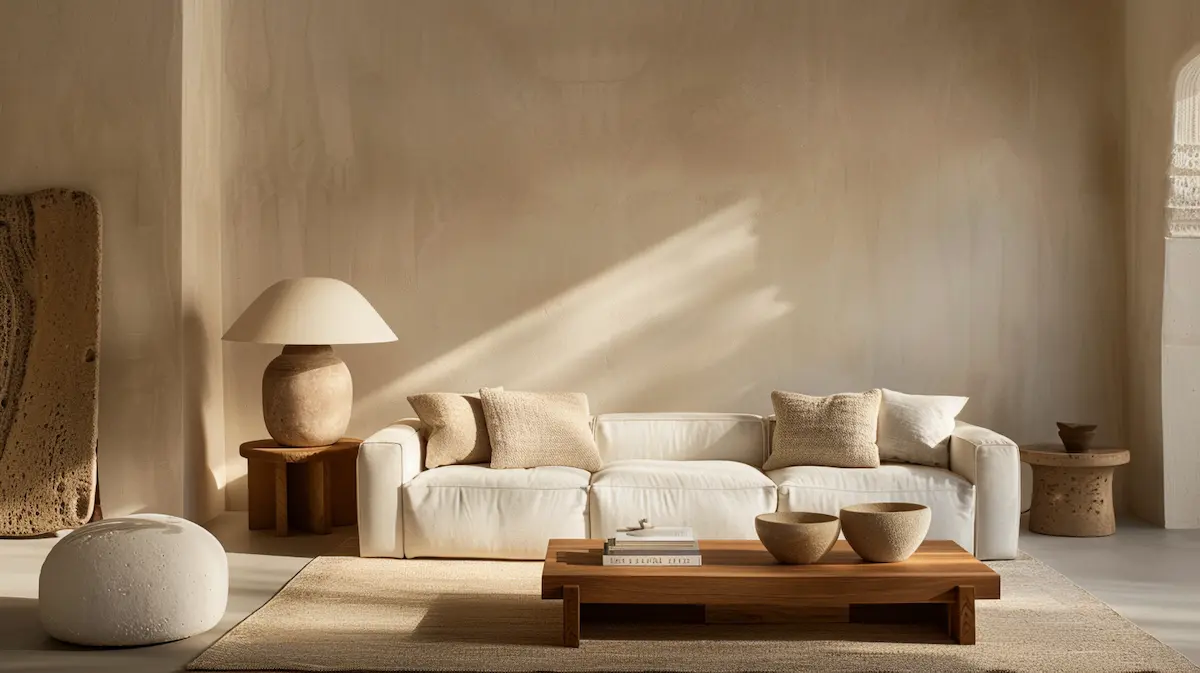
Raw ceramic lighting is one of the purest expressions of Crafted Minimalism. It embraces imperfection — not as a flaw, but as a defining feature. Think uneven surfaces, subtle cracks in the glaze, matte finishes, and organic shapes that feel shaped by hand rather than machine.
What makes this style so powerful is how it interacts with light. Ceramic doesn’t reflect light sharply. Instead, it absorbs and softens it, creating a warm, grounded glow that feels calm and intimate. The result is lighting that doesn’t dominate a space, but quietly anchors it.
This style works especially well in interiors where natural materials already play a central role. When paired with wood, linen, or stone, ceramic lighting enhances the tactile quality of the entire room. It makes the space feel layered without adding visual noise.
For this look, I would personally choose:
- a handmade ceramic table lamp with a slightly irregular base and a soft, neutral tone
- optionally, a ceramic wall light that blends into the wall when turned off, but emits a warm halo when lit
The reason I select these pieces is simple: they don’t try too hard. They feel authentic. There’s no gloss, no perfection — just material and light working together.
This is also a style where less truly becomes more. One well-placed ceramic lamp can define an entire corner of a room.
If your goal is to create warmth without adding clutter, this is one of the strongest directions you can choose.
Editorial Pick — Large Ceramic Table Lamp by Zara
This ceramic table lamp from Zara is a perfect example of quiet impact. The solid base adds visual weight, while the soft neutral finish keeps it calm and understated.
Paired with wooden elements, it creates a subtle contrast that feels natural and layered rather than styled. The diffused light enhances textures in the room, making the space feel warmer without adding clutter.
A simple piece — but exactly the kind that defines the atmosphere.
Style 2 — Linen & Fabric Lamps (Soft & Atmospheric)
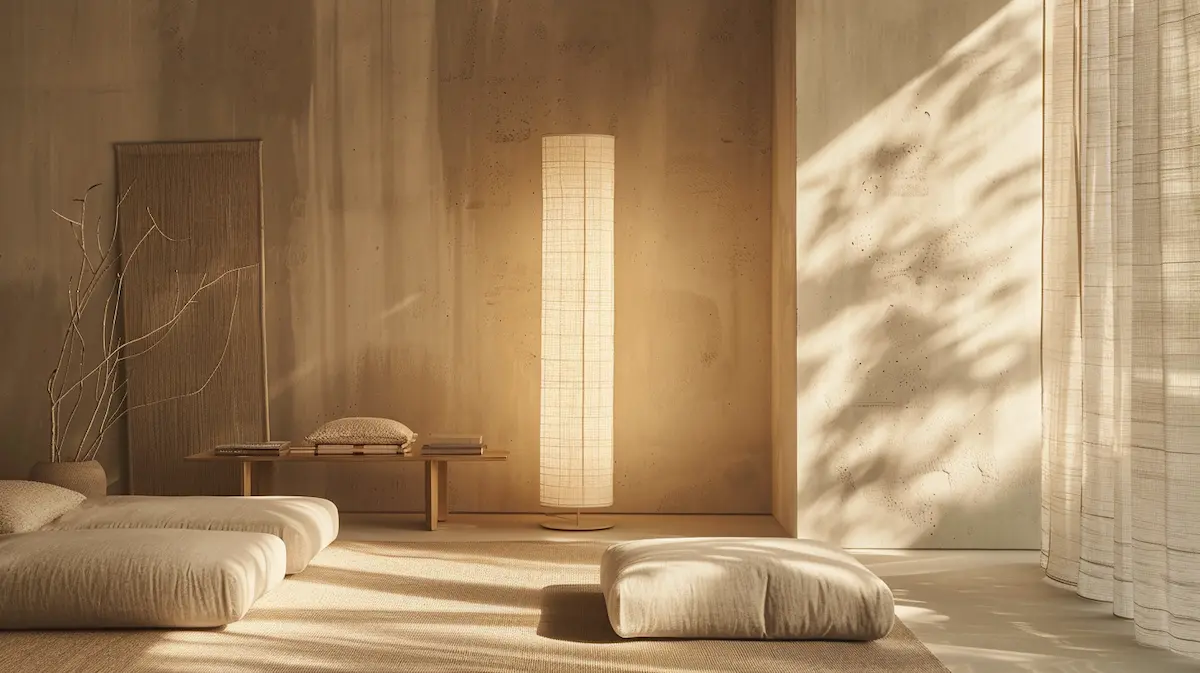
If raw ceramic lighting is about texture and grounding, linen and fabric lighting is about softness. This style doesn’t just illuminate a space — it gently wraps it in light.
Linen shades have a unique way of filtering light. Instead of casting direct brightness, they diffuse it, creating a warm, almost hazy glow. This softens edges, reduces contrast, and makes a room feel instantly more relaxed. It’s the kind of lighting that makes everything look calmer — including the materials around it.
What makes this style especially powerful within Crafted Minimalism is the balance it creates. While the furniture and materials often carry weight and texture, linen lighting introduces a sense of lightness. It prevents the space from feeling too heavy or dense.
This style works beautifully in living rooms and bedrooms, where atmosphere matters more than function. It pairs naturally with:
- soft textiles like wool and cotton
- neutral palettes (beige, off-white, sand tones)
- low, grounded furniture
For this look, I would personally choose:
- a linen floor lamp with a simple, slightly oversized shade
- a linen table lamp with a soft, rounded silhouette
The reason I select these pieces is because they don’t create visual noise. Instead, they act as quiet amplifiers of the space — enhancing mood without drawing too much attention.
This is lighting that doesn’t ask to be seen. It’s meant to be felt.
Editorial Pick — Linen Table Lamp
This linen floor lamp is exactly what you want when your goal is softness. The fabric shade diffuses light into a warm, gentle glow that instantly calms the space.
It doesn’t demand attention — it quietly enhances everything around it. Perfect for creating that relaxed, layered atmosphere Crafted Minimalism is known for.
Style 3 — Sculptural Metal Lighting (Subtle Statement Pieces)

Sculptural metal lighting brings a different kind of tension into Crafted Minimalism — one that adds definition without disrupting calm. Where softer materials like linen and ceramic absorb light, metal introduces contrast through shape and structure.
The key here is restraint. This isn’t about shiny, polished finishes or industrial harshness. Instead, think brushed, aged, or muted metals — finishes that feel softened over time. The focus is not on reflection, but on silhouette.
What makes this style so effective is its ability to act as a visual anchor. A well-chosen metal floor lamp or table lamp can define a corner of the room with minimal effort. It draws the eye, but doesn’t overwhelm the space.
This works especially well in interiors that lean heavily on soft textures. The contrast between:
- linen or wool
- raw wood
- matte ceramics
and a refined metal form creates balance. It prevents the space from becoming too flat or overly “safe.”
For this look, I would personally choose:
- a sculptural metal floor lamp with a clean but distinctive shape
- optionally, a compact metal table lamp that echoes the same finish
The reason I select these pieces is because they do more with less. One strong line, one defined curve — that’s often enough to shift the entire composition of a room.
In Crafted Minimalism, contrast isn’t created through color. It’s created through material and form. And this is exactly where sculptural metal lighting excels.
Editorial Pick — Sculptural Metal Floor Lamp
This sculptural metal floor lamp brings exactly the kind of structure a Crafted Minimalist space needs. The arched shape creates a clear visual line, while the subtle metal finish keeps it refined rather than overpowering.
It acts as a quiet statement piece — defining the space without adding clutter. Perfect for balancing softer materials like linen and wood with a touch of controlled contrast.
Style 4 — Wooden Lighting (Warm & Organic Structure)

Wooden lighting is where Crafted Minimalism starts to feel truly cohesive. Instead of introducing a new material, it reinforces what’s already present in the space. The result is not contrast, but continuity.
What makes wood so powerful in lighting is its ability to carry warmth without relying on the light itself. Even when the lamp is turned off, it adds depth through grain, tone, and natural variation. When the light is on, that warmth is amplified — not just visually, but atmospherically.
This style works especially well in spaces where wood is already a dominant element. Think:
- wooden floors
- low wooden furniture
- subtle wood accents in decor
By repeating the material in your lighting, you create a sense of calm that feels effortless rather than styled.
The forms within this style are usually simple — clean bases, soft curves, or slightly architectural shapes. Nothing overly decorative. The focus stays on the material.
For this look, I would personally choose:
- a wooden table lamp with a visible grain and matte finish
- optionally, a pendant light with wooden details to connect ceiling and furniture
The reason I select these pieces is because they strengthen the overall composition. They don’t stand apart — they belong to the same visual language as the rest of the room.
If you want your space to feel calm, grounded, and consistent, wooden lighting is one of the most reliable choices you can make.
Editorial Pick — Telluride Wooden Table Lamp
The Telluride wooden table lamp is a perfect example of how lighting can blend seamlessly into a space. The natural wood grain adds quiet texture, while the simple form keeps it calm and understated.
What makes this piece stand out is how effortlessly it connects with other wooden elements in the room. It doesn’t create contrast — it creates continuity.
Exactly the kind of lighting that makes a space feel grounded without trying too hard.
Style 5 — Stone & Plaster Lighting (Architectural & Timeless)
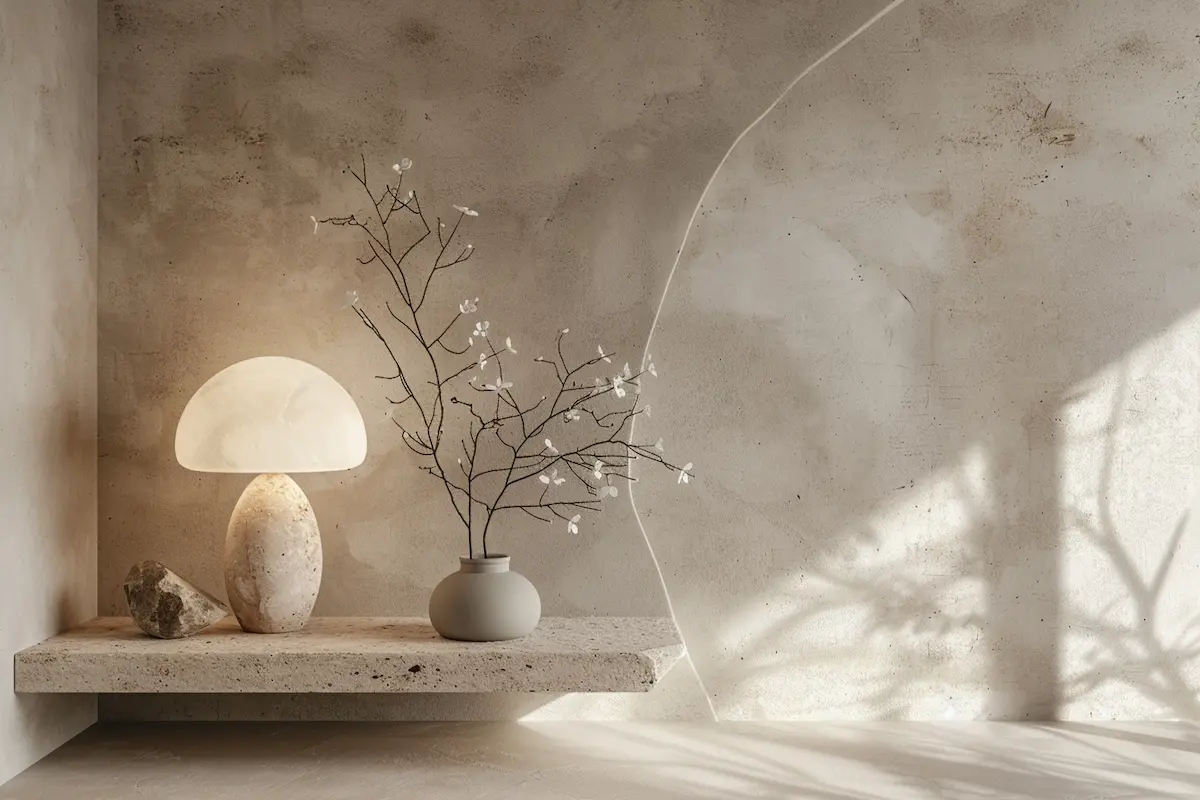
Stone and plaster lighting takes Crafted Minimalism to a more architectural level. Instead of feeling like an added object, these pieces often feel integrated into the space itself.
What defines this style is its solidity. Materials like travertine, limestone, or plaster carry a natural weight that immediately gives a sense of permanence. Unlike lighter materials, they don’t just sit in a space — they anchor it.
The way these materials interact with light is also very different. Rather than diffusing light like linen or softening it like ceramic, stone and plaster create a more directional, sculpted glow. Light and shadow become part of the design, emphasizing edges, curves, and surfaces.
This makes the style feel more architectural than decorative.
It works especially well in interiors that lean toward:
- neutral, tone-on-tone palettes
- textured walls (plaster, limewash)
- minimal but intentional furniture
For this look, I would personally choose:
- a travertine table lamp with a solid, geometric base
- or a plaster wall light that blends into the wall and reveals itself through light
The reason I select these pieces is because they elevate the entire space. They don’t just provide light — they shape how the room is experienced.
This is lighting that feels timeless. Not because it’s simple, but because it feels like it was always meant to be there.
Editorial Pick — Travertine Table Lamp
This travertine table lamp is where lighting becomes architecture. The solid stone base gives it a sense of permanence, while the natural texture adds subtle variation without visual noise.
It doesn’t just light the space — it defines it. The warm glow enhances the depth of the material, creating soft shadows that make the room feel more layered and intentional.
A timeless piece that feels like it was always meant to be there.
How to Combine These Lighting Styles Without Clutter
Combining different lighting styles in Crafted Minimalism isn’t about variety — it’s about control. The goal is not to showcase multiple styles, but to create a space that feels calm, cohesive, and intentional.
Start by choosing one dominant lighting style. This will set the tone for the entire room. For example, if you choose wooden lighting as your base, let that material appear in your main lamp.
From there, you can introduce one supporting style — but only if it complements the first. The key is to connect them through shared elements, such as:
- similar tones (warm, muted, neutral)
- compatible materials (wood + linen, stone + plaster)
- consistent light temperature
Avoid mixing styles that compete for attention. A sculptural metal lamp can work beautifully next to linen — but only if the metal is soft and understated.
Also, resist the urge to add more light sources. In most cases, two strong pieces are more effective than five smaller ones.
Crafted Minimalism is not about layering endlessly. It’s about choosing carefully — and then stopping at the right moment.
Editorial Pick — French Wooden Table Lamp with Raffia Shade
This wooden table lamp with a raffia shade brings together two materials that naturally soften a space. The wood adds structure, while the raffia diffuses the light into a warm, textured glow.
What makes this piece stand out is the balance — it feels both grounded and light at the same time. Perfect for adding warmth without breaking the calm, layered look of a Crafted Minimalist interior.
10. Common Mistakes in Crafted Minimalist Lighting
Even with the right intention, lighting is often where Crafted Minimalist interiors lose their calm. Not because of what’s added — but because of how it’s chosen.
One of the most common mistakes is using too many small light sources. Multiple table lamps, spotlights, and decorative lights quickly create visual noise. Instead of depth, you get fragmentation.
Another issue is lighting that’s too cold or too bright. White, harsh light flattens materials and removes the softness that defines this style. Warm, diffused light is essential to bring out texture and atmosphere.
There’s also a tendency to choose lamps that are too light or insignificant. Pieces without visual weight disappear into the space, making the room feel unfinished rather than minimal.
And finally, many people focus only on function. But in Crafted Minimalism, lighting is never just practical — it’s part of the composition.
Avoiding these mistakes isn’t about doing more. It’s about choosing fewer elements — and choosing them better.
Conclusion
Lighting is what turns a minimal space into a crafted one. It’s not just about visibility — it’s about how a room feels, how materials come alive, and how everything connects.
Throughout these styles, one thing becomes clear: you don’t need more lighting. You need better lighting. Pieces that carry weight, reflect your material choices, and quietly shape the atmosphere.
Whether you’re drawn to ceramic, linen, wood, metal, or stone — the goal is not to follow trends, but to choose what feels natural within your space.
If there’s one takeaway, it’s this:
one well-chosen lamp will always do more than several average ones.
Take your time. Choose intentionally. And let lighting become part of the architecture of your home.