Artisanal Materials in Crafted Minimalism
Why artisanal materials matter in Crafted Minimalism
Crafted Minimalism is often mistaken for a purely visual style — clean lines, neutral tones, and restrained interiors. But without the right materials, those same spaces can quickly feel flat, cold, or emotionally distant. This is where artisanal materials become essential.
Unlike industrially produced finishes, artisanal materials carry visible traces of human involvement. Slight irregularities, variations in surface, and subtle imperfections introduce depth without adding objects. The space feels calmer not because it is emptier, but because it is less repetitive.
Mass-produced materials are designed for consistency. Every surface looks the same, which makes them easy to scan — and easy to tire of. Artisanal materials work differently. Their variation slows the eye and removes the need for visual compensation through decoration.
Within Crafted Minimalism, this distinction is crucial. When materials already carry character, fewer elements are required to make a space feel complete. Furniture doesn’t need styling. Surfaces don’t need accents. Calm is embedded rather than constructed.
Artisanal materials are not about nostalgia or rustic aesthetics. They are about material honesty — allowing a space to feel grounded, human, and lived-in without becoming cluttered. In Crafted Minimalism, craftsmanship is not an embellishment. It is the foundation.
What makes a material “artisanal”?
A material becomes artisanal not because it looks imperfect, but because its character is the result of a human process rather than an industrial one.
Artisanal materials are shaped, finished, or assembled with a level of variation that cannot be fully standardized. This variation is not decorative; it is structural. Clay reacts to hands and heat, wood responds to grain direction and tools, stone reveals mineral differences during cutting. These materials do not aim for uniformity — and that is precisely why they feel calmer.
What defines an artisanal material within Crafted Minimalism is not age or tradition, but intentional restraint. The maker allows the material to speak without overcorrecting it. Surfaces are not polished into perfection, edges are not made artificially irregular for effect, and finishes are kept minimal so that natural qualities remain visible.
It is equally important to understand what artisanal materials are not. They are not mass-produced items with a “handmade look,” faux textures, or factory-perfect objects designed to simulate imperfection. Those materials repeat patterns too consistently, which the eye detects immediately.
Within Crafted Minimalism, artisanal materials matter because they reduce repetition. Less repetition means less scanning. Less scanning means more calm. The material itself carries interest, removing the need for visual compensation through decoration.
Disclaimer: This post may contain affiliate links. This means that if you click on one of these links and make a purchase, we may earn a small commission—at no extra cost to you.
All images featured in this article are AI-generated to illustrate the aesthetic and mood of the interior style. The products linked are carefully selected items that, in our view, most closely match the look and feel of these designs.
As an Etsy affiliate and Amazon Associate, we earn from qualifying purchases. We only recommend products we genuinely believe align with the style and atmosphere presented in our AI-created interiors.

The connection between Crafted Minimalism and Wabi-Sabi
Crafted Minimalism and Wabi-Sabi share a deep respect for imperfection, but they arrive there from different places.
Wabi-Sabi originates from a philosophical acceptance of transience, irregularity, and natural aging. Cracks, asymmetry, and wear are not hidden — they are valued as evidence of time and use. In interior design, this often results in spaces that feel earthy, intuitive, and emotionally grounded.

Crafted Minimalism adopts part of this philosophy, but applies it through a more structured, contemporary lens. Imperfection is present, but it is contained. Materials are allowed to vary, yet forms remain clear and intentional. The goal is not to celebrate decay, but to prevent sterility.
This distinction matters. Where Wabi-Sabi may lean toward the poetic or contemplative, Crafted Minimalism prioritizes daily function. A hand-thrown ceramic bowl, a raw wood surface, or a stone element may show variation — but they are chosen to support calm living, not symbolism.
The connection between the two lies in material honesty. Both reject artificial perfection. But Crafted Minimalism translates that honesty into modern spaces that feel composed rather than rustic.
This relationship is explored further in Wabi-Sabi in Crafted Minimalism, where the philosophical roots of imperfection are placed within a contemporary interior context.
Why artisanal materials create calm (not clutter)
Artisanal materials create calm because they reduce one of the biggest sources of visual stress: repetition. Industrial materials are designed to be identical. Every surface repeats the same pattern, the same finish, the same proportions. The eye recognizes this immediately and scans faster, which increases mental activity rather than slowing it down.
Artisanal materials behave differently. Because they carry small variations — in grain, glaze, edge, or surface — the eye cannot fully predict what it will see next. This unpredictability is subtle, but important. It slows perception and keeps attention soft rather than alert.
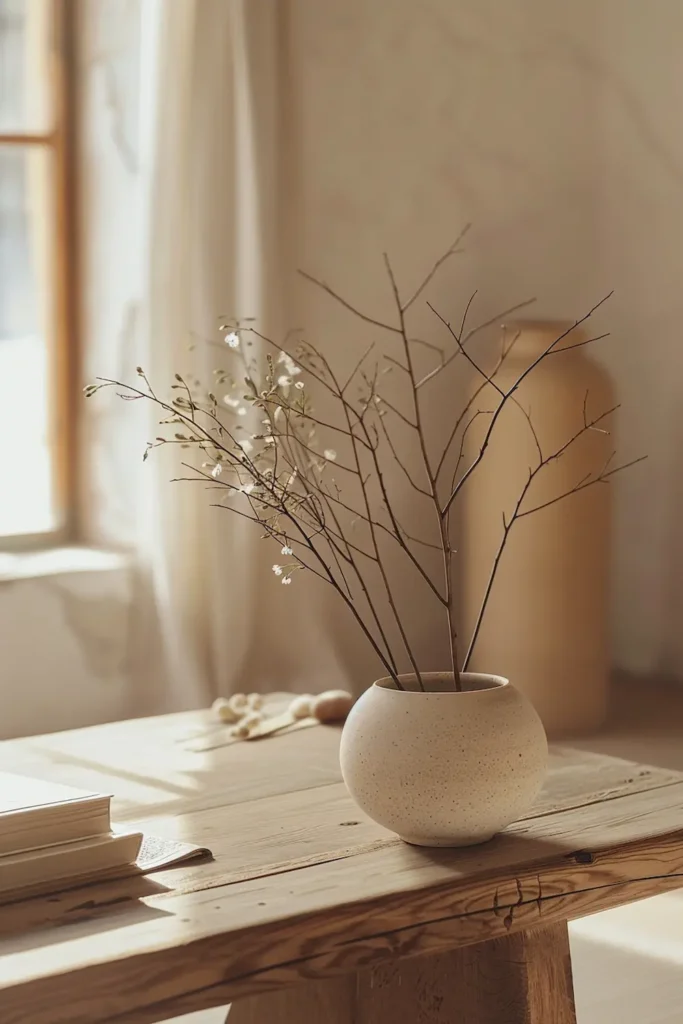
Another reason artisanal materials prevent clutter is that they carry meaning without requiring explanation. A hand-thrown ceramic bowl, a raw wood surface with visible joinery, or a stone element with mineral variation does not need styling to feel complete. The material already holds presence. This reduces the impulse to add accessories, layers, or visual “fixes.”
Crucially, artisanal materials work best when they are used sparingly. One well-chosen piece often replaces several decorative elements. Calm emerges not from abundance, but from sufficiency.
This principle aligns closely with earlier insights explored in Using Texture Without Clutter and How Materials Create Calm, where material choice is shown to directly influence how a space is experienced over time.
When materials do the work, clutter loses its function. Calm becomes a result of structure, not restraint.
Where artisanal materials work best in the home
Artisanal materials have the strongest impact when they are placed where the eye already expects structure and function. Large, continuous surfaces allow craftsmanship to be perceived calmly, without becoming a focal point that demands attention.
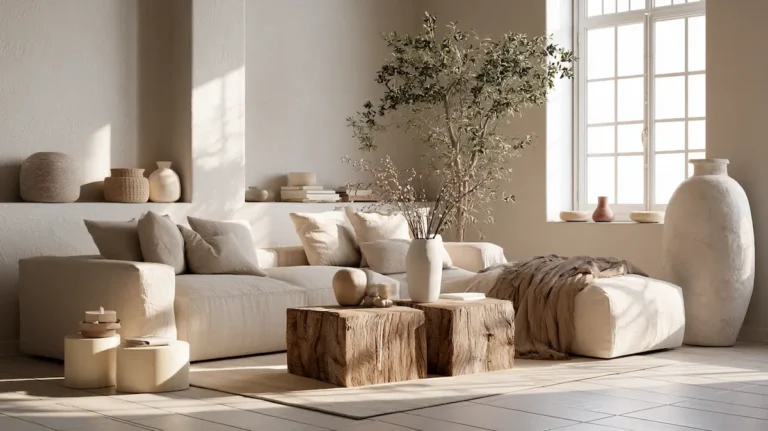
Dining tables, coffee tables, benches, and shelving are ideal locations. These elements anchor a room visually and physically, which means any material variation they carry is read as depth rather than decoration. A raw wood tabletop with visible joinery or a stone surface with subtle mineral shifts can quietly stabilize an entire space.
For practical examples of how artisanal choices translate into specific decor decisions, Artisanal Decor for Calm Interiors takes the next step.

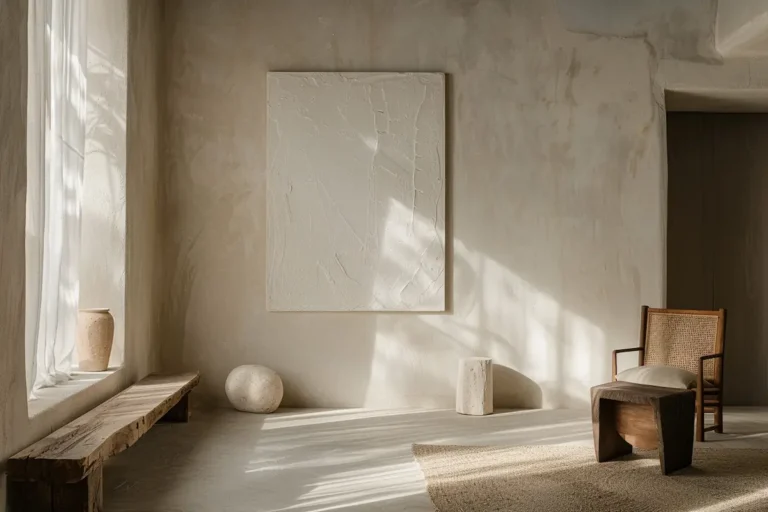
Walls are another powerful but often overlooked area. Plaster, limewash, or mineral-based finishes allow artisan texture to span an entire surface. Because the variation is continuous, it replaces the need for art or wall objects rather than competing with them.
Artisanal materials are less effective when confined to small, isolated accents. Multiple handmade objects grouped together may dilute their individual presence and unintentionally create clutter. The strength of craftsmanship lies in restraint, not repetition.
The guiding principle is scale. One artisan material used generously often achieves more calm than several smaller pieces scattered throughout a room. When craftsmanship supports function, it feels grounded. When it floats as decoration, it loses its quiet authority.
Product type: Handcrafted ceramic bowls or vessels (one object, full presence)
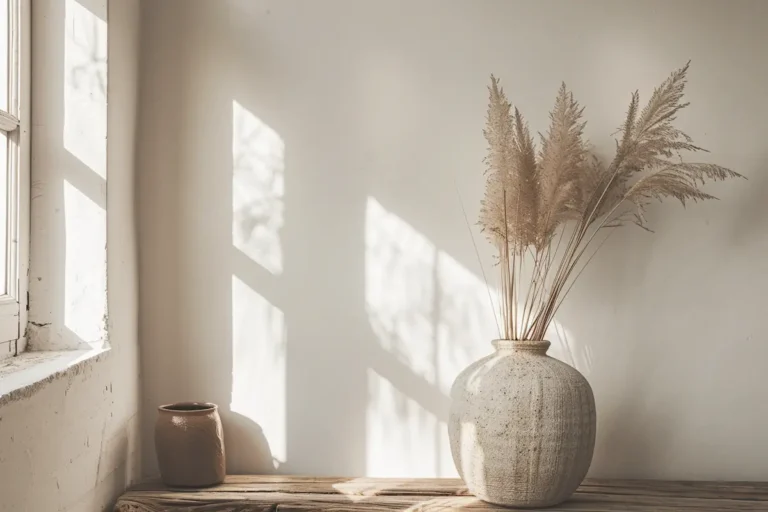
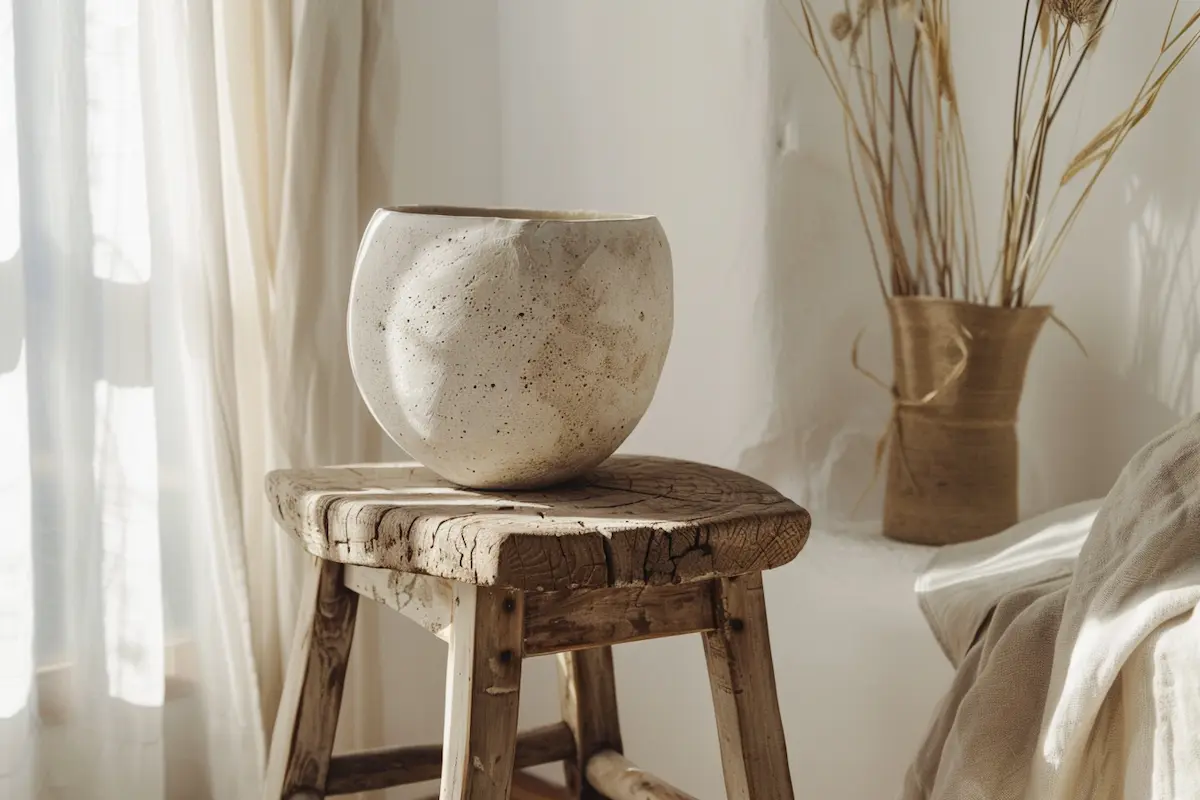
Handcrafted ceramic bowls or vessels are one of the few objects that can exist on their own within Crafted Minimalism. Their value lies not in decoration, but in material presence. Subtle asymmetry, uneven glazing, and hand-shaped edges create texture that feels human rather than styled.
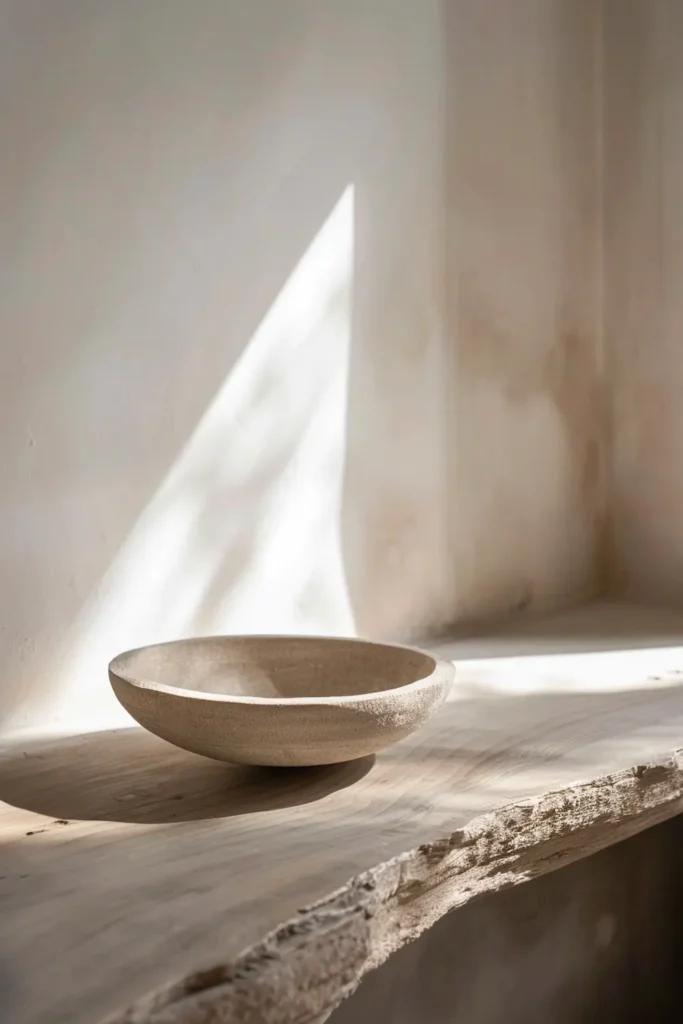
Unlike decorative accessories, a single ceramic piece does not fragment attention. Its surface variation is read slowly, allowing it to hold space without competing with surrounding materials like wood or stone. This is why one well-chosen vessel often replaces several smaller objects.
In practice, these pieces work best when left ungrouped and placed on a stable surface — a raw wood table, stone shelf, or plastered wall niche. The ceramic does not need context. Its texture is sufficient.
This approach is explored further in Ceramics as Statement Pieces, where restraint is shown to be more powerful than abundance.
Product type: Solid raw wood furniture with visible joinery (craft as structure)
Solid raw wood furniture becomes artisanal when its construction is allowed to remain visible. Joinery, grain direction, and subtle irregularities reveal how the piece is made — and that transparency is what creates calm.
Unlike mass-produced wooden furniture, artisanal raw wood pieces are not perfectly uniform. The surface may show slight variation in tone, and joints are often expressed rather than hidden. This reduces visual repetition and gives the furniture a grounded, trustworthy presence.

Within Crafted Minimalism, this type of furniture works best when it serves a clear function: dining tables, benches, shelving, or low storage. The craft replaces ornament. There is no need for styling, because the making itself carries interest.
This distinction between handcrafted structure and industrial finish is explored further in Handmade vs Mass Production and Why Raw Wood Is Essential, where material honesty becomes a defining factor in long-term calm interiors.
Explore a solid wood coffee table where visible grain and natural edges reveal the craft behind the material.
Product type: Handwoven textiles (linen, wool, cotton)
Handwoven textiles introduce texture through structure rather than pattern. The irregular rhythm of a woven fabric slows the eye in a way printed or machine-perfect textiles cannot. Small variations in thread thickness, tension, and weave create depth without visual noise.
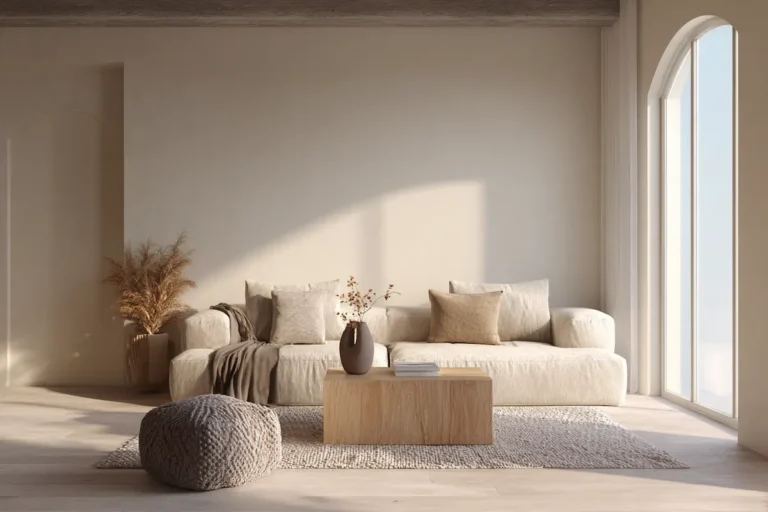
Within Crafted Minimalism, these textiles work best when used in functional roles: upholstery, a single throw, or a wall-hung textile used sparingly. Linen, wool, and cotton absorb light instead of reflecting it, which softens a space without adding layers.
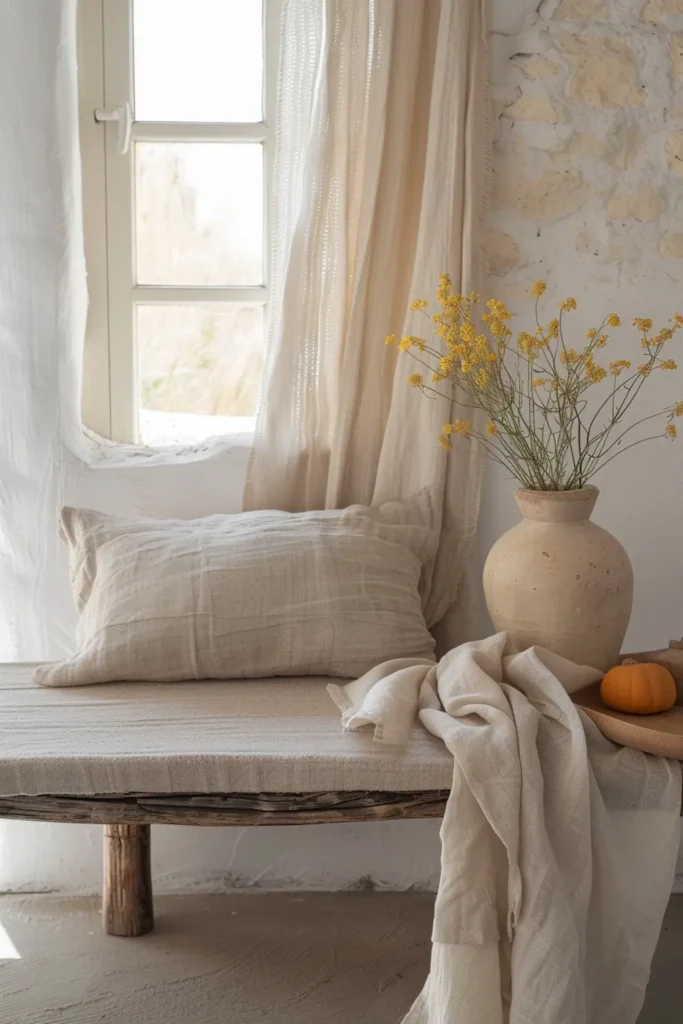
The key is restraint. One handwoven textile can replace multiple decorative items by carrying texture quietly across a larger surface. When materials already hold variation, there is no need to compensate with accessories.
This approach reinforces the idea that texture belongs in materials you touch and use daily — not in objects meant to be looked at.
Explore a handwoven textile where natural fibers and subtle irregularities add depth without visual noise.
Common mistakes when using artisanal materials
Artisanal materials are often chosen with good intentions, but they can easily lose their calming effect when used incorrectly. One of the most common mistakes is treating craftsmanship as decoration. Grouping multiple handmade objects together — bowls, vessels, woven pieces — quickly turns material quality into visual clutter.
Another frequent issue is overemphasis. Artisanal does not mean expressive or dramatic. Exaggerated textures, overly rustic finishes, or intentionally “rough” details can pull a space away from Crafted Minimalism and toward a styled aesthetic. Calm relies on restraint, not performance.
Scale also matters. Small artisanal accents rarely carry enough visual weight on their own, which leads to adding more. This accumulation undermines the very purpose of choosing handcrafted materials. One larger, functional piece almost always works better than several small ones.
Finally, many interiors mix artisanal and industrial materials without hierarchy. When handcrafted elements compete with glossy, mass-produced surfaces, neither can settle. Artisanal materials need space and simplicity around them to function properly.
In Crafted Minimalism, craftsmanship succeeds when it replaces something — not when it adds another layer.
Artisanal materials as a long-term choice
Artisanal materials are rarely chosen for immediate impact. Their value becomes clearer over time.
Because these materials are not defined by uniform finishes or perfect repetition, they age gradually rather than abruptly. Clay develops patina instead of chips. Wood deepens in tone instead of showing wear. Textiles soften rather than lose structure. This slow evolution allows a space to feel consistent even as it changes.
In Crafted Minimalism, longevity is not only about durability, but about visual coherence. Artisanal materials adapt easily when other elements shift. Furniture can move, layouts can evolve, colors can change — the materials remain relevant because they are not tied to trends.
This also reduces the need for replacement. When materials carry character from the start, there is less desire to “update” a space to make it feel finished. Calm is preserved through continuity, not constant refinement.
Choosing artisanal materials is therefore not a stylistic decision, but a strategic one. It supports a slower, more intentional way of living — where the interior grows familiar instead of outdated.

Conclusion: craftsmanship as quiet structure
Artisanal materials play a specific role within Crafted Minimalism. They are not chosen to decorate a space, but to support it quietly. Their value lies in how they reduce repetition, slow perception, and replace the need for visual additions.
Throughout this article, one principle remains consistent: craftsmanship works best when it is allowed to be functional, restrained, and materially honest. Whether through ceramics, wood, textiles, or stone, artisanal materials create depth by existing — not by performing.
When used intentionally, they simplify decision-making rather than complicating it. Fewer objects are needed. Fewer adjustments are required. The interior settles more easily into everyday life.
Crafted Minimalism is not about perfection or scarcity. It is about choosing materials that can carry presence on their own — and trusting them to do so over time.