

Ceramics as Statement Pieces: Quiet Presence in Crafted Minimalism
Why ceramics deserve a central role in Crafted Minimalism
In Crafted Minimalism, a statement piece is not meant to dominate a space, but to resolve it. Ceramics fulfill this role in a way few other materials can. They bring weight without heaviness, character without decoration, and presence without noise.
Unlike furniture, ceramics operate on a human scale. They sit on tables, consoles, or shelves—places where the eye naturally pauses. This makes them ideal for shaping how a surface feels without adding layers or complexity. A single ceramic object can define a space more effectively than multiple styled accessories.
What makes ceramics especially suited to Crafted Minimalism is their material honesty. Clay reveals process. Glaze reveals restraint. Slight irregularities signal intention rather than imperfection. These qualities align seamlessly with a style that values calm through authenticity instead of control.
In this context, ceramics are not decorative accents. They are quiet anchors. They slow the eye, ground surrounding materials, and help an interior feel settled rather than staged. When chosen carefully, a ceramic statement piece does not ask for attention—it earns it.
This is why ceramics deserve a central role in Crafted Minimalist interiors.
Disclaimer: This post may contain affiliate links. This means that if you click on one of these links and make a purchase, we may earn a small commission—at no extra cost to you.
All images featured in this article are AI-generated to illustrate the aesthetic and mood of the interior style. The products linked are carefully selected items that, in our view, most closely match the look and feel of these designs.
As an Etsy affiliate and Amazon Associate, we earn from qualifying purchases. We only recommend products we genuinely believe align with the style and atmosphere presented in our AI-created interiors.
What makes ceramics different from other statement materials

Ceramics occupy a unique position among statement materials because they combine weight, tactility, and restraint in a single object. Where wood introduces movement through grain and stone introduces stillness through mass, ceramics sit precisely between the two. They feel grounded without becoming heavy, and expressive without becoming dominant.
Unlike glass or metal, ceramics absorb light rather than reflect it. This immediately lowers visual intensity. Surfaces appear softer, edges feel calmer, and the object integrates into its surroundings instead of standing apart from them. This makes ceramics especially effective in minimalist interiors, where even small amounts of glare or reflection can disrupt balance.
Ceramics also differ in how they communicate process. Wood shows growth. Stone shows geological time. Ceramics show human intervention. The shaping of clay, the firing process, and the glaze application all leave subtle traces. These traces add depth without ornamentation, allowing the object to feel intentional rather than decorative.
Another key distinction is scale. Ceramic statement pieces rarely overwhelm a space because they are naturally limited by form and function. They hold presence without demanding hierarchy. In Crafted Minimalism, this allows ceramics to act as stabilizers—objects that quietly complete a composition rather than define it.
Ceramics are part of a broader family of materials that carry human presence. Artisanal Materials in Crafted Minimalism explores how that principle extends across the full material palette.
Statement without excess: scale, restraint, and placement
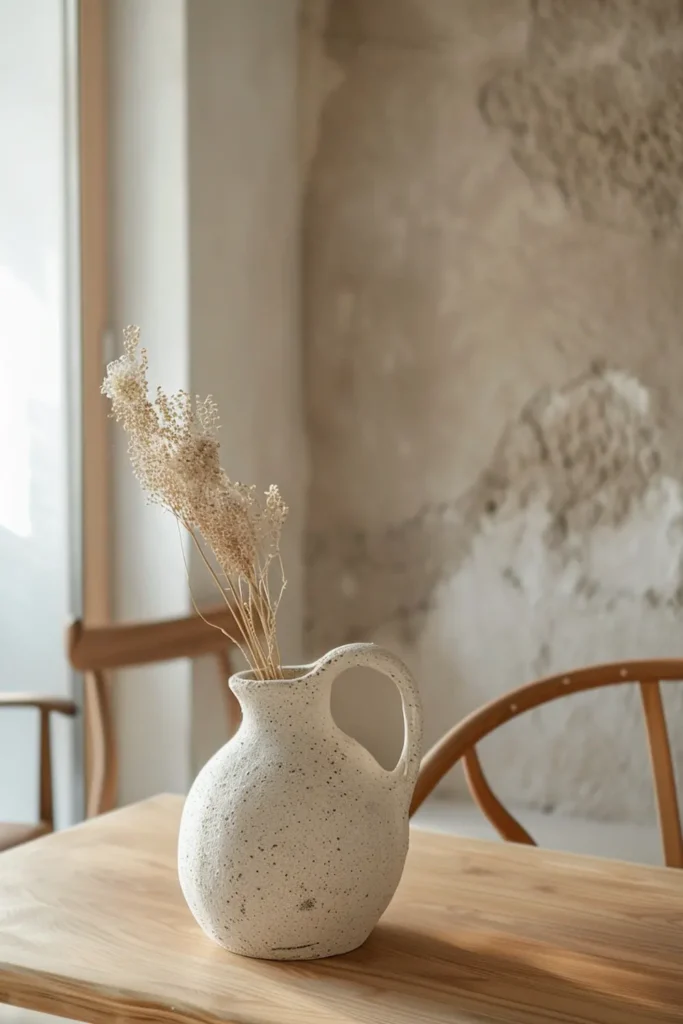
In Crafted Minimalism, a statement is not created through abundance but through precision. Ceramics become powerful when they are given enough space to exist on their own. Scale, restraint, and placement determine whether a ceramic piece feels intentional or simply decorative.
Scale is the first consideration. A ceramic object should feel proportionate to the surface it occupies. Too small, and it disappears into visual noise. Too large, and it becomes intrusive. Medium-scale pieces often work best: large enough to hold presence, small enough to leave breathing room around them.
Restraint is equally important. One ceramic statement piece per surface is usually sufficient. Multiple objects dilute each other’s impact and shift the composition toward styling rather than structure. Crafted Minimalism relies on clarity, not accumulation.
Placement should follow natural points of pause. The center of a dining table, the end of a console, or the quiet edge of a shelf are ideal locations. These are places where the eye already rests. A ceramic piece placed there feels inevitable rather than added.
When scale, restraint, and placement align, ceramics do not decorate a space — they resolve it.
This relationship between material behavior and perceived calm is explored more broadly in How Materials Create Calm.
How ceramics interact with wood and stone

Ceramics play a subtle but essential role in the relationship between wood and stone. Where wood introduces warmth and movement, and stone introduces weight and stillness, ceramics act as a mediating material. They soften transitions without blurring boundaries.
Placed on raw wood, ceramics reduce visual movement. The grain remains visible, but the ceramic surface introduces pause. This keeps wooden surfaces from feeling too active, especially on larger tables or consoles. The interaction feels grounded rather than decorative.
When ceramics sit on stone, the effect shifts. Stone can feel dense and uncompromising on its own. A ceramic object introduces tactility and human scale, preventing the surface from becoming too severe. The ceramic does not compete with the stone’s weight — it tempers it.
This is why ceramics are so effective in interiors that already rely on wood and stone as primary materials. They complete the material dialogue rather than interrupt it. Instead of adding contrast, they add continuity.
This principle directly supports the ideas explored in Statement Pieces in Crafted Minimalism, where a statement is defined by how well it integrates, not by how loudly it announces itself.
For a deeper look at how wood and stone work together before ceramics enter the picture, see Combining Wood and Stone.
My selection criteria: how I choose ceramic statement pieces
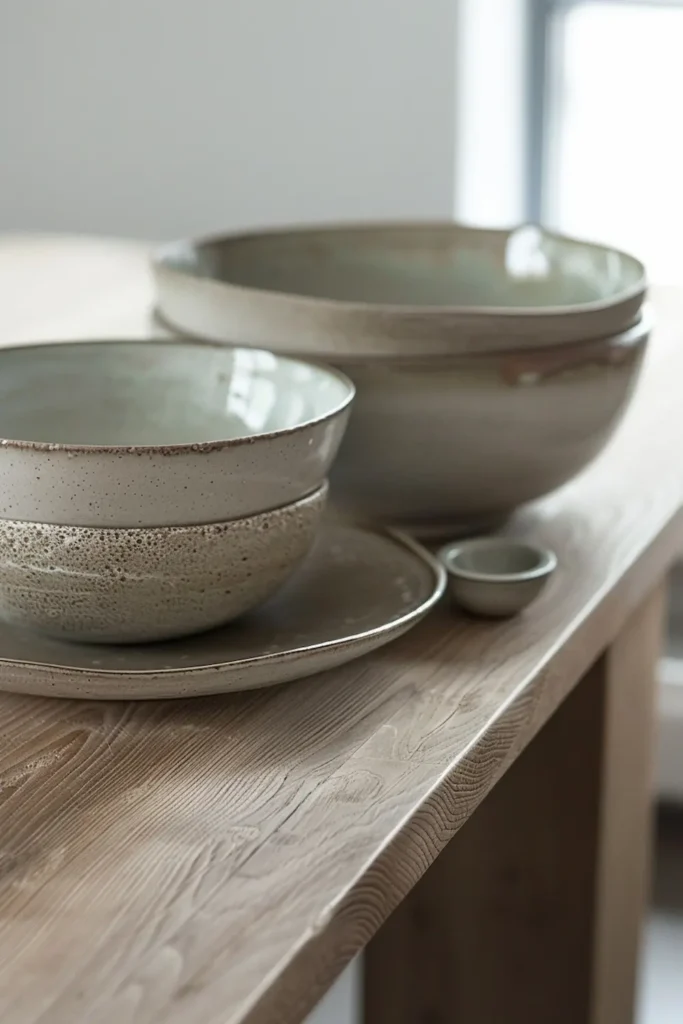
When I select ceramic statement pieces for Crafted Minimalism, I am not looking for expression or decoration. I am looking for material reliability — objects that hold presence without asking for attention. Every piece I choose follows a small set of non-negotiable criteria.
The first is surface behavior. I consistently choose matte or softly mineral glazes. These absorb light rather than reflect it, allowing the form to remain readable without glare. Glossy finishes tend to introduce visual noise and pull the object forward too aggressively.
Second is visible process. I look for ceramics where the hand is still present: subtle asymmetry, gentle variation in thickness, or glaze that settles unevenly. These signs of making add depth without ornament. They allow the object to feel intentional rather than styled.
Color is equally restrained. I favor clay tones, off-whites, muted greys, and earthy neutrals that sit comfortably next to wood and stone. Strong color contrast quickly shifts a piece from structural to expressive.
Finally, scale matters. The object must feel complete on its own. If it needs additional styling to work, it doesn’t belong in a Crafted Minimalist interior.
These criteria ensure that each ceramic piece supports calm through material honesty — not through visual impact.
Hand-thrown ceramic vessel with matte glaze

A hand-thrown ceramic vessel with a matte glaze is one of the purest statement pieces within Crafted Minimalism. I choose this type of object because it carries presence through form and material, not through decoration. The vessel stands on its own, without requiring flowers, branches, or styling to justify its place.
The matte glaze is essential. It absorbs light softly, allowing the shape to remain legible without glare. Subtle variations in tone and texture reveal the firing process and give the surface depth without pattern. This keeps the object calm, even when placed centrally on a table or console.
I specifically favor vessels with slightly uneven rims or gentle asymmetry. These details signal human involvement without turning the piece into an expressive artwork. The result is an object that grounds a surface and completes it — quietly, confidently, and without visual excess.
Used on raw wood or stone, this type of ceramic becomes a true anchor rather than an accessory.
Explore a hand-thrown ceramic piece where subtle irregularity and matte texture give clay a quiet, grounding presence.
Low ceramic bowl as a table anchor

A low ceramic bowl is one of the most effective ways to introduce a statement without adding height or visual interruption. I choose this type of piece because it anchors a surface horizontally, allowing the eye to settle instead of being drawn upward. This makes it especially suitable for dining tables, coffee tables, and stone surfaces where calm depends on visual continuity.
The bowl’s low profile keeps sightlines open, while its material weight provides structure. When left empty—or holding a single, natural element—it avoids becoming decorative. The focus remains on form, proportion, and material behavior rather than content.
I prefer bowls with thick walls, subtle glaze variation, and a slightly irregular rim. These qualities give the object presence without sharpness. Placed centrally, a low ceramic bowl completes a surface in a way that feels intentional rather than styled. It does not compete with wood or stone; it settles between them, reinforcing balance through restraint.
This speckled ceramic centerpiece brings horizontal weight and quiet texture to the table without interrupting visual flow.
Ceramic lamp base as a functional statement

A ceramic lamp base is one of the most effective ways to introduce a statement piece through function rather than form alone. I deliberately choose ceramic bases because they add material weight at eye level without becoming sculptural objects that demand attention. The statement is subtle, embedded in daily use.
Ceramic works especially well for lamp bases because it absorbs light instead of reflecting it. This prevents glare and keeps the visual focus soft, even when the lamp is switched on. Paired with a simple linen or cotton shade, the ceramic base grounds the light source and gives it presence without contrast.
I favor lamp bases with simple silhouettes and mineral or clay-based glazes. Slight surface variation is welcome, but strong color shifts or decorative shapes are not. The goal is continuity, not expression. When chosen this way, a ceramic lamp base becomes part of the room’s structure — a quiet anchor that supports calm both day and night.
Sculptural ceramic object with restrained form

A sculptural ceramic object only works in Crafted Minimalism when its form remains contained and disciplined. I choose this type of piece sparingly, and only when the sculpture derives its presence from material and proportion rather than expressive shape.
The key is restraint. Rounded volumes, closed forms, and a clear sense of mass allow the object to feel grounded rather than decorative. Surface treatment should remain matte or softly mineral, with no sharp color contrasts or ornamental detailing. The sculpture should feel as though it could belong to a functional lineage, even if it isn’t used as one.
Placed on a console, shelf, or stone surface, this type of ceramic object acts as a pause rather than a focal point. It slows perception and introduces weight without hierarchy. Used once, and in isolation, it reinforces calm. Used repeatedly, it becomes noise. In Crafted Minimalism, sculptural ceramics are most powerful when they feel inevitable — not expressive.
Common mistakes when using ceramics as statement pieces
The most common mistake is treating ceramics as decoration rather than structure. When multiple ceramic objects are grouped together, their individual presence dissolves into visual noise. What should anchor a surface becomes styling.
Another frequent error is choosing ceramics with overly expressive glazes. High gloss, strong contrast, or decorative patterns pull the object forward and disrupt calm. In Crafted Minimalism, ceramics should absorb attention, not demand it.
Scale is often misjudged as well. Pieces that are too small feel apologetic; pieces that are too large dominate the surface they sit on. A statement piece should feel proportionate and complete on its own, without needing companions to justify its presence.
Finally, repetition undermines impact. Repeating similar ceramic forms across a space turns material presence into motif. One well-placed piece creates pause. Several create rhythm—and rhythm introduces movement where stillness is needed.
Ceramics work best when they are used once, placed intentionally, and allowed to stand alone.
How to apply ceramics in everyday interiors
Ceramics work best in everyday interiors when they are treated as part of the spatial structure, not as finishing touches. Their role is to stabilize surfaces that are used daily, not to decorate them.
In dining areas, a single ceramic piece placed at the center of the table can replace multiple accessories. It introduces weight and presence without interfering with use. In living spaces, ceramics function well on coffee tables or consoles, where they create a visual pause without interrupting movement or sightlines.
Entryways and transitional zones are another ideal place for ceramic statement pieces. These spaces benefit from grounding elements that slow the transition between rooms. A ceramic object placed deliberately can signal arrival without adding clutter.
The key is consistency. Ceramics should echo the materials already present—raw wood, stone, natural fabrics—rather than introduce contrast. When applied with restraint, ceramics integrate seamlessly into daily life. They do not need rearranging or refreshing. They simply remain, supporting calm through their quiet, material presence.
Ceramics as quiet anchors, not decoration
Ceramics earn their place in Crafted Minimalism not by standing out, but by holding space. As statement pieces, they do not rely on bold form, color, or contrast. Their strength lies in material honesty, weight, and restraint.
When chosen carefully, a ceramic object stabilizes a surface instead of styling it. It slows perception, reduces the need for additional objects, and allows surrounding materials—wood, stone, natural fabrics—to remain legible. The statement is not visual drama, but resolution.
This is why ceramics work best when used sparingly. One piece, placed with intention, can do more than a collection of accessories. It creates calm by being complete on its own.
For a full overview of how ceramics fit within the wider material system, Best Materials for Crafted Minimalism gives you the complete picture.
Within Crafted Minimalism, ceramics are not accents. They are quiet anchors—objects that feel inevitable rather than designed. They support the same principle explored in Statement Pieces in Crafted Minimalism: that a true statement does not demand attention, but earns it through material integrity.
When ceramics are treated this way, they remain relevant over time, settling into the interior rather than competing with it.


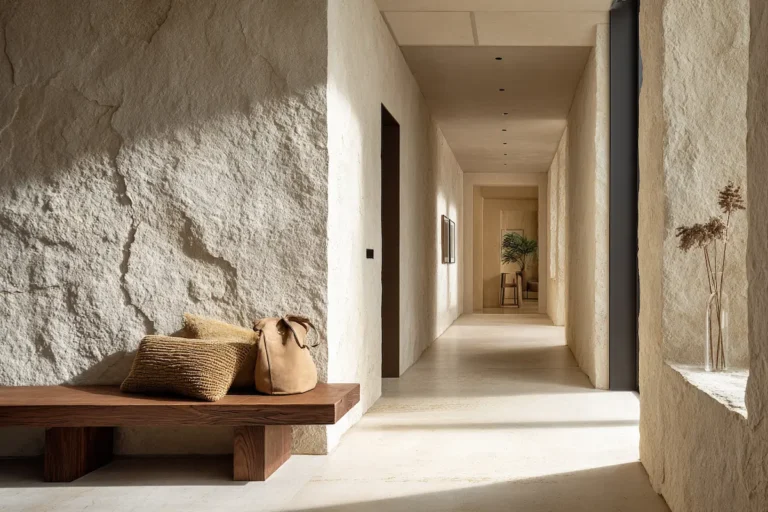
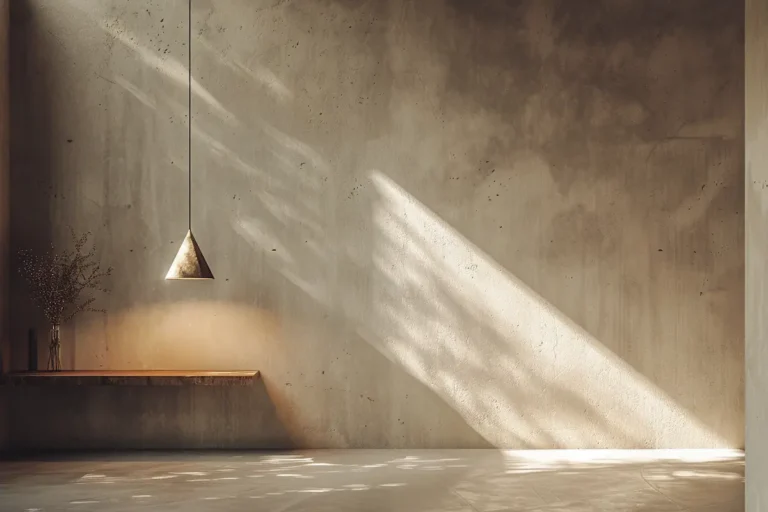

Ceramic products combine durability, elegance, and timeless design—offering reliable performance and aesthetic appeal for both modern and classic spaces. Our commitment to quality ceramic ensures long-lasting value and customer satisfaction.