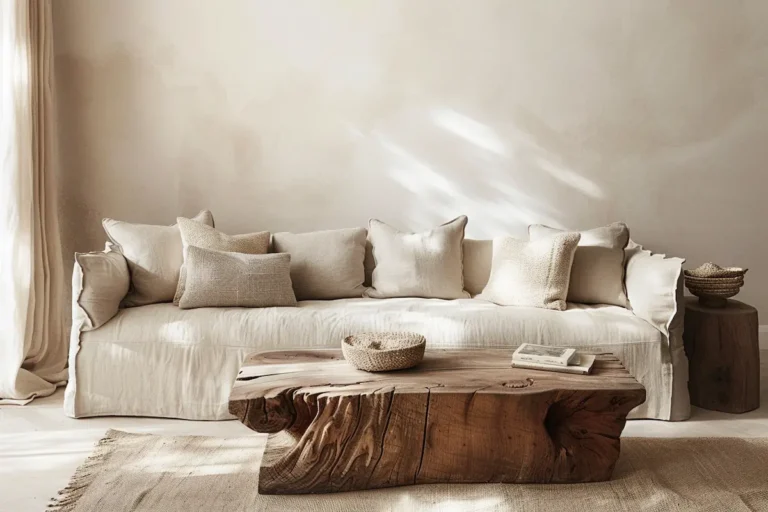

When Texture Becomes Clutter (And How to Avoid It)
Why texture often becomes clutter
Texture is often introduced as a solution when a minimalist interior feels flat or unfinished. A room looks calm but somehow lacks warmth, so texture gets added. A throw here, a cushion there, maybe a rug, a basket, or a wall object. The intention is good — the result often isn’t.
The problem is that texture is frequently treated as decoration rather than as a material strategy. Instead of being embedded in surfaces, it is layered on top of them. Each addition asks for attention, even when the objects themselves are neutral. Over time, these layers accumulate and the space begins to feel visually busy, despite having very little color or furniture.
In minimal interiors this effect is amplified. With fewer elements overall, every added texture carries more visual weight. What was meant to soften the space ends up fragmenting it.
Crafted Minimalism approaches texture differently. Rather than adding more objects, it focuses on how materials themselves carry texture. Grain, weave, surface variation, and tactility are built into the space from the start. This allows depth to exist without increasing visual noise.
Understanding why texture so easily turns into clutter is the first step toward using it intentionally — as a way to replace decoration, not multiply it.
What texture really means in Crafted Minimalism
In Crafted Minimalism, texture is not something you add at the end of the process. It is something that is built into the materials themselves.
Texture, in this context, refers to surface variation that exists without pattern or ornament. Wood grain, woven fibers, stone pores, subtle irregularities in plaster — these elements create depth without asking for attention. They are perceived slowly, not scanned instantly.

This is a crucial distinction. Decorative texture often relies on contrast and repetition. Cushions, throws, wall hangings, and patterned rugs introduce texture by standing out. They work as objects. Material texture, on the other hand, works as infrastructure. It shapes how light behaves, how the eye moves, and how calm a surface feels over time.
In Crafted Minimalism, good texture does not compete with form. It supports it. A table does not become interesting because something is placed on it, but because its surface already carries variation. A wall does not need artwork if its material has depth.
This approach reduces the need for layering. When texture is embedded in wood, fabric, stone, or plaster, fewer elements are required to make a space feel complete. Depth exists without accumulation.
Understanding this definition is essential, because every product choice later in this article will be evaluated on one question:
Does this material carry texture on its own — or does it require additional objects to feel finished?
Texture vs decoration: the critical difference
Texture and decoration are often treated as interchangeable, but within Crafted Minimalism they serve fundamentally different roles.
Decoration is object-based. It exists as something added on top of a space: cushions, vases, wall objects, layered accessories. Even when neutral in color, decoration asks for attention. The eye recognizes it as a separate element and scans it accordingly. Each object becomes a visual decision point.

Texture, by contrast, is surface-based. It does not announce itself as an object, but as a quality of the material itself. Wood grain, fabric weave, stone porosity, or subtle plaster variation are perceived gradually. They don’t interrupt the eye — they slow it down.
This difference has a direct impact on mental load. A room filled with decorative texture may look styled, but it requires constant visual processing. A room where texture is embedded into materials feels quieter, even if it contains fewer objects overall.
Crafted Minimalism relies on this distinction. Instead of adding texture through accessories, it removes accessories by choosing materials that already carry depth. A table with visible grain replaces the need for a centerpiece. A textured wall removes the need for artwork.
When texture replaces decoration, the space becomes more stable over time. There is less to adjust, less to rearrange, and fewer elements that can drift into clutter. Calm is no longer maintained through control, but through material choice.
How materials create texture without clutter
In Crafted Minimalism, texture is not applied — it is inherent. The materials themselves carry depth, variation, and tactility, which removes the need for decorative layering.
Raw wood is a primary example. Its grain is never perfectly repetitive, which means the eye cannot quickly scan it and move on. Instead, attention slows naturally. The same principle applies to natural stone, where subtle pores and mineral variation introduce quiet visual rhythm without contrast.
Natural fabrics such as linen and wool function similarly. Their woven structure softens light and absorbs sound, creating texture that is perceived physically rather than visually. Unlike patterned textiles, these materials do not demand attention — they support calm by reducing sharp edges and reflections.

Plaster and lime-based wall finishes add another layer of material depth. Rather than acting as a backdrop for decoration, textured walls become surfaces in their own right. Light interacts with them gradually, creating shadow and variation throughout the day without adding objects.
What all these materials share is material honesty. Their texture comes from how they are made, not from applied effects. This is why they age well: wear blends into the surface instead of standing out.
This relationship between material choice and sensory calm is explored further in How Materials Create Calm, where texture is shown to influence not just how a space looks, but how it feels and functions over time.
When texture is embedded at the material level, clutter becomes unnecessary. Depth exists without accumulation, and calm becomes a structural quality rather than a styling achievement.
Where texture works best (and where it doesn’t)
Texture has the greatest impact when it appears on large, continuous surfaces. These are the areas the eye naturally rests on: floors, tables, walls, seating, and built-in elements. When texture is embedded there, it shapes the entire atmosphere of a space without needing repetition.
This is why raw wood dining tables, stone surfaces, textured walls, and natural fabric upholstery work so well within Crafted Minimalism. Their texture is experienced passively. You don’t notice it immediately — you feel it over time.

Texture is far less effective when confined to small, isolated objects. Accessories such as cushions, baskets, decorative trays, or small sculptures may add visual interest, but they fragment attention. Each object introduces a separate focal point, which increases visual noise rather than reducing it.
Another common mistake is stacking textures at the same visual level. Multiple textured objects clustered together — even if neutral — begin to compete. Instead of depth, the result is distraction.
In Crafted Minimalism, restraint matters more than variety. One textured surface is often enough to carry an entire zone of a room. Adding more rarely increases calm — it usually dilutes it.
The guiding principle is simple:
Let texture live where structure already exists.
When texture supports form, it stabilizes the space. When it floats freely as decoration, it becomes clutter.
Product type: Raw wood dining table or bench (texture as structure)

A raw wood dining table or bench is one of the most effective ways to introduce texture without clutter. This is because the texture lives in a structural surface — a place where the eye already expects visual weight.
The visible grain of solid wood adds depth without pattern. It replaces the need for decoration by carrying variation naturally across a large surface. Unlike styled tables that rely on centerpieces or layered accessories, a raw wood surface feels complete on its own.
In Crafted Minimalism, these pieces work best when they are solid, minimally treated, and allowed to remain mostly empty. Their role is not to attract attention, but to slow the space down. The texture stabilizes the room, making additional objects unnecessary.
Well-made raw wood tables or benches are often produced by independent makers who prioritize material honesty over finish perfection. Choosing one strong piece like this reduces the urge to layer texture elsewhere.
Explore raw wood dining tables
Linen or wool upholstered seating (soft texture without layering)
Seating is where texture is often added incorrectly through cushions, throws, and decorative fabrics. Crafted Minimalism approaches softness differently: texture is built into the upholstery itself.

Linen and wool introduce tactile depth without visual interruption. Their woven structure breaks light gently and absorbs sound, creating warmth without relying on added layers. Unlike smooth synthetic fabrics, these materials never appear flat or reflective, which keeps seating visually calm even in neutral color palettes.
A sofa or chair upholstered in linen or wool does not need extra styling to feel complete. The material already carries variation and movement, allowing the surrounding space to remain restrained. This makes textured upholstery one of the most effective ways to soften a room without increasing object count.
When choosing seating, prioritize matte finishes, visible weave, and natural fibers over perfectly smooth surfaces. The goal is not coziness through accumulation, but calm through material presence.
Product type: Stone side table or surface (weight as quiet texture)
Stone introduces texture in a fundamentally different way than wood or fabric. Instead of softness or variation, it brings weight and stillness. In Crafted Minimalism, a stone side table or surface works as a quiet counterbalance to lighter materials.
The texture of stone is subtle and compact. Its pores, mineral variation, and matte finish absorb light rather than reflect it, which slows visual movement in a space. This makes stone especially effective in smaller pieces: side tables, consoles, or low surfaces near seating.
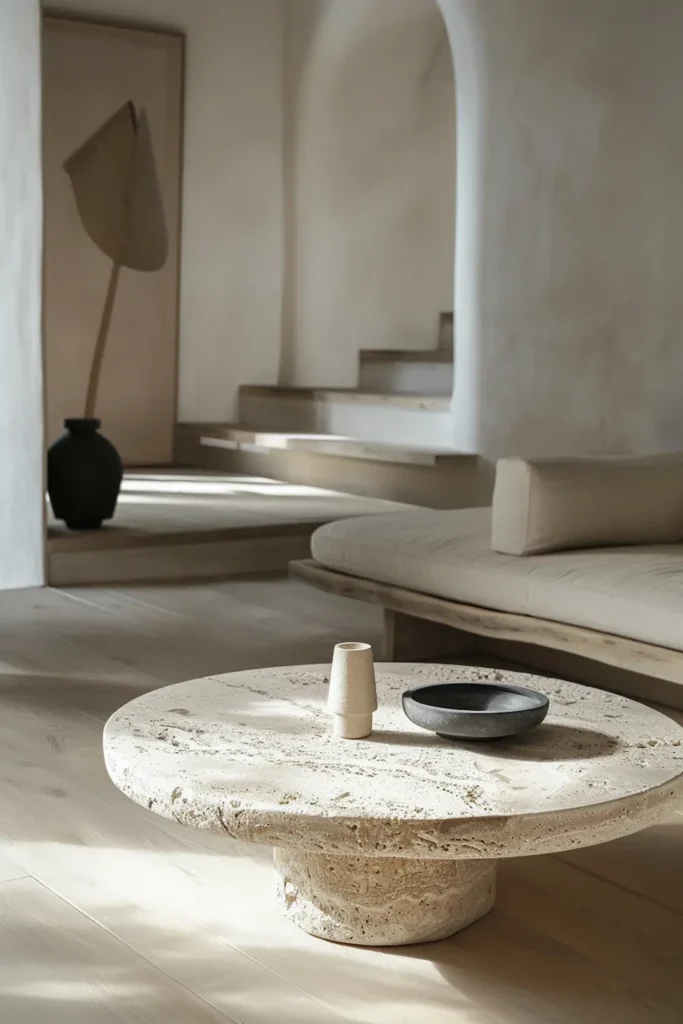
Unlike decorative objects, a stone surface does not fragment attention. It stabilizes the area around it, allowing surrounding elements to remain minimal. Because the material itself carries presence, there is no need to layer accessories on top.
When choosing stone surfaces, look for natural or minimally processed stone with a honed or matte finish. Avoid glossy treatments that turn weight into shine and undermine the calming effect.
Explore handcrafted stone side tables made with natural materials and quiet, grounding forms.
Product type: Plaster or textured wall finish (depth without objects)
Walls are often treated as neutral backdrops, waiting to be filled with artwork or decoration. Crafted Minimalism takes a different approach: the wall itself becomes the textured surface.
Plaster, limewash, or mineral-based wall finishes introduce depth without adding a single object. Their subtle irregularities interact with light throughout the day, creating variation that feels calm rather than busy. Unlike flat paint or patterned wallpaper, these finishes do not create focal points — they create atmosphere.
What makes plaster-based textures effective is scale. Because the texture spans an entire wall, it replaces the need for multiple smaller elements. The eye reads it as continuous, not fragmented. This allows a room to feel complete with fewer visual components overall.

Textured wall finishes are especially powerful in spaces where adding objects would quickly feel overwhelming: small living rooms, bedrooms, or narrow corridors. Instead of hanging art or layering accessories, the wall carries the depth on its own.
When choosing plaster or mineral finishes, look for:
- natural, breathable materials
- matte surfaces with subtle variation
- neutral tones that respond to changing light
Used thoughtfully, textured walls support calm by doing less — and holding more.
Find your perfect limewash paint on Bauwerk Colour.
Product type: Handcrafted ceramic or clay object (one object is enough)
In a space where texture is primarily embedded in materials, there is occasionally room for one intentional object. Within Crafted Minimalism, that object is often handcrafted ceramic or clay.
What distinguishes handcrafted ceramic from decoration is restraint. These pieces are not used in multiples, nor are they arranged as collections. A single bowl, vessel, or low form introduces tactile depth through subtle irregularity, not visual emphasis.
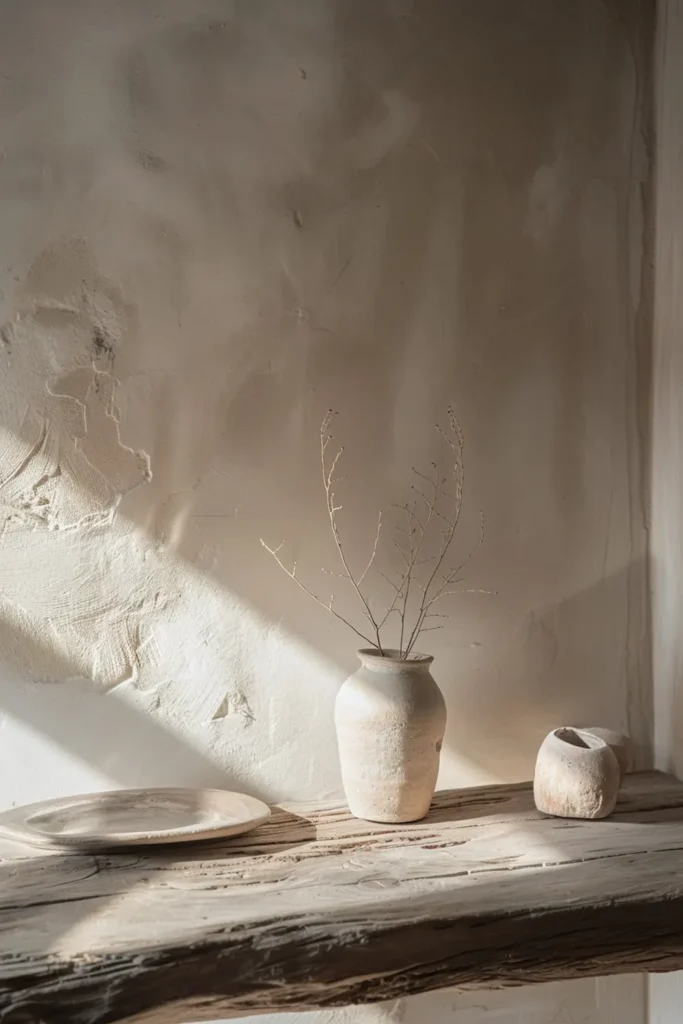
The surface variation of clay — slight asymmetry, tool marks, natural glazing — slows the eye without pulling focus. Because the object is materially honest, it does not compete with wood, stone, or fabric. It quietly reinforces them.
Used correctly, one ceramic object replaces the need for several accessories. It adds human presence without clutter, grounding the space through material rather than styling.
When choosing ceramic pieces, prioritize:
- handmade construction
- muted, mineral tones
- simple forms with visible imperfections
In Crafted Minimalism, one well-chosen object is not an accent — it is a pause.
Common mistakes when adding texture
Texture is often introduced with the right intention, but small missteps can quickly undo its calming effect. One of the most common mistakes is adding texture as decoration rather than structure. Cushions, baskets, layered objects, and wall accessories may seem harmless, but they fragment attention and increase visual noise — especially in minimal interiors.
Another frequent error is overloading one zone with multiple textures. Even natural materials become overwhelming when combined without hierarchy. Texture works best when it replaces something, not when it accumulates. If a surface already carries depth, adding more rarely improves the space.
Scale is also critical. Small textured objects tend to feel busy because they create too many visual start-and-stop points. Large, continuous surfaces — tables, walls, seating — allow texture to be perceived calmly, without interruption.
A subtler mistake is choosing materials that imitate texture rather than embody it. Faux finishes, printed patterns, or heavily treated surfaces often look flat in real life and require constant styling to feel complete.
In Crafted Minimalism, texture succeeds when it is embedded, restrained, and allowed to remain quiet. If texture needs explanation or repetition to be noticed, it is likely working against calm rather than supporting it.
Texture as a long-term design strategy
When texture is treated as a styling tool, it ages quickly. Trends shift, accessories accumulate, and what once felt intentional starts to feel dated. Crafted Minimalism approaches texture differently — as a long-term design strategy, not a finishing layer.
Material-based texture evolves rather than expires. Wood grain deepens, stone softens visually, fabrics relax with use. These changes do not disrupt the space; they strengthen it. Because the texture is inherent to the material, wear blends in instead of standing out.
This approach also reduces maintenance and decision fatigue. When texture is embedded in large surfaces and core furniture pieces, there is less need to update, restyle, or replace elements to keep a space feeling complete. Calm is preserved not through constant control, but through material consistency.
Over time, this creates interiors that feel settled rather than staged. The space adapts to life instead of resisting it. Texture becomes a stabilizing presence — quietly supporting the room as other elements change around it.
Used this way, texture is not something you manage. It is something you live with, and rely on.
Conclusion: depth without accumulation
Using texture without clutter requires a shift in thinking. Instead of asking what to add, Crafted Minimalism asks what can carry depth on its own. When texture is embedded in materials — wood, stone, fabric, plaster — it replaces decoration rather than multiplying it.
Throughout this article, one pattern becomes clear: calm emerges when texture lives where structure already exists. Large surfaces, core furniture pieces, and honest materials do more for an interior than any collection of objects ever could. They slow the eye, reduce visual decisions, and allow a space to feel complete with fewer elements.
This approach is not about restriction, but about precision. Choosing texture intentionally means choosing fewer things — and trusting them more.
If you begin to see texture as a material property rather than a styling tool, clutter loses its purpose. What remains is depth that lasts, and an interior that supports everyday living without constant adjustment.
Disclaimer: This post may contain affiliate links. That means if you click and purchase through one of these links, we may earn a small commission — at no extra cost to you. As an Amazon Associate, I earn from qualifying purchases. We only recommend products we truly love or believe fit the style of our AI-generated designs.