Why Raw Wood Is Essential in Crafted Minimalist Interiors
Raw wood is often described as a “warm” material. But that explanation is too shallow to explain why it plays such a central role in Crafted Minimalism.
Within this design approach, raw wood is not chosen for its aesthetic appeal alone. It is chosen because of how it behaves over time. Unlike highly finished or engineered surfaces, raw wood does not demand perfection. It accepts touch, use, and change without losing its integrity.
This matters because Crafted Minimalism is not about preserving a pristine look. It is about creating spaces that remain calm while being lived in. Raw wood supports that goal by reducing visual tension, absorbing wear into its character, and slowing the overall tempo of a room.
Where polished materials often introduce subtle stress — reflections, fingerprints, visible damage — raw wood does the opposite. It settles. It grounds. It allows daily life to unfold without constant correction.
This article explores why raw wood is essential within Crafted Minimalism, not as a trend or stylistic preference, but as a foundational material choice. You’ll learn what truly defines raw wood, how it differs from finished alternatives, and how to recognize product choices that genuinely support calm, longevity, and everyday living.
What do we actually mean by “raw wood”?
Within Crafted Minimalism, raw wood is not a vague aesthetic label. It is a clearly defined material choice with specific characteristics. Without that clarity, the term quickly loses meaning and gets confused with anything that simply “looks wooden.”
Raw wood, in this context, refers to solid wood. Not engineered boards, not layered constructions, but wood that retains its natural structure and weight. Solid wood behaves differently over time: it expands, contracts, and ages in a way that remains visually coherent instead of deteriorating.
Equally important is that raw wood is minimally treated. This means finishes such as oil, soap, or wax that protect the surface without sealing it behind a synthetic layer. These finishes allow the wood to breathe and respond to light, touch, and use, rather than freezing it in a perfect state.
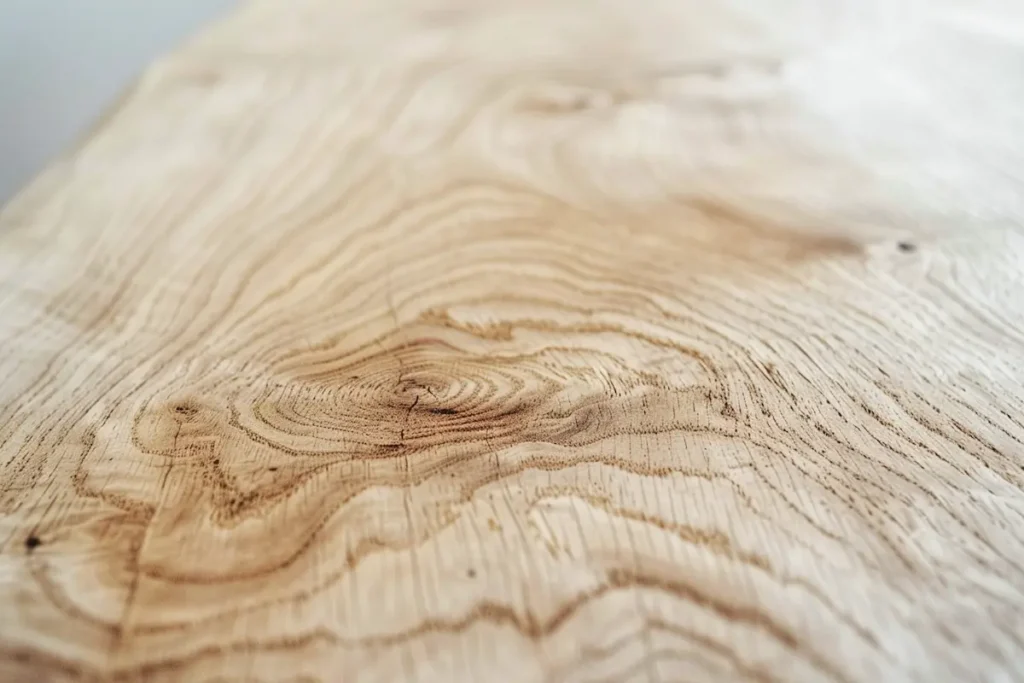
A defining feature of raw wood is a visible grain pattern. Variation is not hidden but allowed. Knots, tonal shifts, and subtle irregularities are part of the material’s integrity, not flaws to be corrected.
Just as important is what raw wood is not. It is not veneer, where a thin decorative layer masks a different core. It is not high-gloss lacquer, which introduces reflection and visual tension. And it is not an engineered “wood-look” surface designed to simulate warmth while behaving like plastic.
Within Crafted Minimalism, visible imperfection is crucial. It removes the pressure of perfection and allows materials to absorb daily life without creating visual stress. These criteria form the foundation for evaluating every raw wood product discussed later in this article.
Raw wood is one of the core materials discussed in Best Materials for Crafted Minimalism, where material choice is treated as a structural decision rather than a stylistic one.
Why raw wood creates calm (psychological & visual impact)
Raw wood does more than introduce warmth. It fundamentally changes how a space is perceived and experienced.
One of the most immediate effects of raw wood is visual calm. Because the grain pattern is organic and non-repetitive, the eye does not lock onto sharp edges or predictable rhythms. Instead of scanning, it settles. This reduces visual tension, especially when large surfaces are involved.
Raw wood also slows the tempo of a space. Smooth, reflective materials accelerate visual movement: light bounces, edges sharpen, and the eye keeps moving. Raw wood absorbs light rather than reflecting it, creating softer transitions and fewer visual interruptions. The result is a room that feels quieter, even without removing objects.
Another crucial factor is stability. Solid wood carries visible weight. Even when furniture is simple in form, the material communicates permanence. This sense of groundedness affects how safe and settled a space feels, particularly in environments where everything else is light, minimal, or neutral.
From a psychological perspective, raw wood is less “scanable” than engineered or polished surfaces. The eye cannot quickly categorize it, which reduces overstimulation. This subtle resistance slows perception and encourages longer, calmer engagement with the space.
In contrast, glossy finishes and highly uniform materials demand constant attention. They reflect movement, highlight fingerprints, and expose wear abruptly. Raw wood does the opposite: it absorbs change quietly, allowing the space to remain calm even as it is actively lived in.
This is why raw wood is not just a material choice in Crafted Minimalism — it is a calming mechanism built into the space itself.

Raw wood vs finished wood: what actually lasts
At first glance, finished wood often appears more refined. Smooth surfaces, uniform color, and sealed finishes promise durability and easy maintenance. But this promise rarely holds up over time.
Finished wood relies on surface perfection. Lacquer, varnish, or high-gloss coatings create a visual layer that must remain intact to look good. The moment that layer is scratched, chipped, or worn through, the material begins to deteriorate visually. Damage becomes highly visible, and wear feels like failure.
Raw wood behaves differently. Because the surface is not sealed behind a synthetic layer, wear does not interrupt its appearance — it becomes part of it. Small scratches blend into the grain. Changes in tone feel natural. Time adds depth rather than visual noise.
Over years of use, this difference becomes significant. Finished wood often looks “old” suddenly: one day pristine, the next day compromised. Raw wood ages gradually. There is no single moment where it crosses from acceptable to damaged.
This has practical consequences. Spaces built around finished wood tend to require more maintenance, more caution, and eventually replacement. Spaces built around raw wood tolerate life more easily.
Within Crafted Minimalism, longevity is not about preserving a perfect look. It is about choosing materials that remain visually coherent as they change. Raw wood lasts not because it resists time, but because it works with it.

How raw wood functions in Crafted Minimalist interiors
Within Crafted Minimalism, raw wood is not used everywhere — and that restraint is intentional. Its strength lies in where it appears and what role it plays in the spatial hierarchy.
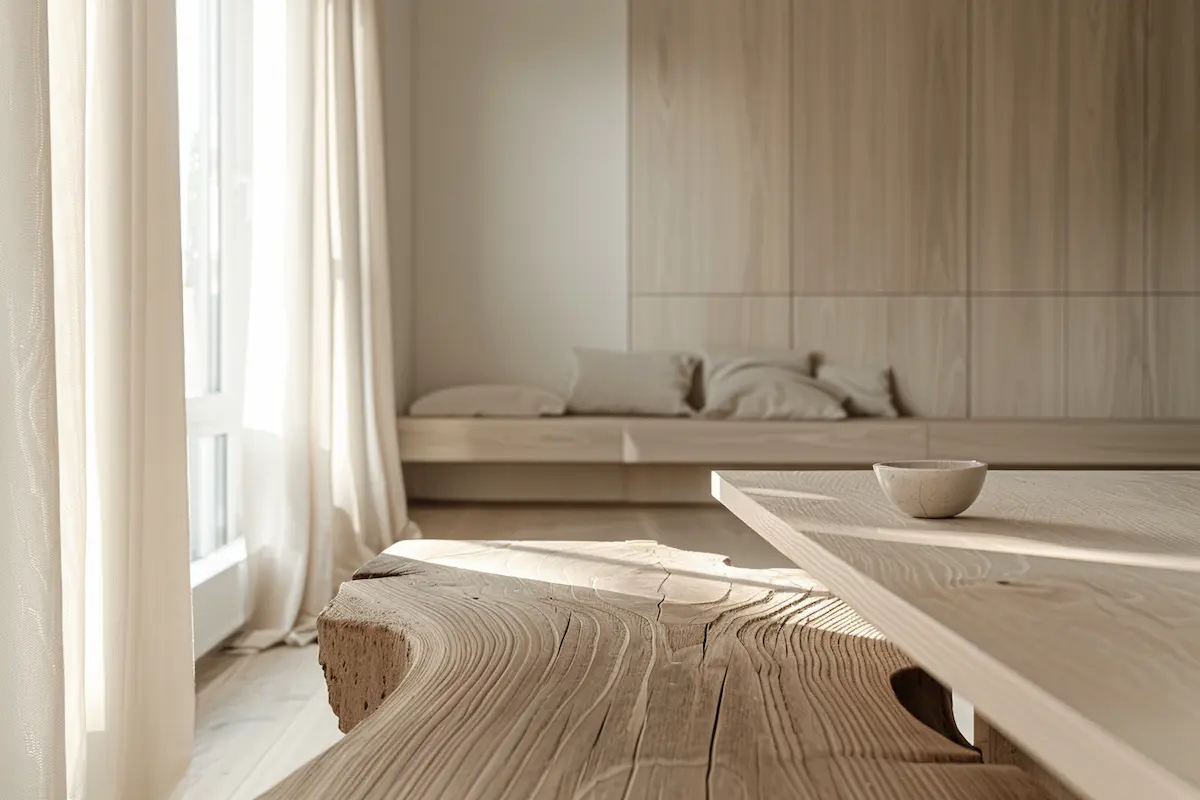
Raw wood works best on structural, load-bearing elements within an interior. Large horizontal surfaces such as dining tables, countertops, benches, or shelving systems are ideal because they anchor the space visually. These are the elements that the eye naturally returns to, and raw wood gives them presence without decoration.
In this role, raw wood often replaces ornament entirely. Instead of adding objects for warmth or character, the material itself carries visual interest through grain, tone variation, and texture. This reduces the need for styling and prevents visual clutter from accumulating over time.
Raw wood also functions as a connector between other core materials. It softens the weight of stone, grounds lighter fabrics like linen, and balances matte metals without competing with them. When used consistently, it creates a calm rhythm across rooms rather than isolated moments of interest.
Importantly, raw wood is rarely used for purely decorative elements in Crafted Minimalism. Thin accents or trend-driven details undermine its grounding effect. The material works because it feels necessary, not added.
When raw wood is placed thoughtfully, it stabilizes the entire interior system. The space feels composed even when lived in, because its most important surfaces are built from a material that welcomes use rather than resists it.
When combined thoughtfully with stone, raw wood gains even more visual stability. This balance is explored further in Combining Wood and Stone.

Raw wood product examples (how to choose and why they work)
This section is not about buying “wood furniture.” It’s about choosing the right raw wood pieces — the ones that actually support Crafted Minimalism by reducing visual friction, increasing long-term stability, and replacing the need for decorative layering.
To keep the approach intentional, each product example below is evaluated using the same criteria established earlier:
- Is it solid wood (not veneer)?
- Is it minimally treated (oil/soap/wax rather than glossy sealing)?
- Does it show visible grain and natural variation?
- Will it age gradually and stay visually coherent under use?
These aren’t luxury requirements. They are functional requirements. They determine whether the product becomes a calm foundation—or a fragile surface you end up managing.
Product type: Solid wood dining table (the anchor piece)
If you choose only one raw wood investment for a Crafted Minimalist home, make it the dining table.
The dining table is a high-contact, high-visibility surface. It is used daily, seen from many angles, and often sits at the center of how people move through the home. That makes it the perfect place for raw wood, because raw wood is strongest where life happens.
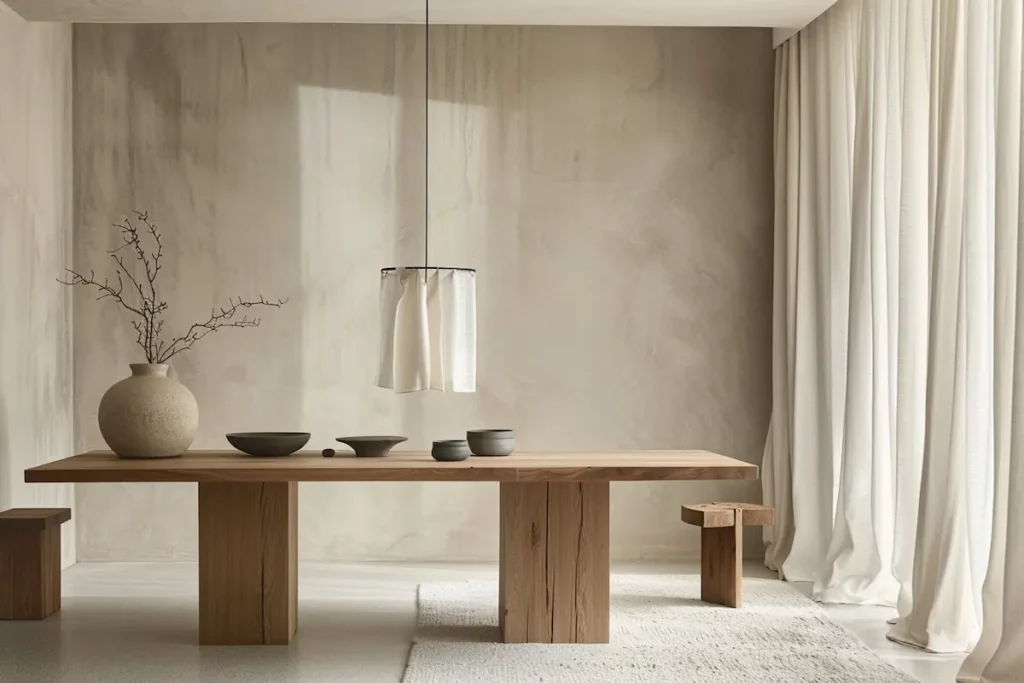
A solid wood table adds calm in three ways:
- Visual weight and stability
Solid wood communicates permanence. Even in a small home, it anchors the room and creates a sense of grounded structure. - Texture that replaces decoration
A raw wood tabletop brings natural variation that makes styling optional. You don’t need centerpieces or accessories for the table to feel complete—its grain already provides depth. - Forgiveness over time
A table sealed in high gloss turns into a stress object: it shows scratches, fingerprints, and wear abruptly. A raw or oil-finished table absorbs small marks into its surface and becomes more characterful, not “ruined.”
What to look for when buying
- solid oak, ash, or walnut (not veneer over MDF)
- matte oil/soap/wax finish (avoid shiny lacquer)
- visible grain and tonal variation (uniform wood often indicates heavy treatment)
Where to buy
Look for quality-focused furniture retailers, carpentry studios, or makers that explicitly state “solid wood” and list the finish type. Avoid product descriptions that only say “wood look” or “oak effect.”
Explore handcrafted raw wood tables on Etsy
If you’re looking for solid wood pieces that show real grain, natural variation, and honest construction, Etsy offers access to independent makers who work with raw wood as a material—not a finish. These tables are often made to order, minimally treated, and designed to age beautifully over time.
Product type: Raw wood bench or side table (a low-commitment entry point)
Not every Crafted Minimalist interior needs a large anchor piece immediately. For many spaces, a raw wood bench or side table is a more accessible starting point — both visually and practically.
These smaller pieces work because they still meet the core raw wood criteria: solid construction, minimal treatment, and visible grain. Despite their size, they introduce the same material honesty as larger furniture, grounding the space without dominating it.

A raw wood bench functions particularly well in transitional areas such as entryways, at the foot of a bed, or along a dining wall. A side table, on the other hand, allows raw wood to appear near seating without competing with larger surfaces.
What makes these pieces effective is their quiet presence. They don’t ask for styling or accessories. Their texture and weight are enough. This makes them ideal for smaller homes or for anyone wanting to introduce raw wood gradually without reshaping the entire interior at once.
When choosing these items, prioritize thickness, visible grain, and simple joinery over decorative detailing. The goal is not to add character — it is to add stability.
Discover handcrafted solid wood benches and side tables — a piece made by independent makers whose use of raw wood aligns with the quiet, intentional foundations of Crafted Minimalism.
Product type: Solid wood shelving or wall storage (vertical calm)
Raw wood is often associated with large horizontal surfaces, but within Crafted Minimalism it is equally powerful when used vertically — especially in shelving and wall storage.
Solid wood shelving works because it introduces structure without visual noise. Unlike closed cabinets or glossy wall systems, open shelves made from raw wood remain visually legible. The grain, thickness, and natural variation give the wall presence, without turning it into a focal point that demands attention.

What matters here is material honesty and proportion. Thin shelves made from engineered boards often feel decorative or temporary. Solid wood shelves, by contrast, communicate stability. Even when sparsely styled, they hold visual weight and reduce the need for additional wall elements.
In Crafted Minimalist interiors, raw wood shelving often replaces both decoration and excessive storage. A few well-proportioned shelves can hold everyday objects — ceramics, books, functional items — while remaining calm because the material itself carries the visual interest.
When selecting solid wood wall storage, look for:
- real thickness rather than hollow construction
- visible grain and tonal variation
- minimal brackets or concealed supports
- finishes that remain matte and tactile
These elements ensure the shelves age gracefully and remain visually coherent over time. Rather than competing with the room, they quietly reinforce its structure — turning storage into a stabilizing architectural element instead of a decorative feature.
Well-made solid wood shelving like this is often crafted by independent makers who focus on material quality and long-term use. Exploring handcrafted raw wood wall storage can reveal pieces that feel structural rather than decorative.
Product type: Raw wood bed frame (calm through physical grounding)
The bedroom is where the impact of raw wood becomes most tangible. Not visually, but physically.
A raw wood bed frame introduces calm because it creates grounding at the level of the body. Solid wood carries weight, both literally and perceptually. When used in a bed frame, that weight translates into stability — something the body responds to instinctively.

Unlike upholstered or highly finished beds, a solid raw wood frame does not rely on softness or decorative detail to feel comforting. Its calm comes from structure. The visible grain, matte surface, and honest construction reduce visual stimulation and support rest rather than distraction.
Raw wood bed frames also age differently. Small marks, changes in tone, or subtle wear do not break the visual integrity of the piece. This matters in a space that should feel permissive rather than precious. A bedroom designed around fragile finishes often introduces subconscious tension — the need to keep things perfect. Raw wood removes that pressure.
Within Crafted Minimalism, the bed frame is not a design statement. It is a supporting element. Its role is to stabilize the room so that fabrics, light, and negative space can do their work quietly.
When choosing a raw wood bed frame, prioritize:
- solid construction over decorative headboards
- visible joinery rather than concealed, engineered systems
- matte, breathable finishes
- simple proportions that sit low and grounded
The result is a bedroom that feels settled, not styled — a space that supports rest by removing unnecessary visual and material complexity.
Well-crafted raw wood bed frames are often made by independent workshops that prioritize structure, material honesty, and long-term comfort over decorative trends.
Product type: Raw wood coffee table or console (subtle grounding in shared spaces)
A raw wood coffee table or console often looks like a minor choice, but within Crafted Minimalism it plays a surprisingly important role. These pieces sit at the intersection of movement, sightlines, and everyday use — which makes their material impact disproportionally large.

In living spaces, a coffee table or console is constantly passed, touched, and seen from multiple angles. When made from raw wood, it introduces low-level grounding that stabilizes the room without drawing attention to itself. The visible grain and natural variation slow the eye, while the weight of the material keeps the piece from feeling temporary or decorative.
Unlike lightweight tables made from engineered wood or metal, a solid raw wood piece does not rely on styling to feel complete. It holds presence even when left mostly empty. This reduces the urge to fill the surface with objects, helping the space remain calm over time.
Console tables work especially well along walls or behind seating areas, where they provide structure without closing off the room. Coffee tables, on the other hand, anchor seating arrangements and visually connect sofas, chairs, and rugs into a coherent whole.
When choosing a raw wood coffee table or console, look for:
- solid construction with real thickness
- visible grain and tonal variation
- simple, grounded proportions
- matte finishes that absorb light rather than reflect it
These pieces are not meant to impress. They are meant to quietly hold the space together — offering calm through material presence rather than design statements.
Explore handcrafted raw wood coffee tables made by independent makers, where solid wood, natural grain, and restrained forms support calm living rather than visual statements.
Common mistakes when choosing raw wood
Raw wood is often chosen with the right intention, but executed in ways that undermine its calming effect. One of the most common mistakes is selecting wood that looks raw but is heavily treated. Thick layers of lacquer or stain flatten the grain, introduce reflection, and turn wood into a fragile surface rather than a forgiving material.
Another frequent issue is confusing rustic styling with Crafted Minimalism. Excessively rough finishes, exaggerated live edges, or overly chunky proportions can shift a space toward farmhouse or decorative territory. Raw wood should feel honest and restrained, not theatrical.
Scale is another overlooked factor. Thin tabletops, lightweight legs, or hollow constructions often signal engineered wood even when marketed as “solid.” These pieces lack visual weight and fail to anchor a room, which leads to compensating with accessories — exactly what Crafted Minimalism tries to avoid.
Mixing too many wood tones is also problematic. While variation within a single piece is desirable, combining multiple unrelated wood finishes across a space creates visual fragmentation. Raw wood works best when it establishes continuity.
Finally, treating raw wood as an accent instead of a structural element weakens its role. Small decorative items made of wood rarely deliver the grounding effect people expect. Raw wood earns its place when it carries weight, function, and permanence.
Raw wood as a long-term design decision
Choosing raw wood within Crafted Minimalism is rarely about an immediate visual effect. It is a decision that unfolds over time.
Unlike trend-driven materials that peak quickly and then feel dated, raw wood settles into a space gradually. Its surface changes subtly with use, light, and age, creating continuity rather than contrast. This slow evolution is what makes raw wood suitable for long-term living — it does not demand replacement when perfection fades.
Raw wood also supports consistency. Because it is not tied to a specific style moment, it adapts easily as other elements change. Fabrics can be replaced, wall colors can shift, layouts can evolve — the wood remains visually relevant. This reduces the need for frequent redesigns and prevents the cycle of constant updates that often leads to visual fatigue.
Within Crafted Minimalism, longevity is not measured in years of durability alone, but in years of visual coherence. Raw wood performs well on both levels. It resists sudden visual decline and allows a space to feel settled rather than perpetually in progress.
This makes raw wood not just a material choice, but a commitment to slower, more intentional living.
Raw wood as a long-term design decision
Choosing raw wood within Crafted Minimalism is rarely about an immediate visual effect. It is a decision that unfolds over time.
Unlike trend-driven materials that peak quickly and then feel dated, raw wood settles into a space gradually. Its surface changes subtly with use, light, and age, creating continuity rather than contrast. This slow evolution is what makes raw wood suitable for long-term living — it does not demand replacement when perfection fades.
Raw wood also supports consistency. Because it is not tied to a specific style moment, it adapts easily as other elements change. Fabrics can be replaced, wall colors can shift, layouts can evolve — the wood remains visually relevant. This reduces the need for frequent redesigns and prevents the cycle of constant updates that often leads to visual fatigue.
Within Crafted Minimalism, longevity is not measured in years of durability alone, but in years of visual coherence. Raw wood performs well on both levels. It resists sudden visual decline and allows a space to feel settled rather than perpetually in progress.
This makes raw wood not just a material choice, but a commitment to slower, more intentional living.