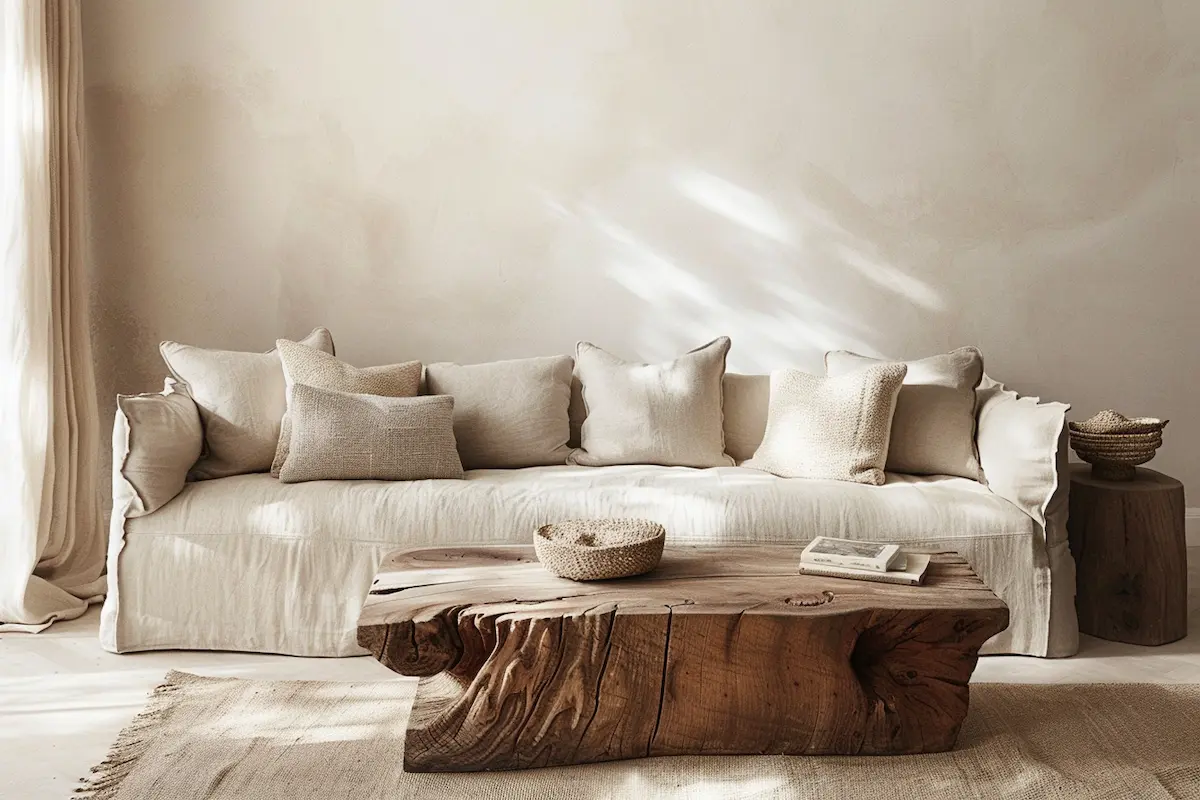
How Natural Fabrics Shape Crafted Minimalist Furniture
Why fabric choice defines calm
In minimalist interiors, furniture often receives most of the attention. Shapes are refined, materials are carefully selected, proportions feel balanced. Yet one element is frequently underestimated: fabric. The wrong fabric can undermine even the most thoughtful furniture choice, while the right one can quietly stabilize the entire space.
Fabric is experienced continuously. It absorbs light, softens sound, and responds to touch in ways that hard materials cannot. In Crafted Minimalism, calm is not created by visual reduction alone, but by reducing sensory friction. Synthetic fabrics often work against this goal. Their uniform surfaces reflect light, resist aging, and feel detached from use, creating a subtle tension that invites styling or replacement.
Natural fabrics behave differently. Linen, wool, cotton, and hemp introduce variation at a micro level. Their fibers scatter light rather than bounce it back. Their texture slows perception instead of accelerating it. Over time, they soften rather than degrade.
This makes fabric choice a structural decision rather than a decorative one. When upholstery and textiles already carry warmth and depth, fewer cushions, throws, or visual accents are needed. Calm emerges not from adding softness later, but from building it directly into the furniture itself.
Fabric is one part of a broader material system. For a complete overview of how all core materials work together, see Best Materials for Crafted Minimalism.
What makes a fabric “natural” in Crafted Minimalism
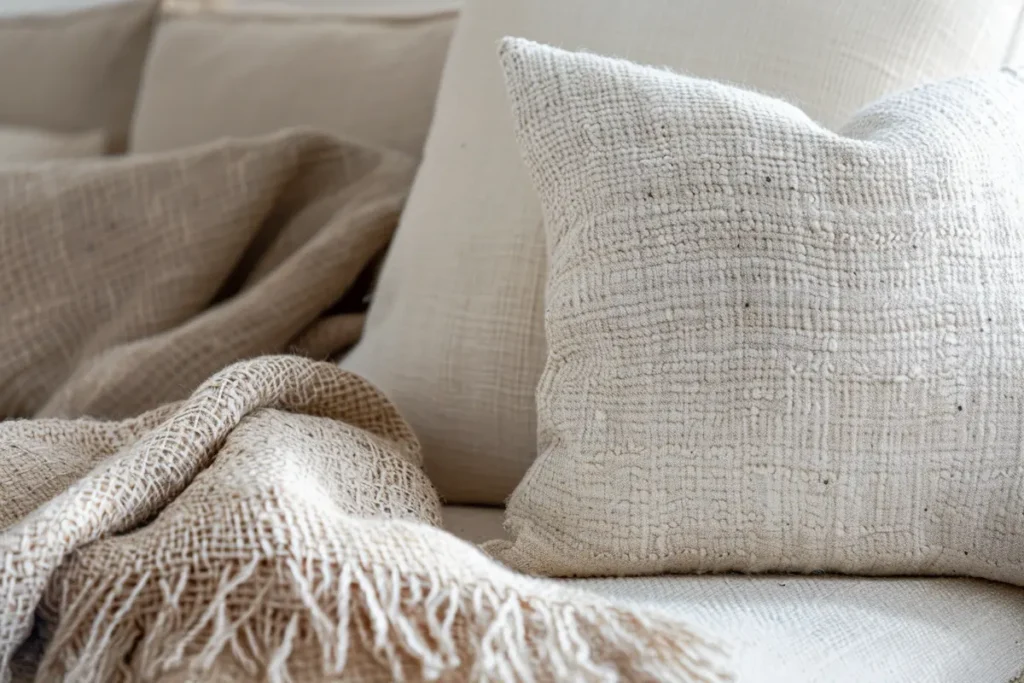
In Crafted Minimalism, a fabric is considered natural not simply because it comes from a plant or animal source, but because of how the fiber behaves over time. Linen, wool, cotton, and hemp share qualities that go beyond origin: they breathe, absorb light, and respond visibly to use.
Natural fabrics have irregular fiber structures. Threads vary slightly in thickness, tension, and spacing, which creates a surface that never reads as perfectly uniform. This variation slows visual scanning and reduces glare. Instead of reflecting light sharply, natural fabrics diffuse it, softening the overall atmosphere of a room.
Equally important is what natural fabrics are not. Synthetic blends, microfiber, and performance-coated textiles are engineered for consistency and resistance. While durable on paper, they often resist aging. Creases look artificial, wear appears abrupt, and surfaces remain visually static. Over time, this can create a sense of distance between the object and daily life.
Within Crafted Minimalism, natural fabrics are valued because they accept change. They wrinkle, soften, and fade gradually, integrating use rather than revealing damage. This makes them suitable for furniture meant to be lived with, not preserved.
By defining these criteria early—fiber structure, light absorption, and aging behavior—we can later evaluate furniture and products based on whether the fabric supports calm, longevity, and material honesty rather than short-term perfection.
How natural fabrics affect visual and sensory calm

Natural fabrics influence calm on multiple sensory levels at once. Visually, they reduce contrast. Their fibers scatter light instead of reflecting it, which softens edges and lowers visual intensity. This makes surfaces feel quieter, even when they cover large areas like sofas or dining chairs.
On a tactile level, natural fabrics respond to touch with subtle resistance and warmth. Linen feels cool but textured, wool feels resilient and insulating, cotton feels familiar and grounding. These sensations register subconsciously, reinforcing a sense of ease rather than alertness. Synthetic fabrics, by contrast, often feel sealed off—smooth, static, and detached from use.
Sound is another overlooked factor. Natural fabrics absorb noise. Upholstered furniture in linen or wool dampens echoes and sharp sounds, especially in open-plan spaces. This contributes to an interior that feels calmer without requiring additional soft furnishings or layers.
Together, these effects explain why natural fabrics play such a structural role in Crafted Minimalism. Calm is not achieved by reducing objects alone, but by choosing materials that do more work quietly. When upholstery already absorbs light, sound, and touch effectively, there is less need for visual correction through styling.
This dynamic is explored further in How Materials Create Calm, where material behavior is shown to shape how a space is perceived over time.
Why synthetic upholstery undermines minimalist interiors
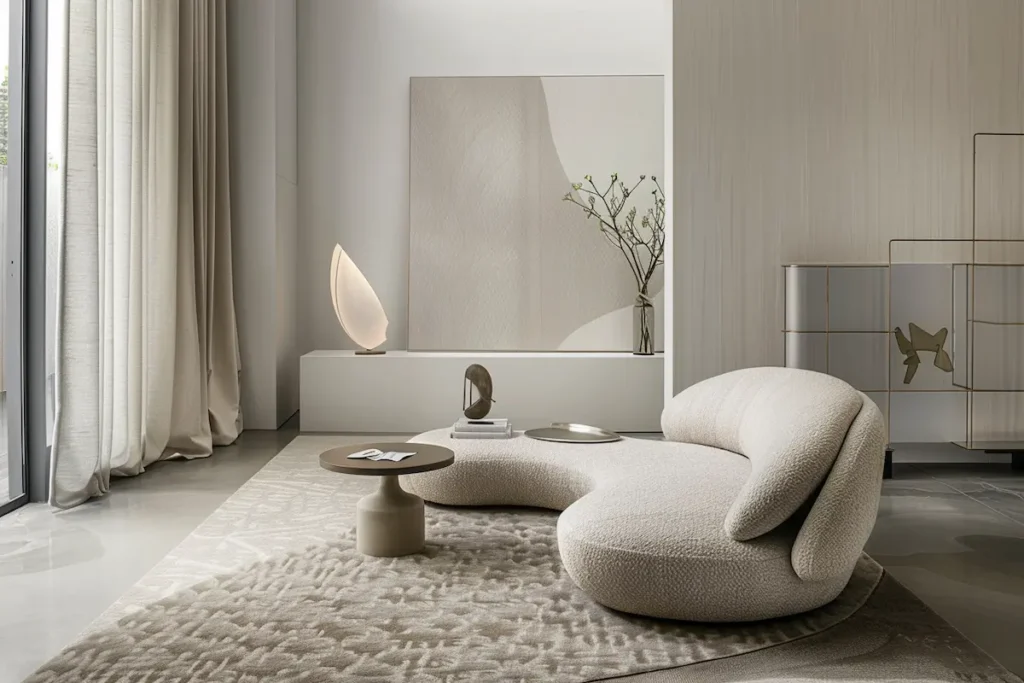
Synthetic upholstery is often chosen for practical reasons: stain resistance, color consistency, or low maintenance. Yet in minimalist interiors, these same qualities frequently work against calm. Synthetic fabrics are engineered for control. Their fibers are uniform, their surfaces sealed, and their behavior predictable. Visually, this creates a flatness that the eye reads instantly.
Because synthetic fabrics reflect light rather than absorb it, they introduce subtle glare. Edges appear sharper, colors feel more saturated, and large upholstered surfaces become visually active. In a minimalist setting, this often leads to compensation: additional cushions, throws, or textures are added to soften the effect. What began as a “clean” choice gradually invites visual clutter.
Another issue is aging. Synthetic fabrics resist change until they don’t. Creases appear suddenly, wear looks abrupt, and surfaces tend to degrade unevenly. This creates a sense that the furniture is either new or worn out, with little in between. Calm interiors benefit from continuity, not abrupt transitions.
Within Crafted Minimalism, this is why synthetic upholstery often feels out of place. Calm is not created by resisting life, but by accommodating it. Natural fabrics evolve gradually, while synthetic ones demand preservation. This distinction connects closely to Using Texture Without Clutter and Handmade vs Mass Production, where material behavior determines whether simplicity feels grounded or merely controlled.
Longevity, patina, and sustainability in fabric choices

Longevity in fabric choices is not about keeping furniture looking new, but about allowing it to age without disruption. Natural fabrics excel at this because their fibers change gradually. Linen softens, wool relaxes, cotton becomes more familiar. These shifts feel continuous rather than abrupt, which helps an interior remain visually stable over time.
Patina plays an important role here. Slight fading, creasing, or texture changes do not signal decline; they signal use. When wear integrates naturally, furniture does not feel outdated or damaged — it feels lived with. This reduces the impulse to replace upholstery simply because it no longer looks pristine.
From a sustainability perspective, this matters more than many performance claims. Furniture that remains emotionally and visually acceptable for longer is less likely to be discarded. Repair becomes a realistic option. Replacement becomes less urgent.
This understanding aligns closely with Is Crafted Minimalism Sustainable, where sustainability is framed as continuity rather than efficiency alone. In Crafted Minimalism, natural fabrics support this continuity by tolerating time instead of resisting it. The calm they provide is not temporary. It deepens as the material settles, reinforcing a long-term relationship between furniture, space, and daily life.
Product type: Linen upholstery for sofas and lounge chairs

Linen upholstery introduces calm through irregularity and breathability. Its fibers vary naturally in thickness, which creates a surface that never feels flat or overly controlled. Light is absorbed rather than reflected, softening the outline of large furniture pieces like sofas and lounge chairs.
Within Crafted Minimalism, linen works best when the form of the furniture is simple and the fabric is allowed to crease naturally. Wrinkles are not flaws; they signal movement and use. Over time, linen becomes softer and more familiar, reinforcing a sense of ease rather than deterioration.
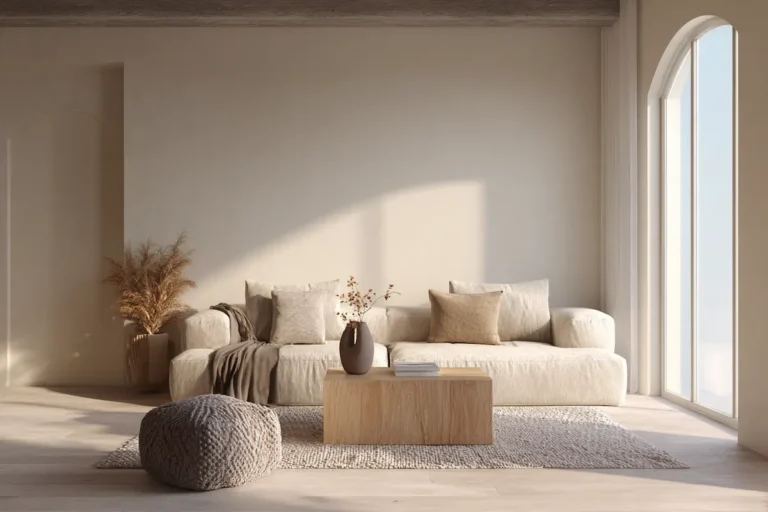
Because linen already carries texture and depth, additional styling becomes unnecessary. A linen-upholstered sofa can stand on its own without layered cushions or throws, making it especially suited to interiors that prioritize restraint, longevity, and quiet comfort.
Explore an upholstered sofa where natural texture and relaxed structure bring softness without visual excess.
Product type: Wool upholstery for seating and cushions

Wool upholstery brings calm through density and resilience. Unlike smoother fibers, wool has natural elasticity and depth, which prevents surfaces from looking flat or overly refined. Light is absorbed unevenly, creating softness without dullness — especially important for seating that occupies visual weight in a room.
Within Crafted Minimalism, wool works particularly well for lounge chairs, dining chairs, and cushions where comfort and structure need to coexist. The fiber regulates temperature naturally and dampens sound, contributing to a quieter atmosphere in everyday use. Over time, wool maintains its form while developing subtle softness, rather than collapsing or shining.
Because wool already holds visual and tactile presence, it does not require decorative layering. Used with restraint, it supports furniture that feels grounded, warm, and durable — without introducing visual clutter.
Product type: Cotton canvas for minimal seating and benches

Cotton canvas offers calm through density and neutrality. Its tightly woven structure feels substantial without becoming rigid, creating a surface that reads as quiet rather than decorative. Visually, canvas sits between linen and wool: less irregular than linen, softer than synthetics, and grounded without drawing attention.
Within Crafted Minimalism, cotton canvas works especially well for benches, dining seating, and low lounge furniture. The fabric supports simple forms and holds its shape without appearing overly refined. Over time, it softens gradually, developing familiarity instead of visible wear.
Because canvas carries its texture internally, it does not require pattern or layering. Used on restrained furniture pieces, it provides durability and calm without introducing visual noise — allowing the form and material balance of the room to remain intact.
Product type: Hemp or mixed natural fibers for durability

Hemp and mixed natural fibers introduce calm through strength rather than softness. Their fibers are coarse, irregular, and inherently durable, which gives upholstered furniture a grounded, almost architectural quality. Visually, these fabrics resist refinement; they hold texture without becoming expressive.
Within Crafted Minimalism, hemp-based fabrics work especially well for dining chairs, benches, and furniture that sees frequent use. The material tolerates friction and pressure without collapsing or shining, allowing the form of the furniture to remain clear over time. Wear appears gradually and evenly, reinforcing continuity rather than deterioration.
Because hemp fabrics already carry visual weight, they require no pattern or embellishment. Used with restraint, they support furniture that feels stable, honest, and quietly resilient — aligning durability with calm rather than performance aesthetics.
Product type: Natural fabric cushions as restrained accents
Natural fabric cushions work best in Crafted Minimalism when they are used sparingly and intentionally. One well-made cushion in linen, wool, or a hemp blend can introduce softness without turning seating into a styled composition. The fabric adds texture through material quality, not through pattern or color contrast.
Because these cushions already carry tactile depth, they do not need layering or repetition. Their role is supportive rather than expressive. Placed on a sofa, bench, or chair, a single natural fabric cushion can soften the space just enough—without distracting from the furniture’s form or material integrity.
Used this way, cushions become part of the structure of calm, not an afterthought added to fix it.

Common mistakes when choosing fabrics for minimalist furniture
One of the most common mistakes in minimalist interiors is assuming that fewer objects automatically create calm. When fabric choices are overlooked, even restrained furniture can feel cold, rigid, or unfinished. The issue is rarely quantity — it is material behavior.
A frequent error is choosing fabrics that are too smooth or technical. Performance upholstery and synthetic blends may appear practical, but their uniform surfaces often introduce glare and visual tension. Instead of settling into the space, the furniture stands apart from it.
Another mistake is compensating with excess. When upholstery feels flat or lifeless, cushions, throws, or contrasting textures are added to “fix” the problem. This quickly leads to visual noise — the opposite of what minimalism intends.
There is also a misconception that natural fabrics must look rustic or informal. In reality, restraint is key. Natural fibers work best when the form is simple and the fabric is allowed to age naturally, without pattern or forced character.
In Crafted Minimalism, fabric is not decoration. It is a structural choice. When chosen correctly, it removes the need for correction rather than creating it.
How to choose fabrics that age well in daily life
Choosing fabrics that age well starts with accepting that use is inevitable. In Crafted Minimalism, the goal is not to prevent wear, but to select materials that change gradually and coherently. Fabrics should soften, fade slightly, and adapt without disrupting the overall calm of the interior.
Natural fibers perform well because they respond to light, friction, and washing in predictable, gentle ways. Linen relaxes and becomes more tactile. Wool retains structure while gaining softness. Cotton canvas lightens subtly without losing integrity. These changes feel continuous rather than sudden, which helps furniture remain visually stable over time.
Another key factor is maintenance philosophy. Fabrics that require constant protection, special treatments, or fear of damage introduce tension into daily life. Calm interiors benefit from materials that tolerate routine use without intervention.
Ultimately, fabrics that age well reduce decision fatigue. When furniture does not need to be preserved or corrected, it becomes easier to live with. Calm emerges not from perfection, but from trust in the material’s ability to carry time gracefully.
Conclusion: fabric as structure, not decoration
In Crafted Minimalism, fabric is not an afterthought. It is a structural element that shapes how furniture feels, ages, and supports daily life. When natural fabrics are chosen intentionally, they reduce the need for styling, correction, and replacement. Calm is built into the furniture itself.
Linen, wool, cotton, and hemp work because they accept use rather than resist it. They soften light, absorb sound, and respond gradually to time. Instead of demanding preservation, they invite trust. This makes interiors feel more stable, familiar, and grounded as the years pass.
Choosing natural fabrics is therefore not about aesthetics alone. It is about selecting materials that carry warmth without visual excess and durability without rigidity. When fabric behaves well, furniture requires less attention — and the space can settle into itself.
In this way, natural fabrics become part of the quiet framework of Crafted Minimalism: supporting calm not by standing out, but by holding everything together.
If you’re ready to translate these fabric principles into specific furniture choices, Must-Have Crafted Minimalist Furniture gives you a practical starting point.