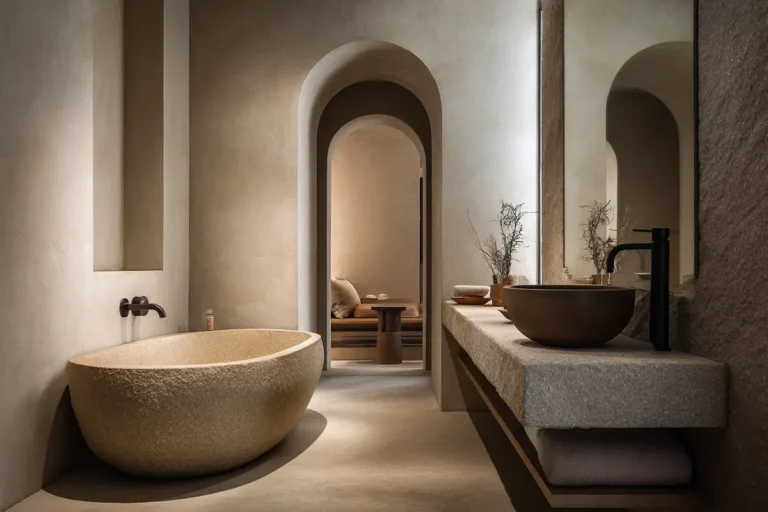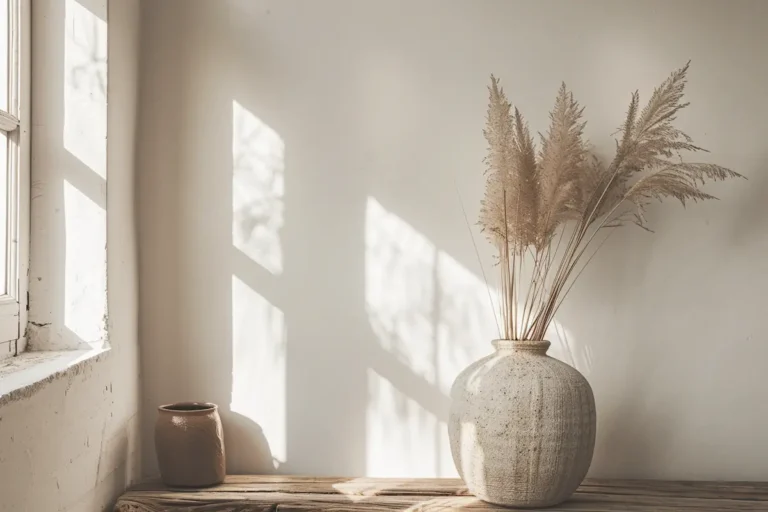
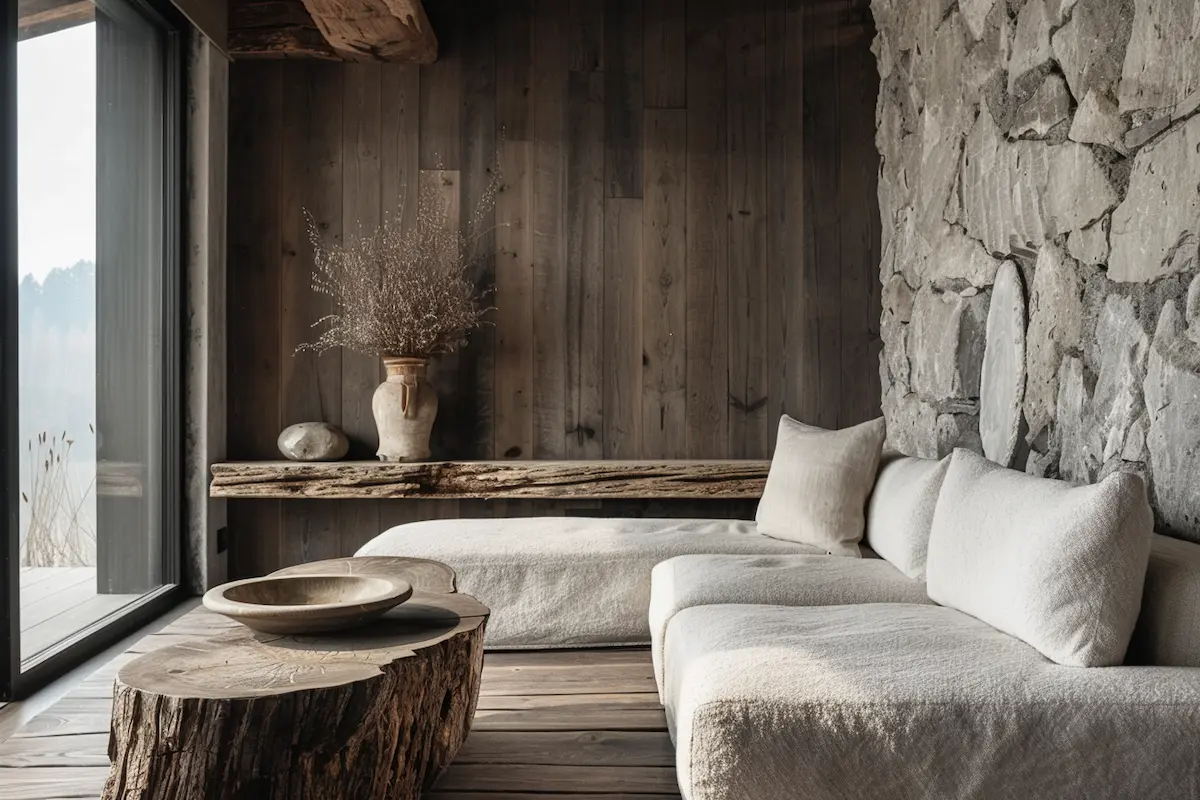
Combining Wood and Stone in Crafted Minimalist Interiors
Why wood and stone belong together
Wood and stone are often treated as opposites, yet in interiors they work best as counterparts. Where wood introduces warmth, movement, and tactility, stone brings weight, stillness, and visual restraint. Together, they create balance without relying on contrast or decoration.
In Crafted Minimalism, this pairing feels instinctively right because both materials are honest about what they are. Wood shows grain, direction, and growth. Stone shows density, mineral variation, and permanence. Neither tries to imitate the other. Instead, they meet at a point of quiet equilibrium.
Used on their own, each material has limits. Too much wood can feel visually busy or overly soft. Too much stone can feel distant or cold. When combined thoughtfully, those extremes cancel each other out. Wood softens stone’s weight. Stone grounds wood’s movement.
This relationship is not about styling or visual drama. It is about material dialogue. The calm comes from how the materials behave together over time — how they age, how they hold space, and how little they ask for correction.
In Crafted Minimalism, wood and stone are not accents. They are structure.
The material dialogue: warmth and weight
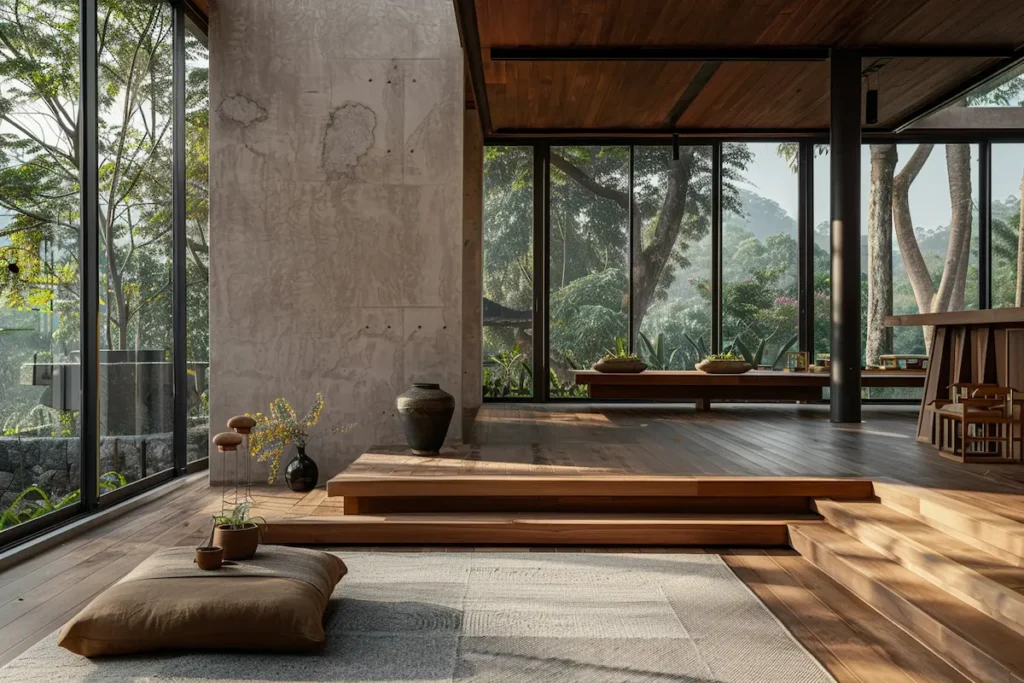
The relationship between wood and stone is not based on contrast, but on complementary behavior. Each material contributes something the other lacks, creating balance through function rather than visual drama.
Wood introduces warmth through movement. Its grain direction, tonal variation, and tactile surface keep the eye gently engaged. Even when forms are simple, wood never appears static. This movement makes spaces feel alive, but without restraint it can also create visual softness or restlessness.
Stone responds by doing the opposite. It slows everything down. Mineral variation is non-directional, meaning the eye does not follow a line or pattern. Instead, it rests. Stone adds visual silence and physical weight, grounding the space and counterbalancing wood’s motion.
In Crafted Minimalism, this dialogue is essential. Calm is not achieved by eliminating variation, but by distributing it intelligently. Wood carries expression. Stone carries stillness. Together, they prevent either material from becoming dominant.
What matters most is proportion. Stone works best when it supports — bases, surfaces, anchors. Wood works best when it remains touchable — tabletops, seating, vertical elements. When each material stays within its natural role, the interior feels stable without feeling rigid.
This balance allows both materials to exist honestly, without forcing contrast. The result is an interior that feels settled, grounded, and quietly intentional.
Why wood alone or stone alone is often not enough
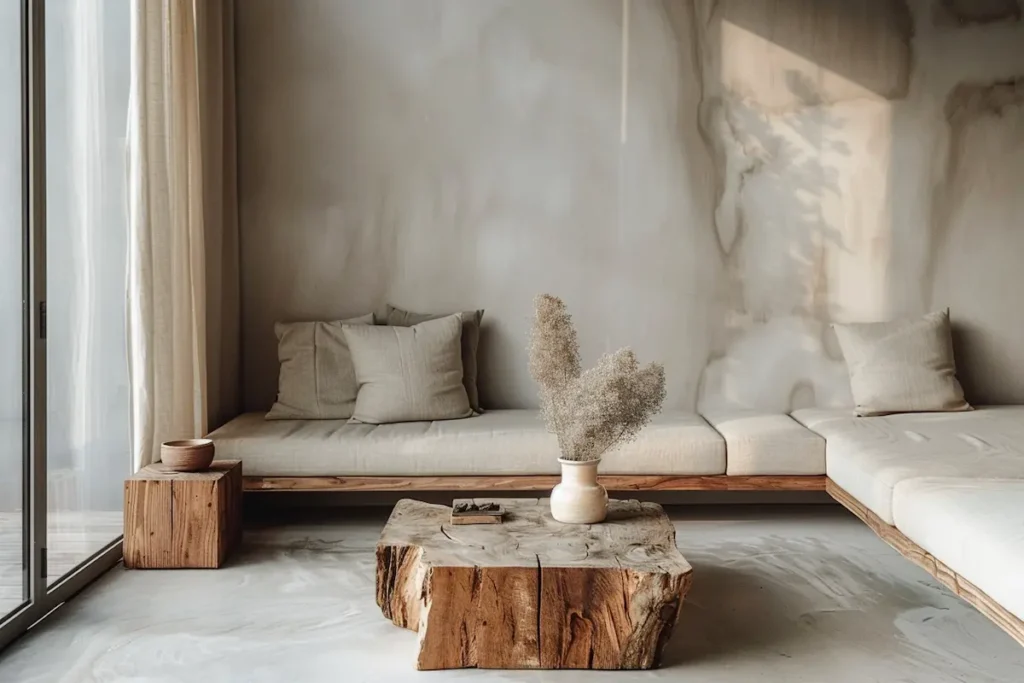
Used on their own, both wood and stone can fall short of creating lasting calm. Wood-only interiors often feel warm and inviting at first, but without a counterbalance they can become visually active. Grain direction, tonal variation, and repeated wooden surfaces introduce continuous movement. Over time, this can feel busy rather than restful — especially in larger or open spaces.
Stone-only interiors create the opposite effect. Their stillness and density can feel grounding, but when stone dominates without softer elements, the space risks becoming distant or emotionally cool. Even when colors are neutral, too much stone can feel heavy and unyielding, especially in daily living environments.
Crafted Minimalism addresses this by refusing to let a single material carry the entire interior. Calm emerges not from purity, but from balance. Wood needs something to slow it down. Stone needs something to soften its weight.
This is why the principles explored in Why Raw Wood Is Essential are most effective when raw wood is allowed to interact with other grounding materials rather than standing alone. When wood and stone are combined thoughtfully, neither material has to compensate for its own limitations. Together, they create stability without rigidity and warmth without excess.
Visual rhythm: grain versus mineral variation
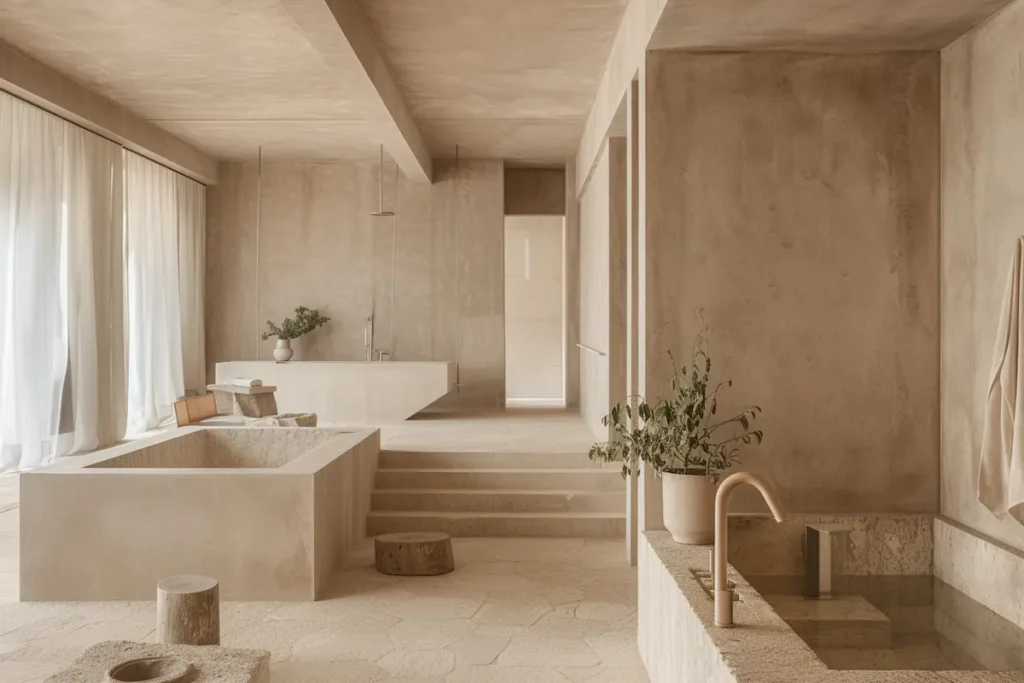
Visual rhythm is one of the most underestimated aspects of calm interiors. It determines how the eye moves — or rests — within a space. Wood and stone contribute fundamentally different rhythms, and it is precisely this difference that makes their combination so effective.
Wood introduces directional movement. Grain lines lead the eye along a surface, creating flow and subtle energy. Even in muted tones, wood carries motion. This is why wooden elements feel warm and alive, but also why too much exposed grain can feel visually active.
Stone behaves differently. Mineral variation is non-directional. There is no clear line to follow, no pattern to track. Instead, the eye pauses. Stone interrupts movement and introduces stillness. Its variation exists, but it does not guide attention — it absorbs it.
In Crafted Minimalism, calm emerges when these rhythms are layered intentionally. Wood provides continuity and tactility. Stone provides visual silence. Together, they prevent the interior from becoming either restless or inert.
This principle closely relates to How Materials Create Calm, where perception is shaped by surface behavior rather than form alone, and to Using Texture Without Clutter, where embedded variation replaces decorative layering.
Longevity and aging: how wood and stone evolve together
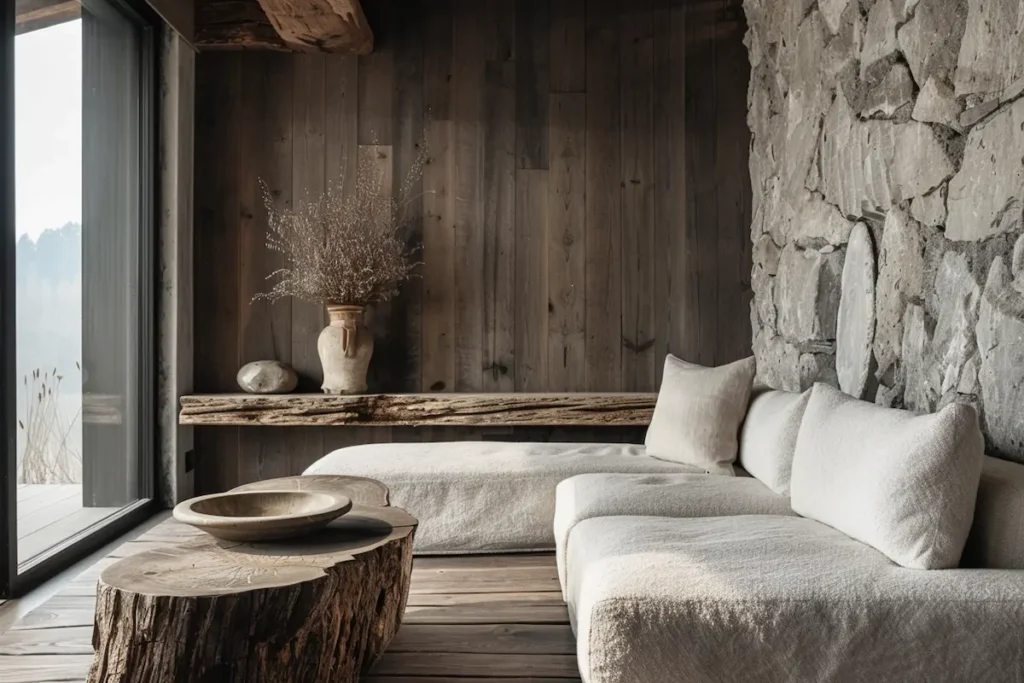
Longevity in Crafted Minimalism is not about keeping materials unchanged, but about how they age alongside each other. Wood and stone mature at different rhythms, and that difference creates stability rather than imbalance.
Wood responds visibly to time. Its surface deepens in tone, edges soften slightly, and patina develops through touch and light. These changes make wood feel more familiar and lived-in. Stone, by contrast, remains largely constant. Its density and structure change very little, even as subtle marks or softening appear over years of use.
When combined, these aging processes support each other. Wood brings warmth and narrative. Stone provides continuity and visual anchoring. The interior does not feel like it is shifting or deteriorating — it feels like it is settling.
This is why wood-and-stone interiors often feel calmer over time rather than dated. The materials do not compete in how they age. One evolves, the other holds. Together, they reduce the urge for updates or replacements.
This perspective aligns closely with Is Crafted Minimalism Sustainable, where longevity is defined not by resistance to wear, but by a material’s ability to remain visually and emotionally relevant as time passes.
Product type: Solid wood dining table with stone base or stone accents
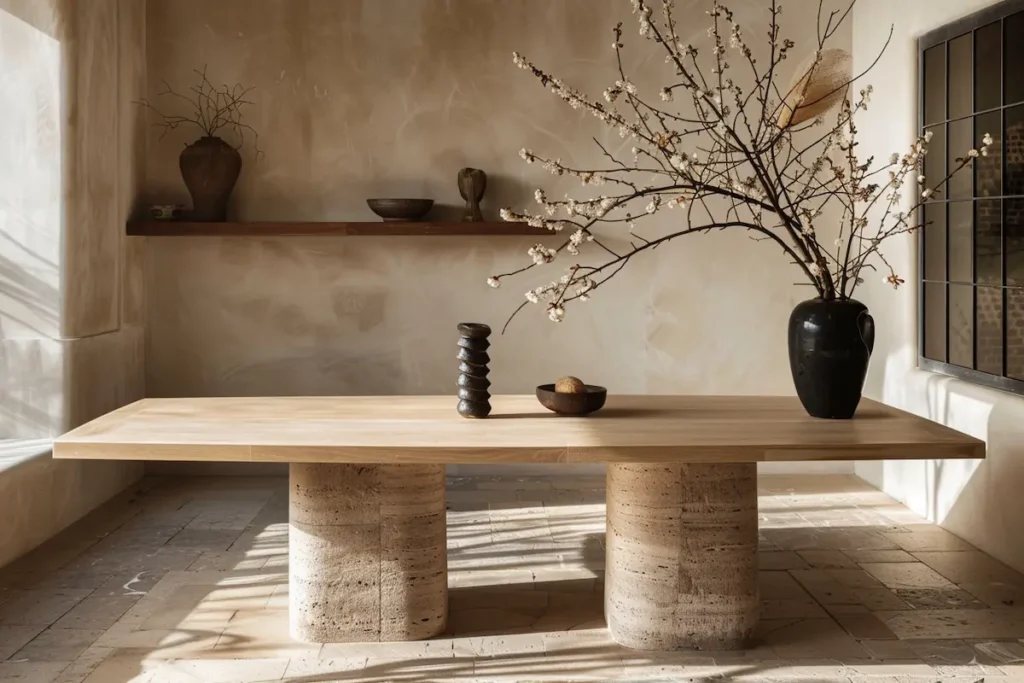
A solid wood dining table paired with a stone base or stone detailing captures the balance that defines Crafted Minimalism. The wooden tabletop brings warmth and tactility through visible grain and subtle movement, while the stone element adds visual weight and stillness beneath. This distribution matters: warmth where people touch, stability where the structure carries load.
Within this combination, the materials are not competing. The stone does not decorate the table; it anchors it. The wood does not soften the stone; it humanizes it. Together, they create a dining surface that feels calm, grounded, and trustworthy in daily use.
This type of table works especially well in open-plan spaces, where visual stability is essential. The stone element slows the eye and grounds the room, while the wood keeps the space inviting. Compared to fully wooden tables, the result feels less visually busy and more composed over time.
For a deeper understanding of wood’s role in this balance, see Why Raw Wood Is Essential.
Product type: Stone coffee table paired with raw wood seating
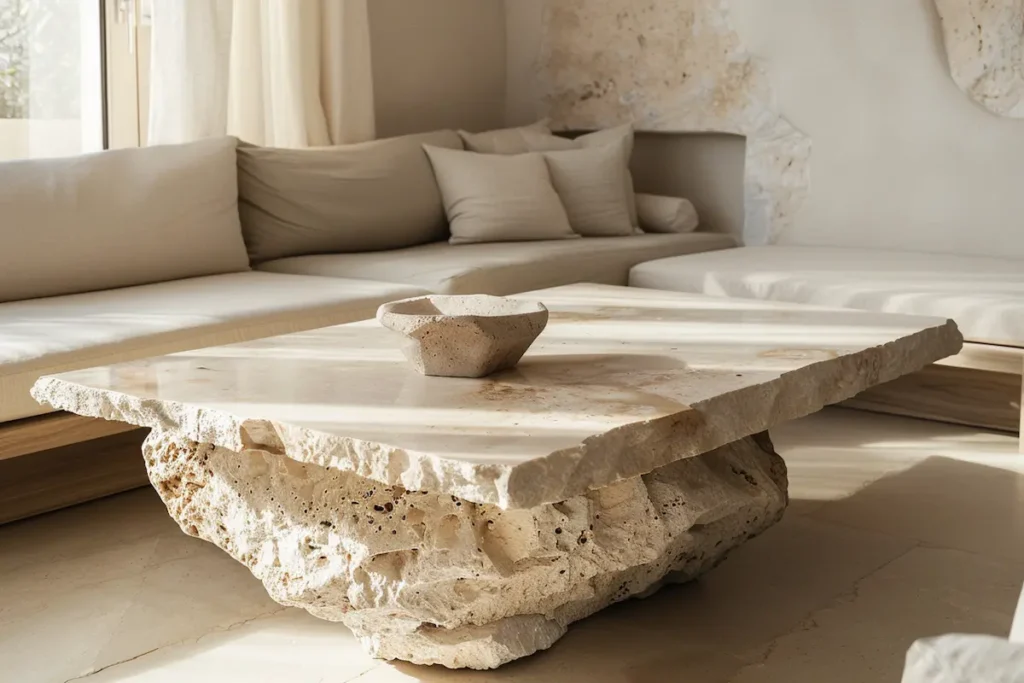
A stone coffee table functions as a visual anchor within a seating area. Its low height and mineral surface slow the eye, creating a stable center around which the rest of the space can settle. When paired with raw wood seating, this stability becomes especially effective.
Raw wood chairs or benches introduce warmth and tactility around the stone surface. The grain brings movement, while the stone holds everything in place. This prevents the seating area from feeling either too soft or too static. Instead, the materials establish a calm rhythm that supports conversation and daily use.
This combination works particularly well in living rooms where visual restraint is important. The stone table reduces the need for decorative objects, while the wood seating keeps the space approachable. Together, they form a balanced focal point that feels intentional without drawing attention to itself.
Explore a stone coffee table where raw mineral texture and weight create a quiet center for the living space.
Product type: Wood and stone side table or console
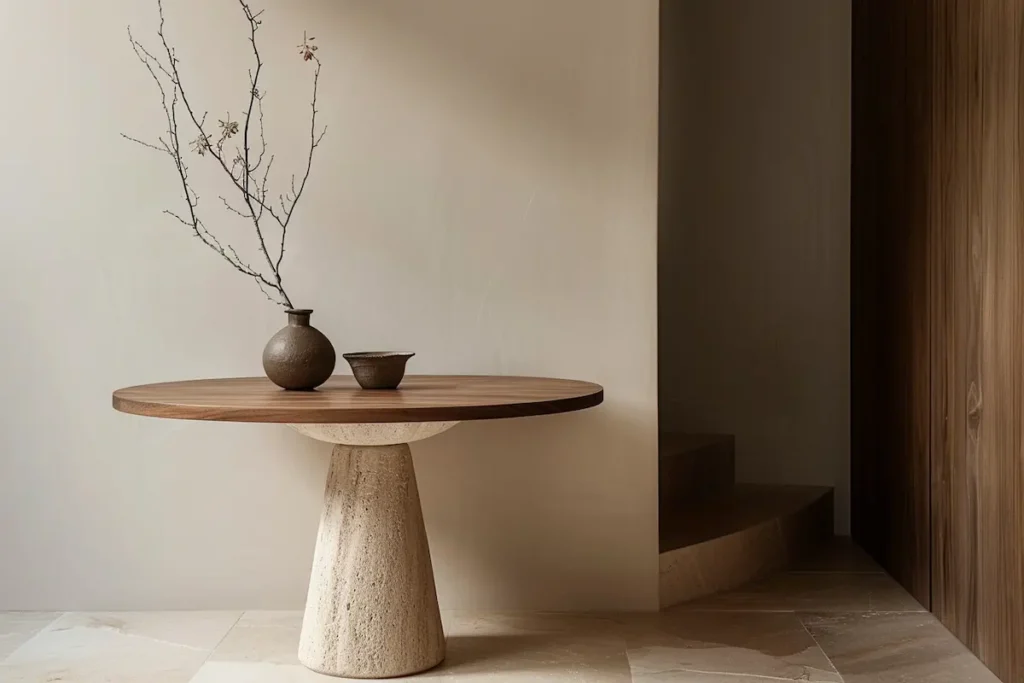
A wood and stone side table or console is often the most subtle way to introduce this material combination into an interior. On a smaller scale, the dialogue between warmth and weight becomes more refined. The stone element provides quiet stability, while the wood surface adds tactility and visual softness.
Because these pieces are not primary furniture, they work best when they remain understated. A stone base or stone shelf grounds the object, preventing it from feeling decorative or lightweight. The wooden top keeps the piece approachable and human in scale.
In Crafted Minimalism, side tables and consoles function as transitional elements. They connect spaces without drawing attention, supporting flow rather than interrupting it. Used in hallways, next to seating, or along walls, this combination reinforces material consistency throughout the interior — without introducing repetition or excess.
Explore a travertine bistro table where natural stone texture adds quiet weight and timeless presence to small dining spaces.
Common mistakes when combining wood and stone
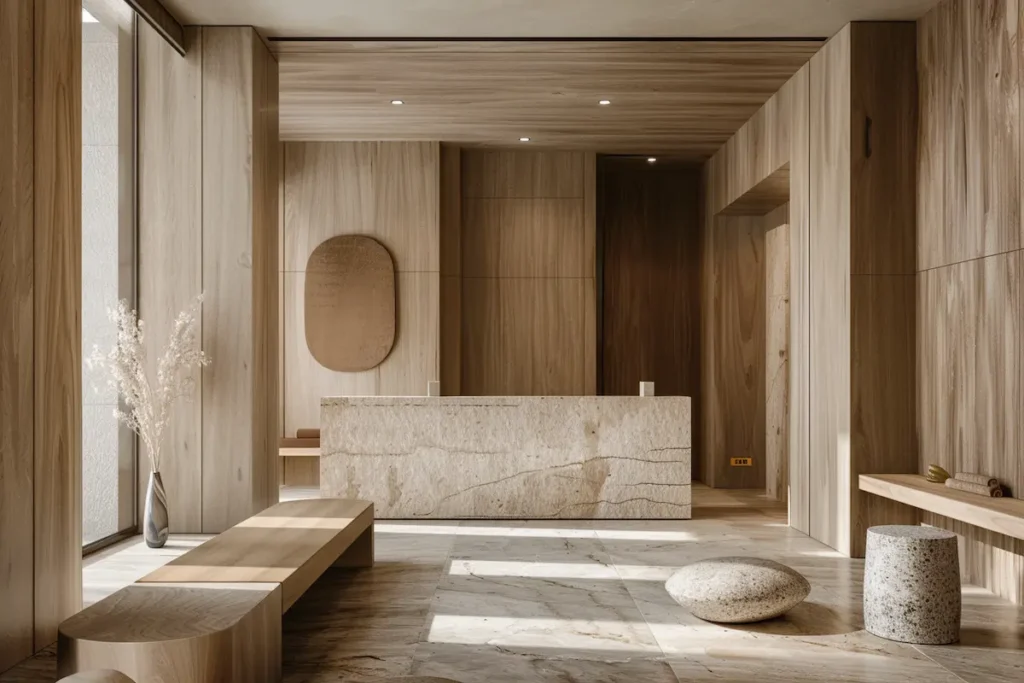
The most common mistake when combining wood and stone is treating the pairing as a visual contrast rather than a structural relationship. When materials are chosen for effect instead of balance, the interior can quickly feel staged or heavy-handed.
A frequent error is overusing stone as a decorative surface. Stone works best when it carries weight — bases, anchors, or primary planes. When used too lightly or repeatedly, it loses its grounding role and becomes visual noise. Similarly, combining multiple stone types in one space often fragments calm instead of reinforcing it.
Another issue is mismatched refinement. Highly polished stone paired with rustic wood creates tension rather than harmony. Crafted Minimalism relies on materials that feel equally honest. Subtle finishes, visible grain, and restrained mineral texture allow both materials to coexist without hierarchy.
Finally, scale matters. Small stone accents paired with dominant wooden elements often feel unresolved. The balance works best when stone is allowed to hold space and wood is allowed to be touched. When each material stays within its natural role, calm follows without correction.
How to apply wood and stone in everyday interiors
Applying wood and stone successfully in everyday interiors is less about making statements and more about placing materials where they naturally belong. The combination works best when it supports daily routines instead of interrupting them.
In dining areas, wood should remain the primary touch surface — tabletops, chair seats, armrests — while stone provides stability underneath or nearby. This keeps the space warm and usable while maintaining visual grounding. In living spaces, stone works well at a low level: coffee tables, side tables, or hearth elements that anchor the room. Wood then frames the experience through seating and storage.
Entryways and transitional zones benefit from this pairing as well. A stone console base or surface slows movement and creates a sense of arrival, while wood keeps the space approachable rather than formal.
The key is restraint. One strong stone element per zone is often enough. When wood and stone are allowed to do their work quietly, the interior feels coherent without needing repetition or decoration. Calm comes from placement, not abundance.
How to apply wood and stone in everyday interiors
Applying wood and stone successfully in everyday interiors is less about making statements and more about placing materials where they naturally belong. The combination works best when it supports daily routines instead of interrupting them.
In dining areas, wood should remain the primary touch surface — tabletops, chair seats, armrests — while stone provides stability underneath or nearby. This keeps the space warm and usable while maintaining visual grounding. In living spaces, stone works well at a low level: coffee tables, side tables, or hearth elements that anchor the room. Wood then frames the experience through seating and storage.
Entryways and transitional zones benefit from this pairing as well. A stone console base or surface slows movement and creates a sense of arrival, while wood keeps the space approachable rather than formal.
The key is restraint. One strong stone element per zone is often enough. When wood and stone are allowed to do their work quietly, the interior feels coherent without needing repetition or decoration. Calm comes from placement, not abundance.