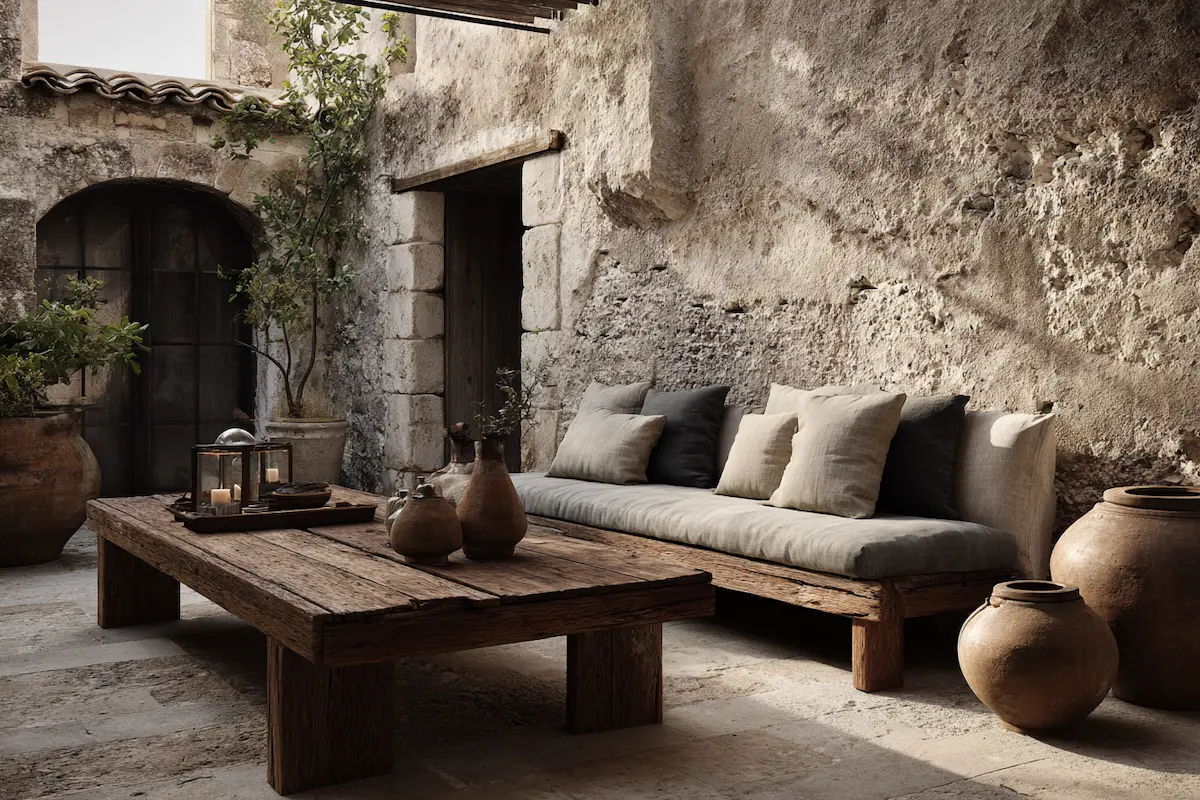
Crafted Minimalism Patio: 4 Outdoor Styles Built on Materials and Calm
A patio is often treated as an afterthought — a place for furniture rather than design. Yet within Crafted Minimalism, the patio is not a separate zone, but a natural extension of the home. It is where architecture meets open air, and where materials are experienced in their most honest form.
Unlike interior spaces, an outdoor setting leaves little room for excess. Light changes throughout the day, weather exposes every surface, and time becomes part of the design. This is exactly why a crafted minimalist approach works so well outside. The focus shifts away from decoration and toward material weight, proportion, and restraint.
A well-designed patio doesn’t rely on styling tricks. Instead, it feels grounded through stone, wood, mineral finishes, and carefully chosen forms that age beautifully. Fewer objects, stronger materials — a principle that becomes even more important outdoors.
In this article, I explore four distinct Crafted Minimalism patio styles, each built around a clear material story. From stone-driven Mediterranean calm to sculptural modern compositions and rustic European courtyards, every style is designed to be recreated, not just admired.
For each patio style, I recommend three to four carefully selected products that appear directly in the visual inspiration. I explain why each item was chosen, how it supports the material language of the space, and how it contributes to a calm, cohesive outdoor setting.
To understand how patios fit within the broader interior vision, you can explore the full framework in Crafted Minimalism by Room Overview. And because material choice is the foundation of every outdoor space, you’ll also find deeper guidance in Artisanal Materials in Crafted Minimalism.
Let’s begin with the patio — where minimalism slows down and materials take the lead.
Disclaimer: This post may contain affiliate links. This means that if you click on one of these links and make a purchase, we may earn a small commission—at no extra cost to you.
All images featured in this article are AI-generated to illustrate the aesthetic and mood of the interior style. The products linked are carefully selected items that, in our view, most closely match the look and feel of these designs.
As an Etsy affiliate and Amazon Associate, we earn from qualifying purchases. We only recommend products we genuinely believe align with the style and atmosphere presented in our AI-created interiors.
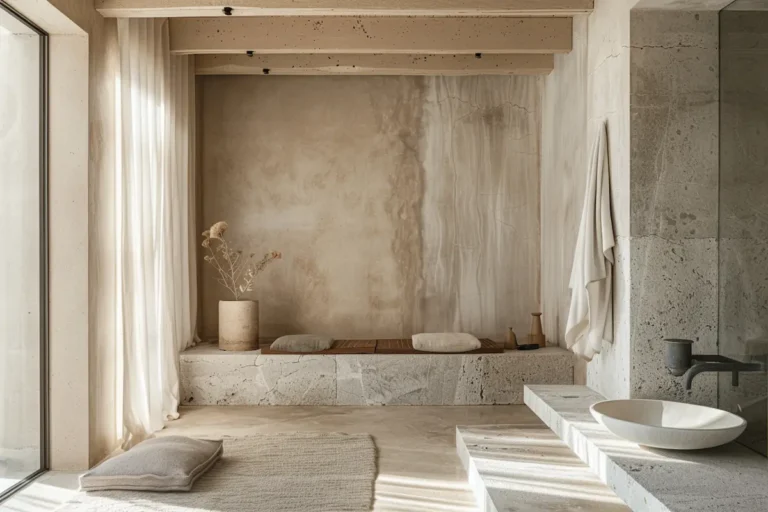
Stijl 1 — Stone & Shade Patio

Mediterranean calm, mass, and softened light
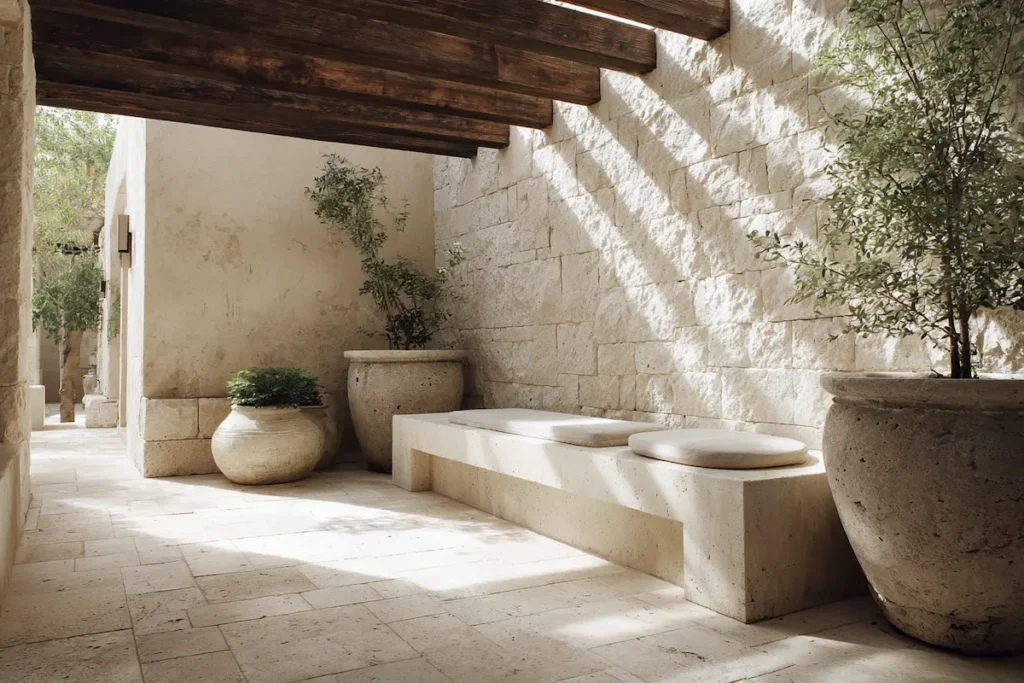
A Stone & Shade patio is built around one core idea: outdoor calm through weight and restraint. Instead of filling the space with furniture, this style relies on architectural mass, mineral surfaces, and carefully controlled softness. Shade is not an accessory here — it is part of the design.
Inspired by Mediterranean courtyards, this patio style feels grounded and timeless. Stone walls and floors absorb heat and light, creating a slow, quiet atmosphere throughout the day. Decorative elements are kept to a minimum, allowing materials to age naturally and take center stage.
This is a patio designed to be experienced gradually. Morning light, afternoon shadow, evening stillness — the space changes, but never becomes busy.
Curated Product Selection (Shop the Look)
1. Potted Olive Tree
Why this piece works:
Every Stone & Shade patio needs one organic element that feels architectural rather than decorative. An olive tree does exactly that. Its sculptural trunk and muted foliage introduce life without disrupting the calm, mineral palette.
I chose an olive tree specifically because it feels timeless and regional. It references Mediterranean courtyards without becoming literal or themed. Placed in a large pot, it adds vertical balance and softens the heaviness of stone surfaces.
Even as an artificial version, this works well in patios where maintenance or climate makes live planting difficult — the visual effect remains calm and grounded.
2. Whitewashed Terracotta Planters
Why this piece works:
Terracotta is one of the most honest outdoor materials — porous, imperfect, and beautifully matte. The whitewashed finish softens the color just enough to blend seamlessly with stone and plaster.
I chose these planters because they introduce texture without contrast. Their slightly irregular surface prevents the patio from feeling too polished, while the neutral tone keeps the focus on form rather than color.
Used in pairs or small clusters, they reinforce the Mediterranean character of the space without turning it into decor.
3. Limestone Veneer Wall Finish — Dover
by Marble Trend
Why this piece works:
In this style, walls are not a backdrop — they are the foundation. The Dover limestone veneer brings exactly the kind of quiet texture a Stone & Shade patio needs.
I chose this finish because it adds depth without pattern. The natural variation in the stone catches light subtly throughout the day, enhancing shadow rather than competing with it. It creates the sense of an enclosed, grounded courtyard even in more modern settings.
This type of wall treatment instantly elevates a patio from furnished outdoor space to architectural environment.
4. Neutral Outdoor Seat Cushions
Why this piece works:
Softness in a Stone & Shade patio should always be restrained. These neutral outdoor cushions add comfort without introducing visual clutter.
I chose cushions in light, muted tones because they echo the surrounding stone rather than standing out against it. Their role is functional, not decorative — to make seating usable while preserving the calm, mineral atmosphere.
Used sparingly, they strike the right balance between livability and restraint.
Why This Style Works So Well Outdoors
- Stone and terracotta age beautifully
- Shade becomes a design element, not an afterthought
- Organic forms soften architectural mass
- The space remains calm in all seasons
A Stone & Shade patio doesn’t ask to be styled. It simply exists with confidence, letting materials, light, and time do the work.
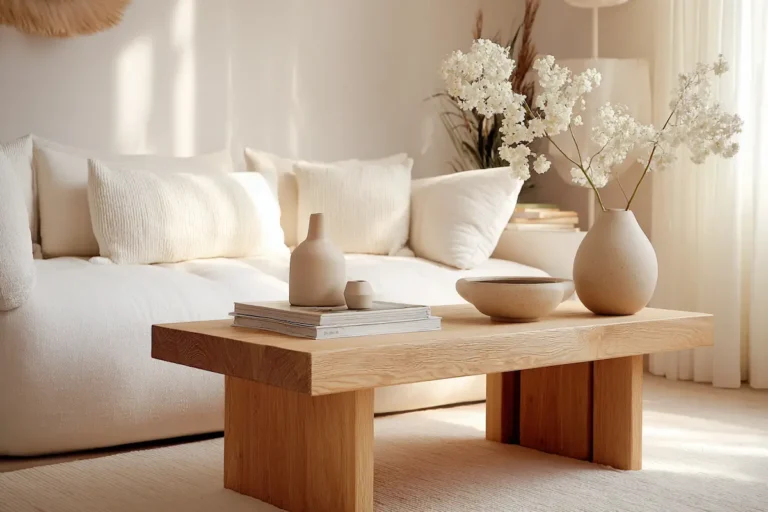
Stijl 2 — Warm Wood Outdoor Lounge
Intimate, tactile, and quietly grounded
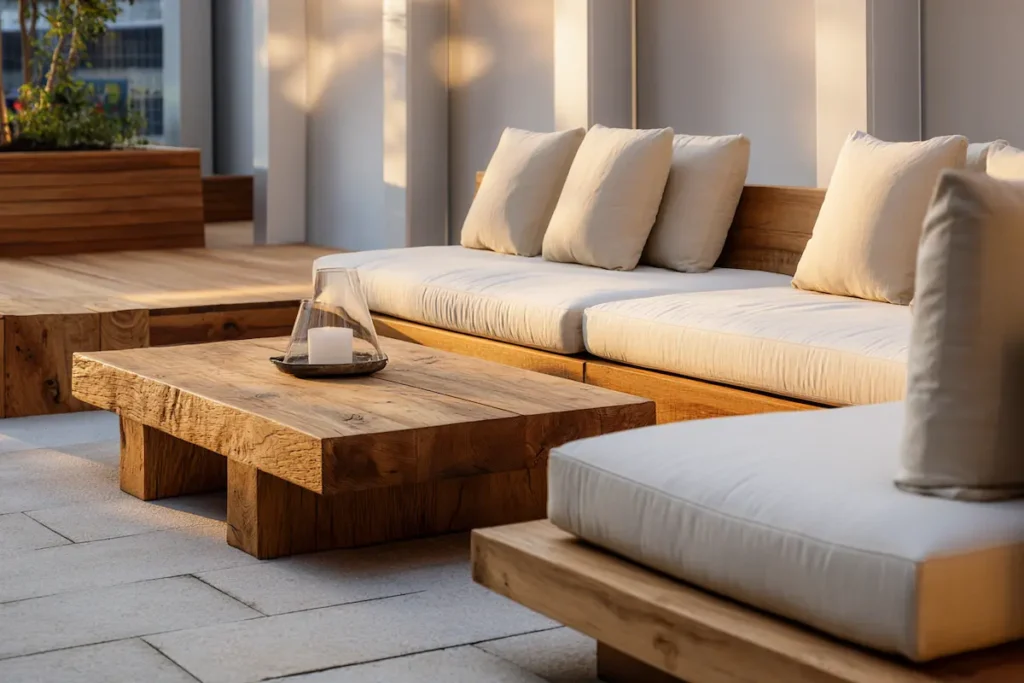
A Warm Wood Outdoor Lounge is about ease and enclosure. Where stone patios feel architectural and still, this style introduces warmth through wood, soft forms, and tactile surfaces — without losing the restraint that defines Crafted Minimalism.
Rather than treating outdoor seating as a separate furniture category, this approach mirrors interior design logic. Low seating, generous proportions, and a limited material palette create a patio that feels like a natural extension of the home. The atmosphere is relaxed, but never casual.
Wood plays a central role here. Its grain, warmth, and ability to age gracefully soften the outdoor environment, especially when paired with restrained textiles and simple forms. The result is a patio that invites lingering — without becoming visually busy.
Curated Product Selection (Shop the Look)
1. Light Eucalyptus Wood Outdoor Coffee Table
by Armen Living
Why this piece works:
This coffee table anchors the lounge without weighing it down. The light eucalyptus wood introduces warmth while maintaining a clean, contemporary feel — ideal for a minimalist outdoor setting.
I chose this table because of its low profile and simple geometry. It doesn’t dominate the space, but it gives the seating area structure and intention. The pale wood tone reflects light gently, preventing the patio from feeling heavy or enclosed.
Placed centrally, it encourages a relaxed seating layout while keeping the overall composition calm and cohesive.
2. Amalfi Outdoor Collection (Wood Seating & Lounge Elements)
Why this piece works:
The Amalfi collection brings together everything this style needs: warm wood, generous proportions, and restrained detailing. The pieces feel substantial without becoming bulky, making them ideal for a lounge-focused patio.
I chose this collection because it emphasizes comfort through form, not excess cushioning or decorative elements. The wood structure remains visible, reinforcing material integrity, while the seating feels inviting and grounded.
Used selectively — one sofa or a pair of lounge chairs — these pieces help define the patio as a place to settle, not just pass through.
3. Reclaimed Wood Two-Seater Sofa — Tuscan
by Jo Alexander
Why this piece works:
Reclaimed wood introduces a subtle layer of history into an otherwise clean, modern patio. This two-seater sofa balances refinement and authenticity, making it especially suitable for Crafted Minimalism.
I chose this piece because it adds depth without decoration. The reclaimed wood brings character, while the form remains restrained and timeless. It pairs beautifully with lighter wood elements, adding contrast without disrupting the calm palette.
This sofa works best as the primary seating piece, allowing the rest of the patio to remain minimal and uncluttered.
Why This Style Works So Well Outdoors
- Wood softens open spaces without clutter
- Low seating encourages relaxation
- Material consistency creates calm
- The patio feels like an extension of the interior
A Warm Wood Outdoor Lounge is not about styling for impact. It’s about creating a space that feels effortless, grounded, and lived in — season after season.
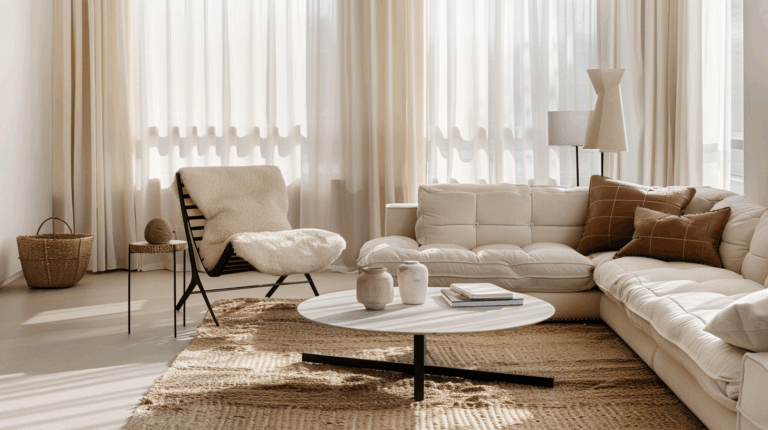
Style 3 — Sculptural Minimal Patio

Gallery-like calm, bold forms, and deliberate emptiness
A Sculptural Minimal patio treats the outdoor space as a composition, not a lounge. Comfort is present, but never the starting point. Instead, this style is built around form, scale, and negative space — allowing each object to exist almost as an art piece.
Rather than filling the patio with seating, this approach relies on fewer, larger elements. Objects are placed with intention, often leaving generous open areas around them. This restraint is what creates the sense of quiet luxury. Nothing competes. Nothing feels added.
Inspired by modern architecture and gallery spaces, this patio style works especially well in urban settings, contemporary homes, or courtyards where structure and clarity matter more than softness.

Curated Product Selection (Shop the Look)
1. Modular Outdoor Sofa — Mellow Center Module
by Cane-line
Why this piece works:
This modular sofa introduces comfort without softening the overall aesthetic. Its low, clean-lined form keeps the patio grounded and architectural, while the neutral upholstery blends seamlessly into a sculptural setting.
I chose this piece because it allows for flexible composition. Used as a single module or repeated symmetrically, it reinforces the idea of furniture as structure rather than decoration. The generous proportions feel intentional, not casual — a perfect match for a gallery-inspired outdoor space.
2. Block Table
Why this piece works:
The Block Table functions as a sculptural anchor. Its solid, geometric form echoes architectural elements and reinforces the weight-driven language of this style.
I chose this table because it reads more like a plinth than a piece of furniture. It doesn’t invite styling; it invites presence. Used sparingly, it becomes a focal point without drawing attention away from the overall composition.
This kind of object defines space simply by existing.
3. Stone Outdoor Lounge Set
via 2Modern
Why this piece works:
Stone introduces permanence — something few outdoor materials can achieve at this level. This lounge set adds visual weight and tactile contrast, reinforcing the architectural nature of the patio.
I chose stone seating because it challenges the idea that outdoor furniture must be soft or lightweight. In a Sculptural Minimal patio, stone feels deliberate and timeless, especially when paired with neutral upholstery or left unadorned.
Used selectively, these pieces transform the patio into an outdoor room with presence.
4. Alma Outdoor Coffee Table
by Modest Hut
Why this piece works:
The Alma coffee table introduces softness through proportion rather than material. Its rounded form subtly contrasts the sharper lines of block tables and stone seating, preventing the space from feeling too rigid.
I chose this table because it maintains simplicity while adding balance. It works as a visual pause — a moment of relief between heavier elements — without becoming decorative.
In a space defined by form and restraint, this kind of quiet counterbalance is essential.
Why This Style Works So Well Outdoors
- Large forms create calm
- Negative space feels intentional, not empty
- Objects act as anchors, not accessories
- The patio becomes an experience, not a setup
A Sculptural Minimal patio doesn’t invite clutter. It invites stillness — allowing architecture, material, and light to define the atmosphere.
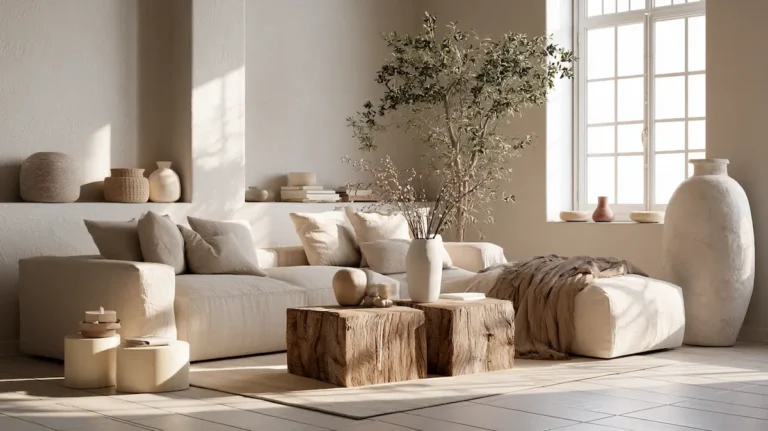
Style 4 — Rustic European Courtyard
Time-worn materials, quiet authenticity, lived-in calm
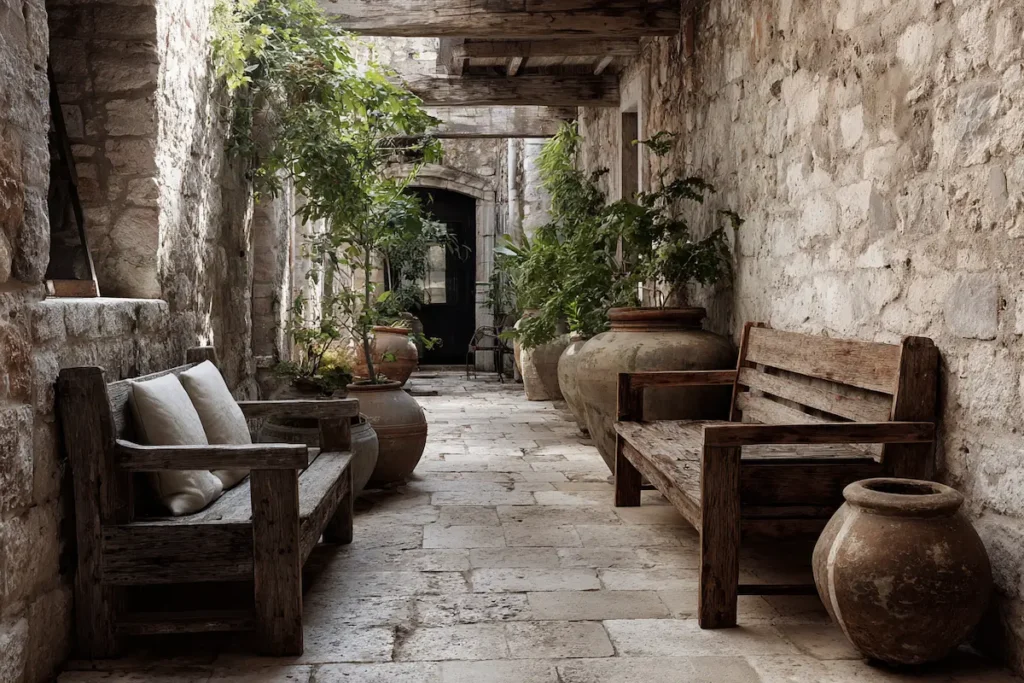
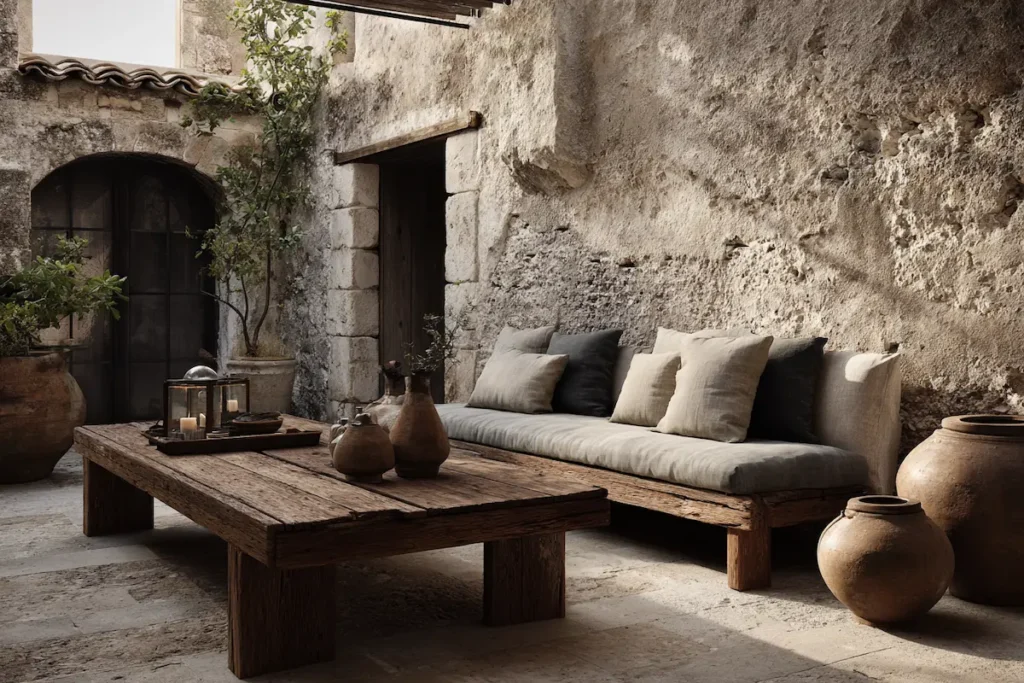
A Rustic European Courtyard patio is defined by authenticity over polish. This style doesn’t aim to look new or styled — it feels collected, settled, and shaped by time. Within Crafted Minimalism, it’s the most tactile and emotionally grounded approach to outdoor living.
Instead of architectural sharpness or sculptural statements, this patio relies on patina, texture, and honest materials. Weathered wood, hand-thrown pottery, and simple metal accents create an atmosphere that feels quietly familiar, as if the space has always existed this way.
This is a style that works especially well in enclosed patios, inner courtyards, or gardens framed by walls — spaces where light is softer and materials can reveal their character slowly throughout the day.
Curated Product Selection (Shop the Look)
1. Weathered Teak Outdoor Chair
via Chairish
Why this piece works:
This chair immediately sets the tone for the entire courtyard. The aged teak surface, softened by exposure and use, introduces warmth without refinement. It feels sturdy, honest, and quietly functional.
I chose this piece because it doesn’t try to look rustic — it simply is. The muted grey tone of the wood pairs naturally with stone floors and plastered walls, while the straightforward form keeps the space grounded rather than decorative.
Used alone or as a small pair, it reinforces the idea that outdoor seating doesn’t need softness to feel inviting.
2. Vintage Pottery Vase
Why this piece works:
Hand-thrown pottery is essential in a Rustic European setting. This vintage vase adds a human scale and sense of history that manufactured decor can’t replicate.
I chose this piece because of its irregular form and muted glaze. It works as a quiet focal point — whether placed on the ground, on a low table, or against a wall — without ever feeling styled.
Left empty or holding a single branch, it brings softness and imperfection into the space.
3. Reclaimed Wood Coffee Table
Why this piece works:
This coffee table introduces function without refinement. The reclaimed wood surface carries visible wear, knots, and variation — qualities that add depth rather than distraction.
I chose this table because it feels collected, not designed. Its simple form allows surrounding materials to breathe, while the aged wood ties together the chair, pottery, and stone elements of the patio.
It works best left mostly clear, reinforcing the principle that surfaces don’t need styling to feel complete.
4. Simple Metal Outdoor Lantern
Why this piece works:
Lighting in a Rustic European courtyard should feel atmospheric, not architectural. This simple metal lantern provides warmth and intimacy without introducing a design statement.
I chose this lantern because of its unpretentious form. It complements aged wood and pottery without competing for attention, and its soft glow enhances evening calm rather than overpowering it.
Placed on the ground or on a low surface, it becomes part of the environment rather than a focal point.
Why This Style Works So Well Outdoors
- Materials age beautifully instead of wearing out
- Patina adds depth without decoration
- Fewer objects create stronger atmosphere
- The patio feels timeless rather than styled
A Rustic European Courtyard patio doesn’t try to impress. It simply exists with confidence, shaped by material, light, and time — exactly what Crafted Minimalism outdoors is meant to be.
How to Choose the Right Crafted Minimalist Patio Style
Choosing a Crafted Minimalist patio style isn’t about picking the most visually impressive setup — it’s about selecting the style that brings the most ease and longevity to your outdoor space. A patio is experienced differently than an interior room. Light shifts constantly, materials are exposed to weather, and the space is often used more intuitively.
Start with the architecture and scale of your patio. Enclosed patios or courtyards benefit from heavier, grounding styles such as Stone & Shade or Rustic European, where walls and mass create intimacy. More open patios, terraces, or garden-facing spaces often work better with Warm Wood or Sculptural Minimal styles, which rely on form and openness rather than enclosure.
Sun exposure also plays a key role. Patios with intense sunlight feel calmer when balanced with stone, plaster, and shade-driven designs. Shadier patios can handle warmer materials like wood and reclaimed elements without becoming visually heavy. Rather than fighting the natural conditions, let them guide your material choices.
Finally, consider how the patio connects to the interior. Crafted Minimalism doesn’t require identical styling indoors and out, but it does benefit from material continuity. A stone-heavy interior pairs naturally with a Stone & Shade patio, while sculptural or modern interiors transition more seamlessly into a Sculptural Minimal outdoor space.
Most importantly, choose one dominant style. Outdoor spaces become cluttered faster than interiors, and mixing styles often dilutes the calm. A single, clearly defined material story will always feel more refined — and more timeless — than a collection of good ideas.
Fewer Objects, Stronger Materials: Outdoor Restraint Explained
Outdoor spaces leave little room for distraction. Unlike interiors, where walls and ceilings can absorb visual noise, patios expose every object to open light and changing conditions. This makes restraint not just an aesthetic preference, but a practical design principle.
In Crafted Minimalism, fewer objects allow materials to perform their role fully. Stone, wood, and mineral finishes reveal their texture through light and shadow, especially outdoors. When too many elements compete, these subtleties are lost. What remains is clutter — even when each item is individually well chosen.
This is why a crafted minimalist patio relies on weight rather than quantity. One substantial bench will always feel calmer than several lightweight chairs. A single ceramic pot placed with intention is more effective than multiple decorative planters. Outdoors, every object should feel earned.
Material repetition is equally important. Repeating the same stone, wood tone, or finish across surfaces creates continuity and visual rest. Small variations in texture or patina add depth without breaking the overall harmony.
Restraint doesn’t mean comfort is sacrificed. It means comfort is built into the structure of the space rather than added through layers. When materials are chosen thoughtfully and objects are allowed to breathe, the patio becomes a place of ease — one that feels grounded in every season.
The same principle applies indoors — and the nuances of when texture helps versus when it distracts are explored in detail in Using Texture Without Clutter.
Final Thoughts — Designing a Patio That Feels Timeless
A patio designed through the lens of Crafted Minimalism is not about filling an outdoor space — it’s about clarifying it. When materials are allowed to lead, the patio becomes more than a place to sit. It becomes an environment shaped by weight, texture, and time.
Across all four styles, the same principle returns: fewer objects, stronger choices. Whether you’re drawn to stone and shade, warm wood, sculptural forms, or rustic European materials, the most successful patios are built around a clear material story. One that responds to light, weather, and use without relying on decoration.
What gives a crafted minimalist patio its longevity is not trend or styling, but restraint. Materials that age gracefully. Furniture that feels intentional rather than interchangeable. Space left open on purpose. These choices create calm — and calm is what makes an outdoor space feel inviting season after season.
When your patio aligns with the rest of your home, the transition between inside and outside becomes effortless. You can explore how this approach extends throughout the house in Crafted Minimalism by Room Overview, and deepen your understanding of surface-driven design through Artisanal Materials in Crafted Minimalism.
Ultimately, the most refined patios are the ones that don’t try to impress. They simply feel right — grounded, balanced, and quietly timeless.