
How to Recognize a True Crafted Minimalist Interior
How to tell the difference between visual minimalism and a space that actually works
Crafted Minimalism is often described as a look.
But in practice, it’s a system.
This is where confusion begins.
Many interiors look minimal.
Few interiors are actually Crafted Minimalist.
White walls, empty rooms, and neutral palettes are frequently mistaken for the real thing — while the underlying structure tells a very different story.
This article explains how to recognize a true Crafted Minimalist interior, not by surface signals, but by the decisions underneath.
Once you know what to look for, the difference becomes impossible to unsee.
Why appearance alone is misleading
Visual minimalism is easy to imitate.
You can:
- remove furniture
- paint everything white
- hide objects
And the space will look minimal.
But without structure, that calm is fragile.
True Crafted Minimalism doesn’t rely on emptiness.
It relies on clarity.
If a space only feels calm when nothing is happening in it, it’s not a system — it’s a setup.
Recognition starts with intention, not aesthetics
The first indicator of a true Crafted Minimalist interior is intentionality.
Ask yourself:
- Does every major element have a clear role?
- Is the layout deliberate rather than accidental?
- Would the space still function under daily pressure?
Crafted Minimalism is designed to perform, not to pose.
This is why understanding the underlying framework matters more than copying visuals — a point explored in
Crafted Minimalism Design Principles.

Material depth reveals authenticity
Materials are one of the fastest ways to tell the difference.
True Crafted Minimalist interiors favor materials that:
- have visual weight
- show texture
- age visibly
You’ll see:
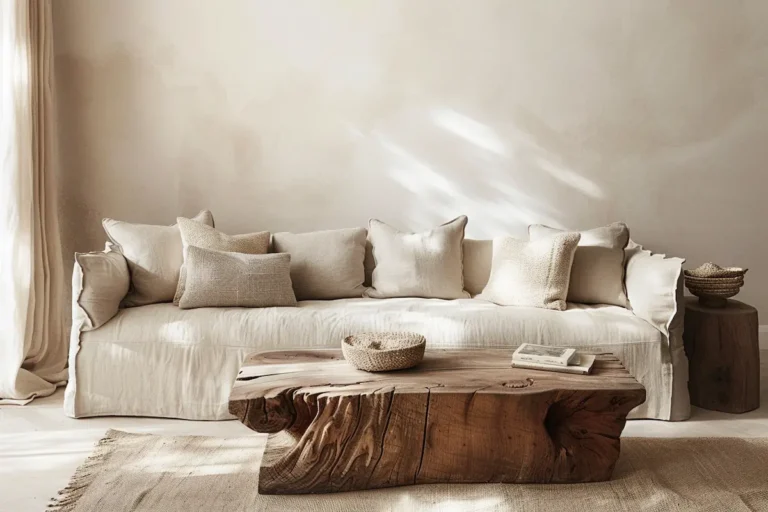
- solid wood instead of veneers
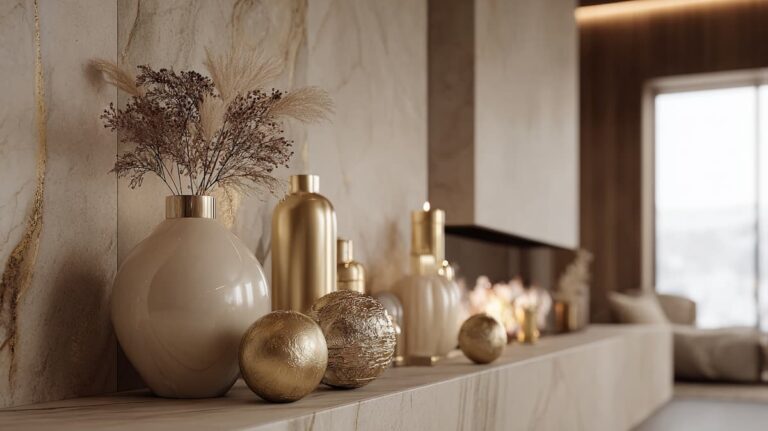
- stone instead of composites
- ceramics instead of plastics
In contrast, superficial minimalism often relies on:
- flat surfaces
- uniform finishes
- materials chosen only for appearance
If a space looks perfect but feels untouchable, it’s likely staged — not crafted.
The space remains calm when life happens
This is perhaps the most reliable test.
A true Crafted Minimalist interior stays calm when:
- objects are in use
- people move through it
- daily routines unfold
Calm here is resilient.
If the space requires constant resetting to feel good, the calm is decorative, not structural.
This distinction explains many of the misunderstandings addressed in
Common Misconceptions About Crafted Minimalism.

Fewer decisions, not fewer objects
A common myth is that Crafted Minimalism means extreme reduction.
In reality, it means decision reduction.
A true Crafted Minimalist interior:
- minimizes choices
- clarifies storage
- assigns roles to surfaces
This reduces mental load.
If a space looks empty but still creates friction — asking constant questions like “where does this go?” — it hasn’t solved the real problem.
Proportion over decoration
Decoration is optional in Crafted Minimalism.
Proportion is not.
True Crafted Minimalist spaces feel balanced because:
- furniture fits the room
- objects relate to each other
- nothing feels temporary
Proportion creates quiet authority.
When proportions are wrong, decoration often tries to compensate — and fails.

Storage is integrated, not hidden chaotically
True Crafted Minimalist interiors don’t rely on last-minute hiding.
Storage is:
- planned
- aligned with architecture
- visually coherent
You don’t see piles waiting to be hidden.
Instead, objects already belong.
If storage solutions feel improvised or overloaded, the system hasn’t been designed — it’s been patched.
The space doesn’t depend on trends
A true Crafted Minimalist interior doesn’t clearly belong to a year.
It avoids:
- trendy silhouettes
- fashionable finishes
- recognizable “moments”
Instead, it relies on:
- repetition
- restraint
- timeless materials
If you can easily date a space by its details, it’s likely trend-led rather than framework-led.

Warmth comes from structure, not layering
True Crafted Minimalist warmth is subtle.
It comes from:
- material tone
- light quality
- spatial predictability
Not from:
- decorative layers
- visual density
- added softness
If warmth disappears when accessories are removed, it was never structural.
A true Crafted Minimalist interior remains warm even when stripped back.
Craftsmanship is visible, not advertised
Crafted Minimalism doesn’t shout craftsmanship.
It lets you notice it slowly:
- in joinery
- in finishes
- in wear patterns
These details don’t compete for attention — they reward it.
Spaces that rely on labels or statements to signal quality often lack this quiet confidence.
The interior supports routines, not aesthetics
True Crafted Minimalist interiors are designed around how life unfolds.
You’ll notice:
- logical pathways
- intuitive placement
- consistency across rooms
The space doesn’t ask for adaptation.
It adapts to you.
This is why people often describe these interiors as “easy” rather than impressive.
When something feels off, it usually is
Finally, trust your perception.
If a space:
- looks calm but feels tense
- photographs well but feels impractical
- appears minimal but demands effort
it’s likely not a true Crafted Minimalist interior.
Recognition is less about checklists —
and more about coherence.
Final thoughts
A true Crafted Minimalist interior is not defined by how little you see —
but by how little resistance you feel.
It remains calm:
- when life is busy
- when objects are used
- when trends pass
Once you learn to recognize it, the difference between appearance and structure becomes clear — and hard to ignore.
Where to go next
To deepen your understanding and sharpen your eye, continue with:
- Crafted Minimalism Design Principles
- Common Misconceptions About Crafted Minimalism
Together, these articles give you the tools to evaluate interiors — not just admire them.