
Smart Calm Living: How Smart Homes Create Calm, Not Chaos
Introduction: The Promise of a Quieter Home
There’s a version of the smart home that most of us have seen — and quietly feared. The blinking router, the app that doesn’t sync, the voice assistant that mishears your request and turns off all the lights mid-dinner. Technology, the story goes, was supposed to make life easier. Often, it just adds noise.
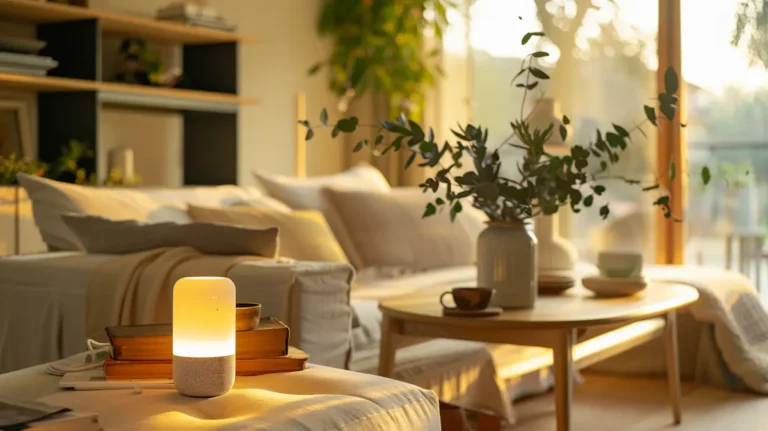
But there is another version. One where your home reads the morning light and adjusts itself before you’ve even made coffee. Where the temperature, the music, the atmosphere — all of it simply fits. Where technology recedes into the background and your home becomes what a home was always meant to be: a place to breathe.
“The best smart home is the one you forget is smart. It works so well, so quietly, that you only notice your home — not the technology.”
This is the philosophy behind Smart Calm Living. It’s not about owning more devices. It’s about designing your environment with intention — using technology as a quiet partner, not a demanding presence. In this article, we explore how a thoughtfully built smart home can genuinely reduce mental load, soften daily transitions, and make space for the kind of calm that most of us are looking for.
Why Smart Homes Often Feel Overwhelming
Before we can design for calm, we need to understand why smart technology so often produces the opposite. The answer usually isn’t the technology itself — it’s the way it’s introduced into a home.
Most people build their smart home incrementally. A smart bulb here, a thermostat there, a doorbell camera added after a break-in nearby. Each device is purchased independently, installed with its own app, and configured in isolation. Before long, there are seven apps on your phone, three different voice assistants with overlapping commands, and a living room that requires a manual to operate.
This fragmentation is the root cause of smart home stress. Research in environmental psychology consistently shows that visual and cognitive complexity — too many things requiring attention, too many systems to manage — raises cortisol levels and reduces our sense of control. A smart home that demands attention is working against its own purpose.
The other common mistake is optimizing for features rather than feeling. A home full of impressive technology that requires daily maintenance, app updates, and manual overrides is not a calm home — it’s a management project. Smart Calm Living starts from a different question: not ‘what can this home do?’ but ‘how does this home make you feel?’
The Four Pillars of a Calm Smart Home
A smart home designed for calm isn’t built on the latest gadgets — it’s built on principles. Here are the four pillars that distinguish a genuinely restful smart environment from a stressful one.
Invisibility
The best smart home technology disappears. Sensors are flush with walls. Speakers are built into ceilings. Controls are embedded in surfaces. When devices are visible, they should be beautiful enough to belong — not remind you that your home is ‘equipped.’ Companies like Nest, Sonos, and Lutron have long understood this: their products are designed as much for aesthetics as function.
Invisibility also applies to interaction. A home that requires you to pick up your phone to adjust the temperature has not reduced friction — it has moved it. Motion sensors, time-based routines, and biometric awareness mean that a calm smart home anticipates rather than responds.
Automation with Grace
Automation only creates calm when it works reliably and predictably. One failed routine — the lights that don’t turn off, the thermostat that fires at 3am — can undo weeks of trust-building with your system. The key is to automate gradually, test thoroughly, and prioritize the moments that matter most: waking up, arriving home, winding down for sleep.
These transitional moments — what designers call ‘threshold moments’ — have an outsized effect on our emotional state. A morning routine that gently raises the blinds, warms the kitchen light, and starts your coffee isn’t just convenient. It signals to your body that the day is beginning on your terms.
Unified Control
Fragmentation is the enemy of calm. A home built around a single platform — whether Apple Home, Google Home, Amazon Alexa, or a professional system like Control4 — is fundamentally easier to live with than one stitched together from incompatible apps. The introduction of Matter, the new universal smart home standard, is making this easier: devices from different manufacturers can now speak the same language.
Unified control doesn’t mean every interaction goes through one screen. It means every interaction feels consistent — that the logic of your home is coherent, learnable, and trustworthy.
Sensory Intentionality
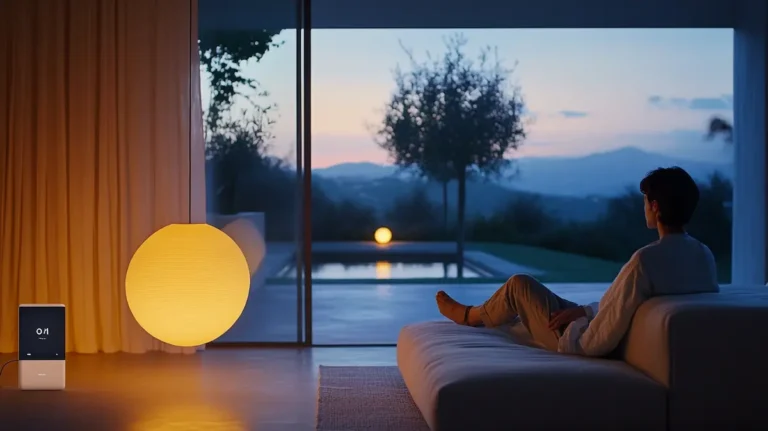
Light, temperature, sound, and scent are the invisible architecture of a calm space. Smart homes offer extraordinary control over all four — but this control must be exercised with sensitivity, not just possibility. Warmer, dimmer light in the evening. Cooler temperatures during deep work. A barely-there soundscape that transitions with the time of day. These are not features. They are the texture of daily life.

Designing by Room: Where Calm Technology Makes the Biggest Difference
Not every room benefits equally from smart technology. Here’s where intentional integration creates the most meaningful shift in daily experience.
The Bedroom: Rest as a System
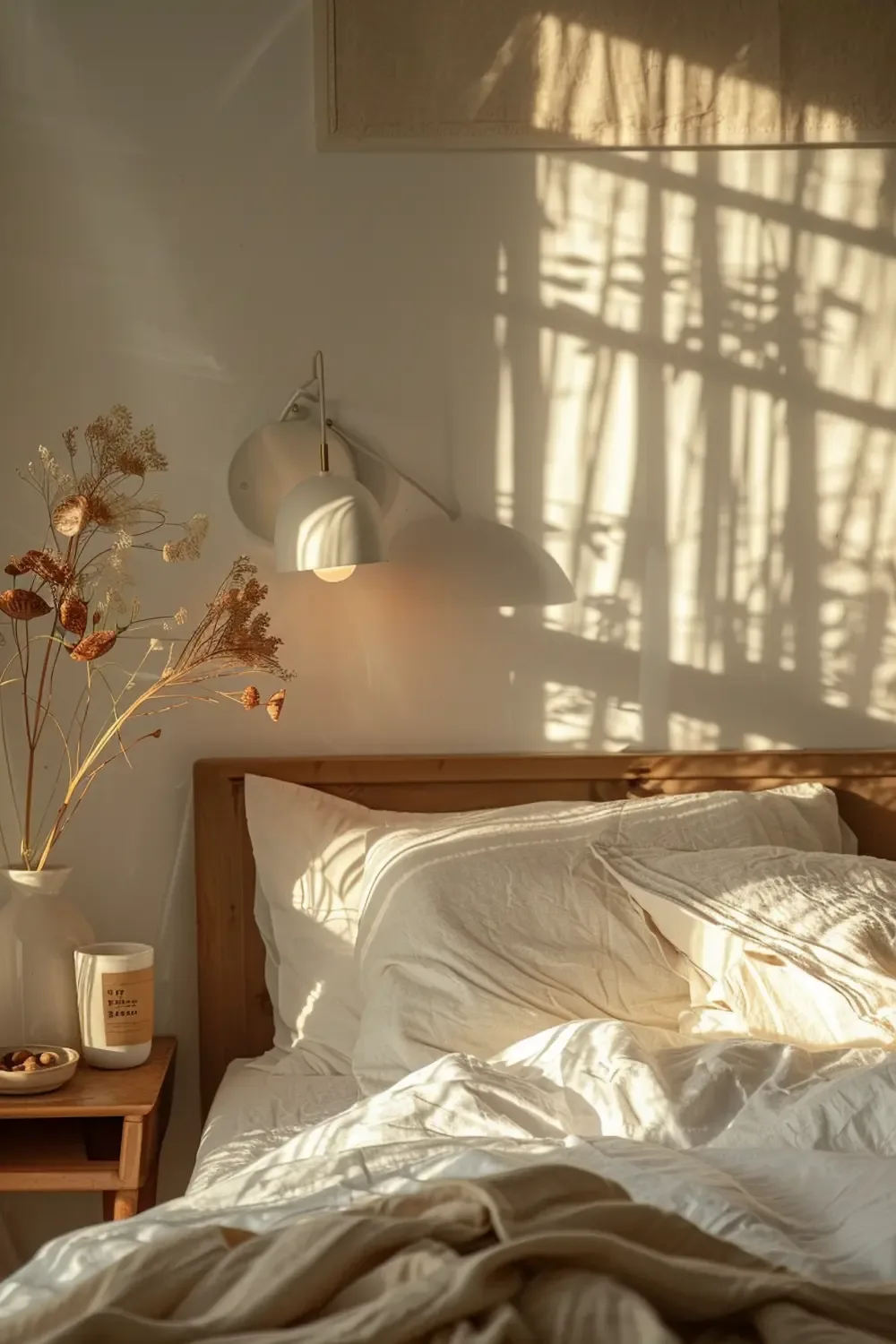
Sleep is where calm technology earns its keep. Smart blinds that block early light and open gradually at your preferred wake time. A thermostat that drops two degrees at 10pm and rises again at 7am. A white noise system that activates when your phone connects to the bedroom charger. These are not luxuries — they are environmental design for recovery.
The bedroom is also where restraint matters most. No screens on the ceiling. No notification lights. No devices that require interaction. The smart bedroom should be the room your home does the most work in — and the room you think about the least.
The Kitchen: Removing Friction from the Ritual
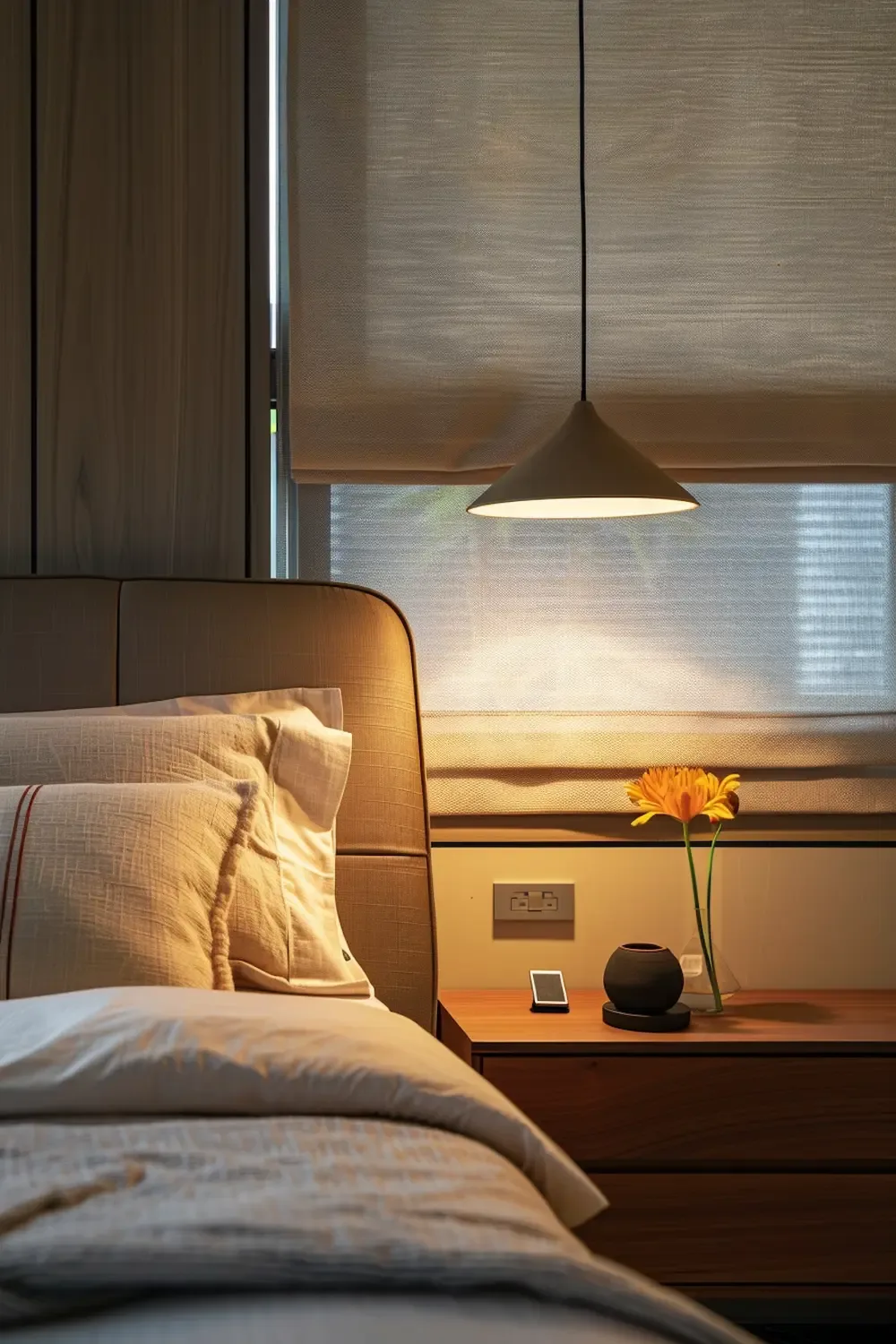
Morning rituals set the tone for the day. A smart kitchen doesn’t mean a futuristic kitchen — it means one where the small frictions have been removed. Coffee starts before you arrive. The right playlist comes on without asking. The under-cabinet lighting adjusts to the quality of daylight outside. These micro-moments of seamlessness accumulate into a feeling of ease.
The Living Room: Atmosphere on Demand
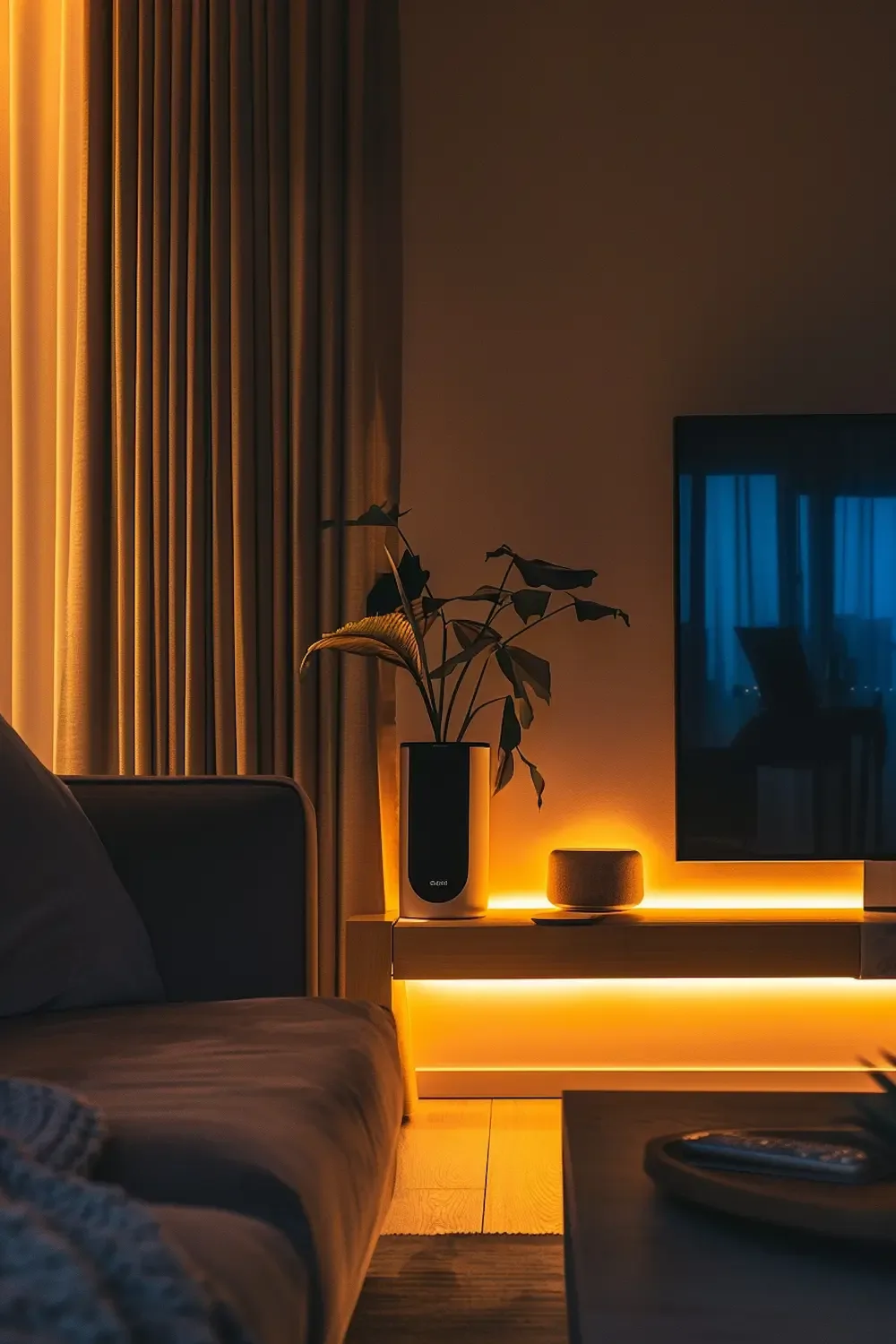
The living room is where lighting and sound do the heaviest lifting. A well-designed scene system — ‘Reading,’ ‘Film,’ ‘Dinner,’ ‘Wind Down’ — means you never have to think about ambiance. One tap, or better, no tap at all: the system shifts at the right time because it knows the time, the day, and the season. Circadian lighting, which mimics the natural arc of sunlight, has been shown to improve mood, energy, and sleep quality without any conscious effort from the occupant.
The Role of AI in the Calm Home
We are moving from programmable smart homes — where you set schedules and scenes — to learning smart homes, where the home begins to understand you. This is where AI becomes genuinely transformative, not as a gimmick, but as the engine of a home that truly adapts.
Modern systems from companies like Josh.ai, Brilliant, and emerging features in Apple Home and Google Home are beginning to learn occupancy patterns, temperature preferences, and lighting habits. Over time, a learning home requires fewer manual inputs because it already knows. The thermostat adjusts before you feel cold. The lights shift before your eyes tire. The home becomes, in the truest sense, an extension of your own rhythms.
This is the long-term destination of Smart Calm Living: not a home full of smart devices, but a home with its own quiet intelligence — one that holds space for you rather than demanding your attention.
“A learning home requires fewer manual inputs because it already knows. The thermostat adjusts before you feel cold. The lights shift before your eyes tire.”
Getting Started: A Calm-First Approach to Building Your Smart Home
You don’t need to rewire your home to begin. Smart Calm Living is a philosophy that can be applied at any scale — from a single smart bulb to a whole-home system. What matters is the order of intention.
Start with light. Lighting has the highest impact-to-effort ratio of any smart home upgrade. A single smart dimmer, a set of warm-spectrum bulbs on a sunrise routine, or a bedside lamp on a sleep timer can meaningfully change how a room feels at different times of day. Once you experience what good light design does for your mood, the rest follows naturally.
Then address transitions. Identify the three moments in your day that feel most rushed or fragmented — waking up, arriving home, going to bed — and automate something small for each one. Not for efficiency’s sake, but for the feeling it creates: that your home is on your side.
Choose a platform before you choose devices. Whether you go with Apple, Google, Amazon, or a professional-grade system, make this decision early. It will save you considerable frustration and ensure your home grows coherently rather than chaotically.
Finally, edit. The most common mistake in smart home design is adding without subtracting. For every device you add, ask what it replaces — in terms of friction, visual noise, and cognitive load. A calm home is never the most feature-rich one. It is the most considered one.

Conclusion: Your Home as a Place of Rest
The smart home was never really about the technology. It was always about the possibility of a home that works — quietly, reliably, beautifully — in harmony with the way you live. We’ve just had to wait for the technology to catch up to that vision.
Smart Calm Living is the recognition that we are getting closer. That the tools exist, right now, to design a home that reduces friction, supports rest, and holds you with a kind of ambient intelligence. That technology and calm are not opposites — they are, when handled with care, the same thing.
Your home is the place you return to. It deserves to be the most thoughtful environment in your life.