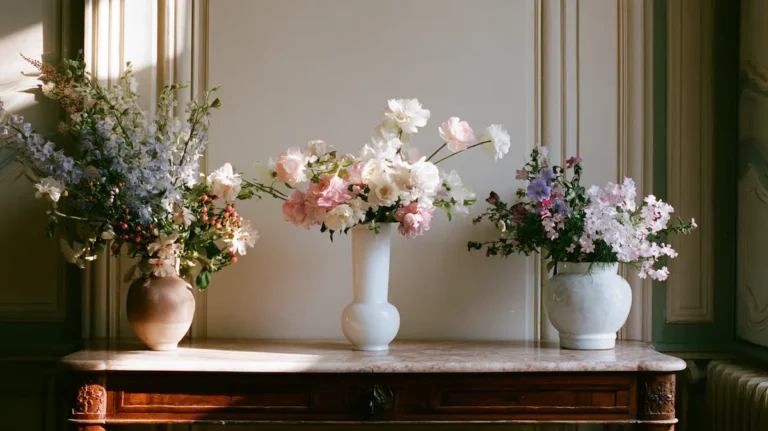

What Is Parisian Vintage Chic? – A Style Guide for Beginners
There is a moment, standing in a certain kind of Parisian apartment, when everything seems to be exactly right — and you cannot quite explain why. The room is full of things from different eras. Nothing matches in the conventional sense. There are signs of age, of use, of a life being lived. And yet it is undeniably, almost painfully beautiful. That is Parisian Vintage Chic. This guide is your starting point for understanding it.
This article is part of the Parisian Vintage Chic Interior category. The pillar article — Parisian Vintage Chic Interior: The Complete Style Guide — gives you the full overview of the style. This article goes deeper on a single question: what exactly is Parisian Vintage Chic, and how do you begin to understand it as a coherent aesthetic with its own logic, history, and principles?
The Definition — And Why It Resists One
Most interior design styles can be summarized in a sentence. Scandinavian minimalism: clean lines, neutral palette, functional beauty. Industrial: raw materials, exposed structure, urban edge. Maximalism: more of everything, more color, more pattern, more life.
Parisian Vintage Chic resists that kind of summary. Not because it lacks definition, but because its definition is relational rather than prescriptive. It is not about a specific set of furniture, a specific color palette, or a specific era. It is about the relationship between things — the way objects from different periods and different origins come together in a space that feels simultaneously collected and inevitable.
The best working definition is this: Parisian Vintage Chic is a residential interior aesthetic rooted in the layered, bourgeois apartments of Paris — characterized by warm neutrals, vintage anchor pieces with visible history, deliberate mixing of periods and textures, and an unapologetically personal curation that makes every room feel as though it has evolved organically rather than been assembled at once.
What the word ‘vintage’ means here
It is worth being precise about ‘vintage,’ because the word is used loosely in interior design. In this context, vintage does not simply mean old. It means pieces that carry the visual and material evidence of their age — patina, wear, the specific proportions and craftsmanship of a particular period — and that were of sufficient quality when made that they have only improved with time.
A cheap reproduction that looks old is not vintage. A genuinely old piece that was mediocre when made has age but not the quality that gives vintage its value. What we are looking for is the intersection: old enough to have a story, good enough to have survived that story with its integrity intact.
What ‘chic’ adds to it
The word chic in French carries a meaning that its English usage has diluted. In French, chic is less about fashion and more about a quality of ease — the appearance of someone or something that is well-considered without appearing to have tried. The opposite of chic is not unfashionable but forced. An interior that is chic looks like it came together naturally, even when enormous care went into it. This is a crucial quality of the Parisian Vintage Chic style: it must never look like it was trying.
“The secret of French chic is that it looks as though no secret was involved. The effort is invisible. The result looks inevitable.”
Where It Comes From: The Short History
You cannot understand an aesthetic without understanding where it grew. Parisian Vintage Chic did not emerge from a design movement or a school of thought. It emerged from the specific physical reality of Parisian apartments — their architecture, their history, and the particular kind of life lived in them across generations.
The Haussmann apartment as container
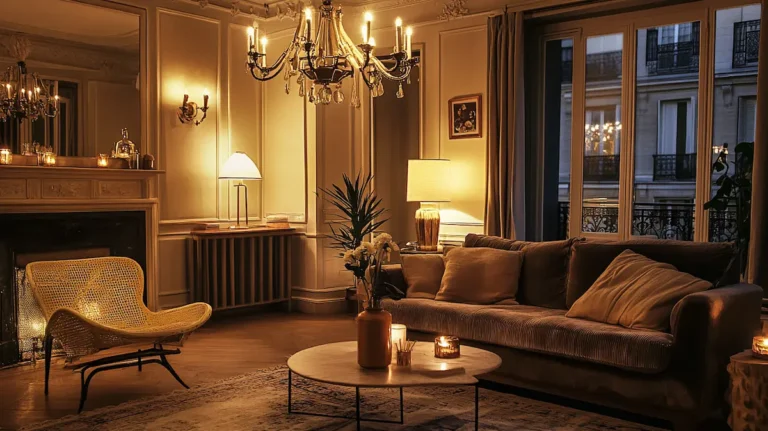
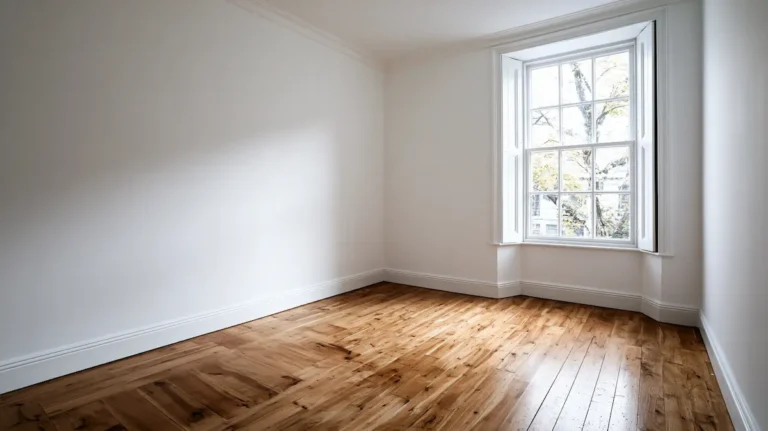
When Baron Haussmann rebuilt Paris between 1853 and 1870 under Napoleon III, he created a physical typology — the grand Haussmann apartment — that would define Parisian domestic life for the next century and a half. High ceilings with ornate plaster moldings. Herringbone oak parquet floors. Tall windows with wrought-iron balconies. Enfilades of rooms connected by double doors. Marble fireplaces as the gravitational center of each principal room.
This architecture is not neutral. It has strong aesthetic opinions built into its proportions. It demands furniture of a certain scale. It makes low, contemporary furniture look stranded and rootless. It rewards tall bookcases, imposing mirrors, art hung high on long picture rails. The Parisian Vintage Chic interior, at its most authentic, is a response to this architecture — an aesthetic that grew directly from the container it occupies.
Accumulation across generations
The other formative force is time. The characteristic quality of a true Parisian Vintage Chic interior — the layered feeling, the sense that objects have arrived from many different places and eras — is largely the product of genuine accumulation across generations. The armchair was the grandmother’s. The print above the desk came from a brocante in the seventies. The ceramic bowl was bought on a trip to Morocco. The side table was inherited when a cousin moved abroad.
This is why the style is so difficult to replicate in a single shopping trip. Its authenticity comes from time — from the fact that the objects in the room have actually been collected over years, each arriving with a story, each earning its place through continued relevance rather than through purchase.
→ The full historical context, from Haussmann to the contemporary Parisian stylist: → The History of Parisian Interior Style (From Haussmann to Now)

The Visual Language: What Parisian Vintage Chic Actually Looks Like
A style guide for beginners needs to be concrete. So let’s look at the specific visual elements that, together, produce the Parisian Vintage Chic effect. These are the things you learn to recognize first, and to compose deliberately as your eye develops.
Warm, restrained color
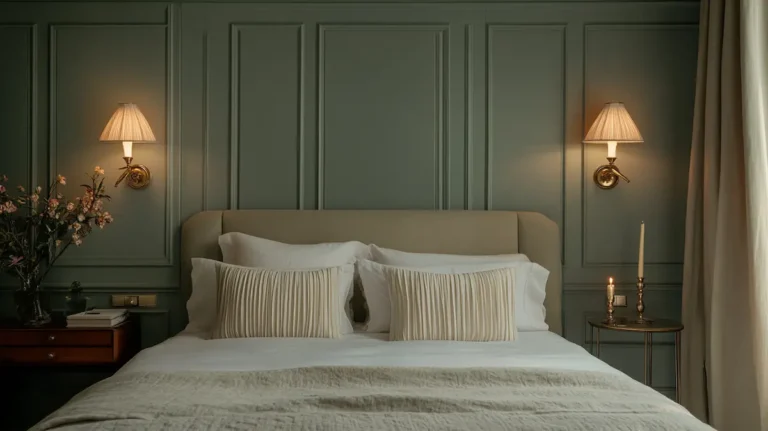
The palette of a Parisian Vintage Chic interior is built from warm neutrals — not cold, not stark, not beige in the flat, lifeless sense — but the specific warm whites, soft grays, and aged creams that seem to absorb light rather than reflect it. Think of the color of old plaster. The tone of aged linen. The particular ivory of an antique page.
Against this base, accents appear in deep, saturated tones: a dark bottle green, a burgundy that suggests old wine, a navy that reads almost as a neutral. And throughout, gold — not shiny gold, but the warm, matte gold of aged gilding, of brass that has patinated, of bronze that has darkened with decades of handling.
Vintage anchor pieces
Every Parisian Vintage Chic interior has at least one — usually two or three — pieces that anchor the room in a specific historical moment. These are not background furniture. They are the visual and historical center of gravity around which everything else is arranged.
The most common anchor pieces:
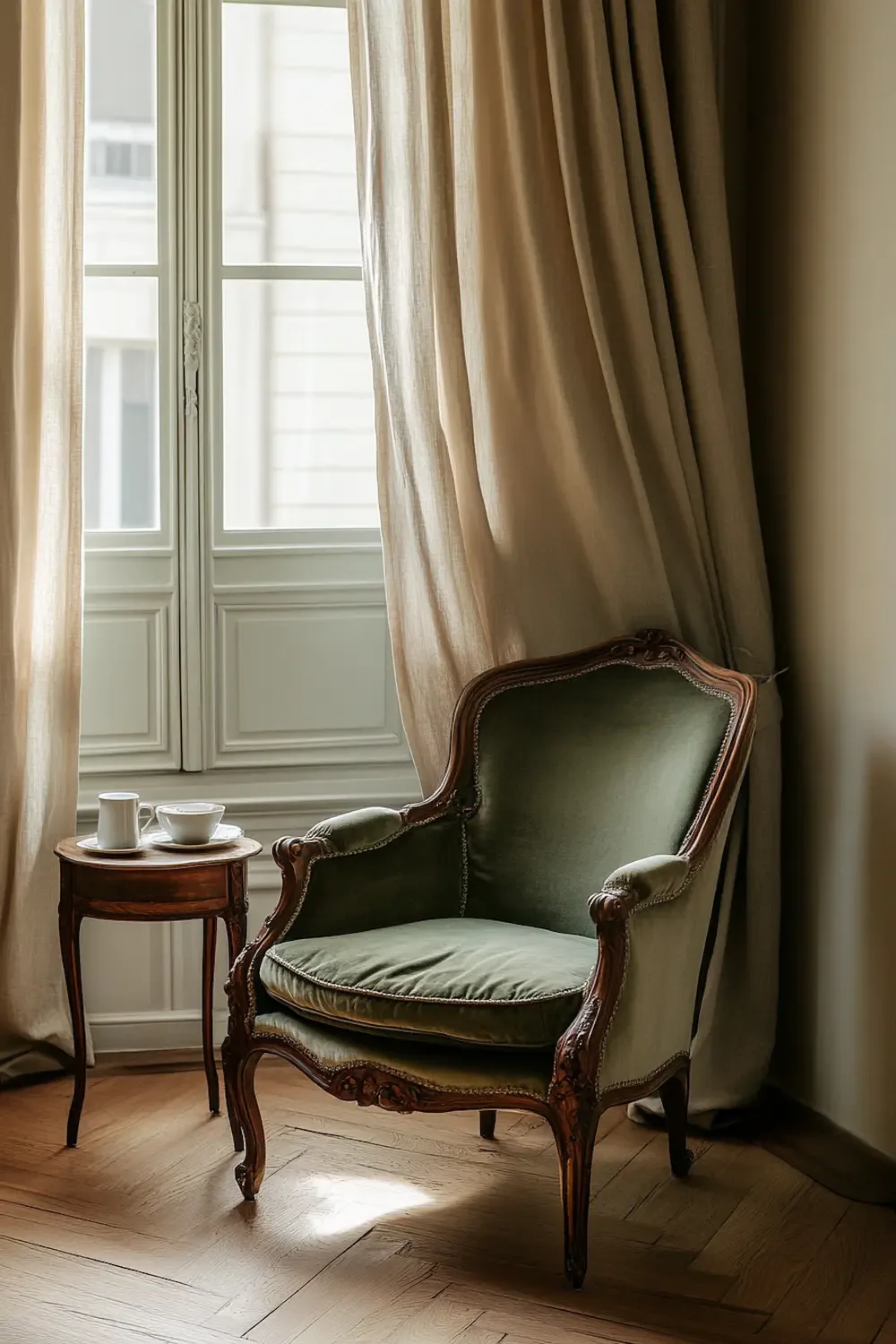
- Fauteuils in the Louis XV or Louis XVI manner: armchairs with carved wooden frames, curved or straight legs, re-upholstered in linen, velvet, or a subtle woven fabric. Present in virtually every authentic Parisian interior.
- Gilded mirrors: large, framed in gold that has worn in the corners, hung above a fireplace or console table. They are not decoration so much as architecture — they create depth, return light, and give scale to a wall.
- Marble fireplace mantels: where they exist, they are the absolute anchor. The arrangement on and above the mantel is the most curated, most personal composition in the room.
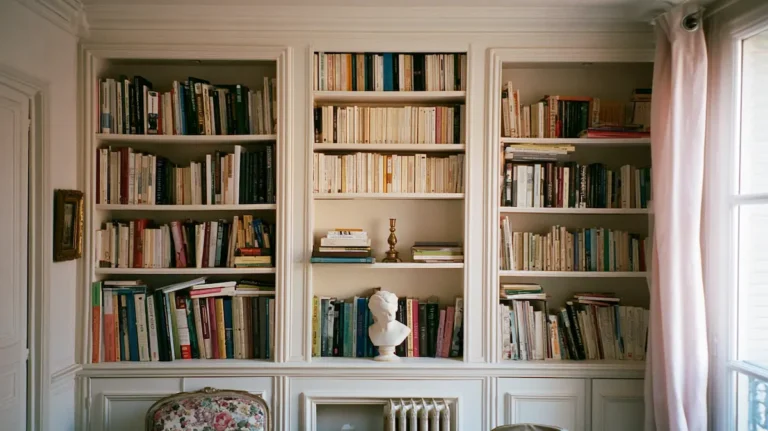
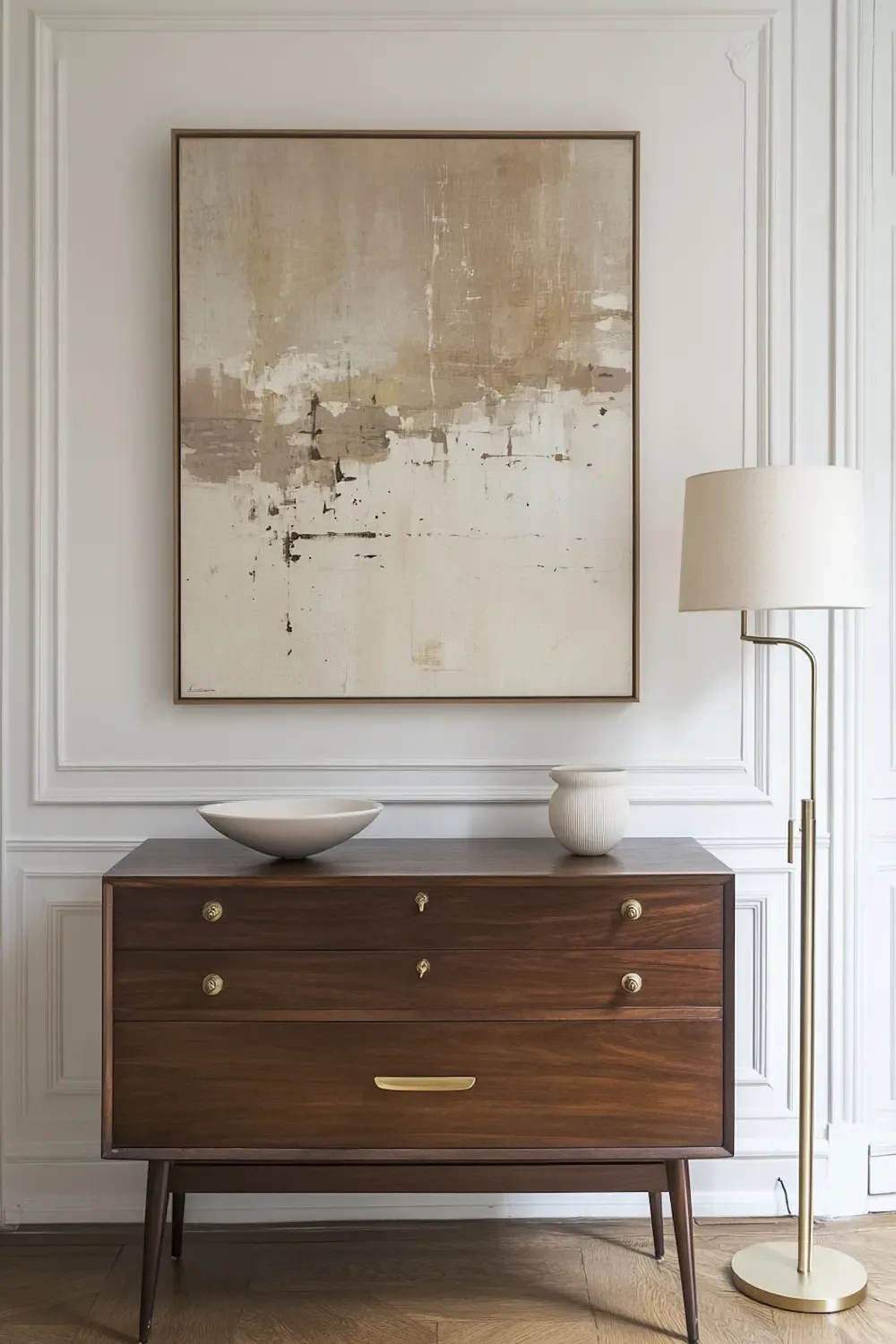
- Wooden storage pieces: a commode in walnut, a secretaire in lacquered fruitwood, a library bookcase with glass doors. Functional, beautiful, and carrying the specific proportional dignity of eighteenth or early twentieth century cabinetmaking.
- Antique or vintage rugs: Aubusson, Persian, or Moroccan. The rug anchors the seating area, introduces pattern and color in a way that feels aged and intentional, and softens a parquet floor without diminishing it.
Layered textiles
Textile layering is one of the most immediately recognizable qualities of Parisian Vintage Chic, and one of the easiest to apply. The principle is that no single fabric is doing all the work in a room. The sofa has one fabric. The cushions have two or three more. There is a throw in a different weight. The curtains are in a different material again. The rug brings pattern and pile.
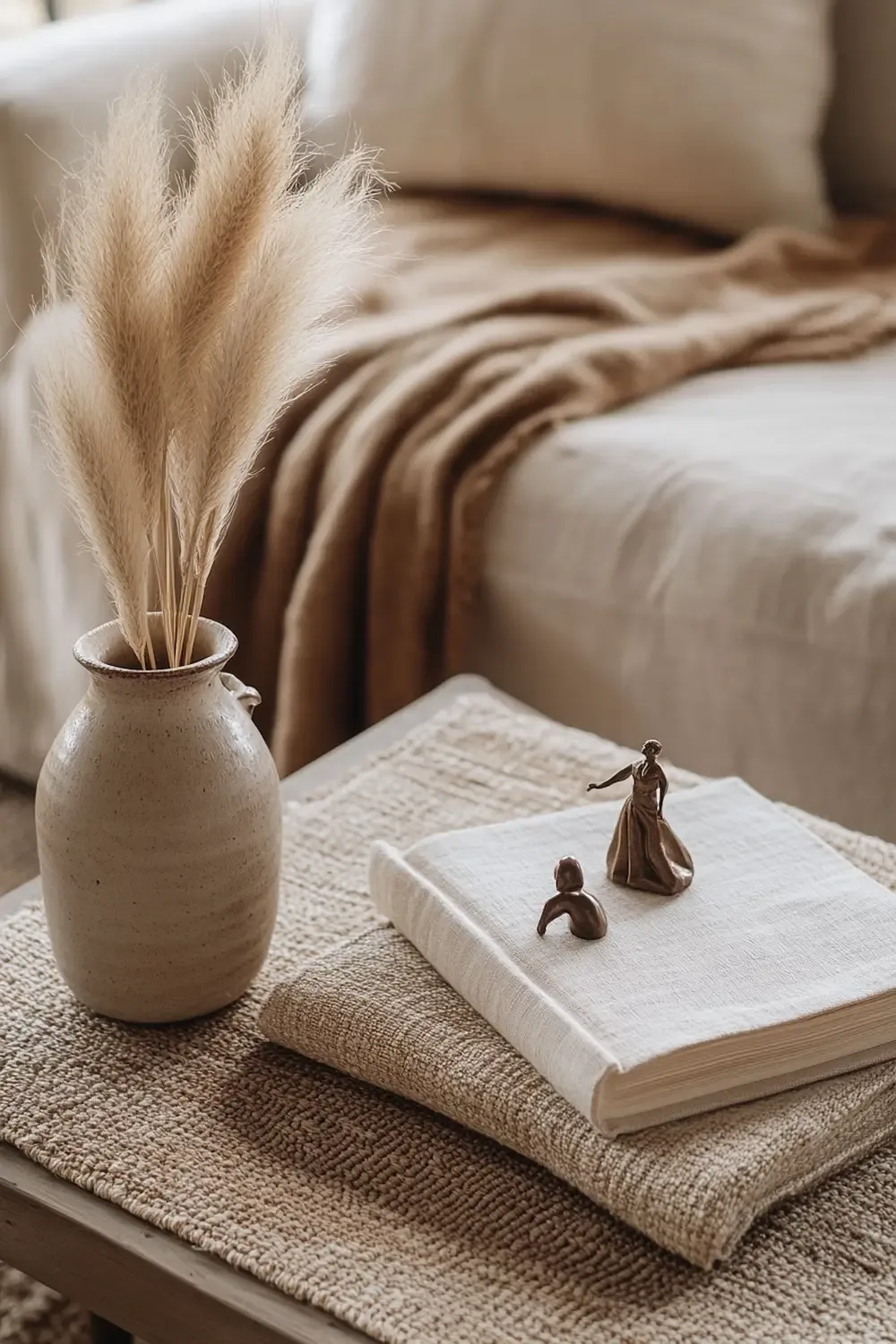
All these fabrics are warm to the hand and warm to the eye: linen, velvet, cotton, wool, aged leather. Nothing synthetic. Nothing that reads as cold or slick. The hand-feel of a room is as important as its visual texture — a quality that photographs cannot fully convey but that every person who steps into the space will register immediately.
Art and objects with a story
The walls and surfaces of a Parisian Vintage Chic interior are not decorated — they are inhabited. The distinction is important. Decoration implies objects chosen for their visual compatibility with the room. Inhabited surfaces hold objects chosen for their meaning to the person living there.
Oil paintings in heavy gilded frames alongside smaller works on paper. A collection of objects on the mantelpiece that spans continents and centuries. Books, actual books read by actual people, on shelves and tables and floors. A small sculpture acquired from a gallery years ago. A ceramic piece made by a friend. These objects do not need to be expensive. They need to be genuine.
The Underlying Principles: Why It Looks the Way It Does
A beginner can recognize Parisian Vintage Chic. But understanding why it works — what principles produce that effect — is what allows you to apply it rather than just appreciate it. There are four.
Principle 1: Imperfection is not a problem to solve
This is the hardest principle to internalize for anyone trained by contemporary design culture, which values newness, uniformity, and the absence of visible wear. In Parisian Vintage Chic, the crack in the plaster is not a flaw — it is a record. The faded patch on the velvet armchair is not deterioration — it is evidence. The mirror with worn gilding in its corners is not damaged — it is honest.
The visual effect of this principle is warmth. Rooms full of perfect, new objects have a coldness to them — a sense that they are performing rather than living. Rooms full of objects that show their age feel inhabited, specific, real. That quality of realness is central to the Parisian aesthetic.
Principle 2: Restraint in abundance
This sounds paradoxical but is the key to understanding why Parisian interiors feel different from mere clutter. There is abundance — objects, textiles, art — but within that abundance, there is editorial restraint. Not everything is kept. Only what genuinely belongs is allowed to stay. The result is richness without noise.
This is closely related to the broader French concept of je ne sais quoi — the quality of something that seems right without being explicable. In the Parisian interior, je ne sais quoi is the product of a curator’s instinct: the ability to know when to stop adding, when a composition is complete, and when one more object would tip the balance from richness to excess.
Principle 3: Personal over perfect
A Parisian Vintage Chic interior is always, recognizably, someone’s. Not a showroom. Not a hotel. Not an Instagram set. Someone lives here, and that person’s specific taste, history, and sensibility are visible in every corner. The art was chosen because it moves them, not because it coordinates. The books are real. The objects have provenance.
This principle is what makes the style impossible to copy directly — and why copies always feel slightly hollow. You cannot buy someone else’s personal history. You can only build your own, over time, with patience and selectivity.
Principle 4: Time as a design material
The most unusual and most important principle of Parisian Vintage Chic is that time is an active ingredient. A Parisian interior is not finished when the last piece of furniture arrives. It continues to develop: a new work on the wall, a piece removed that no longer fits, an object rearranged. The room evolves with its inhabitant, and that evolution is visible — in the variety of periods, in the traces of different decisions made at different moments, in the sense of a life accumulating rather than a space being staged.
→ The psychological dimension of these principles — why restraint creates beauty rather than limiting it: → The Psychology of French Chic: Why Less Feels More
What Parisian Vintage Chic Is Not
Understanding a style also means understanding its boundaries — what it excludes, and what it is easily confused with. There are three things Parisian Vintage Chic is consistently and incorrectly conflated with.
It is not French Country
French Country — also called Provençal style — shares a French origin and a love of vintage pieces, but is otherwise a fundamentally different aesthetic. Where Parisian Vintage Chic is urban, intellectual, and refined, French Country is rural, organic, and warm in a specifically earthy way. The colors are different (lavender, ochre, terracotta versus cream, warm gray, deep green). The furniture is different (robust Provençal oak versus carved Parisian fruitwood). The feeling is different: French Country is a farmhouse kitchen; Parisian Vintage Chic is a second-floor apartment on the Île Saint-Louis.
The confusion happens because both styles use vintage furniture and natural textiles. But the reference points — geographical, historical, and atmospheric — are entirely separate.
→ A detailed side-by-side comparison with practical guidance on which is right for your space: → Parisian Vintage vs French Country: What's the Difference?
It is not maximalism
Maximalism says: more of everything. More color, more pattern, more objects, more visual stimulation. Parisian Vintage Chic is layered and rich, but it operates by a different logic. The abundance is curated — every element has been selected and placed with intention. Maximalism celebrates accumulation; Parisian Vintage Chic practices selective richness. The difference is visible in the quality of each element: in maximalism, the cumulative effect is the point; in Parisian Vintage Chic, each piece must earn its place individually.
It is not shabby chic
Shabby chic, as a decorating style, fetishizes a specific kind of distressed, pastel-colored aesthetic — white-painted furniture with deliberate wear marks, floral prints, an overall sweetness. Parisian Vintage Chic is something entirely different. Its palette is warm and deep rather than pastel. Its proportions are substantial rather than delicate. Its imperfection is genuine rather than manufactured. And it carries none of the nostalgic, romanticized quality that defines shabby chic — it is elegant rather than charming, urban rather than cottage.
| Style | Palette | Furniture | Feeling | Key distinction |
| Parisian Vintage Chic | Warm neutrals, deep accents, matte gold | Louis-era, Art Déco, multi-period mix | Elegant, intellectual, personal | Curated layering with genuine history |
| French Country | Lavender, ochre, terracotta | Provençal oak, rustic, handmade | Warm, earthy, rural | Organic, seasonal, grounded in land |
| Maximalism | Bold, saturated, eclectic | Anything, the more the better | Energetic, celebratory, abundant | Quantity and visual impact as the point |
| Shabby Chic | Pastels, white, powder pink | Painted, distressed, delicate | Nostalgic, romantic, cottage | Deliberate manufactured aging |
Color in Parisian Vintage Chic: The Essentials
Color is one of the most accessible entry points into the style — and one of the most frequently misunderstood. The Parisian palette is often described as neutral, which is true in the sense that it does not feature bright or trendy colors. But it is emphatically not the cool, clinical neutrality of contemporary minimalism. It is a warm neutrality — one built from tones that have yellow, ochre, or red undertones rather than blue or green ones.
The three layers of Parisian color
The base: warm whites and off-whites. Not the bright white of a freshly painted wall, but a blanc cassé — a broken white that reads as ivory or aged cream in warm light. This is the color of Haussmann plaster ceilings, of old linen, of a cotton shirt worn and washed a hundred times. It is warm, and that warmth is doing significant work.
The middle ground: warm grays and taupes. Soft gris de lin, warm greige, the color of aged stone. These tones recede and support — they make everything placed against them more beautiful, because they add warmth without competing for attention.
The accents: deep and saturated. Vert anglais (a dark green with gray undertones), bordeaux, navy, aubergine, warm ochre. Used sparingly — in a single wall, a key piece of upholstery, a collection of objects — these tones give the room its point of gravity. Without them, the warm neutrals risk feeling undirected. With them, the palette becomes coherent and intentional.
And throughout: gold. Not the gold of fashion jewelry or cheap hardware, but the specific gold of old things — oxidized brass, worn gilding, aged bronze. This tone appears in frames, in light fittings, in door hardware, and in the patina of wood surfaces. It is the thread that runs through the entire palette and ties it together.
→ The complete guide to building a Parisian color palette, from base to accent: → The Essential Color Palette for Parisian Vintage Interiors

Mixing Old and New: The Skill at the Heart of the Style
If there is a single practical skill that defines Parisian Vintage Chic — the one that separates a room that works from a room that merely has vintage furniture in it — it is the ability to mix old and new deliberately. Not randomly, not by accident, but with a clear sense of what each piece contributes to the whole and how different periods create productive tension with each other.
Why mixing matters
A room furnished entirely with antiques from a single period has a different quality — museum-like, historically complete, slightly static. A room furnished entirely with contemporary pieces has its own quality — of the moment, coherent in a different way, but lacking the layered depth that time provides. Parisian Vintage Chic is neither of these. It is the deliberate collision of periods, where a nineteenth-century armchair sits beside a mid-century lamp and a contemporary ceramic, and all three are improved by the company.
This mixing works for a specific reason: contrast creates visual interest, and interest creates engagement. When every piece in a room belongs to the same period and style, the eye moves through it quickly — there is nothing to discover. When periods are mixed with intelligence, the eye keeps finding new relationships, new unexpected harmonies, new points of tension that reward attention.
The rules of productive mixing
- One dominant period, others as counterpoint. Mixing works best when there is a dominant historical register — usually nineteenth or early twentieth century — against which other periods play. This prevents the room from feeling like a jumble sale while allowing the counterpoints to do their work.
- Mix by material, not just by period. A contemporary ceramic object can sit beside a nineteenth-century commode if both share a warm material quality — natural, tactile, without industrial finish. The period difference recedes when material coherence is present.
- Vary the scale. A room where all the vintage pieces are similarly scaled feels monotonous. A large anchor piece — an armoire, a long dining table — combined with smaller, more intimate vintage objects creates the sense of a room that has grown organically rather than been curated in a single session.
- Let the new piece be genuinely new. When a contemporary piece is introduced into a vintage-dominant room, it should read as a clear contemporary choice — not as a new piece trying to look old, which produces an effect of timid inauthenticity. A clean-lined contemporary lamp beside a baroque gilded mirror is interesting. A new lamp with fake antiquing effects beside the same mirror is not.
→ The complete guide to mixing old and new in a Parisian interior, with specific practical examples: → How to Mix Old and New in a Parisian-Style Home
How to Begin: A Practical Starting Point for Beginners
The single most common mistake beginners make with Parisian Vintage Chic is trying to create it all at once. They buy a collection of vintage-looking pieces in a single shopping trip, arrange them in a room, and find that the result looks styled rather than lived-in — assembled rather than accumulated. The style refuses to be rushed.
Start with one anchor piece
The right starting point is always one significant anchor piece — something that genuinely has age, quality, and presence. An armchair in a period style, re-upholstered in good fabric. A large gilded mirror. A wooden commode with its original hardware. This piece becomes the reference point for everything else in the room: its scale, its period, its material quality, its tone.
Everything else in the room then enters in relationship to this anchor. The rug should be warm enough to support it without competing. The lamps should be at the right scale relative to the furniture around them. The art should have a quality — of medium, of framing, of subject — that resonates with the period feel of the anchor without simply repeating it.
Build slowly, buy with intention
After the anchor piece is in place, resist the temptation to complete the room quickly. Live with the anchor piece alone for a while. Notice what it asks for — which surfaces feel empty, which distances feel wrong, which existing furniture is incompatible and should go. Let the next piece suggest itself.
This slow approach produces better results for two reasons. First, it allows you to develop a genuine sense of what works in your specific space, with your specific architecture and light. Second, it means that each piece that enters the room has been thought about — has a reason to be there — rather than arriving as part of a batch purchase that filled a cart and emptied a wallet simultaneously.
Where to find good pieces
The best sources for Parisian Vintage Chic anchor pieces, in rough order of quality and authenticity:
- Antique fairs and brocantes — the closest thing to the original Parisian sourcing experience. Handle pieces, ask about provenance, train your eye.
- Auction house previews — even if you do not buy, previews are exceptional places to develop an eye for quality and proportion.
- Inherited furniture — always the most authentic source. If you have pieces from earlier generations that have been in storage because they ‘didn’t fit,’ look again.
- Specialist vintage dealers — online and physical. More curated than a brocante, often more expensive, but with a higher ratio of the right kind of pieces.
- Good reproductions, used sparingly — a well-made reproduction of a Louis-style chair in a good fabric, used as a secondary seat in a room dominated by genuine vintage pieces, is acceptable. Reproductions as the primary aesthetic note are not.

The Beginning of a Long Education
Parisian Vintage Chic is a style that rewards patience and punishes haste. It cannot be completed, only continued. Every room that genuinely embodies it is the product of years of looking, choosing, occasionally making mistakes, and slowly developing an eye that knows — almost before the analysis begins — whether something belongs.
This guide has given you the conceptual framework: the definition, the history, the visual language, the principles, and the practical starting points. The rest is practice. Visit brocantes. Look carefully at the apartments in French films and novels. Notice, when you see a Parisian interior that moves you, exactly what it is that does the moving. The eye develops through use, and every room you look at attentively is part of the education.
“You don’t decorate a Parisian vintage interior. You inhabit it, over time, until it becomes unmistakably yours.”
For the broader context in which this style sits, return to the category pillar: Parisian Vintage Chic Interior: The Complete Style Guide. For the specific next steps — history, psychology, color, and mixing — the articles linked throughout this guide each take one thread and follow it all the way through.