
Crafted Minimalism vs Modern Minimalism: Two Philosophies of Living With Less
Minimalism is often misunderstood as a single aesthetic—white walls, empty rooms, and strict restraint. In reality, minimalism has evolved into multiple interpretations, each shaped by cultural shifts, emotional needs, and changing ideas about what makes a home truly livable. Two of the most influential approaches today are Modern Minimalism and Crafted Minimalism.
At first glance, these styles may appear similar. Both reject excess, favor simplicity, and value intention over decoration. Yet the experience of living in them feels profoundly different. Understanding this difference is essential if you are designing a space meant not just to look refined, but to support everyday life in a meaningful way.
This article explores the philosophical, material, emotional, and practical distinctions between Crafted Minimalism and Modern Minimalism—so you can recognize not only how they look, but how they function as environments for living.
The Roots of Modern Minimalism
Modern Minimalism is deeply connected to early modernist thought. Influenced by movements such as Bauhaus, De Stijl, and later International Style architecture, it emerged from a desire for clarity, efficiency, and rational design. Its core principle is reduction: removing everything that does not serve a clear function or structural purpose.
In interiors, this philosophy translates into clean lines, smooth surfaces, and a highly controlled visual language. Spaces are often defined by straight geometry, symmetry, and repetition. Color palettes remain limited—frequently white, black, gray, or cool neutrals—allowing form and proportion to dominate rather than texture or ornamentation.
Furniture in Modern Minimalism is typically engineered rather than handcrafted. Materials such as polished concrete, steel, glass, lacquered wood, and synthetic composites are favored for their uniformity and precision. Storage is concealed. Objects are minimized. The space aims to feel orderly, logical, and visually silent.

For many people, this approach creates mental clarity. The absence of visual noise can feel liberating, especially in fast-paced urban environments. However, it can also feel distant or impersonal if emotional comfort is not carefully considered.
The Emergence of Crafted Minimalism
Crafted Minimalism developed as a response to the emotional limitations some people experience in highly controlled minimalist spaces. Rather than rejecting minimalism, it reframes it. The question shifts from “What can be removed?” to “What is truly worth keeping?”
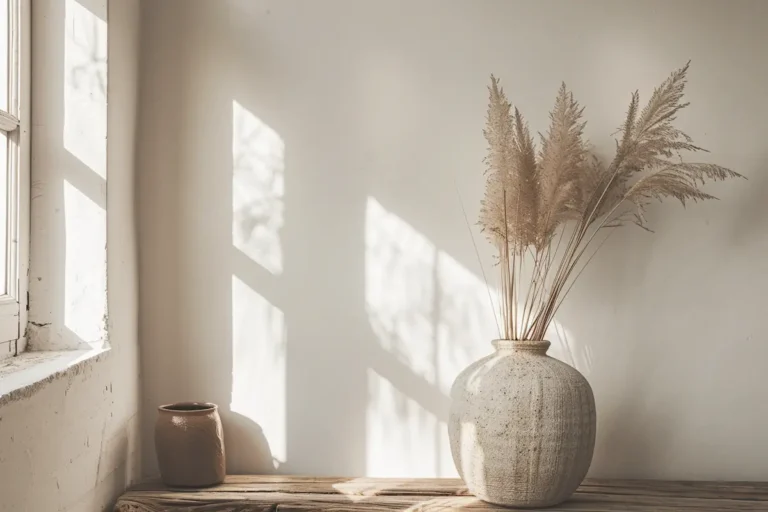
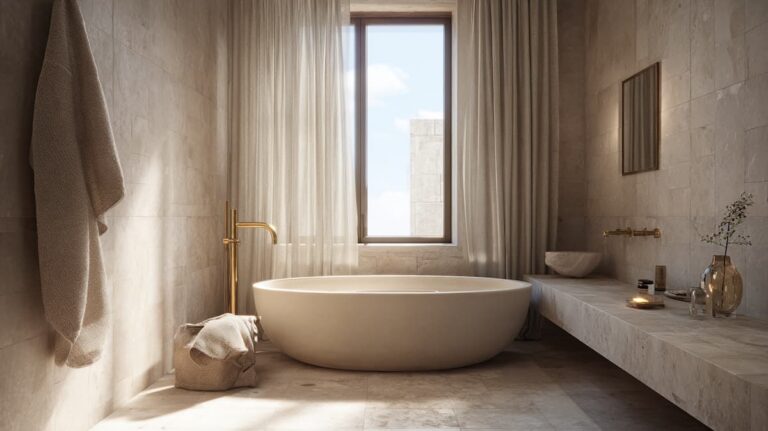
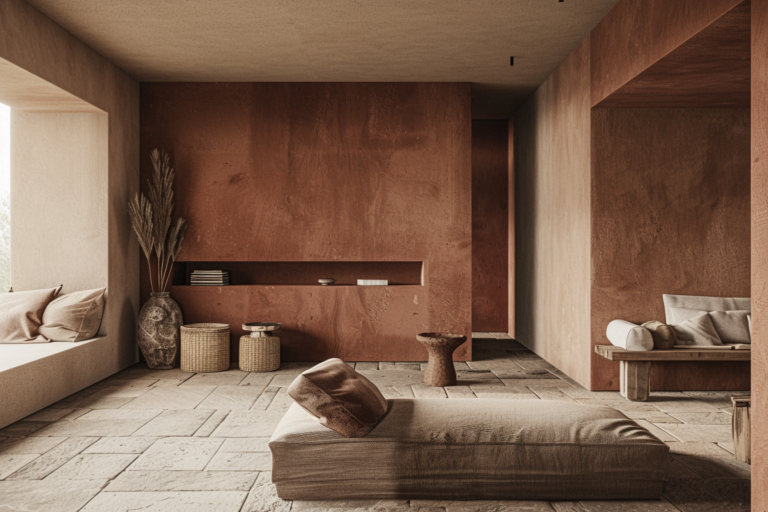
This approach places craftsmanship, material honesty, and tactility at the center of the interior. Spaces remain uncluttered, but they are no longer sterile. Natural materials take precedence: solid wood, linen, wool, clay, stone, limewash, and plaster. These materials are chosen not for perfection, but for character.
In Crafted Minimalism, imperfections are intentional. Brush strokes remain visible. Wood grain is celebrated rather than hidden. Surfaces show subtle variation. These elements introduce warmth and depth without adding visual chaos.
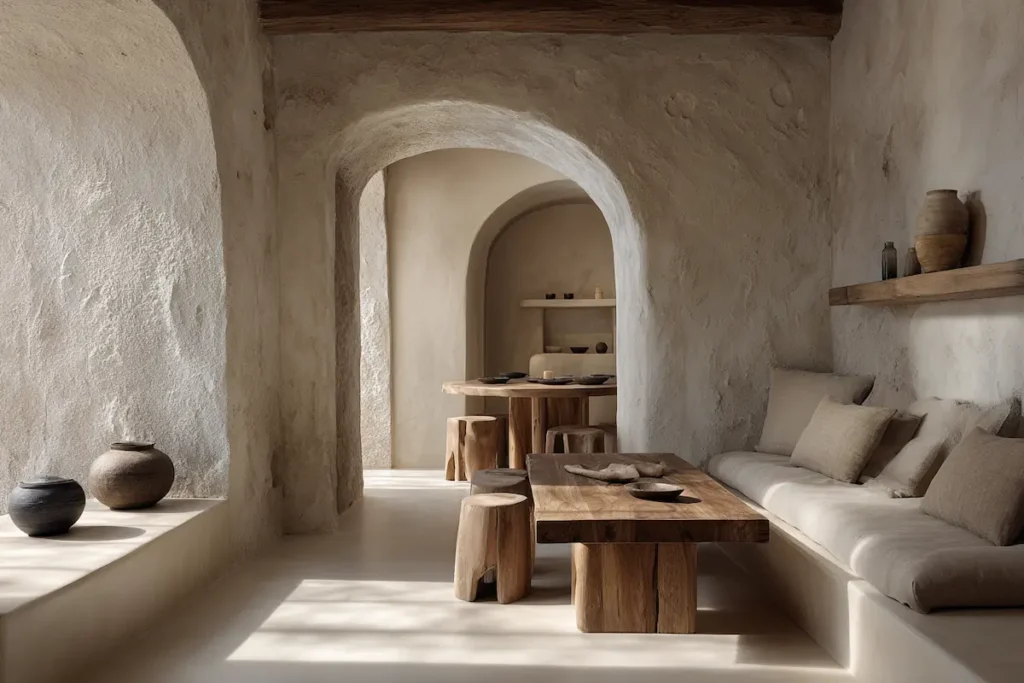
Where Modern Minimalism seeks calm through precision, Crafted Minimalism seeks calm through connection—to materials, to time, and to the human hand.
Reduction vs Intention
One of the most fundamental differences between the two styles lies in their relationship to reduction.
Modern Minimalism reduces by subtraction. Objects are removed until only the essential remains. The emphasis is on efficiency, clarity, and control. Each item must justify its presence functionally.
Crafted Minimalism reduces by intention. Fewer objects are present, but each carries weight—materially, visually, or emotionally. A single ceramic bowl, for example, may replace multiple decorative items, not because it is more efficient, but because it feels meaningful.
This difference influences how spaces are curated. Modern Minimalism often feels highly edited and precise. Crafted Minimalism feels selective and personal, even when the space remains visually quiet.
Materials: Uniformity vs Presence
Material choice is one of the clearest indicators of which philosophy a space follows.
Modern Minimalism favors materials that can be refined into uniform surfaces. Concrete is polished. Wood is lacquered. Metal is brushed or coated. The goal is consistency and predictability. Texture is minimized so that form and geometry remain dominant.
Crafted Minimalism embraces materials that retain evidence of their origin. Plaster walls show movement. Wood furniture reveals knots and grain. Textiles wrinkle naturally. Stone feels irregular rather than perfect. These materials introduce sensory richness without clutter.
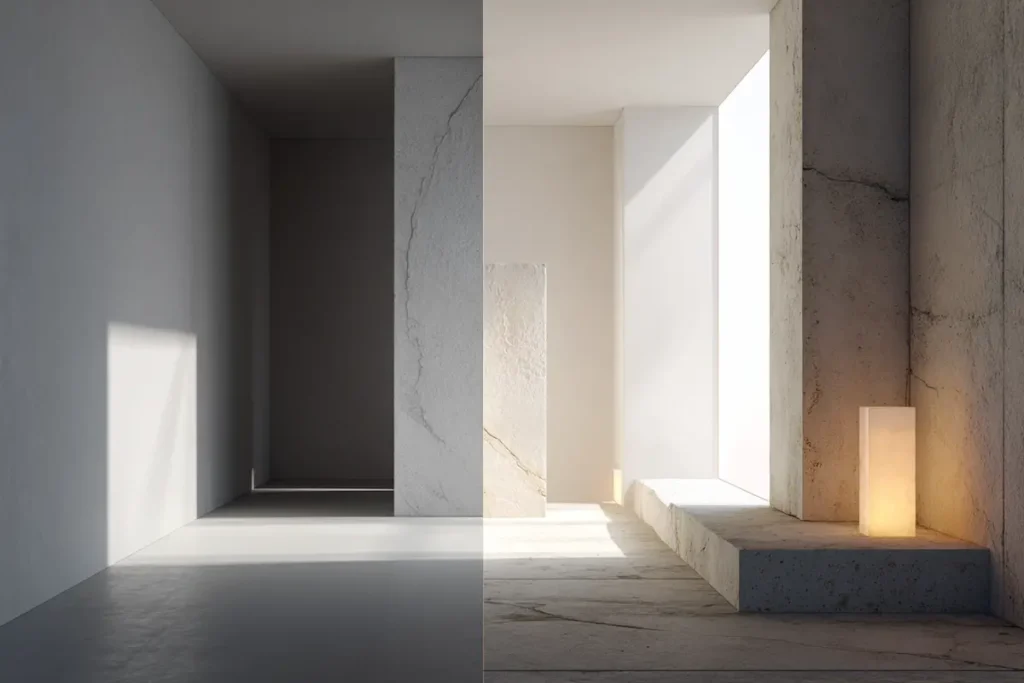
This distinction affects not only aesthetics, but how a space ages. Modern minimalist interiors aim to resist time, maintaining a consistent appearance. Crafted minimalist interiors evolve with time, developing patina and character.
Color and Light
Modern Minimalism typically relies on cool or neutral palettes. White, gray, black, and muted monochromes dominate. Light is often architectural—directional, crisp, and designed to highlight form rather than texture.
Crafted Minimalism leans toward warm neutrals and earthy tones: sand, clay, beige, off-white, soft browns, muted greens. Light is softer and more diffuse, often natural or indirect. Shadows become part of the composition, enhancing texture rather than flattening it.

The emotional impact is significant. Modern Minimalism feels structured and alert. Crafted Minimalism feels relaxed and grounding.
Furniture and Form
Furniture in Modern Minimalism often prioritizes clean geometry. Edges are sharp. Forms are linear. Pieces are designed to disappear visually, reinforcing the architecture rather than competing with it.
In Crafted Minimalism, furniture becomes more sculptural. Edges soften. Forms curve gently. Joinery may be visible. Pieces feel grounded and tactile, even when visually simple.
This difference shapes how a room is experienced physically. Crafted Minimalism often invites touch—sitting, leaning, resting—while Modern Minimalism emphasizes visual order over physical comfort.
Objects, Decor, and Meaning
Both styles limit decorative objects, but for different reasons.
In Modern Minimalism, objects are minimized to avoid distraction. Decor is often abstract, geometric, or absent entirely. The space itself becomes the primary visual statement.
In Crafted Minimalism, objects are few but intentional. A handmade ceramic, a woven basket, or a piece of textured wall art may be present—not as decoration, but as material expression.

Objects in Crafted Minimalism often carry a sense of story or process, even if their origin is unknown. They contribute to atmosphere rather than decoration.
Emotional Experience
The emotional difference between the two styles is perhaps the most important.
Modern Minimalism offers:
- Visual order
- Mental clarity
- A sense of control
- Architectural precision
Crafted Minimalism offers:
- Emotional warmth
- Sensory comfort
- Grounded calm
- A feeling of ease
Neither experience is universally better. Some people thrive in structured, highly controlled environments. Others feel more at home in spaces that acknowledge imperfection and texture.
Lifestyle Considerations
Modern Minimalism often works best in environments where order and efficiency are prioritized—urban apartments, workspaces, or homes with strong architectural identity.
Crafted Minimalism suits spaces designed for long-term living. Homes where daily rituals, family life, and slow moments matter benefit from the warmth and adaptability this approach offers.
Many contemporary interiors blend the two philosophies—using modern minimalist spatial clarity while introducing crafted materials and textures for balance.
Choosing Between the Two
The choice between Crafted Minimalism and Modern Minimalism is less about trends and more about temperament.
If you value precision, structure, and visual control, Modern Minimalism may feel natural.
If you value comfort, material honesty, and emotional grounding, Crafted Minimalism may resonate more deeply.
Understanding the distinction allows you to design a home that supports not just how you want it to look—but how you want it to feel.
Final Reflection
Minimalism is no longer a single language. It has evolved into nuanced interpretations that reflect different values and lifestyles. Modern Minimalism and Crafted Minimalism share a commitment to simplicity, but express it through fundamentally different means.
One seeks calm through precision. The other through presence. Both invite us to live with less—but ask different questions about what truly matters.