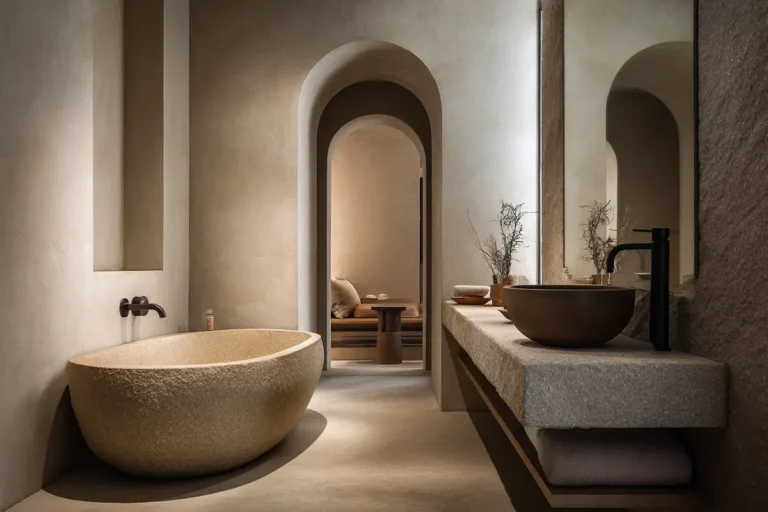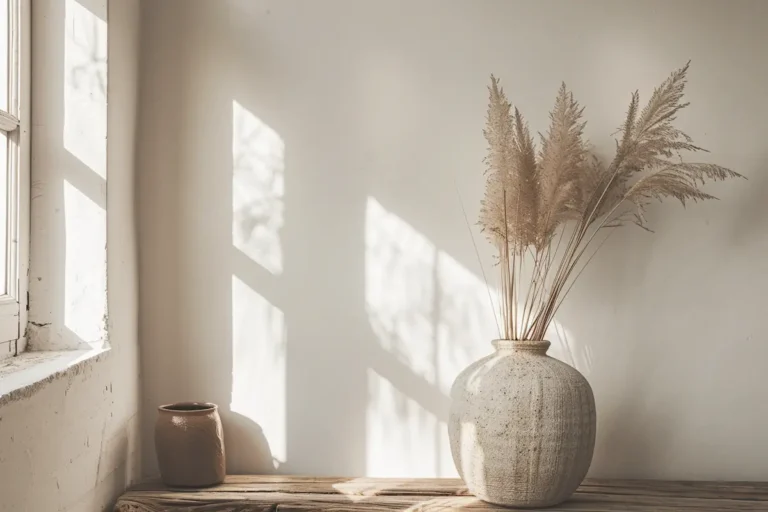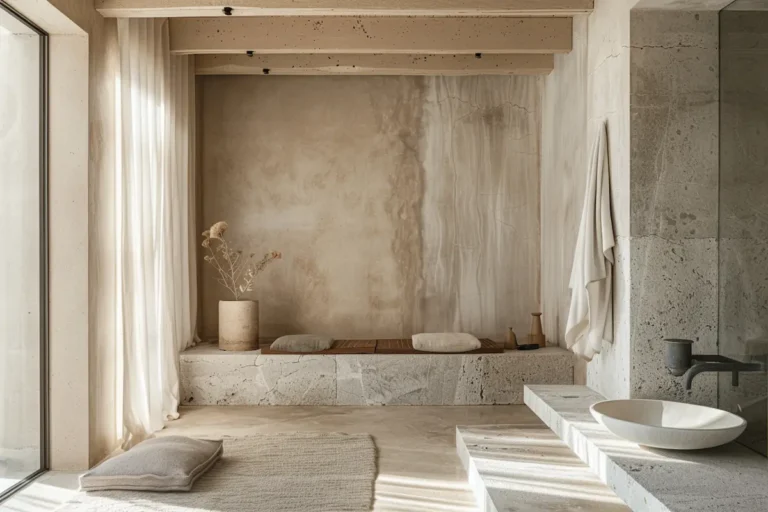

Is Crafted Minimalism Sustainable?
Looking beyond labels to understand what sustainability really means in interiors
Sustainability has become one of the most overused words in interior design.
Almost every style claims it. Almost every product promises it.
And yet, many people who try to design a “sustainable” home feel confused.
Is sustainability about materials?
About price?
About buying less — or buying better?
Crafted Minimalism is often described as sustainable, but rarely explained as such.
This article looks beyond labels and trends to answer one clear question:
Is Crafted Minimalism actually sustainable — and if so, why?
Not in theory.
But in everyday living.
Sustainability is not a style feature
One of the biggest misunderstandings about sustainability is that it can be added.
A material gets labeled “eco”.
A product gets certified.
A color palette looks “natural”.
But sustainability is not a visual layer.
It’s a systemic outcome.
An interior is sustainable when:
- it doesn’t need constant replacement
- it supports long-term use
- it reduces waste over time
Crafted Minimalism doesn’t market itself as green.
Instead, sustainability emerges as a byproduct of how the style is structured.
If you’re unfamiliar with the framework itself, start with:
What Is Crafted Minimalism
Why sustainability often fails in interiors
Many interiors labeled “sustainable” fail because they focus on single decisions, not systems.
Common examples:
- eco-certified furniture replaced every few years
- trend-driven styles built from “green” materials
- low-quality items bought frequently because they’re affordable
Sustainability isn’t about what you buy once.
It’s about how often you need to buy again.
This is where Crafted Minimalism takes a different approach.
Longevity is the foundation of sustainability
The most sustainable interior decision is not having to replace something.
Crafted Minimalism prioritizes:
- durable materials
- timeless proportions
- neutral structural foundations
Because of this, interiors age slowly.
A table doesn’t become “wrong” because a trend changes.
A floor doesn’t feel outdated after a season.
A layout doesn’t need rethinking every few years.
Longevity reduces:
- material waste
- financial waste
- emotional fatigue
This alone places Crafted Minimalism ahead of many trend-driven “eco” styles.
Materials that age instead of expire
Crafted Minimalism relies on materials that change, not disappear.
Think of:
- solid wood that develops patina
- stone that shows wear
- ceramics that age quietly
These materials:
- don’t rely on surface perfection
- don’t require constant maintenance
- don’t become unusable when scratched
In contrast, many mass-produced “sustainable” items rely on finishes that degrade quickly.
When appearance collapses, replacement follows.

Fewer purchases, not cheaper ones
Sustainability is often framed as a budget issue.
But cost and sustainability are not the same thing.
Buying cheap furniture repeatedly is rarely sustainable — financially or environmentally.
Crafted Minimalism encourages:
- fewer purchases
- better evaluation
- longer use cycles
That doesn’t mean everything must be expensive.
It means:
- prioritizing impact pieces
- avoiding impulse buys
- building an interior gradually
For people concerned about affordability, sustainability does not disappear.
It simply requires a different strategy — explored in
Budget-Friendly Crafted Minimalist Furniture
The role of restraint
Crafted Minimalism is restrained by design.
That restraint reduces:
- overconsumption
- decorative redundancy
- unnecessary upgrades
Instead of filling space, it asks:
- what is essential?
- what supports daily life?
- what deserves to stay?
This mindset naturally aligns with sustainable behavior — without requiring constant self-control.
The environment doesn’t benefit from willpower.
It benefits from systems that remove temptation.

Sustainability through adaptability
Another overlooked aspect of sustainability is adaptability.
An interior that can’t adjust to life changes often gets replaced.
Crafted Minimalism supports adaptability through:
- flexible layouts
- neutral foundations
- non-prescriptive styling
This allows:
- rooms to change function
- furniture to move across spaces
- additions without disruption
Adaptable interiors stay relevant longer — and relevance is sustainable.
Low maintenance = lower impact
Maintenance has an environmental cost.
Frequent:
- cleaning
- refinishing
- replacing
all consume resources.
Crafted Minimalism minimizes maintenance by using:
- forgiving materials
- simple forms
- predictable layouts
When upkeep is minimal, longevity increases — and impact decreases.
This is a quiet form of sustainability that rarely gets attention, but matters greatly over time.
Sustainability without moral pressure
One reason Crafted Minimalism resonates is that it doesn’t moralize.
It doesn’t demand:
- perfect choices
- constant vigilance
- ideological purity
Instead, it aligns sustainability with self-interest:
- less stress
- fewer decisions
- long-term satisfaction
When sustainable behavior feels supportive rather than restrictive, it lasts.
This makes Crafted Minimalism especially realistic for everyday living.
The problem with “fast sustainability”
Many brands now offer fast versions of sustainability:
- quick fixes
- visual signals
- green messaging
But speed and sustainability rarely align.
Crafted Minimalism moves slowly by design:
- fewer updates
- longer decision cycles
- gradual evolution
This slowness is often mistaken for inaccessibility — but it’s actually what makes the system work.

Is Crafted Minimalism perfect?
No interior approach is perfect.
Crafted Minimalism can fail when:
- restraint becomes rigidity
- materials are chosen only for status
- the system is copied without understanding
Sustainability requires intention, not imitation.
But when applied thoughtfully, Crafted Minimalism avoids many of the structural issues that cause sustainable interiors to fail.
Sustainability as a long-term relationship
True sustainability is not a checklist.
It’s a relationship between:
- people
- space
- time
Crafted Minimalism treats interiors as evolving environments, not finished products.
That perspective:
- reduces pressure
- extends lifespan
- lowers environmental cost
And importantly, it makes sustainability feel achievable — not abstract.

Final thoughts
Crafted Minimalism is sustainable not because it claims to be —
but because it removes many of the reasons interiors fail over time.
It reduces:
- replacement cycles
- trend dependency
- maintenance burden
And replaces them with:
- longevity
- adaptability
- material honesty
Sustainability, in this context, isn’t a feature.
It’s a consequence.
Where to go next
To deepen your understanding of Crafted Minimalism beyond sustainability, continue with:
- What Is Crafted Minimalism
- Budget-Friendly Crafted Minimalist Furniture
Together, these articles show how the philosophy works —
both in principle and in practice.