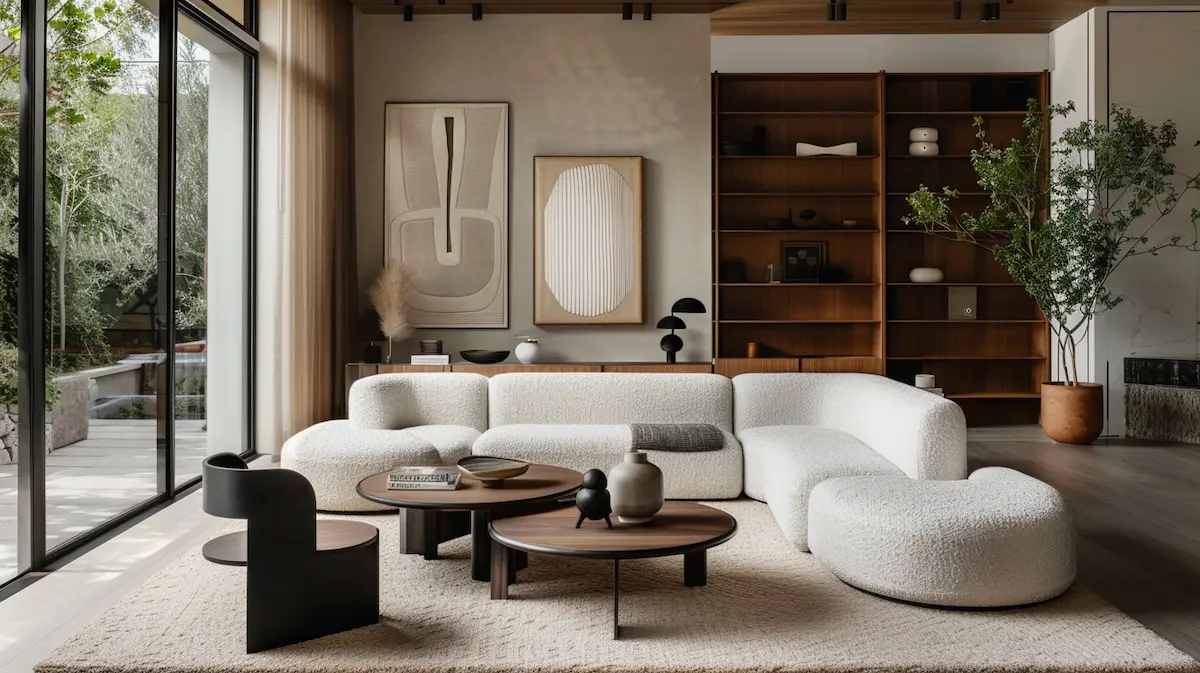
How to Style Crafted Minimalism with a Modern Edge (Without Losing Warmth)
There’s a reason why so many minimalist interiors feel either too cold or too cluttered. They lean too far in one direction. Either everything is stripped back to the point where a space feels lifeless, or warmth is added without restraint—losing the calm that minimalism is meant to create.
That’s exactly where Crafted Minimalism with a modern edge comes in.
This style lives in the tension between opposites. It keeps the warmth of natural materials—wood, linen, stone—but introduces a sharper, more intentional layer. Clean lines. Subtle contrasts. A sense that every object has been chosen, not just placed.
Where traditional crafted minimalism focuses on softness and imperfection, a modern edge adds precision and clarity. Think: a handcrafted wooden table paired with a sleek black metal frame, or a soft neutral palette anchored by one sculptural statement piece.
If you’ve ever struggled to choose between something that feels warm and something that feels modern, this approach removes that dilemma entirely. It’s not about choosing—it’s about balancing.
To fully understand how this differs from more traditional interpretations, it helps to first explore the distinction between crafted and modern minimalism (you can read more about that here: Crafted Minimalism vs Modern Minimalism).
In this guide, I’ll show you exactly how to create that balance—without losing the soul of your space.
What Defines a “Modern Edge” in Crafted Minimalism?
At first glance, crafted minimalism already feels intentional and refined. It celebrates natural materials, subtle imperfections, and a slower, more tactile way of living. But when you introduce a modern edge, something shifts. The space becomes sharper. More defined. More architectural.
A modern edge isn’t about adding more—it’s about introducing contrast with purpose.
One of the most noticeable differences is in the lines of the space. Where crafted minimalism leans into soft, organic shapes, a modern edge brings in cleaner silhouettes. Straight edges, defined forms, and structured furniture create a visual framework that grounds the space.
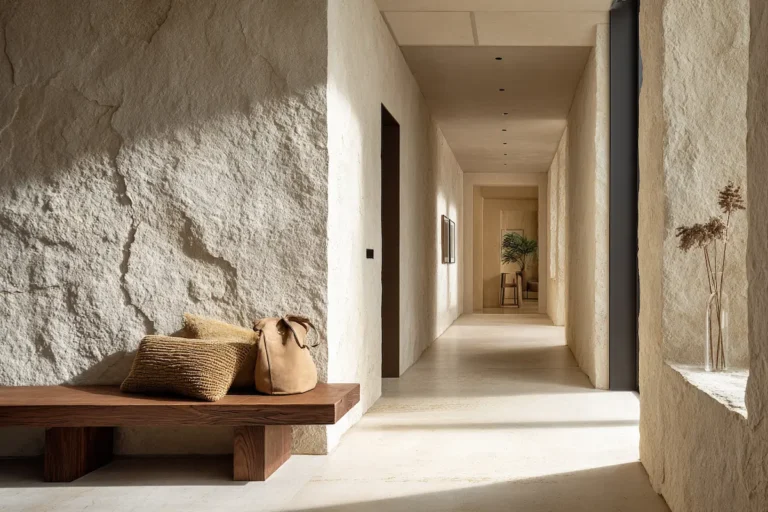
Then there’s the use of material contrast. Instead of layering similar textures, you start combining opposites: warm wood against cool metal, matte finishes next to subtle gloss, soft textiles paired with solid, structured elements. This tension is what makes the space feel dynamic rather than flat.
Another defining element is the idea of controlled imperfection. Crafted minimalism embraces handmade irregularities, but with a modern edge, those imperfections are balanced by precision. Nothing feels случайно placed. Even the most organic object has a clear role within the composition.
Finally, a modern edge introduces a sense of visual restraint with impact. Instead of multiple decorative elements, you’ll often see one or two pieces that stand out—whether that’s a sculptural chair, a bold light fixture, or a contrasting accent.
It’s this combination—structure, contrast, and intention—that transforms a soft minimalist space into something that feels both warm and distinctly modern.
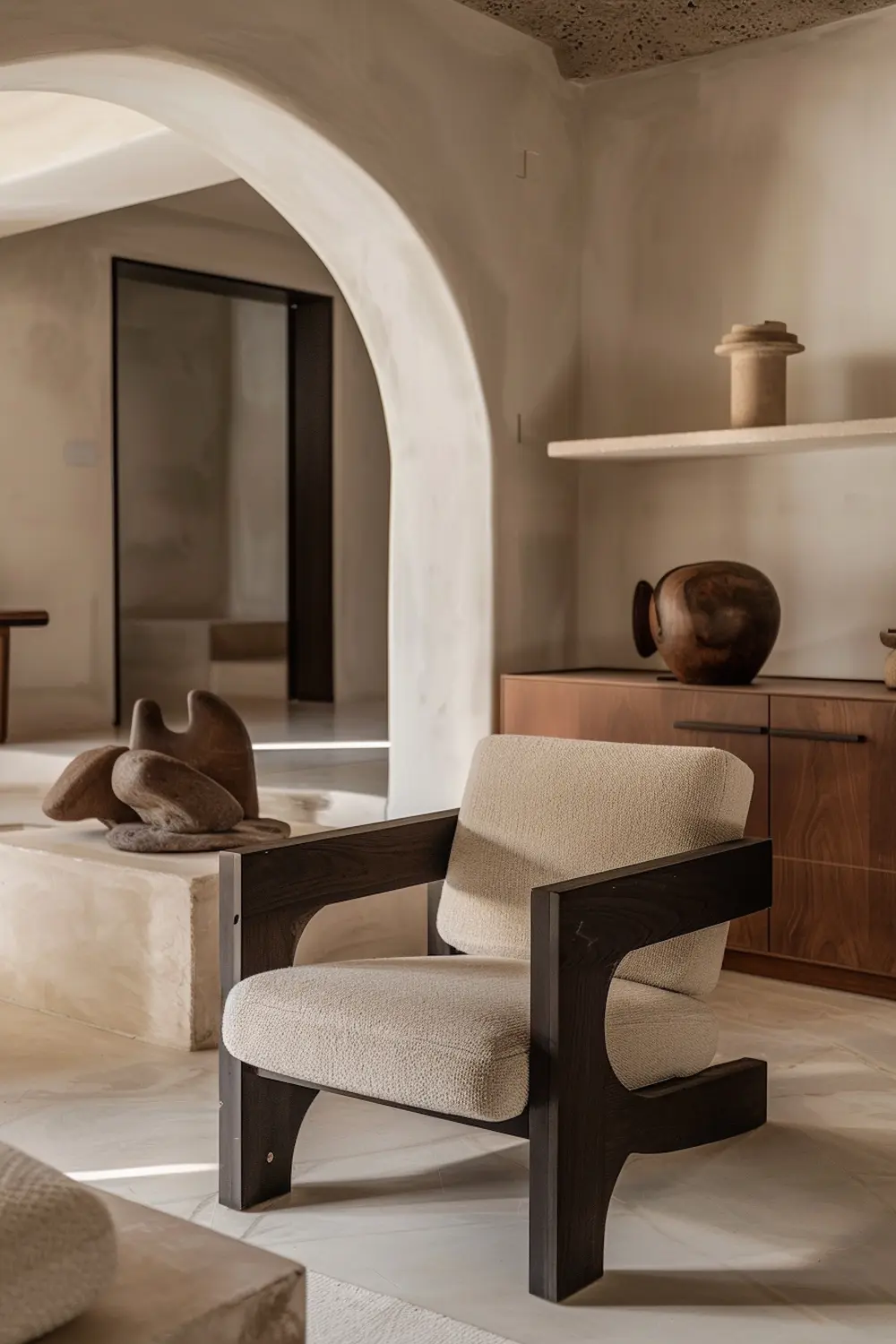
The Core Design Principles
If you want to bring a modern edge into crafted minimalism without losing its warmth, you need more than just the right pieces—you need a clear set of principles. This style works because everything feels intentional. Nothing is случайно.
Here are the foundations that make it work:
1. Clean Lines as a Framework
Every space starts with structure. Think of clean lines as the quiet backbone of your interior. Straight-edged sofas, defined table silhouettes, and architectural layouts create a sense of order that allows softer, handcrafted elements to stand out.
Without this framework, a space quickly feels too relaxed or undefined. With it, even the most organic materials feel elevated and purposeful.
2. Contrast Over Harmony
Traditional interiors often aim for everything to blend seamlessly. Here, it’s the opposite. You want contrast—but in a controlled way.
Pair light with dark. Smooth with textured. Refined with raw.
For example, a soft linen sofa becomes more interesting when placed next to a sharply defined metal side table. The goal isn’t to clash—it’s to create subtle tension that keeps the space visually engaging.
3. Intentional Negative Space
One of the most overlooked elements in this style is what you don’t add.
Empty space isn’t wasted space—it’s what gives your furniture and materials room to breathe. It allows each piece to be seen and appreciated.
Instead of filling every corner, focus on spacing. Let objects stand on their own. This is what creates that calm, editorial look.
4. One Statement Per Zone
A modern edge doesn’t mean adding more standout pieces—it means choosing one strong focal point per area.
This could be a sculptural lamp, a bold chair, or a striking coffee table. Everything else supports that choice.
When you introduce too many statement pieces, the balance disappears. But when you limit yourself, each piece carries more weight—and the entire space feels more curated.
These principles work together to create something that feels both grounded and refined. It’s not about strict rules, but about making intentional choices that balance softness with structure.
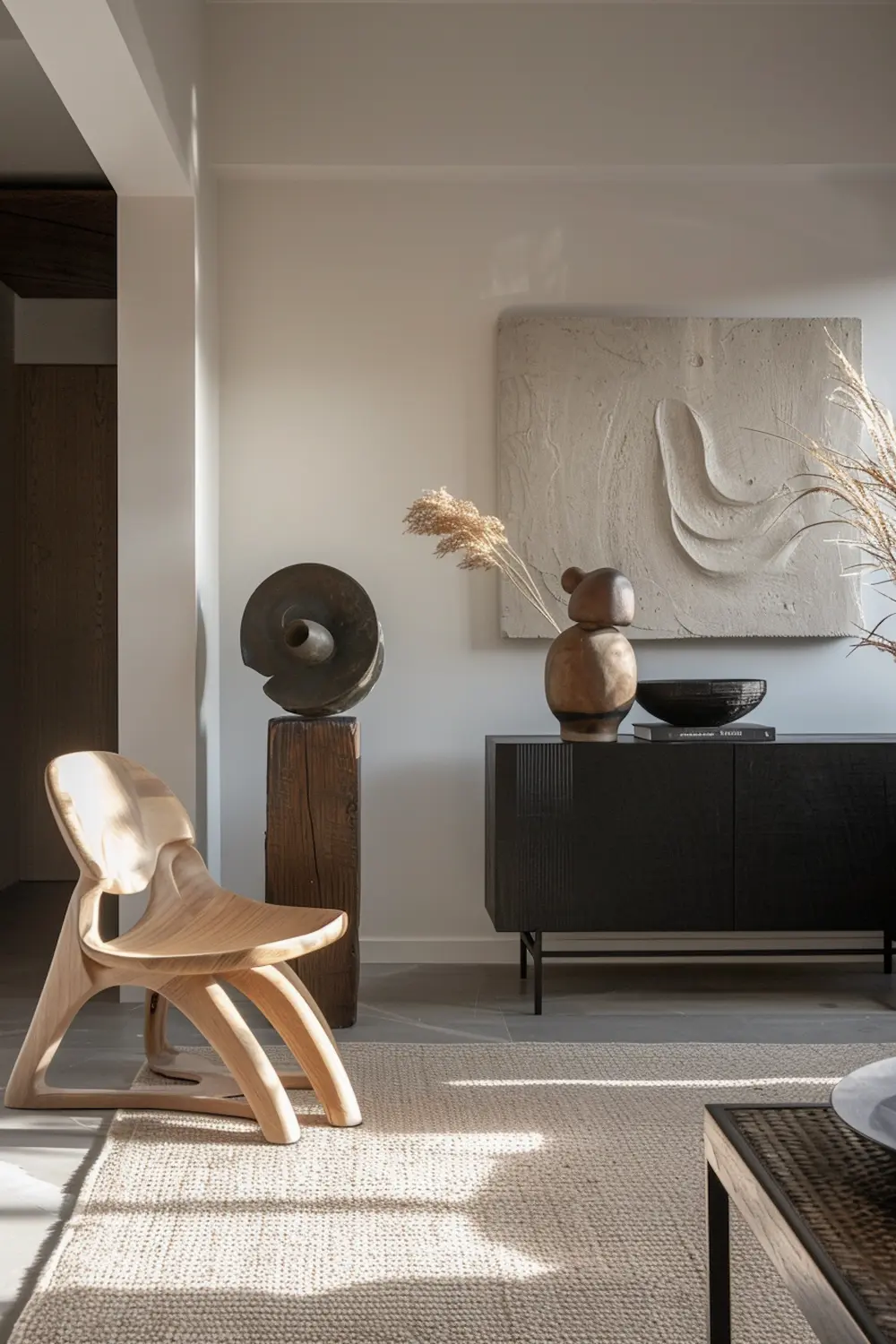
Style Breakdown: 4 Ways to Add a Modern Edge
Once you understand the principles, the next step is translating them into actual looks. Because a “modern edge” doesn’t look the same in every space—it can be subtle, bold, textural, or architectural.
These four directions show how you can apply it, depending on the mood you want to create.
1. Soft Wood + Black Accents
This is one of the most accessible ways to introduce a modern edge without losing warmth.
Start with a base of soft, natural wood—oak, ash, or walnut—and layer in black accents through lighting, table legs, or small furniture pieces. The warmth of the wood keeps the space grounded, while the black adds definition and contrast.
What makes this combination work so well is the balance. The black never dominates—it sharpens the overall look. Even a thin metal frame or a subtle detail can completely transform how refined the space feels.
This approach is perfect if you want something modern, but still soft and inviting.
This same balance between warmth and structure plays out with other material pairings too. Combining Wood and Stone explores a closely related combination.
2. Sculptural Minimalism
Here, the modern edge comes from form rather than contrast.
Instead of relying on color differences, you introduce pieces that feel almost like art. Think curved lounge chairs, abstract side tables, or statement lighting with unusual silhouettes.
The rest of the space stays minimal and calm, allowing these shapes to stand out without competition.
This style works especially well in neutral palettes, where the focus shifts entirely to the outline and structure of each object. It feels more high-end, more editorial—and slightly more daring.
3. Textural Minimalism with Sharp Lines
If you love texture but still want a clean look, this approach brings the best of both worlds.
Layer materials like linen, wool, and raw wood—but keep the silhouettes structured. Straight sofas, clean-edged tables, and minimal shapes prevent the space from feeling too soft or “bohemian.”
The contrast here isn’t in color, but in how materials behave. Soft textiles meet firm structures. Matte surfaces sit next to subtle grain or weave.
It creates depth without visual clutter—exactly what crafted minimalism with a modern edge is all about.
4. Neutral Monochrome with Depth
At first glance, this style looks the most minimal—but it’s often the most difficult to get right.
Everything stays within a tight color palette: beige, greige, soft taupe, off-white. But instead of relying on color contrast, you build depth through layers of material and tone.
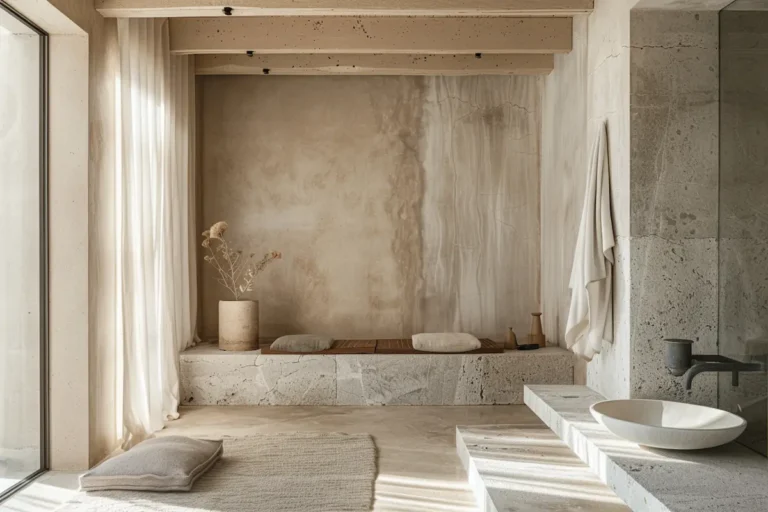
A matte wall, a slightly textured rug, a smooth stone surface, a soft upholstered chair—each element is different, even if the color is similar.
To add that modern edge, introduce one sharper element. This could be a dark accent, a sculptural object, or a piece with a more defined silhouette.
The result is calm, cohesive, and quietly powerful.
The principles behind building a cohesive neutral base are covered in more depth in Color Palettes for Crafted Minimalism.
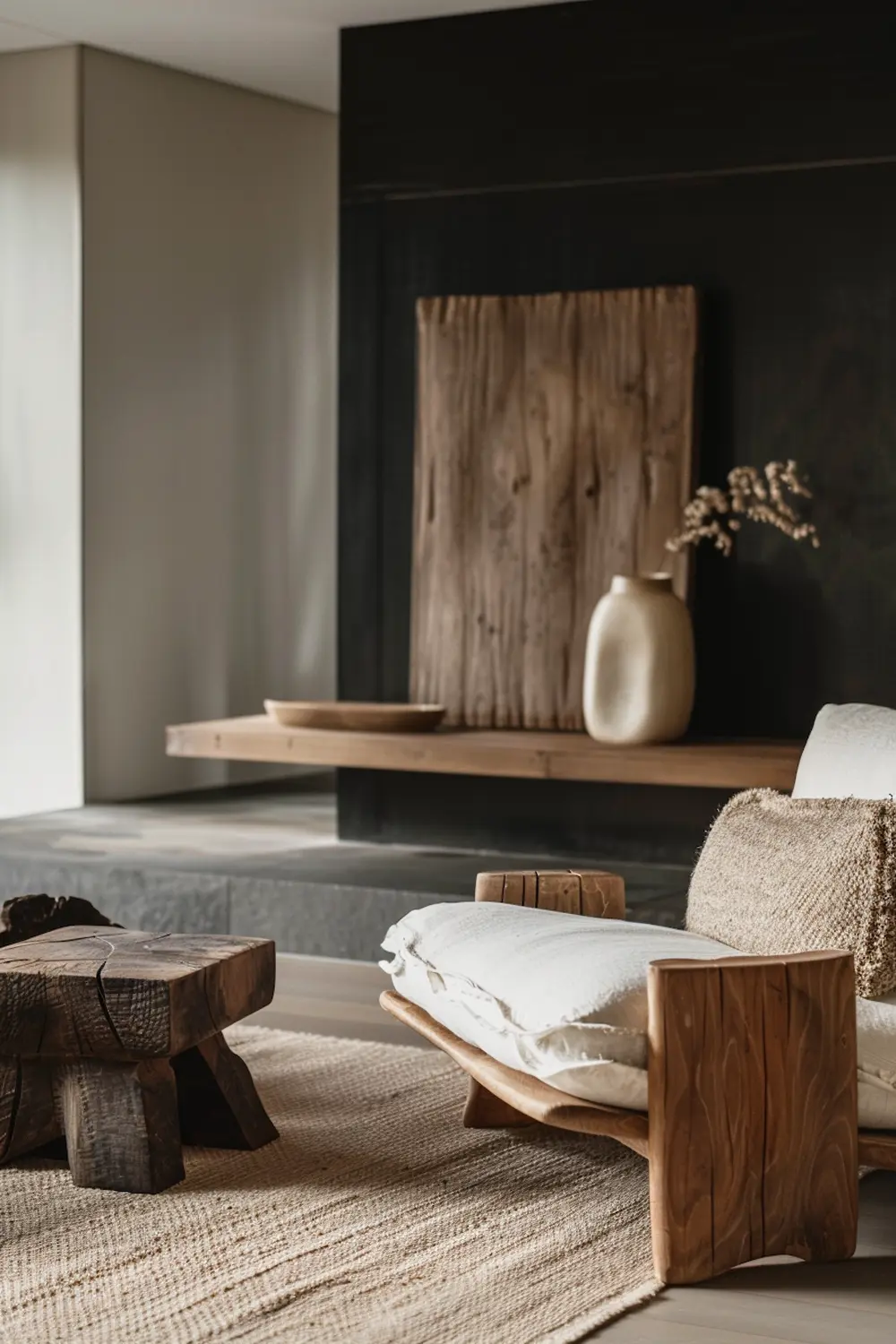
Featured Products: My Curated Picks for a Modern Edge
Translating a style into your own home can feel overwhelming—especially when the balance between warm and modern is this subtle. That’s why I always come back to a few carefully chosen pieces that anchor the look.
These are not just beautiful objects—they’re pieces that introduce contrast, structure, or sculptural presence in a way that instantly elevates a space.
Here are the exact items I would personally choose to create a crafted minimalist interior with a modern edge:
Product 1 – Rectangle Coffee Table Set
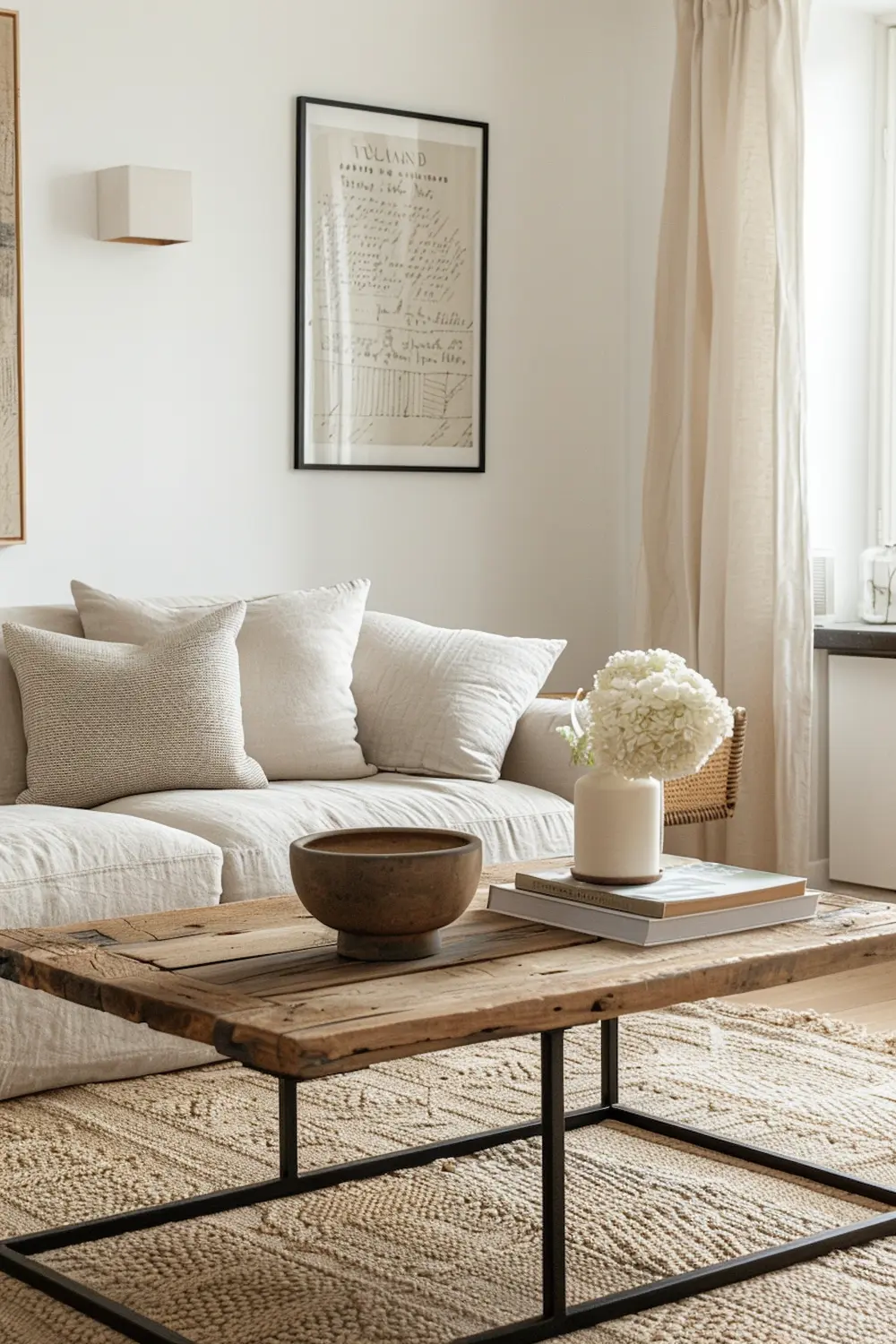
This set is a perfect example of how you can introduce contrast without overwhelming a space.
What immediately stood out to me is the combination of warm natural oak with a clean, structured base. Even though the design is subtle, the layered nesting format adds a modern, architectural feel. It gives you flexibility in styling while still maintaining a minimal look.
I would use this in a neutral living room where you want to keep things soft—but still need a defined focal point. The different heights create visual interest, while the wood keeps everything grounded and warm.
Product 2 – Relax Armchair with Footrest Bouclé
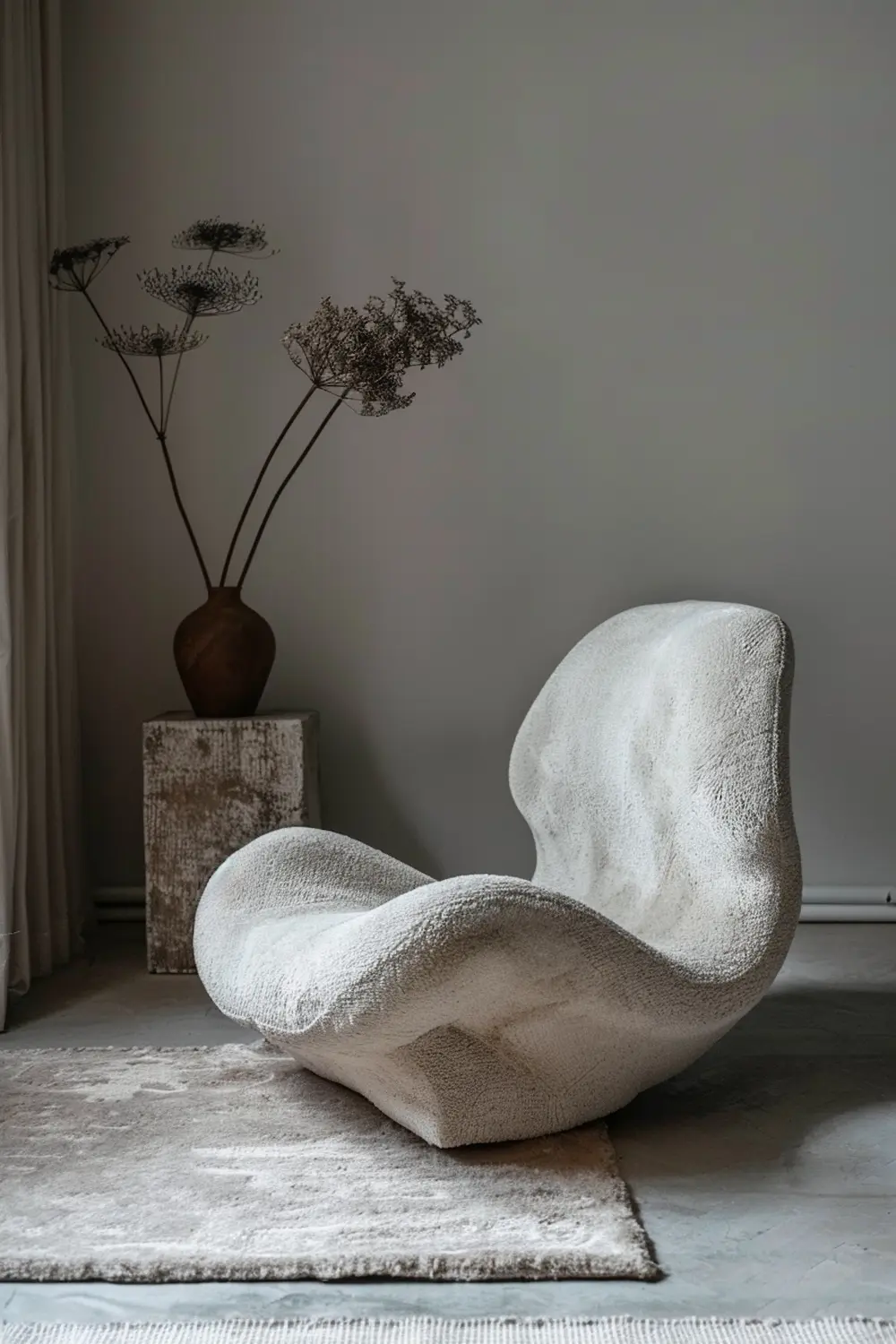
This is exactly the kind of piece that transforms a space from “nice” to editorial.
What makes this armchair with footrest so powerful is its sculptural form. It doesn’t rely on color contrast—instead, it draws attention through shape and presence. The bouclé upholstery adds softness, while the silhouette keeps it modern and slightly unexpected.
I would place this in a calm, minimal corner and let it stand on its own. It becomes a statement without needing anything around it—and that’s what makes it so effective in this style.
Product 3 – Block Travertine Side Table
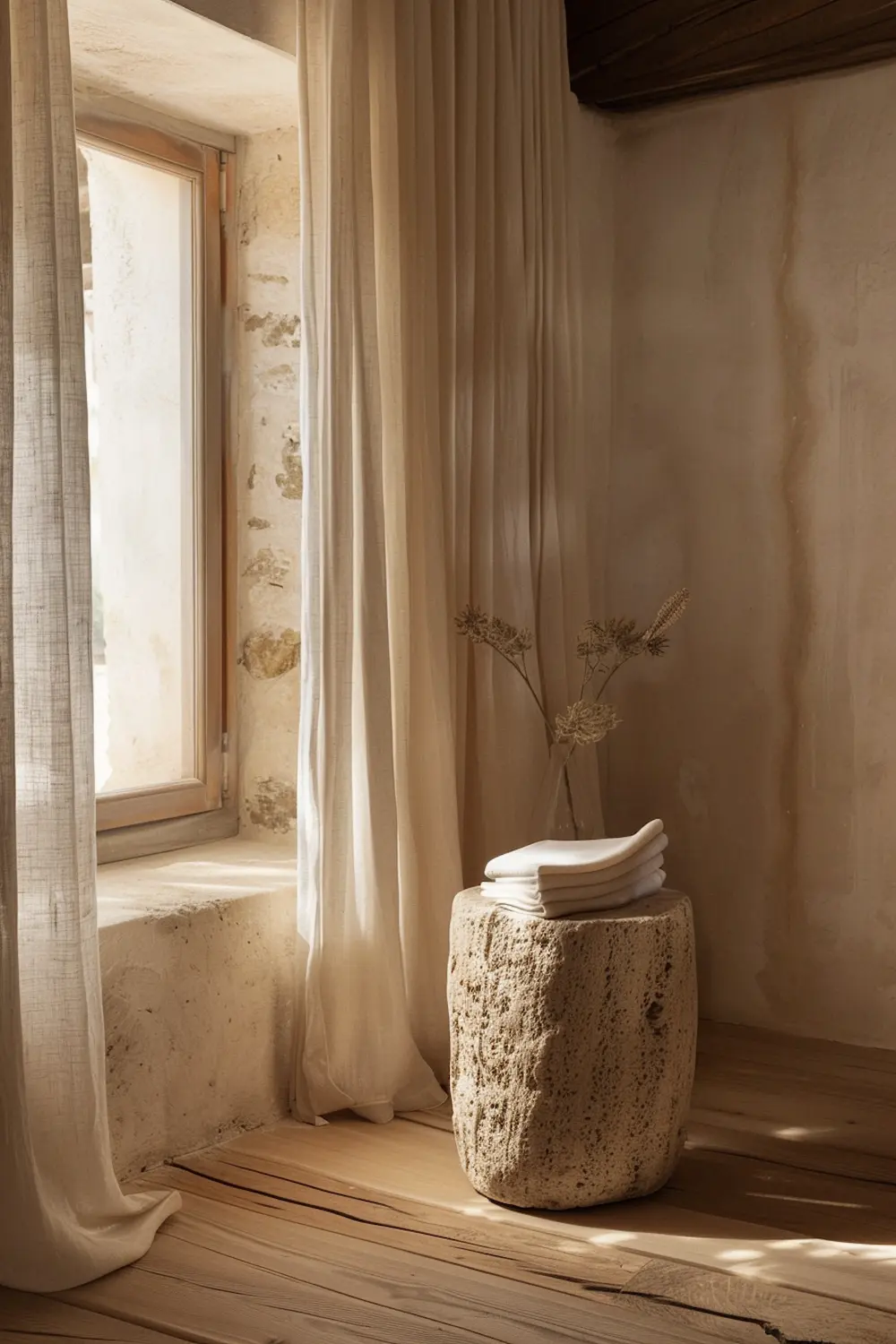
If you want to introduce a modern edge through material alone, this travertine side table is the piece to look at.
Travertine has that rare quality of feeling both raw and refined at the same time. The solid block shape gives it a strong, architectural presence, while the natural texture keeps it warm and organic.
I love using a piece like this next to softer elements—a linen sofa, a woven rug—because it creates that subtle tension between soft and solid. It doesn’t need styling. The material is the design.
Product 4 – Metal Spotlight Floor Lamp
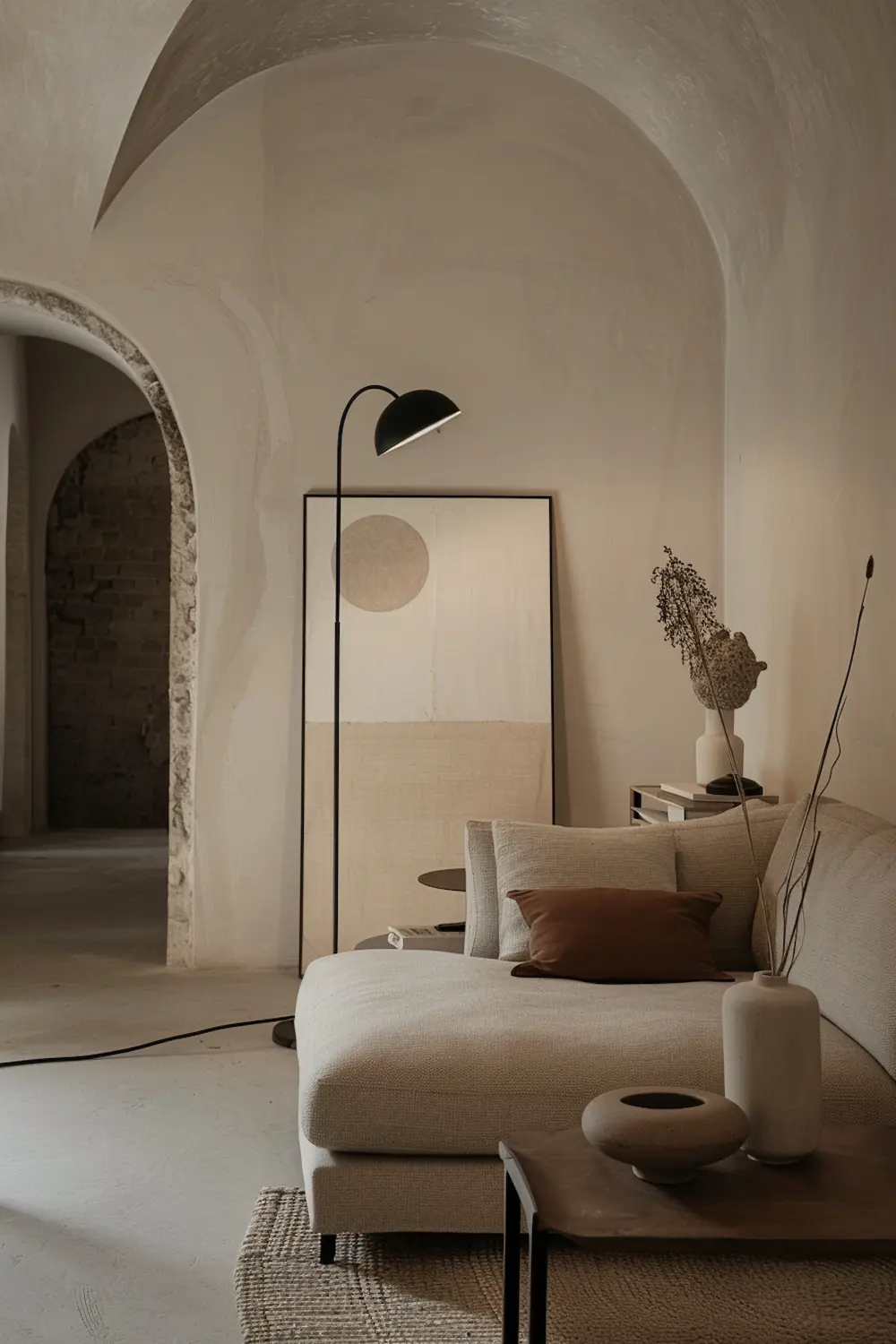
Lighting is often underestimated, but this is where you can really define the structure of a space.
This metal spotlight floor lamp works because of its clean, almost industrial lines. The metal finish adds that modern sharpness, while the simple form keeps it from feeling heavy or overpowering.
I would use this to add vertical balance—especially in a room with low, soft furniture. It subtly pulls the eye upward and reinforces the architectural feel that defines a modern edge.
These pieces work together because each one introduces a different type of contrast—material, shape, structure—without breaking the calm, cohesive palette.
That’s exactly how you create a modern edge: not by adding more, but by choosing better.
Common Mistakes When Adding a Modern Edge
Adding a modern edge sounds simple—until a space suddenly starts to feel cold, harsh, or disconnected. That’s because the balance between warmth and precision is easy to tip.
One of the most common mistakes is going too far into contrast. Adding black accents or sharp lines can elevate a space, but when overdone, it removes the softness that makes crafted minimalism feel inviting. The result? A space that looks modern, but no longer feels like home.
Another mistake is stacking too many statement pieces. A sculptural chair, a bold lamp, a striking table—individually they work. Together, they compete. Instead of creating focus, they create noise. This style relies on restraint. One strong piece per zone is more than enough.
There’s also the tendency to replace warmth instead of layering it. Swapping wood for metal or soft textiles for sleeker finishes can quickly flatten the space. The key isn’t removing warmth—it’s contrasting it.
Finally, many spaces fail because there’s no clear structure underneath. Without clean lines or a defined layout, even the best pieces feel random. The modern edge doesn’t come from the objects alone—it comes from how they’re placed.
When you avoid these mistakes, the balance becomes much easier to maintain—and the space starts to feel intentional instead of styled.
How to Apply This Style in Your Own Space
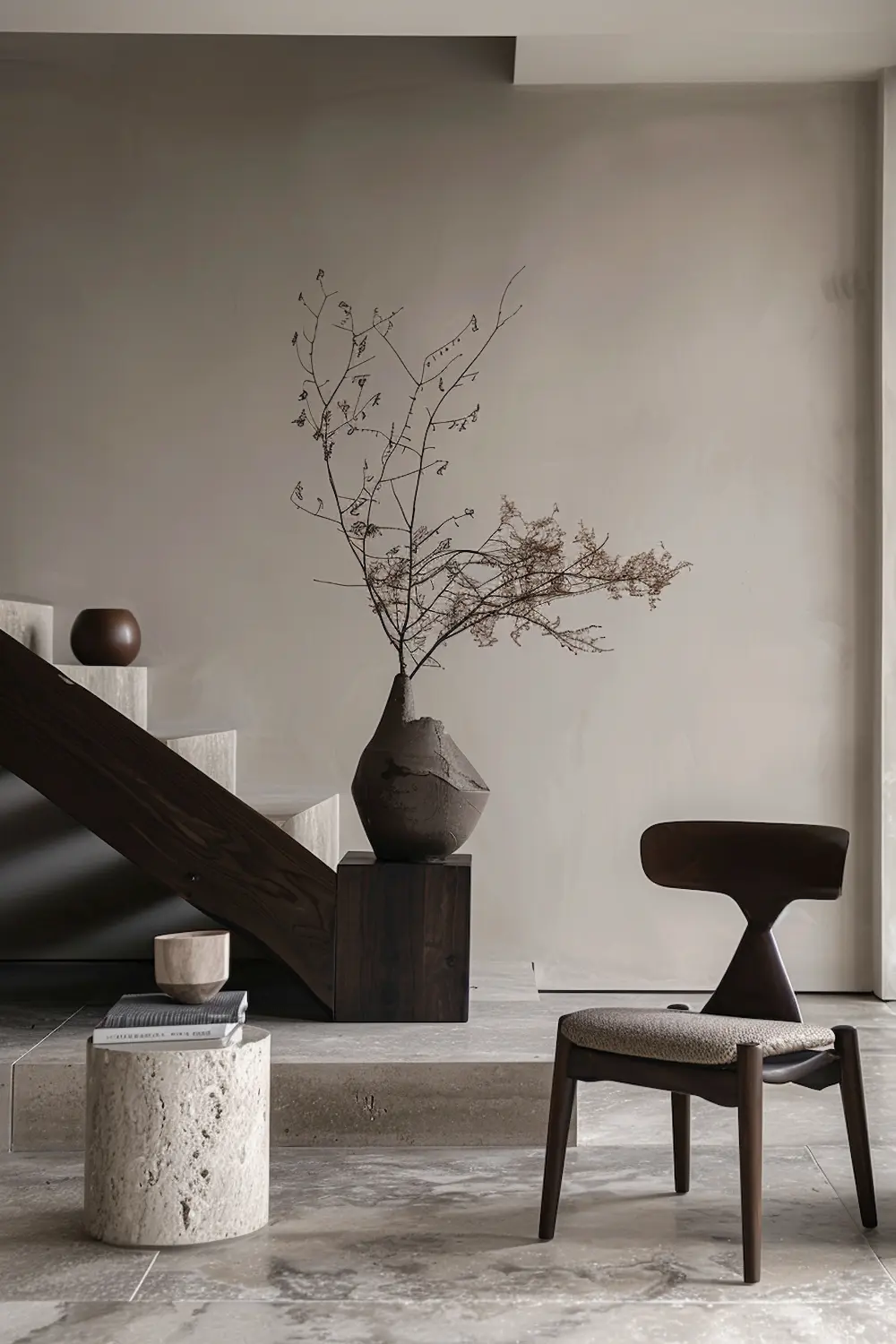
The key to making this style work in real life is to simplify your decisions. You don’t need to redesign your entire home—you just need to approach it with intention.
Start with one area. A corner of your living room, a reading nook, or even just your coffee table setup. Focus on building that space using the principles you’ve seen: clean lines, subtle contrast, and one focal point.
For a complete approach to designing this space from the ground up, Crafted Minimalism Living Room covers the full process.
From there, think in layers. Begin with your base—usually neutral and calm. Then introduce contrast through one or two materials, like wood and metal. Only after that, add a statement piece that draws attention.
What helps most is working step by step. Instead of buying everything at once, test the balance. Add one piece, observe how it changes the space, and adjust accordingly.
This approach not only makes the process easier—it also ensures your space evolves in a way that feels natural and personal.
Conclusion: The Art of Controlled Contrast
Crafted minimalism with a modern edge isn’t about choosing between warm or modern—it’s about understanding how the two can exist together.
By combining natural materials with clean lines, and softness with structure, you create a space that feels both calm and intentional. Not overly styled, not overly minimal—just balanced.
And that’s ultimately what makes this style so powerful. It doesn’t rely on trends or excess. It relies on thoughtful choices.
When you get that balance right, even the simplest space can feel refined, personal, and quietly striking.