Why Minimalism Feels Cold (And How Warm Minimalism Fixes It)
Minimalism is often presented as the ultimate path to calm: fewer items, clean lines, and a clear, distraction-free space. But in reality, many minimalist interiors end up feeling the opposite of what they promise. Instead of calm, they feel empty. Instead of intentional, they feel unfinished. And instead of warm and inviting, they feel cold and impersonal.
You’ve probably seen it before—rooms dominated by stark white walls, glossy surfaces, and barely any texture. Everything looks “perfect,” but nothing feels lived in. There’s no softness, no depth, no sense of personality. It’s minimalism taken too literally: removing not just clutter, but also character.
The problem isn’t minimalism itself—it’s how it’s often interpreted. When the focus is only on reducing, you risk stripping away the very elements that make a space feel human. Warmth doesn’t come from having more things, but from choosing the right ones: materials that feel natural, textures that invite touch, and objects that carry meaning. If you want to understand this shift more deeply, it helps to explore how warmth is intentionally built into minimalist spaces in How Crafted Minimalism Adds Warmth.
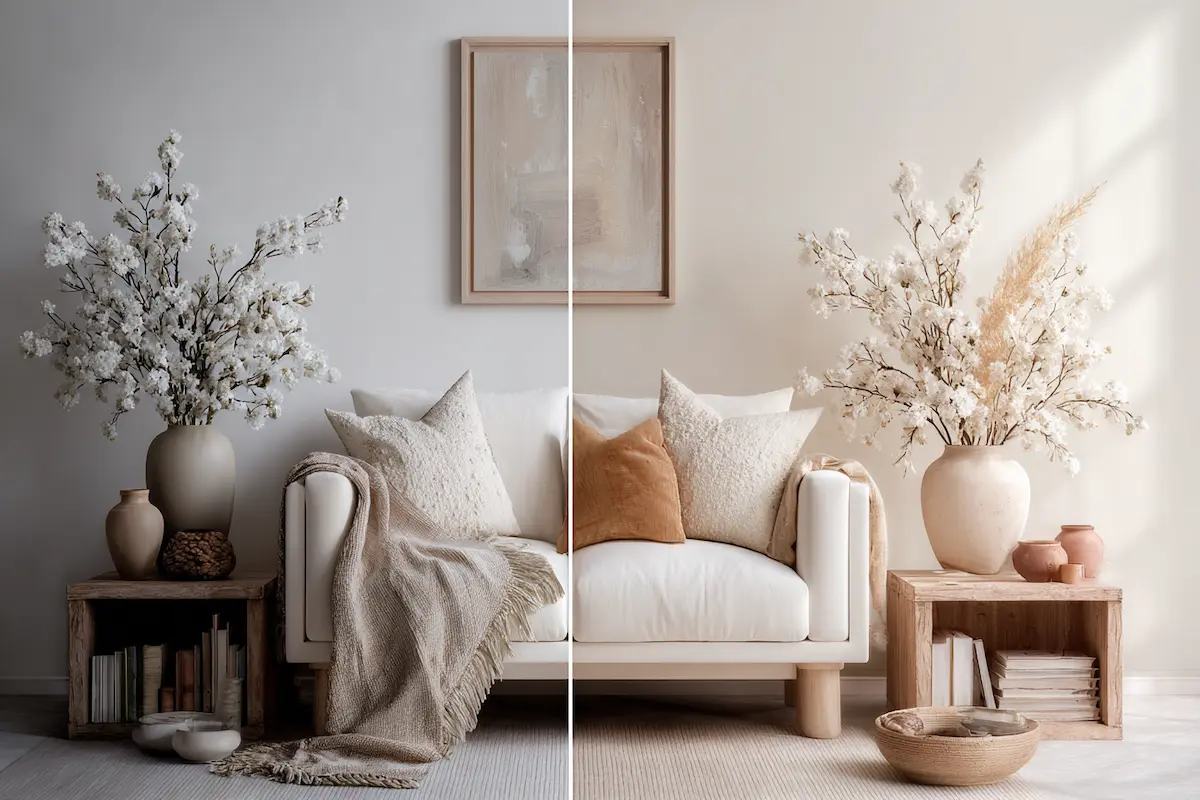
That’s where warm minimalism comes in. It keeps the clarity and simplicity of minimal design, but adds back what’s missing—softness, depth, and emotional connection. This doesn’t mean suddenly introducing bold colors or visual clutter. In fact, even subtle tones can completely change the feeling of a space. Soft palettes, like those explored in Crafted Minimalism Pastel Interior, show how color can stay minimal while still feeling warm and inviting. The same applies to choosing the right tonal balance, as you’ll see in Color Palettes for Crafted Minimalism, where depth is created without overwhelming the space.
In this article, you’ll learn how to create a minimalist home that feels calm without feeling cold—and how a few carefully chosen elements can completely transform the atmosphere of your space.
The Core Problem: Where Cold Minimalism Goes Wrong
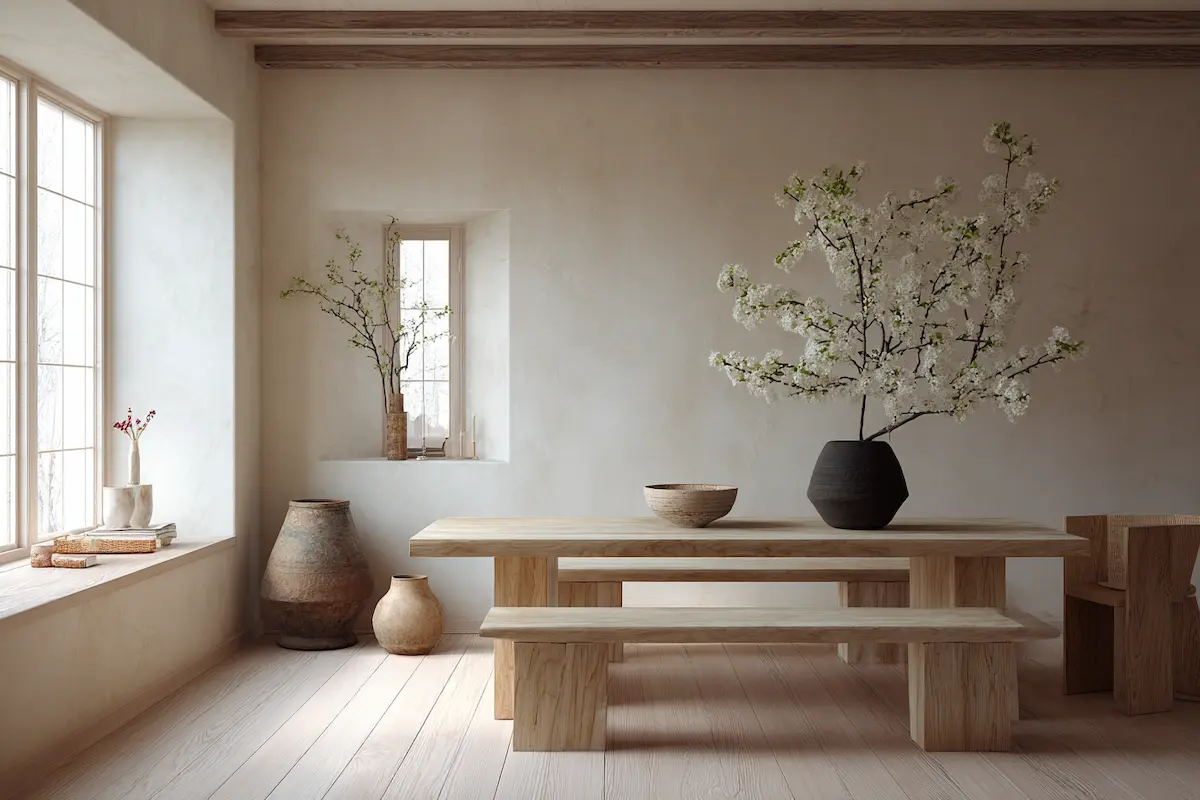
At its core, minimalism is meant to create clarity. But somewhere along the way, that idea shifted from intentional living to simply having less. And that’s exactly where things start to go wrong.
One of the biggest mistakes is focusing too much on reduction, without thinking about what remains. When a space is stripped back to the bare minimum without any consideration for atmosphere, it can quickly feel flat and lifeless. The goal shouldn’t be emptiness—it should be balance. A minimalist space still needs layers, contrast, and subtle variation to feel complete.
Another common issue is the overuse of hard, cold materials. Think glossy finishes, sharp edges, glass surfaces, and overly bright whites. While these elements can look clean and modern, they often lack the depth and softness needed to create a welcoming environment. Without natural materials or tactile surfaces, a room can feel more like a showroom than a home.
There’s also often a missing emotional connection. In many minimalist interiors, objects are chosen purely for how they look, not for what they add to the experience of the space. When everything is generic or trend-driven, the result is a room that feels disconnected—beautiful at first glance, but not somewhere you truly want to spend time.
Color plays a role here too. When minimalism is interpreted as “only white and grey,” it removes an important tool for creating warmth and dimension. Even the most subtle shifts in tone can make a huge difference, which is why understanding balanced palettes—like those explored in Color Palettes for Crafted Minimalism—is key to avoiding a cold, one-dimensional look.
In the end, minimalism doesn’t fail because it’s too simple—it fails when it removes the feeling from a space.
The Foundation of Warm Minimalism
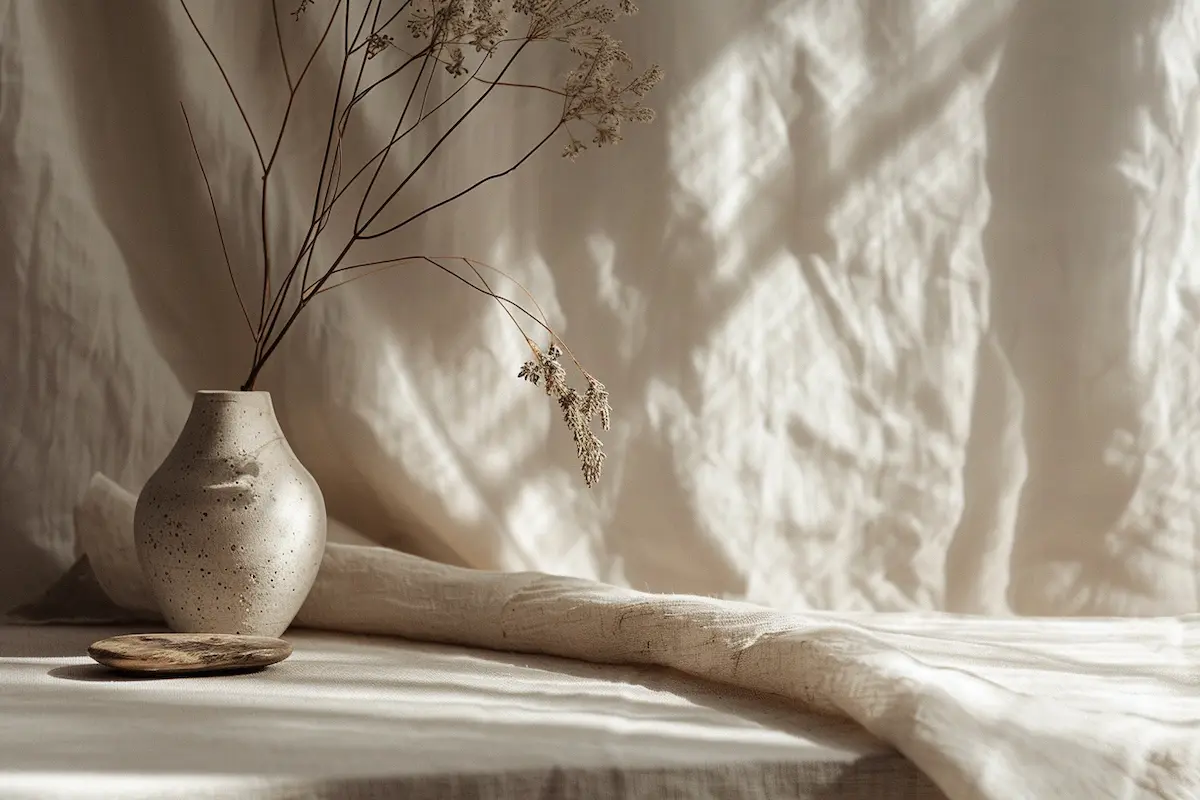
If cold minimalism is defined by what’s missing, warm minimalism is defined by what’s intentionally added back in. Not more clutter—but more feeling. The difference lies in how materials, shapes, and choices come together to create a space that feels calm and alive.
Material Warmth
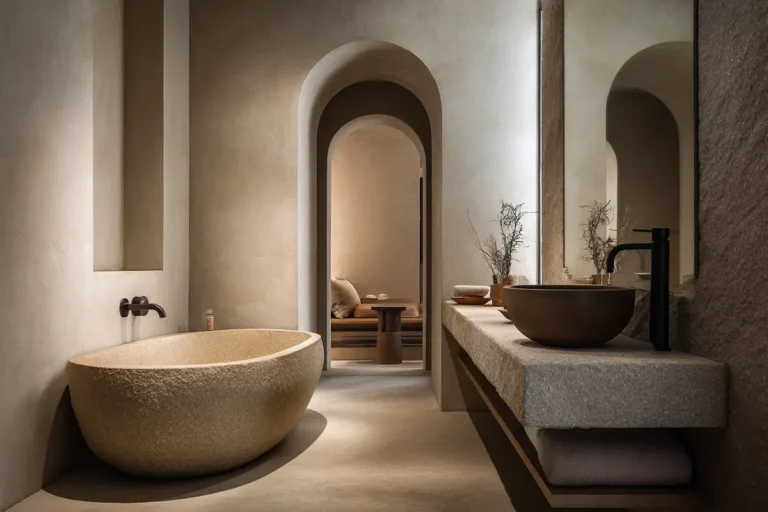
The fastest way to shift a minimalist space from cold to warm is through materials. Instead of relying on glossy, artificial finishes, warm minimalism leans into natural, tactile surfaces—wood with visible grain, linen with subtle creases, wool that softens edges, and ceramics with imperfect glazes.
These materials don’t just fill a space visually; they add depth and variation. Light interacts differently with each surface, creating soft shadows and highlights that make a room feel layered rather than flat. This is exactly the principle behind How Crafted Minimalism Adds Warmth, where materials are used not as decoration, but as the foundation of the atmosphere.
Visual Softness
Beyond materials, shape plays a quiet but powerful role. Cold minimalism often relies on sharp lines and rigid geometry, which can feel structured but also harsh. Warm minimalism softens this by introducing curves, rounded edges, and more organic silhouettes.
Think of a softly curved chair instead of a boxy one, or a rounded ceramic vase instead of a perfectly symmetrical object. These subtle shifts make a space feel more relaxed and natural, without adding visual noise. The goal isn’t to remove structure, but to balance it with softness.
Emotional Selection
Perhaps the most overlooked element is intention. Warm minimalism isn’t about owning less—it’s about choosing better. Every item in the space should feel considered, not just aesthetically but emotionally.
This means selecting pieces that have a sense of presence: a handmade object, a material that ages beautifully, or something that simply feels right in the space. Color also becomes part of this decision. Instead of defaulting to safe neutrals, you can introduce soft tonal variations—like muted pastels or warm earthy shades—to create depth without overwhelming the room. Subtle palettes, similar to those explored in Crafted Minimalism Pastel Interior, show how color can enhance warmth while still staying minimal.
When these three elements come together—material warmth, visual softness, and emotional selection—you create a space that feels intentional rather than empty. That’s the real foundation of warm minimalism.
How to Add Warmth Without Adding Clutter
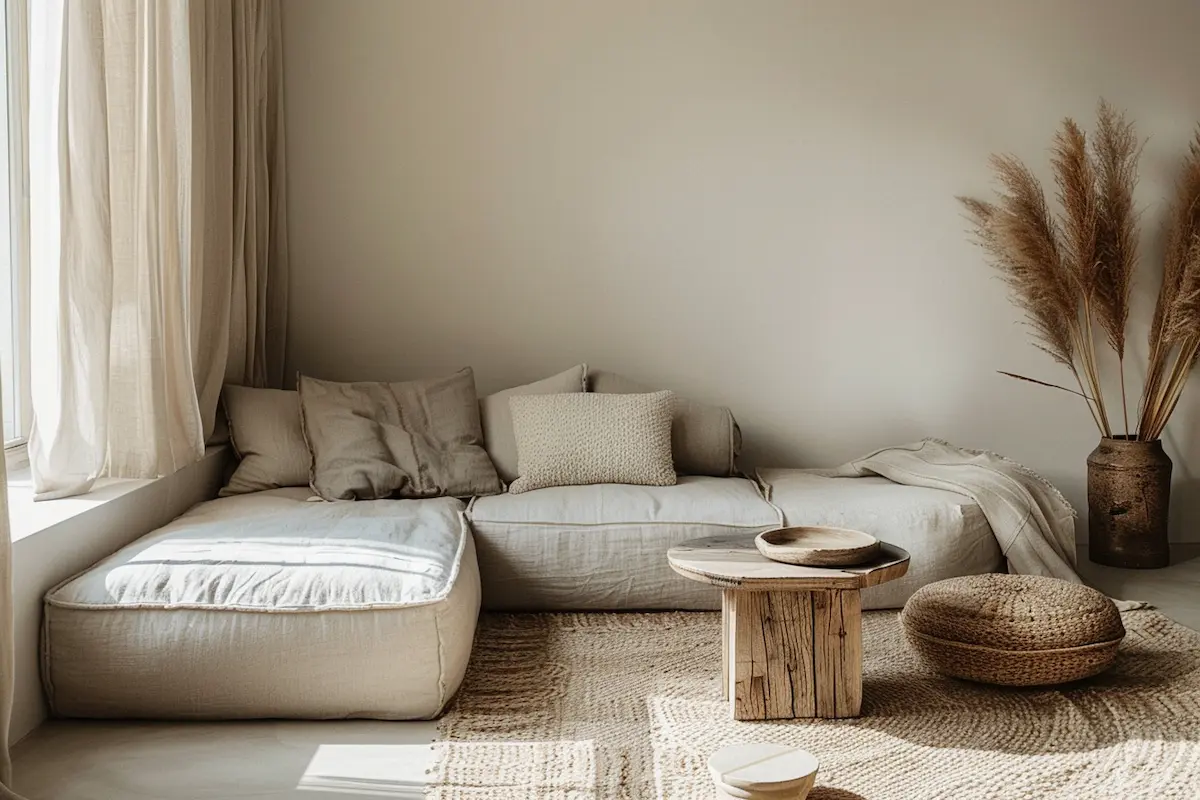
Creating a warm minimalist space isn’t about adding more—it’s about changing how the existing elements interact. The mistake many people make is trying to fix a cold interior by introducing extra decor. But more items rarely solve the problem. In fact, they often dilute the calm that minimalism is meant to create.
The real shift happens when you move from adding objects to building layers.
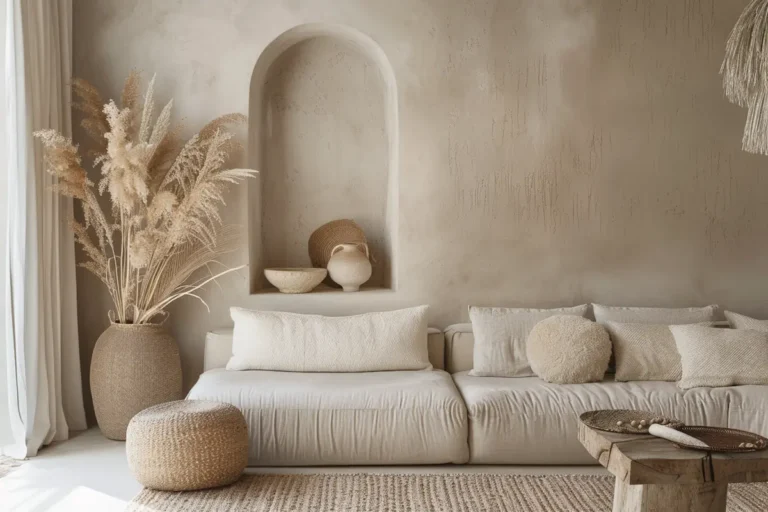
Start with texture. A space with only smooth, flat surfaces will always feel cold, no matter how carefully styled it is. By introducing subtle variation—linen against wood, wool against a matte surface—you create depth without increasing visual complexity. These layers don’t compete for attention, but they change how the space feels.
Color should follow the same principle. Instead of contrast, think in gradual transitions. When tones sit close together—warm beige, sand, soft taupe—they create a quiet richness that doesn’t disrupt the minimal look. The space remains calm, but no longer feels flat or one-dimensional.
Another important shift is how you approach focal points. Rather than spreading attention across multiple objects, warm minimalism relies on one intentional piece per area. This could be a lamp, a small table, or a sculptural object. Because everything around it is restrained, that single element has more impact—without overwhelming the space.
Lighting ties all of this together. Even the best materials and color choices can feel cold under harsh, cool light. A softer, warmer light source changes how textures are perceived and how shadows fall within the room. It doesn’t just illuminate the space—it adds atmosphere and depth.
Finally, it’s worth removing anything that doesn’t actively contribute to the feeling you want to create. Minimalism becomes cold when objects are either purely functional or purely decorative, without intention. Warm minimalism sits somewhere in between: every item has a role, whether it’s adding softness, grounding the space, or creating subtle contrast.
When you approach your interior this way, warmth doesn’t come from quantity—it comes from precision.
Carefully Chosen Pieces That Instantly Warm Up a Minimalist Space
Even with the right materials and a balanced palette, some spaces still feel like they’re missing something. That final layer of warmth often comes from a few carefully chosen pieces—not many, but the right ones. These are the items that quietly shape the atmosphere of a room without disrupting its minimal character.
The key is to choose pieces that do more than just “look good.” They should add texture, soften the space, or create a focal point in a subtle, natural way. Instead of filling your home with decorative objects, you’re selecting elements that earn their place.
Product 1: A Soft Textural Anchor
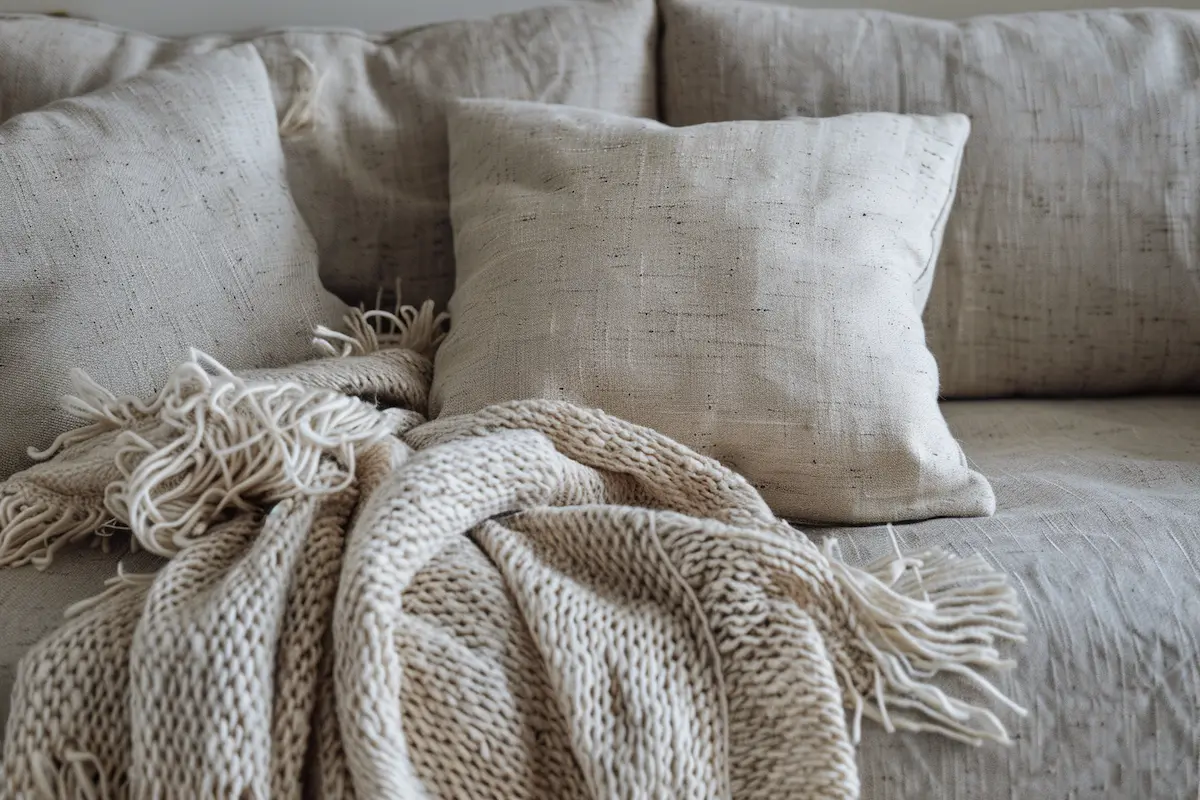
One of the simplest ways to make a minimalist space feel warmer is by introducing a soft, tactile layer that subtly changes how the room is experienced. A wool throw, a textured rug, or a heavy linen blanket can do exactly that—without adding visual clutter.
A piece like the Mia Throw by Beddy’s is a perfect example of this. It adds an immediate sense of softness, while still fitting seamlessly into a neutral, minimalist palette. The texture is visible, but not overwhelming—exactly what you want in a space where calm and balance are key.
I specifically like this type of piece because it works almost in the background. It doesn’t demand attention, but it breaks the uniformity that often makes minimal interiors feel flat. Where hard surfaces reflect light in a sharp, sometimes cold way, soft textiles absorb and diffuse it. That alone creates a more relaxed, lived-in atmosphere.
What makes a textural anchor so effective is that it connects everything else in the space. It softens the transition between materials, adds a sense of comfort, and makes the room feel more approachable. Especially in a neutral palette, texture becomes more important than color—it’s what creates depth without disrupting the calm.
This is not about adding decoration. It’s about adding feeling. One well-chosen textile can completely shift the tone of a space, turning it from clean but distant into something that actually invites you to sit down and stay.
Product 2: An Organic Material Statement
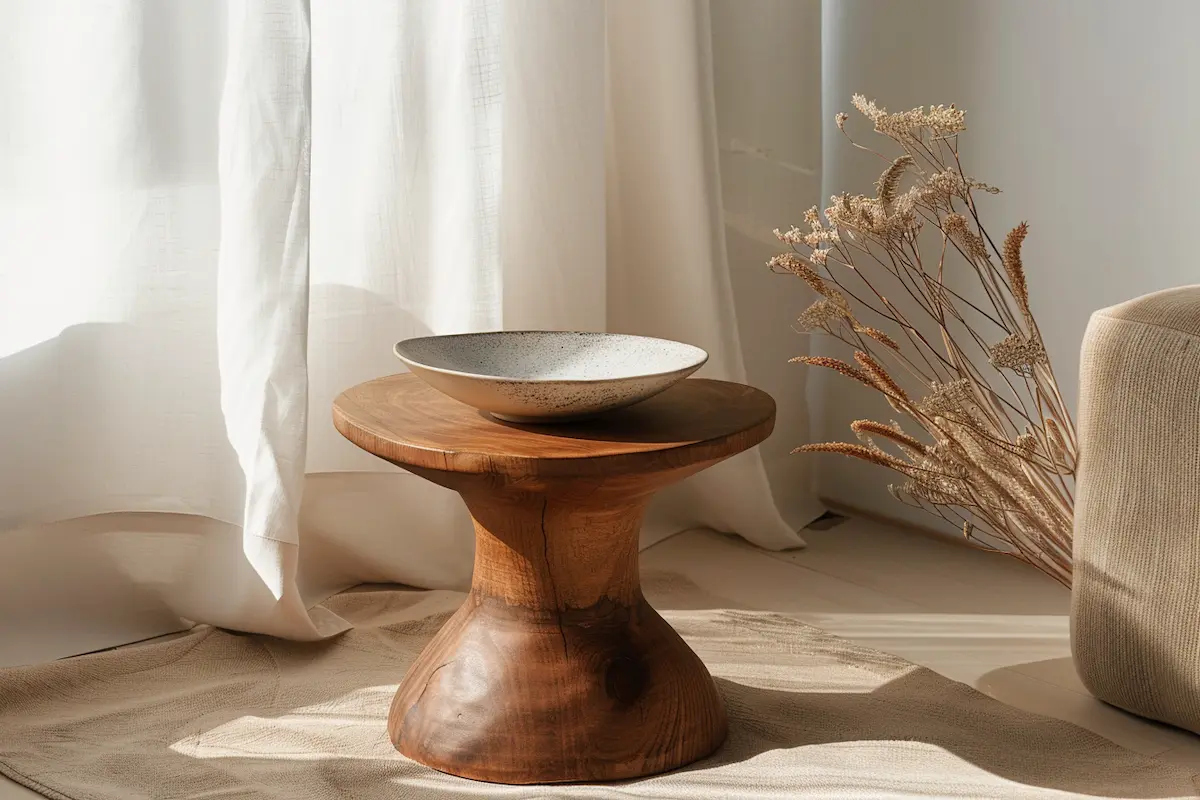
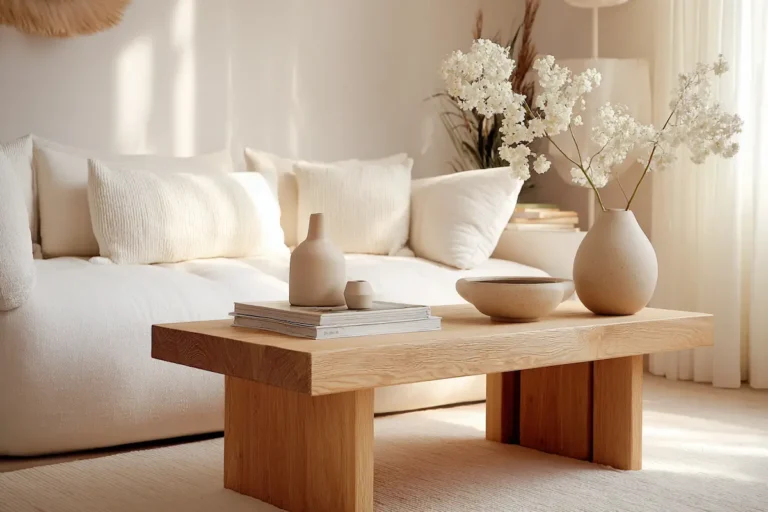
Where a soft textile adds comfort, this piece introduces something just as important: natural character. A small table in raw wood or a handcrafted finish instantly brings depth into a minimalist space—without adding visual noise.
The Amira Natural Halo Side Table Stool by Adairs is exactly the kind of piece I would choose for this. The rounded shape already softens the overall look, but it’s really the material that makes the difference. The natural wood grain adds variation and subtle imperfection, which prevents the space from feeling too polished or artificial.
What I like about this type of item is that it functions as both furniture and atmosphere. It’s practical, but it also grounds the space. Especially in a room with cleaner lines and lighter tones, a piece like this creates balance—it adds weight without heaviness.
Instead of adding more decor, this kind of object does the work on its own. It proves that you don’t need many items to create warmth—just the right material in the right place.
Product 3: Warm Ambient Lighting
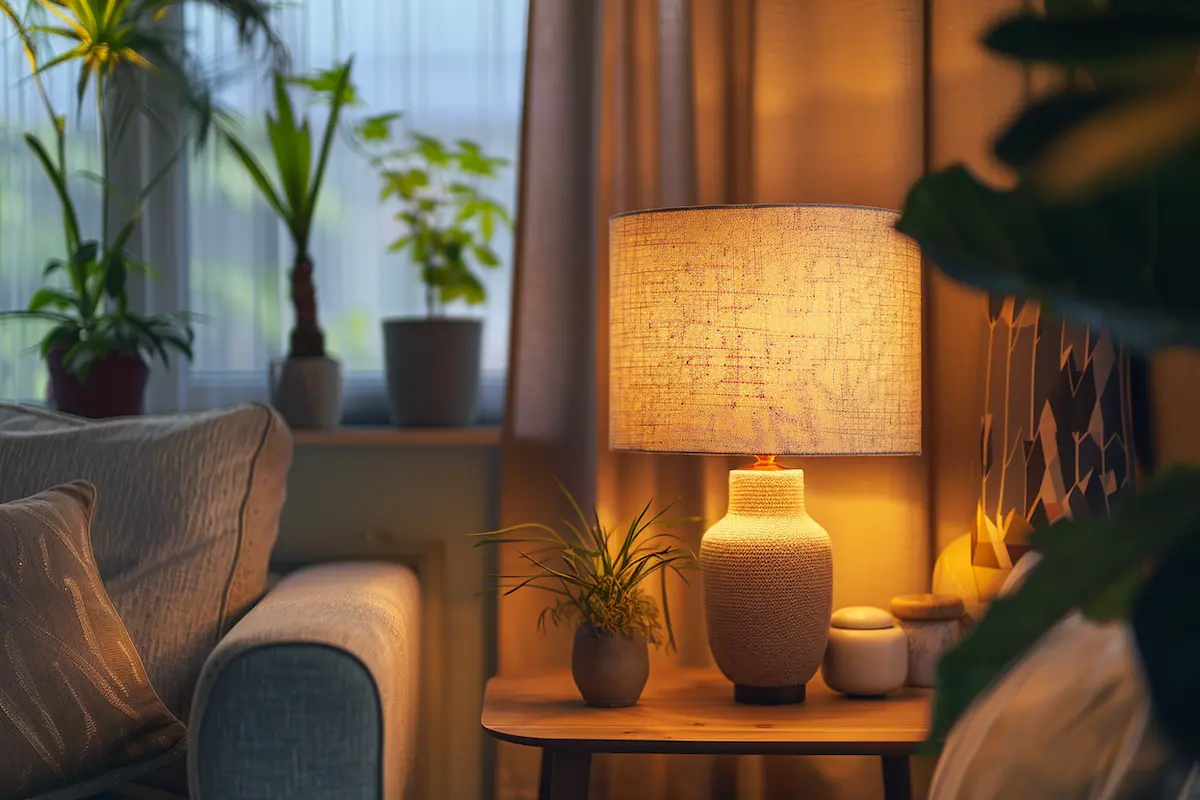
Lighting is often underestimated in minimalist interiors, but it’s one of the most powerful tools you have. The wrong light can make even the most carefully styled space feel cold, while the right light can completely transform it.
The Light Beige Linen Rattan Lamp (Chairish) is a perfect example of how lighting can add warmth without adding clutter. The combination of linen and rattan creates a soft, diffused glow that gently spreads through the room, rather than casting harsh, direct light.
What makes this piece stand out is how it interacts with everything around it. It softens edges, highlights textures, and creates subtle shadows that add depth. Even a very minimal space starts to feel layered and atmospheric under this kind of lighting.
This is why I see lighting not as a finishing touch, but as a foundational element. It doesn’t just illuminate—it defines the mood of the entire room.
For a deeper look at how lighting choices shape atmosphere throughout the home, How Light Shapes Crafted Minimalism expands on this idea.
Product 4: A Sculptural Minimal Object
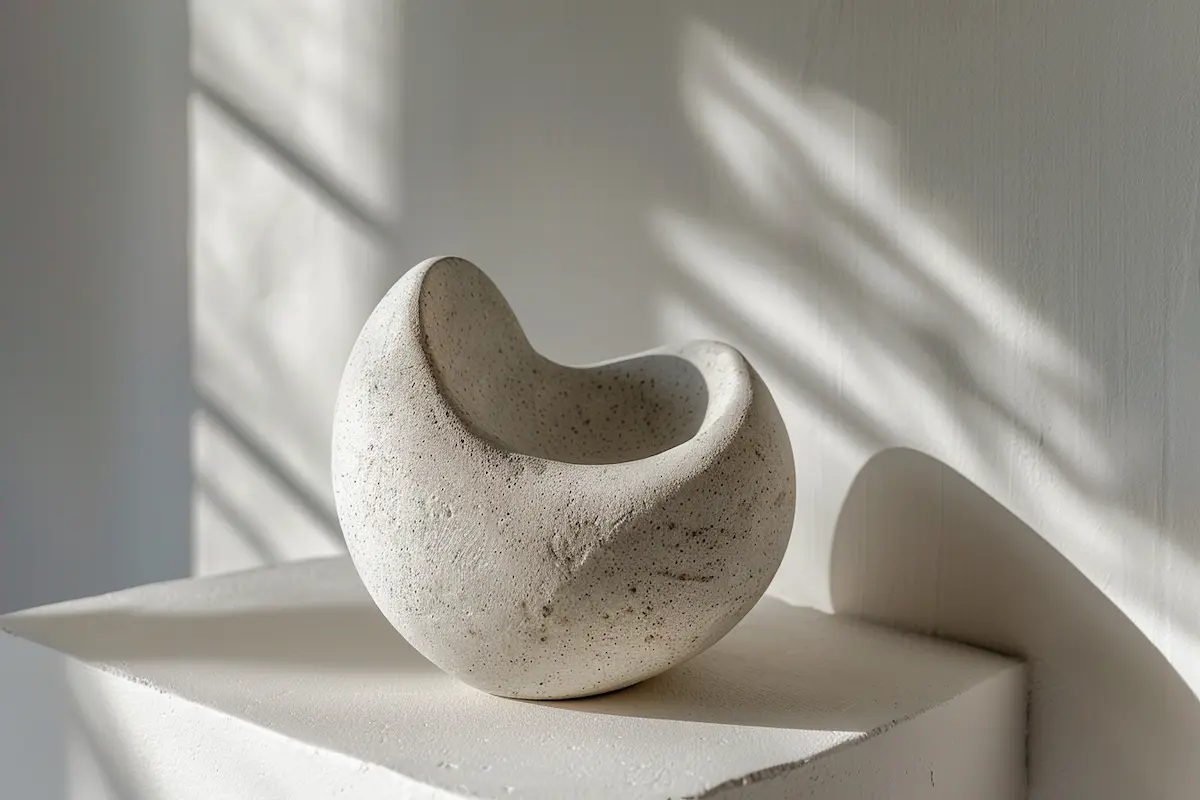
Minimalism doesn’t mean removing personality—it means expressing it with more intention. A single sculptural object can do more for a space than a collection of smaller decorative items.
The Pivet Vessel Small White by Florabelle is exactly the kind of piece that works in this context. Its form is simple, but not flat. The subtle shape and matte finish give it presence without making it dominant.
What I like about this type of object is that it creates a focal point in a very quiet way. It gives the eye somewhere to land, without disrupting the calm of the space. Especially when placed on a natural surface—like wood or stone—it becomes part of the overall composition rather than something that sits on top of it.
This is the difference between decorating and curating. Instead of filling space, you’re choosing one element that adds just enough visual interest to keep the room from feeling empty.
Common Mistakes That Make Minimalism Feel Cold
Even with the best intentions, it’s easy to fall into patterns that make a minimalist space feel distant instead of inviting. Most of these mistakes don’t come from doing too much—but from approaching minimalism too one-dimensionally.
One of the most common issues is relying too heavily on pure white and flat neutrals without any variation. While this can look clean, it often removes depth from a space. Without subtle tonal differences or warm undertones, everything blends into a single layer, making the room feel empty rather than calm.
Another mistake is ignoring texture. A space filled with smooth, uniform surfaces—like lacquered finishes, glass, or polished metals—can quickly feel cold, even if the layout is well-designed. Texture is what creates contrast without clutter. Without it, minimalism loses its sense of balance.
There’s also a tendency to follow a very rigid idea of what minimalism “should” look like. This often leads to spaces that feel overly styled or even staged. Ironically, trying too hard to make a space look minimal can result in something that feels unnatural and disconnected. Real warmth comes from subtle imperfection and variation, not from perfection.
Another common trap is adding what looks like minimal decor, but functions as visual filler. Think of small objects that don’t really add anything—no texture, no function, no emotional value. These items often make a space feel more cluttered, even if there aren’t many of them.
Finally, lighting is often overlooked. Cool, bright lighting can flatten textures and remove any sense of atmosphere. Even a well-balanced interior can feel clinical under the wrong light.
Warm minimalism avoids these mistakes by focusing less on rules and more on how a space feels. It’s not about achieving a certain look—it’s about creating an environment that feels calm, layered, and genuinely comfortable to live in.
Final Thoughts: Warm Minimalism as a Lifestyle Shift
Warm minimalism isn’t just a styling approach—it’s a different way of thinking about your space. It shifts the focus from “having less” to choosing with intention. Instead of removing until nothing is left, you refine until everything that remains actually contributes to how the space feels.
What makes this approach powerful is that it’s sustainable. You’re not constantly adding new items to fix the atmosphere of your home. Instead, you’re building a foundation where materials, light, and carefully chosen pieces do the work for you. The result is a space that feels calm, but never empty—and refined, but never cold.
It also gives you more freedom. Warm minimalism doesn’t rely on strict rules or a fixed aesthetic. Whether you lean slightly more towards soft neutrals, subtle color, or natural materials, the goal stays the same: creating a space that feels balanced, personal, and comfortable to live in.
In the end, warmth doesn’t come from filling a room—it comes from how thoughtfully it’s put together.