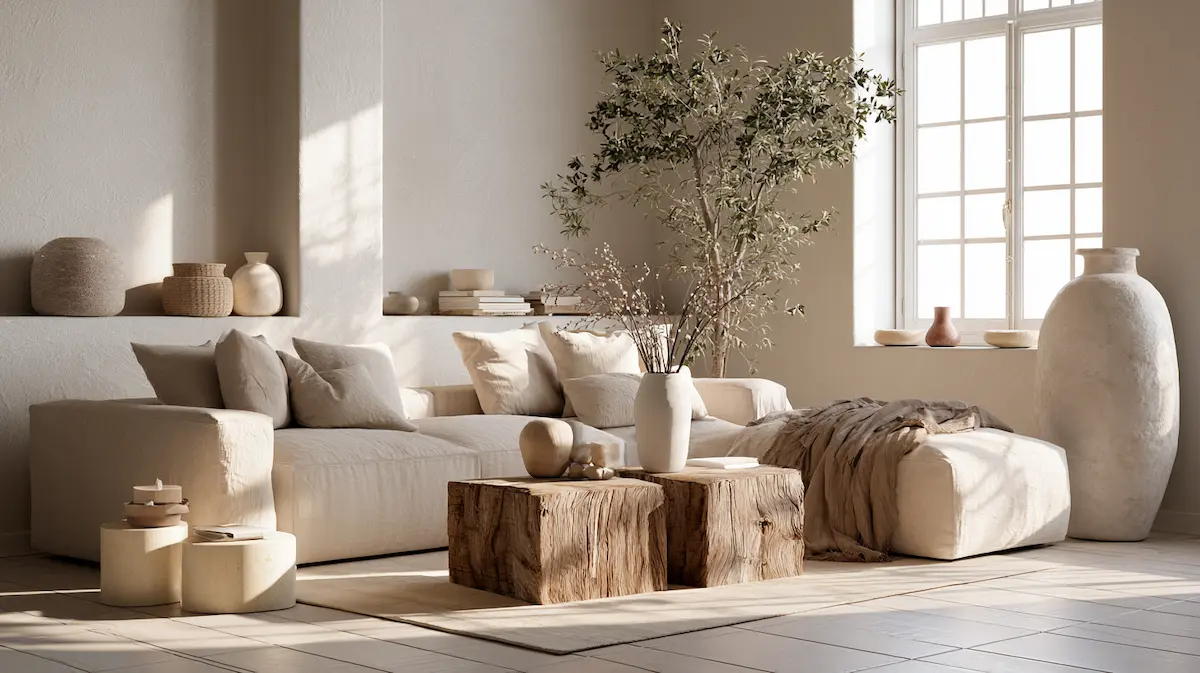
Why Your Minimal Interior Feels Empty (And How to Fix It With Crafted Calm)
Why “Calm” Often Turns Into Emptiness
There’s a fine line between a calm interior and a space that simply feels… empty. And surprisingly, a lot of minimalist homes unintentionally cross that line.
You start with the right intention: less clutter, more space, a quieter environment. But somewhere along the way, “calm” turns into something cold. The room feels unfinished instead of intentional. Clean, but not comforting. Styled, but not lived in.
That’s because calm isn’t created by removing things. It’s created by choosing the right things.
This is exactly where crafted minimalism makes the difference. Instead of focusing on less, it focuses on what remains. Every material, every texture, every object has a purpose. Not to fill the space, but to give it presence.
A calm interior should feel soft, grounded, and complete—even when there’s very little in it. It should invite you to sit down, slow down, and stay a while. That sense of ease doesn’t come from emptiness, but from balance.
If you’ve ever felt like your space looks “minimal” but doesn’t feel like home, you’re not alone. And the good news is: it’s not about adding more—it’s about choosing better.
In fact, this is exactly why so many people are drawn to this style in the first place. It’s not just about aesthetics, but about how a space makes you feel.
Disclaimer: This post may contain affiliate links. This means that if you click on one of these links and make a purchase, we may earn a small commission—at no extra cost to you.
All images featured in this article are AI-generated to illustrate the aesthetic and mood of the interior style. The products linked are carefully selected items that, in our view, most closely match the look and feel of these designs.
As an Etsy affiliate and Amazon Associate, we earn from qualifying purchases. We only recommend products we genuinely believe align with the style and atmosphere presented in our AI-created interiors.
Calm vs. Empty: The Key Difference Most People Miss
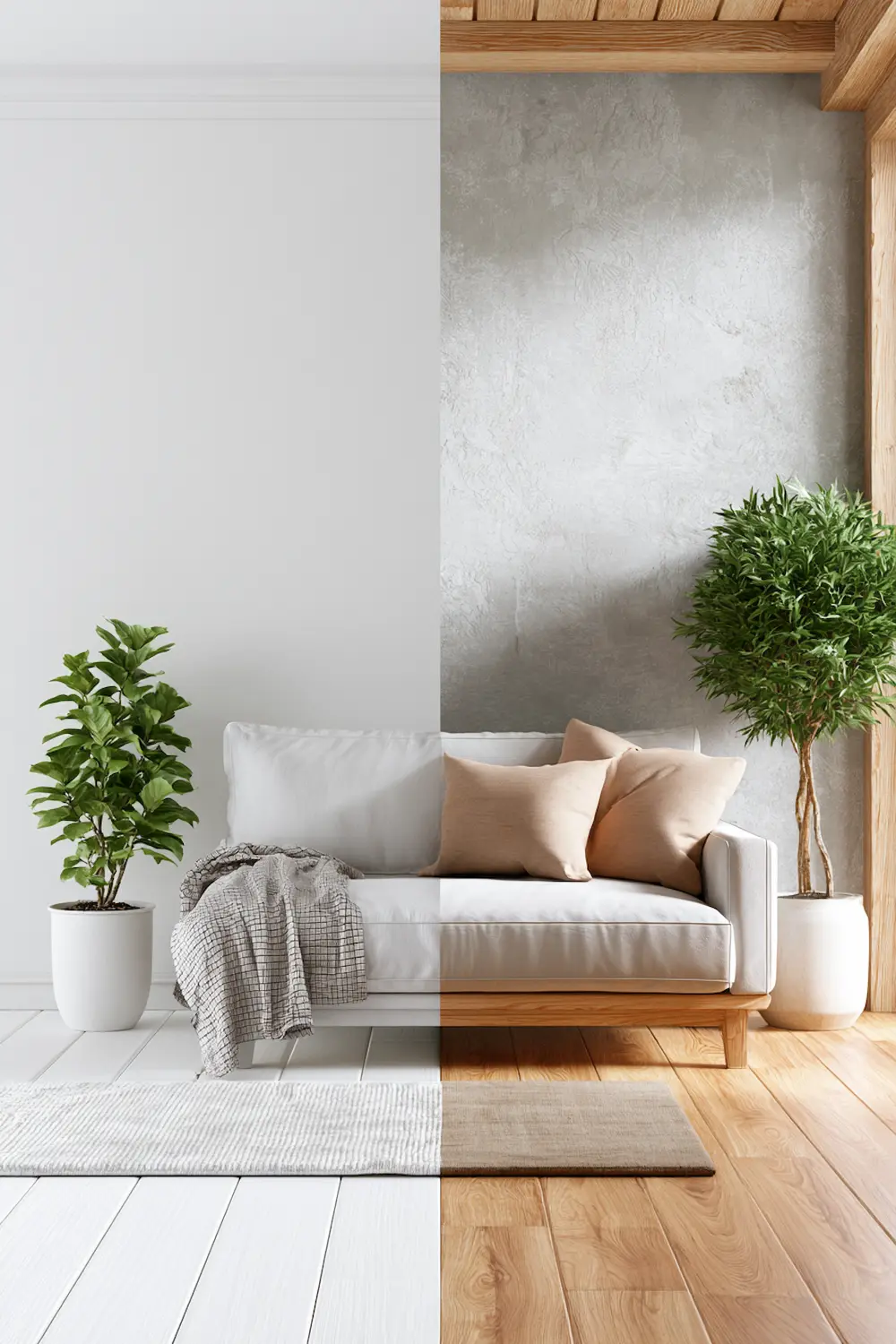
At first glance, a calm space and an empty space can look almost identical. Both might have neutral colors, clean lines, and very few objects. But the feeling they create is completely different.
A calm interior feels intentional. Your eyes can rest, but they don’t get lost. There’s a quiet sense of structure—subtle contrasts, soft transitions, and just enough visual interest to keep the space alive. You notice the warmth of materials, the way light moves across surfaces, the presence of carefully chosen pieces.
An empty interior, on the other hand, lacks that depth. It feels flat. There’s nothing for your eye to land on, no variation to explore. Instead of calm, it creates a sense of distance—almost like the room hasn’t been finished yet.
The difference comes down to one thing: presence.
Calm spaces still hold something. Not clutter, but intention. And that intention is built through three essential elements:
- Material – what things are made of, and how they visually feel
- Texture – how surfaces interact with light and softness
- Visual weight – how objects anchor the space and guide your eye
When these three work together, a room can feel rich without being busy. Quiet, without being empty.
Understanding this difference is the foundation of everything that follows. Because once you stop removing—and start composing—minimalism becomes something entirely different.
The Role of Materials in Creating Calm
If there’s one thing that quietly determines whether a space feels calm or empty, it’s the materials you choose.
In a minimalist interior, you don’t have many elements to rely on. That means every surface becomes more important. The texture of a table, the softness of a fabric, the depth of a natural finish—these aren’t details, they are the design.
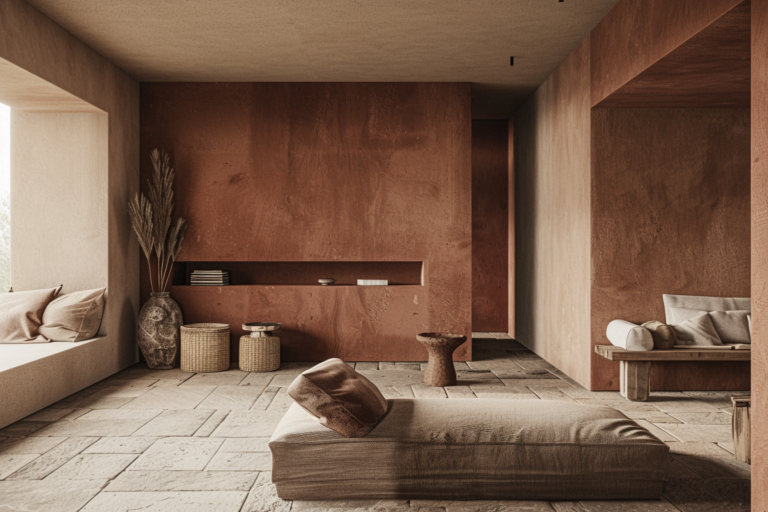
Natural materials are especially powerful here. They bring an inherent softness and variation that you simply don’t get from synthetic or overly polished surfaces. Think of the warmth of raw wood, the subtle irregularities in stone, or the way linen diffuses light instead of reflecting it. These materials don’t shout for attention, but they create a quiet richness that fills the space without adding clutter.
This is also why spaces that rely too heavily on flat, glossy, or artificial materials often feel cold. Even if the layout is minimal, the lack of texture removes any sense of depth. The result? A room that looks clean, but feels lifeless.
Instead, calm interiors are built on a combination of materials that balance each other:
- wood adds warmth and grounding
- stone brings stability and contrast
- textiles introduce softness and movement
It’s not about using more—it’s about creating subtle variation within a limited palette. That variation is what keeps a minimalist space from falling flat.
If you want to go deeper into how different materials influence the feeling of a space, this is exactly what’s explored in How Materials Create Calm.
Layering Without Clutter: The Art of Subtle Depth
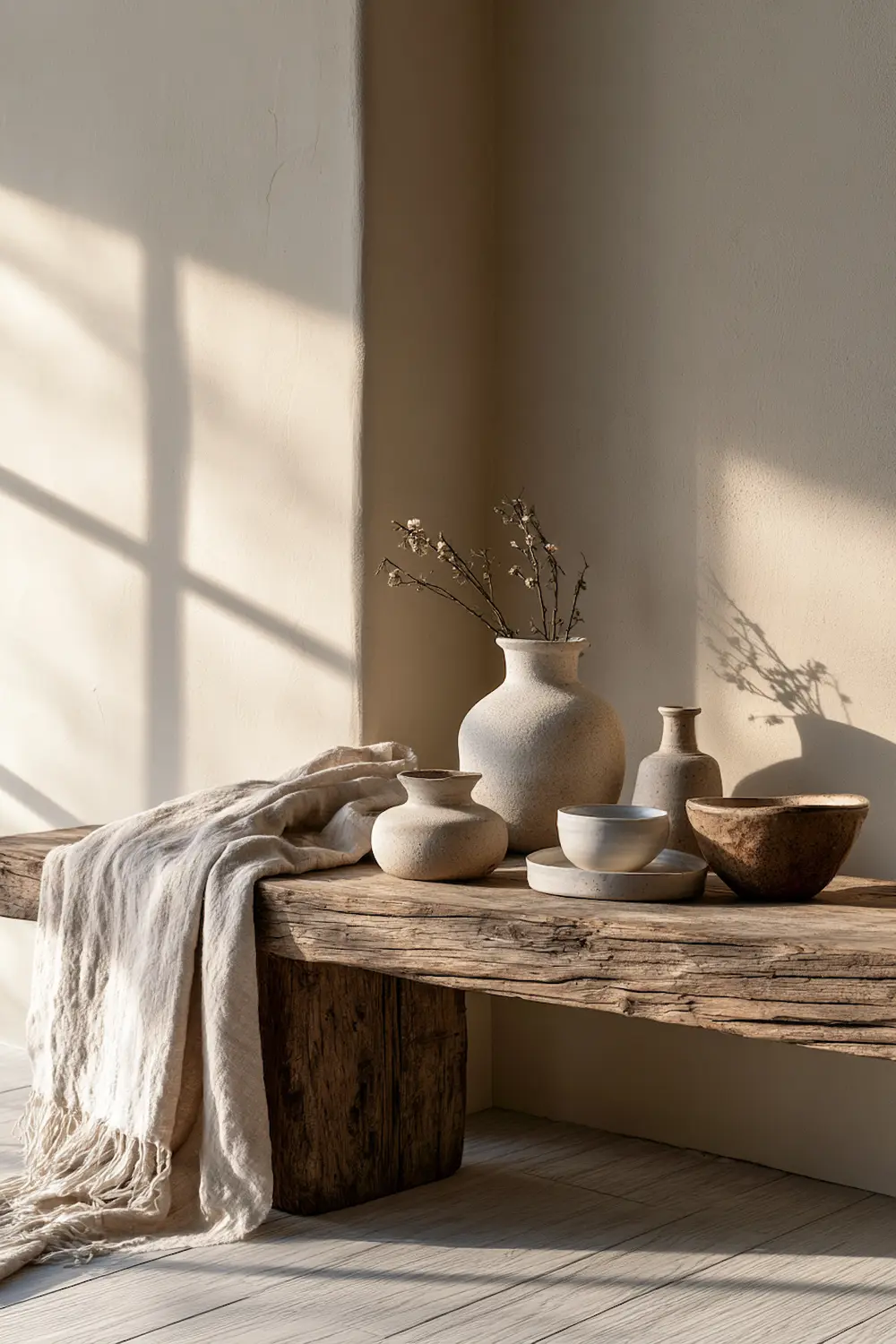
One of the biggest misconceptions about minimalist interiors is that everything should be reduced to a single layer. One surface, one object, one tone. But that’s exactly what makes a space feel flat.
Calm doesn’t come from removing layers—it comes from refining them.
Layering, in the context of crafted minimalism, is about creating depth without adding noise. It’s the difference between a room that looks “styled” and a space that simply feels right. You may not immediately notice the individual elements, but you feel the softness, the balance, the cohesion.
This kind of layering happens in subtle ways:
- a linen throw casually draped over a structured sofa
- a ceramic object placed slightly in front of a larger piece
- overlapping materials like wood, fabric, and stone within the same visual frame
Nothing is loud, but everything contributes.
The key is restraint. Instead of adding more items, you work with variation within what’s already there. A tonal palette can still feel rich when textures differ. A simple surface becomes more interesting when light interacts with multiple materials. Even negative space becomes part of the composition when it’s intentionally left open.
This is also where artisanal elements play a powerful role. Handmade objects often carry small imperfections—subtle curves, uneven finishes—that add character without disrupting the calm. They introduce a human touch that makes the space feel lived-in rather than staged.
If you want to explore how these kinds of pieces can elevate a minimalist interior, you’ll find more inspiration in Artisanal Decor for Calm Interiors.
Ultimately, layering isn’t about complexity. It’s about depth you can feel, even when you can’t immediately see it.
This appreciation for imperfection connects to a broader design philosophy. Wabi-Sabi in Crafted Minimalism explores where that influence comes from.
Creating Focal Points That Anchor the Space
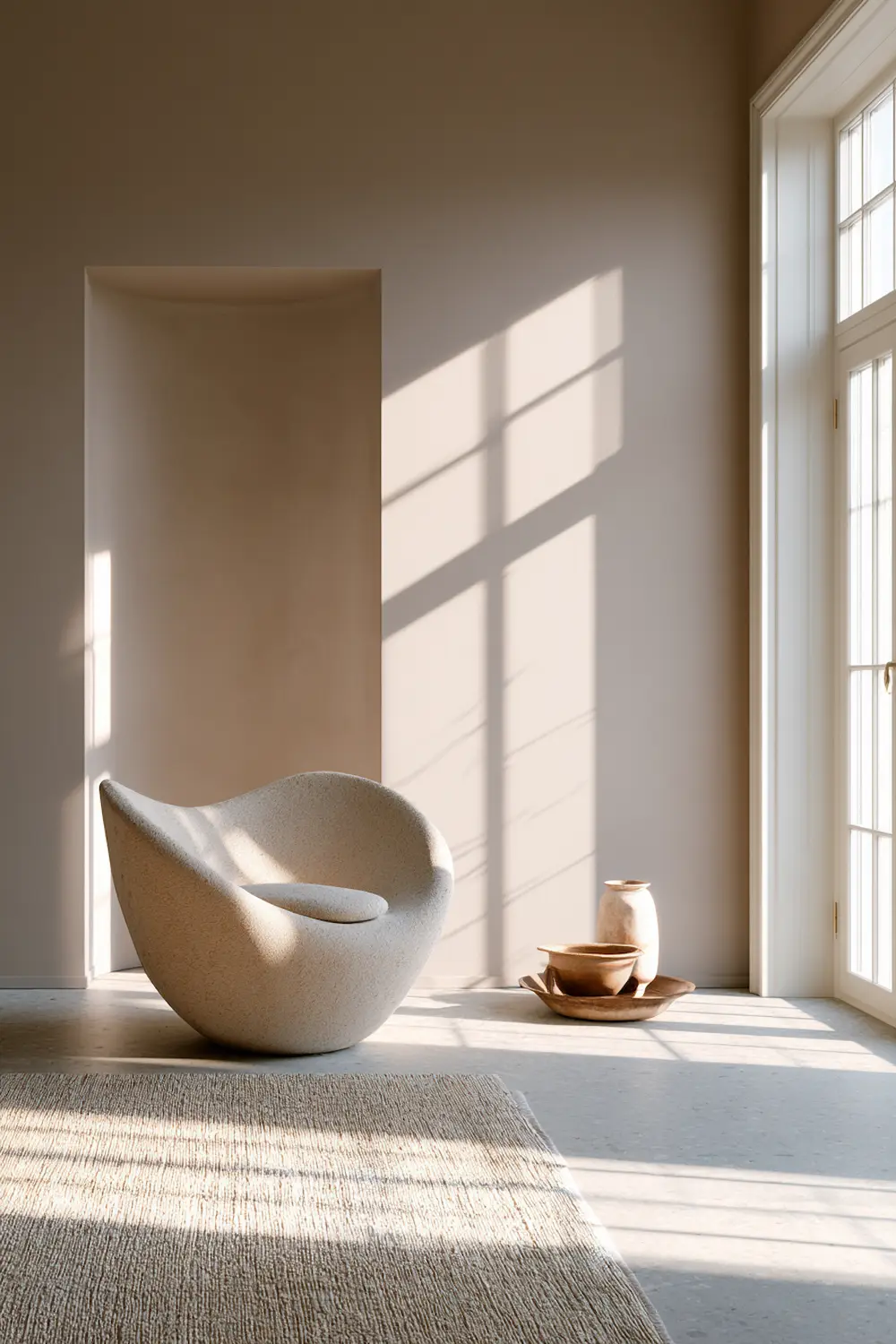
Even the calmest interior needs something to hold onto.
One of the main reasons minimalist spaces start to feel empty is because there’s no clear focal point. Your eye moves through the room, but never lands. And without that sense of direction, the space can feel unfinished—no matter how well it’s styled.
A calm interior doesn’t rely on many elements, but it does rely on the right one.
Instead of filling a room with multiple small objects, crafted minimalism works with one or two pieces that carry visual weight. These are the elements that quietly anchor the space. Not because they’re loud, but because they feel intentional and grounded.
Think of:
- a sculptural lounge chair with a soft but distinctive silhouette
- a solid wood coffee table that adds warmth and structure
- a statement lamp that draws the eye without overpowering the room
These pieces create a natural point of focus. They give the space a sense of balance, allowing everything else to stay minimal without feeling empty.
What matters most here is not size, but presence. A well-chosen object can define an entire room simply through its material, shape, or proportion. It tells your eye where to pause—and in doing so, it creates calm.
Once you understand this, minimalism becomes less about removing things, and more about choosing what deserves to stay.
And that’s exactly where the right pieces can make all the difference. In the next section, I’ll show you a few carefully selected items that bring this balance to life.
Shop the Look: 4 Pieces That Create Calm Without Emptiness
If a calm interior is built on presence, then the pieces you choose should do more than just “fit the style.” They should carry the space. Not by being loud, but by adding exactly the kind of depth, softness, or weight that keeps a room from feeling empty.
These are four pieces I would personally select to create that balance—each one chosen for how it contributes to a calm, crafted atmosphere.
1. Lounge Chair (The Anchor Piece)
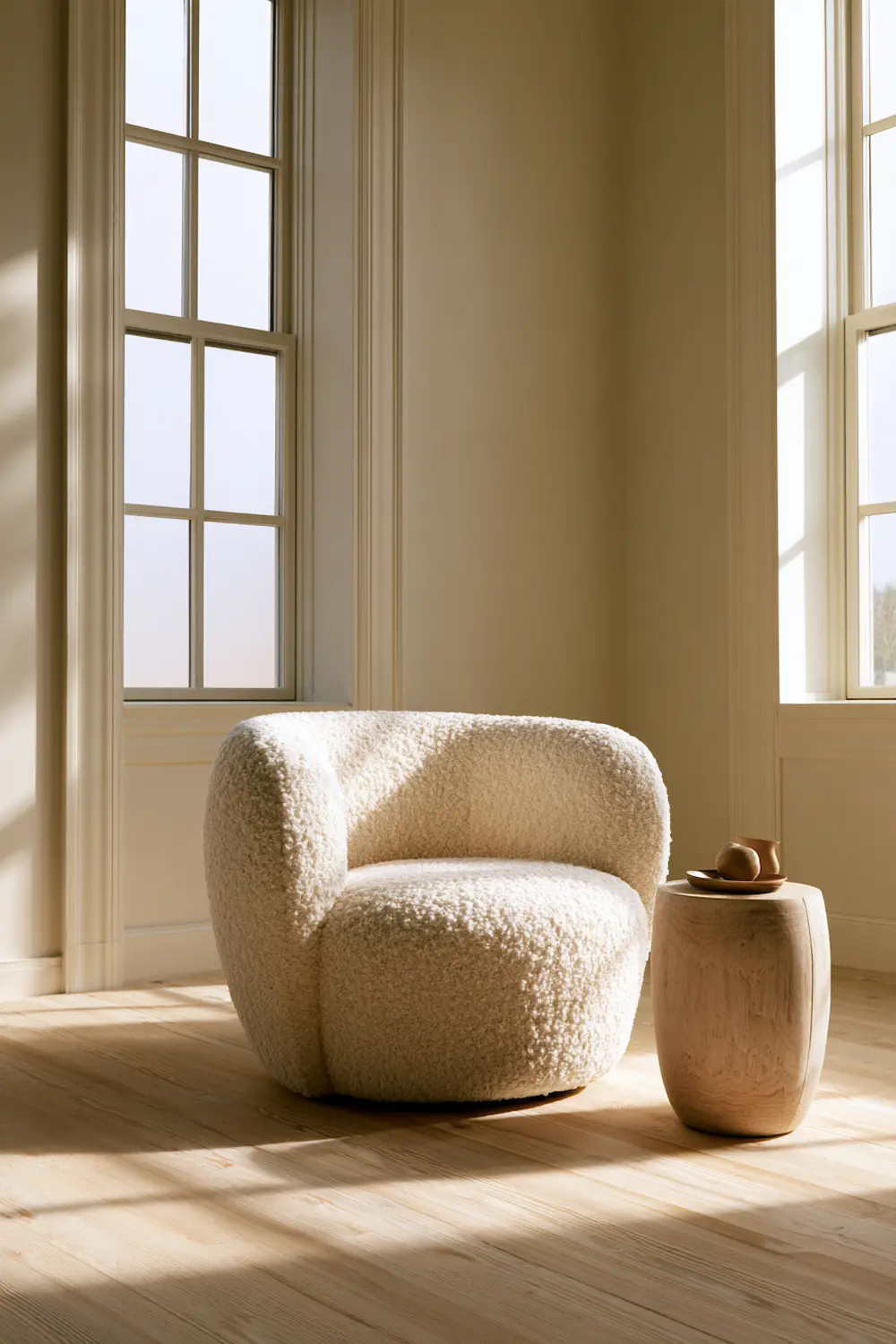
This is the kind of lounge chair that immediately defines a space without overpowering it. The rounded silhouette feels soft and inviting, while the sheepskin upholstery adds a level of warmth that’s hard to achieve with smoother fabrics.
What makes this piece so effective in a minimalist setting is its presence. It doesn’t rely on bold color or sharp lines—instead, it quietly draws attention through texture and form. The volume of the chair anchors the room, while the tactile surface keeps it from feeling heavy or static.
In a calm interior, this is exactly what you want: a piece that holds the space, so everything else can stay minimal.
2. Travertine End Table
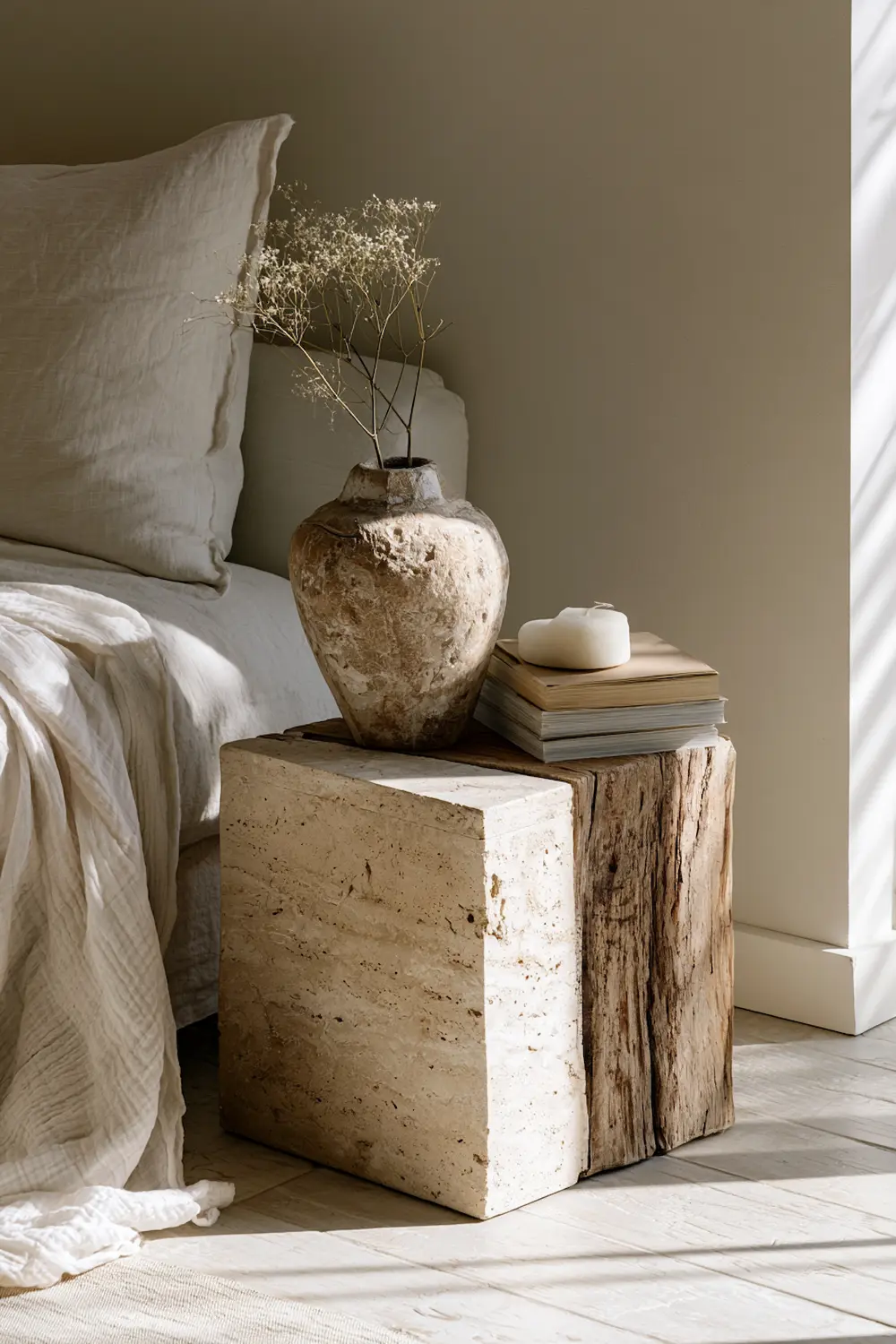
A piece like this travertine table does something subtle but essential—it grounds the room. The solid cube shape brings structure, while the natural stone introduces variation through its surface.
Travertine, in particular, has this quiet complexity. From a distance, it feels minimal. Up close, you start to notice the tonal shifts and natural markings. That’s what gives the space depth without adding visual clutter.
Placed next to a softer element like the lounge chair, it creates contrast in the best way: not loud, but balanced. It keeps the room from feeling too light or undefined.
3. Linen Throw Blanket (Softness and Movement)
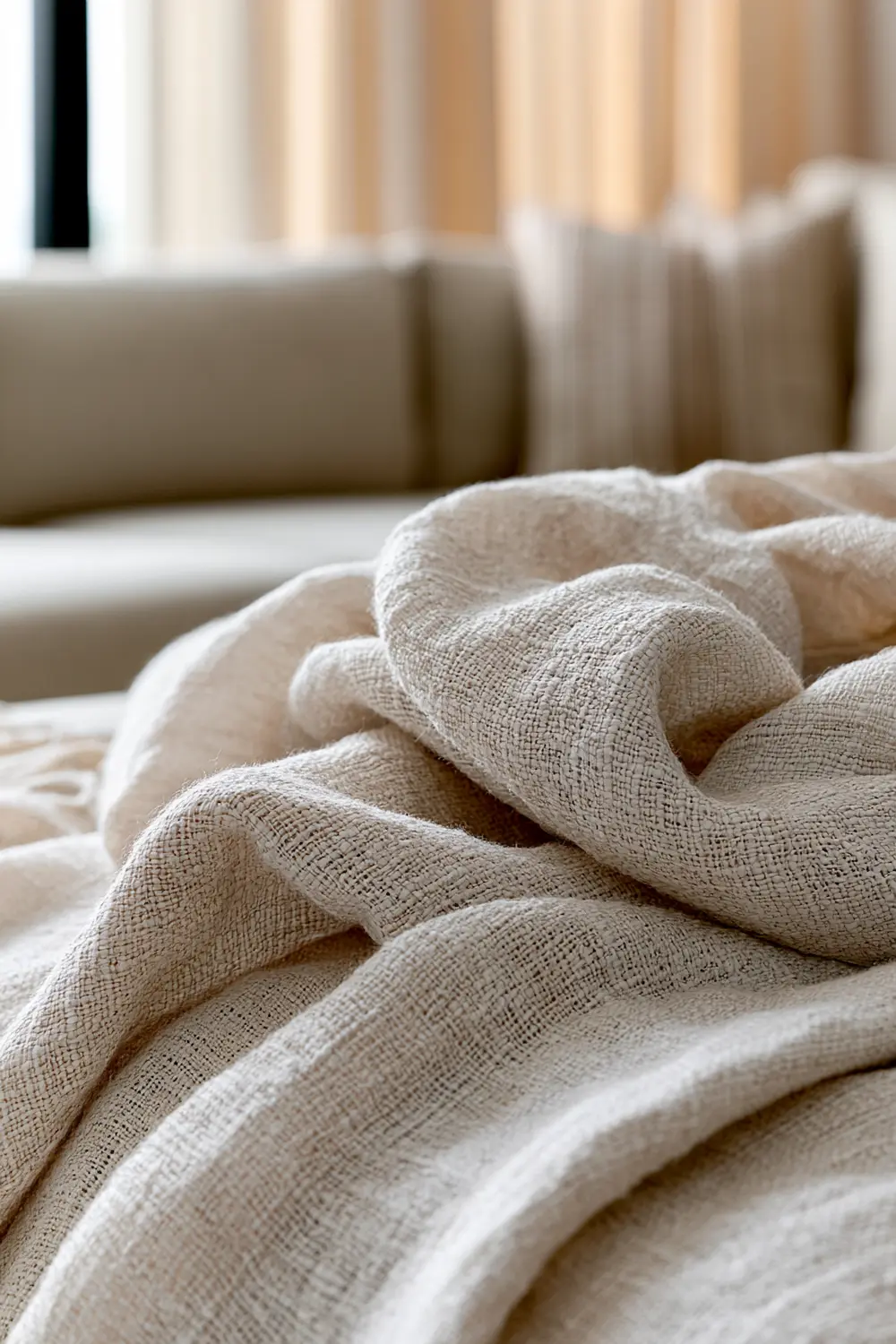
Minimal spaces often lack one thing: softness. And that’s exactly what a linen throw like this brings in.
The beauty of this piece is in how effortlessly it adds layering. The slightly crinkled texture, the way it falls over a sofa or chair—it introduces movement into a space that might otherwise feel too structured.
What I like here is that it doesn’t compete for attention. It blends into the palette, but changes how the space feels. It makes everything more relaxed, more lived-in. And that’s often the missing piece when minimalism starts to feel too rigid.
4. Ceramic Vase Decoration Ornaments Handmade Pottery (A Quiet Focal Point)
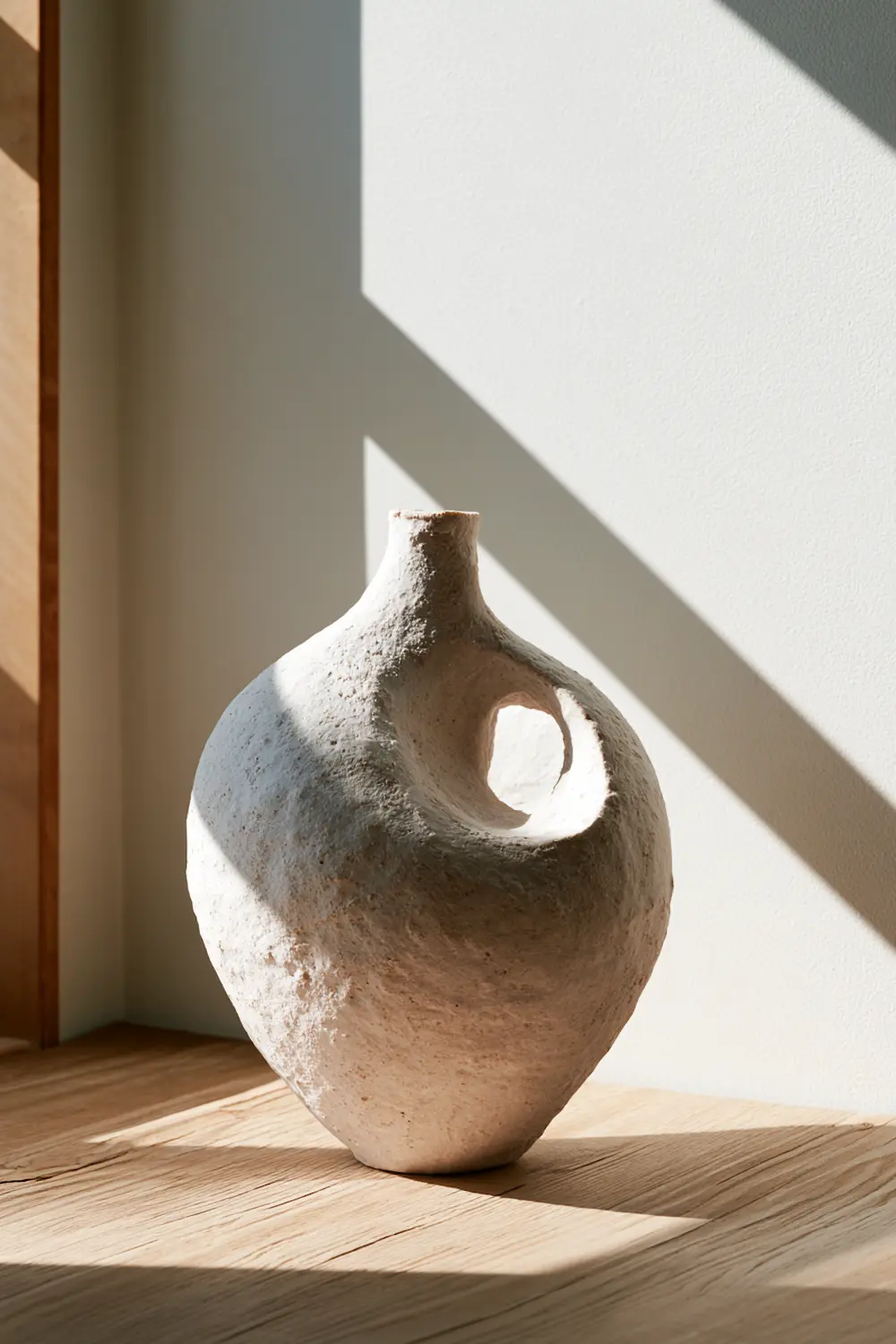
This is where you add personality—without adding noise.
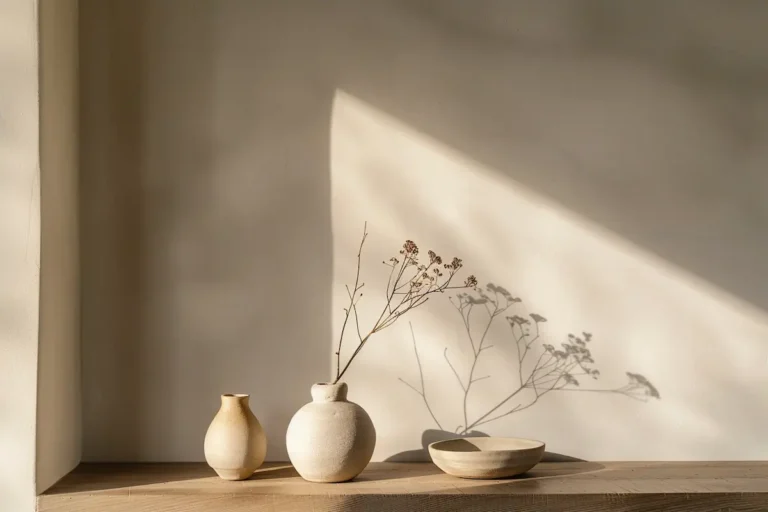
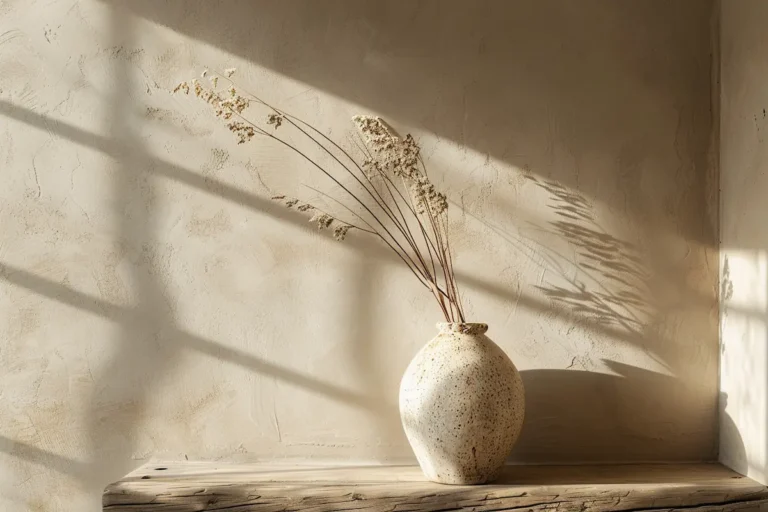
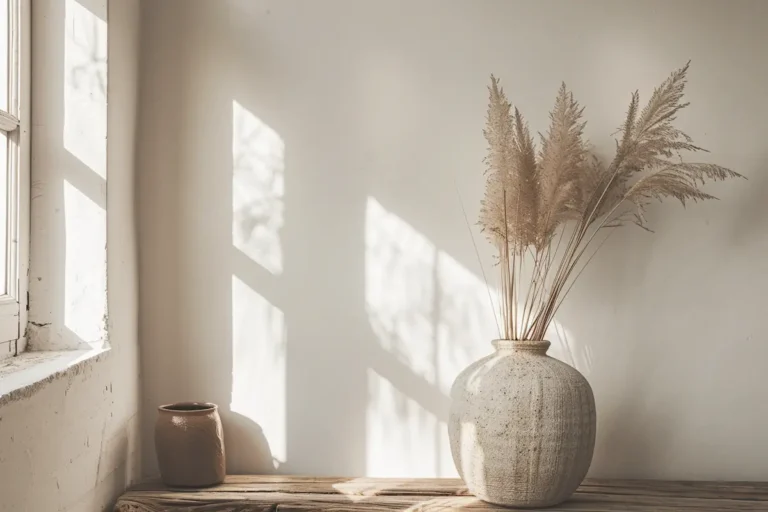
A sculptural ceramic object like this works because it rewards attention without demanding it. The slightly imperfect shape, the matte finish, the handcrafted feel—it all adds a layer of depth that’s subtle but noticeable.
Placed on a table or shelf, it becomes a quiet focal point. Not the first thing you see, but the thing that makes the space feel complete when you take a second look.
It’s a reminder that calm interiors aren’t empty—they’re intentional down to the smallest detail.
When you bring these pieces together, the effect is immediate. The space still feels minimal, but no longer bare. There’s warmth, contrast, and softness—all working quietly in the background.
And that’s exactly the point: not to fill the room, but to make sure every piece adds something you can feel.
Common Mistakes That Make Minimalism Feel Empty
If a space feels empty instead of calm, it’s usually not because you’ve removed too much—it’s because something essential is missing. And often, it’s not immediately obvious what that is.
One of the most common mistakes is a lack of contrast. When everything sits within the same tone and material, the room starts to feel flat. Calm interiors still need subtle variation—slightly darker woods, softer textiles, or a matte surface next to something more textured—to create depth.
Another issue is over-simplifying the palette. Neutral doesn’t mean one single shade repeated everywhere. Without tonal variation, even the most beautiful materials lose their impact. A calm space should feel layered, not monochrome in the literal sense.
Then there’s the absence of texture. Smooth surfaces alone rarely create warmth. Without fabrics, natural finishes, or tactile elements, the space can quickly feel cold and impersonal—even if the layout is perfectly minimal.
A more subtle mistake is skipping a focal point altogether. When nothing stands out, nothing anchors the room. Your eye keeps moving without ever settling, which creates that sense of emptiness rather than calm.
And finally, there’s the tendency to make everything feel a bit too… perfect. Spaces that are overly styled or symmetrical can lose their sense of life. Calm interiors still need a hint of imperfection—something slightly off-center, a natural variation, a human touch.
The good news is that none of these require adding more. They’re about adjusting what’s already there—introducing contrast, texture, and intention in small but meaningful ways.
Final Thoughts – Calm Is About Presence, Not Absence
Creating a calm interior isn’t about stripping everything back until there’s almost nothing left. It’s about knowing what deserves to stay—and allowing those elements to carry the space.
When materials feel warm, textures add subtle depth, and a few carefully chosen pieces create focus, something shifts. The room no longer feels empty. It feels intentional. Grounded. Complete.
That’s the essence of crafted minimalism.
You don’t need more furniture, more decor, or more styling. You need better choices. Pieces that add softness where things feel rigid. Materials that bring warmth where it feels flat. Objects that anchor the space instead of filling it.
And once you start looking at your interior this way, minimalism stops being about less—and starts becoming about just enough.
If you’re refining your space, take a moment to look around. Not at what’s missing, but at what’s already there. What adds presence? What feels flat? What could be replaced with something more intentional?
Because calm isn’t created by absence.
It’s created by what you choose to keep.