
What Is Crafted Minimalism?
Meaning, Origins & How It Differs from Modern Minimalism
Minimalism has long been associated with clean lines, empty spaces, and a strict “less is more” mindset. While that approach still resonates with many people, it has also sparked criticism. For some, minimal interiors feel cold, impersonal, or disconnected from everyday life.
Out of that tension, a more tactile and human-centered approach has emerged: Crafted Minimalism.
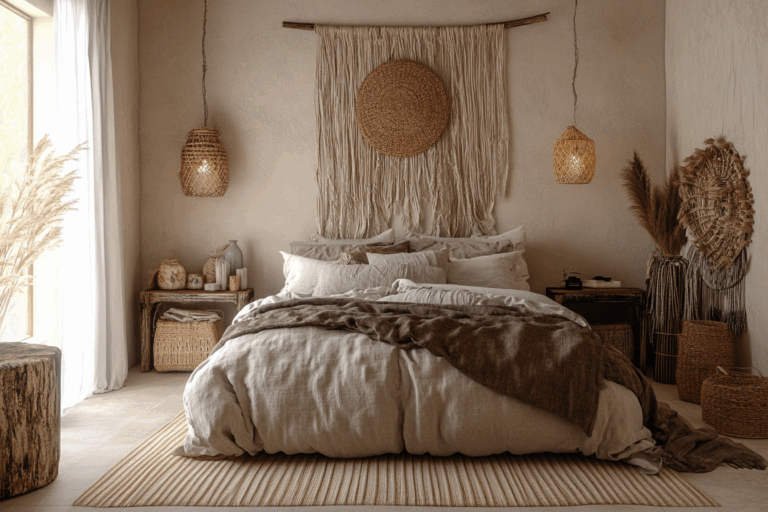
Crafted minimalism combines the visual calm of minimalism with warmth, texture, and craftsmanship. It doesn’t aim to remove personality from a space, but to distill it carefully. The result is an interior that feels intentional, grounded, and quietly expressive — rather than empty or overly polished.
Crafted Minimalism in one glance


What Is Crafted Minimalism?
Crafted minimalism is an interior design style that blends minimalist principles with a strong emphasis on materials, texture, and craftsmanship.
Where traditional minimalism often focuses on reduction and visual purity, crafted minimalism focuses on refinement. The goal is not to strip a space down to its bare essentials, but to curate it thoughtfully. Every element is chosen for its material quality, function, and visual calm.
Instead of glossy finishes and factory-perfect surfaces, you’ll find:
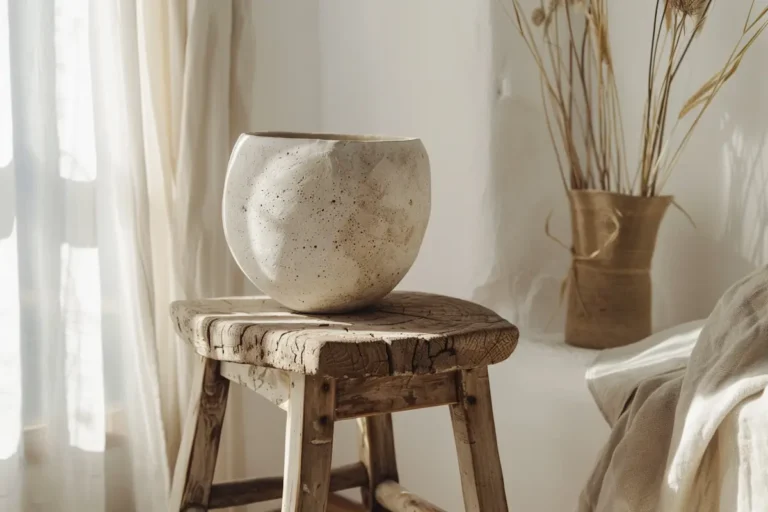
- Natural wood with visible grain
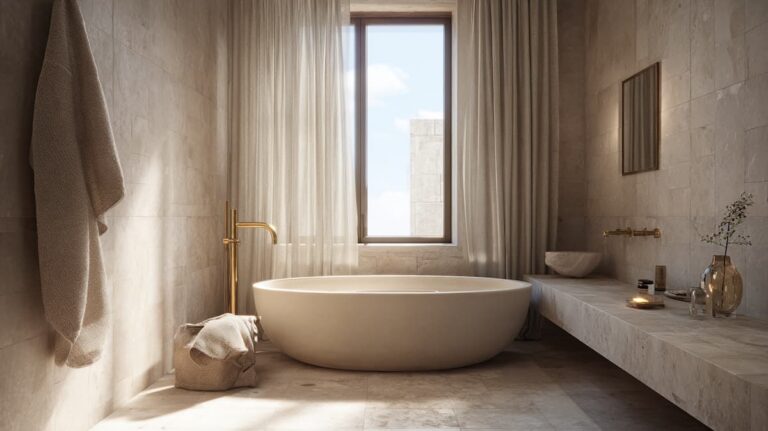
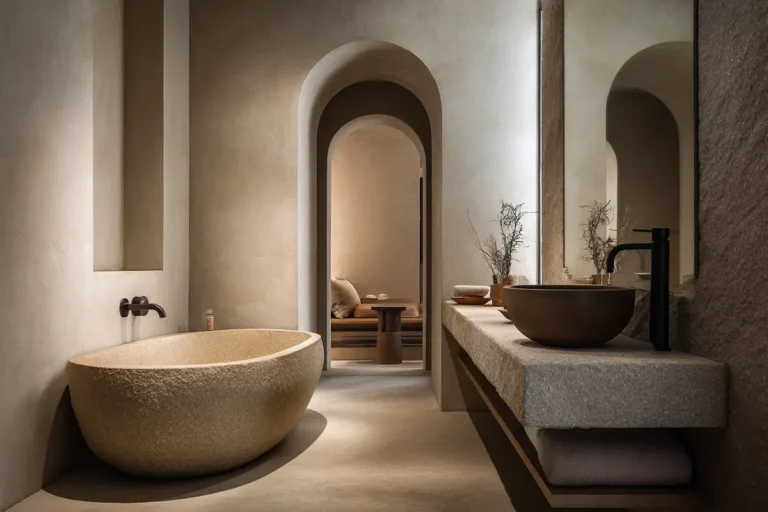
- Stone, clay, and plaster with subtle irregularities
- Textiles like linen or wool that soften a space
Crafted minimalism feels calm without feeling empty — and minimal without feeling strict.
Visual example — material & craft

The Meaning Behind Crafted Minimalism
At its core, crafted minimalism is about intentional restraint.
Instead of asking “What can I remove?”, the question becomes:
“What truly deserves a place here?”
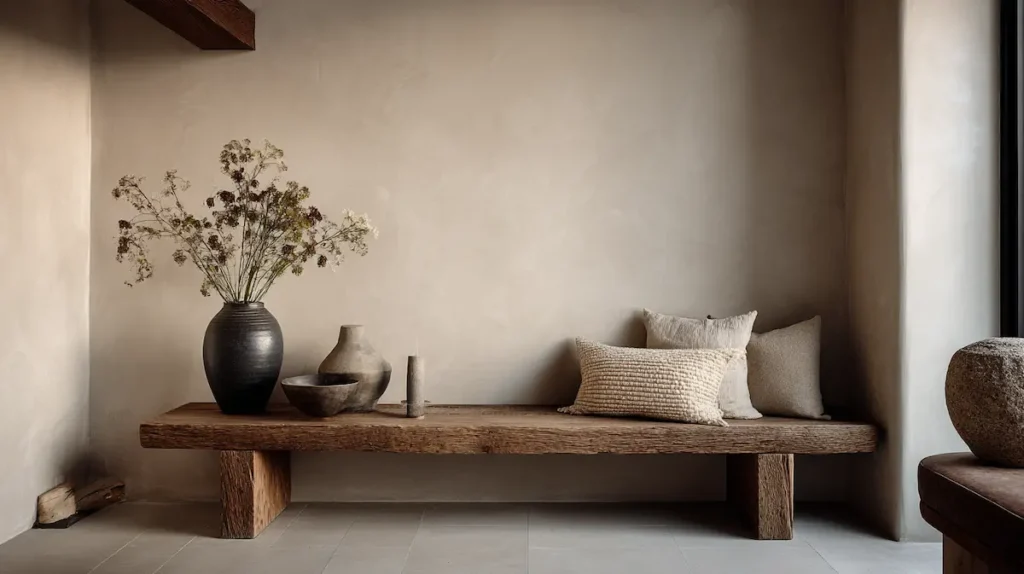
Objects are chosen slowly and deliberately. A handcrafted ceramic bowl replaces decorative clutter. A solid wood table replaces furniture designed for trends rather than longevity. Materials are allowed to age, patinate, and tell a story.
This philosophy values:
- Fewer objects, but higher quality
- Craft over mass production
- Longevity over fast trends
The interior becomes a reflection of care and intention, not consumption.
Intentional styling

Origins: Where Did Crafted Minimalism Come From?
Crafted minimalism didn’t emerge as a single movement. It evolved naturally from overlapping design philosophies and cultural shifts.
First, there is modern minimalism, which introduced clarity, function, and spatial calm. However, its clinical execution left many homes feeling more like galleries than living spaces.
Second, Japanese wabi-sabi philosophy contributed the idea that beauty lies in imperfection, aging, and natural variation. Cracks, textures, and asymmetry became something to appreciate rather than hide.
Third, Scandinavian design traditions added warmth through wood, soft textiles, and diffused light — proving that minimal interiors could still feel inviting.
Finally, crafted minimalism reflects a broader reaction to mass production. As fast furniture and disposable interiors became common, many people began craving authenticity, craftsmanship, and connection.
Origins & philosophy

Crafted Minimalism vs. Modern Minimalism
Although the two styles share a minimalist foundation, they feel very different in practice.
Modern minimalism prioritizes clean geometry, smooth finishes, and visual perfection. It often relies on cool color palettes and architectural statements. While striking, it can feel rigid or emotionally distant.
Crafted minimalism, on the other hand, prioritizes material honesty and tactility. Surfaces invite touch. Objects show how they were made. The space feels composed, but not controlled.
In essence:
- Modern minimalism removes
- Crafted minimalism refines
Modern Minimalism

Crafted Minimalism

Why Crafted Minimalism Feels So Relevant Today
In 2026, homes are expected to do more than ever. They are places to work, rest, create, and disconnect. As a result, overstimulating interiors no longer appeal to most people.
Crafted minimalism responds to this shift by offering:
- Visual calm without sterility
- Warmth without clutter
- Design that supports daily life
Rather than demanding perfection, it supports ease and presence.
Slow living atmosphere

Core Characteristics of Crafted Minimalism
A crafted minimalist interior can usually be recognized by a combination of these elements:
- Natural materials such as wood, stone, clay, and linen
- Visible texture instead of flat surfaces
- Warm, earthy neutrals rather than stark whites
- Functional objects that double as visual anchors
- A sense of calm that feels lived-in, not staged
Key elements combined

How Crafted Minimalism Adds Warmth to Minimalist Interiors
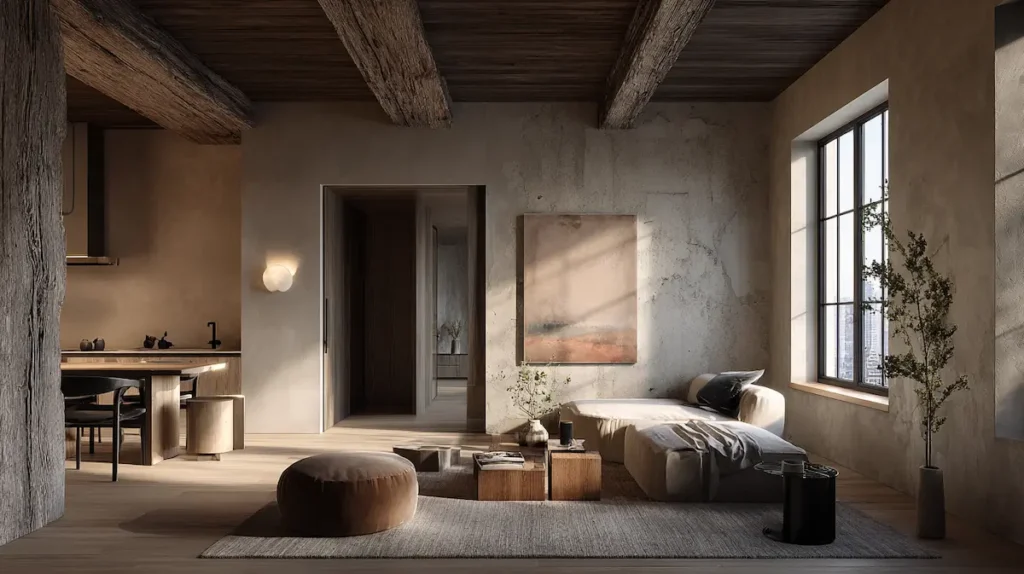
Warmth in crafted minimalism doesn’t come from adding more objects, but from how materials and light are used.
Textured walls catch shadows. Wood tones soften clean lines. Soft lighting replaces harsh contrasts. The result is a space that feels complete even with very few elements.
Warmth through materials
How to Tell If an Interior Is Truly Crafted Minimalist
A truly crafted minimalist interior feels calm, but never empty. Restrained, but never cold. There is space to breathe, but also a sense of presence.
If a room feels thoughtful rather than styled — and warm rather than bare — you’re likely looking at crafted minimalism.
Recognition & balance
Crafted Minimalism as a Foundation
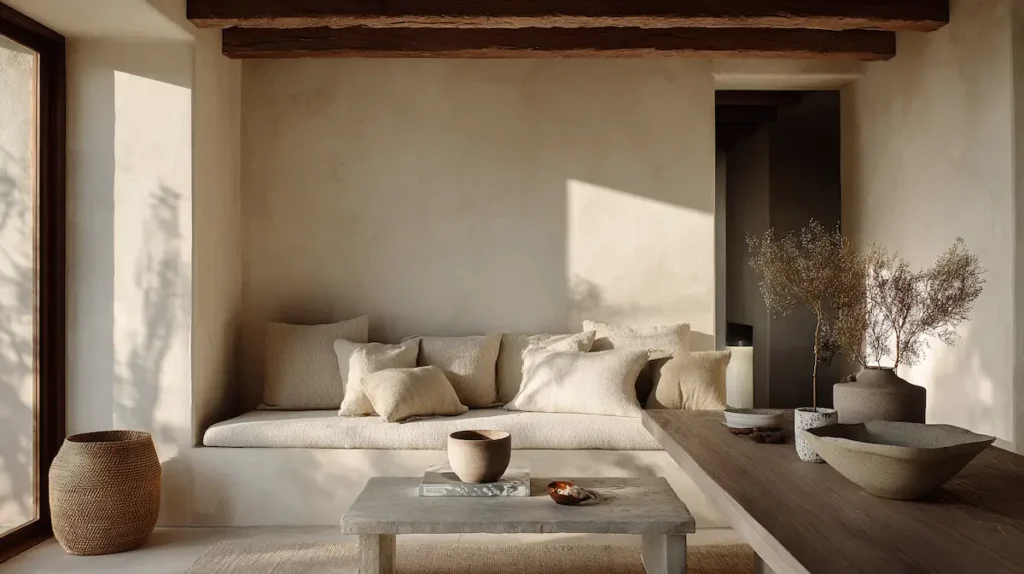
Crafted minimalism is more than a look. It’s a design philosophy that values intention, material honesty, and emotional comfort.
As a foundation, it informs how you choose materials, furniture, colors, and layout — making it the perfect starting point for deeper explorations into texture, rooms, and styling.
Sense of home
Also read: Crafted Minimalism by Room