Best Materials for Crafted Minimalism: How to Build Calm That Lasts
Crafted Minimalism is often misunderstood as a visual preference: calm rooms, muted tones, restrained interiors. But this description misses the core of the approach.
Crafted Minimalism is not primarily about how a space looks.
It is about how a space behaves over time.
A room designed within this framework should feel:
- stable under daily use
- calm even when imperfect
- familiar rather than staged
- supportive rather than impressive
At the heart of that experience are materials.
Materials are not decorative elements in Crafted Minimalism. They are not chosen to complete a look or to signal taste. They are chosen because they quietly remove friction from everyday living.
This article explores the best materials for Crafted Minimalism in depth. Not as a shopping list, but as a system of choices that build calm structurally — so you don’t have to constantly manage it later with styling, decluttering, or replacement.
Disclaimer: This post may contain affiliate links. This means that if you click on one of these links and make a purchase, we may earn a small commission—at no extra cost to you.
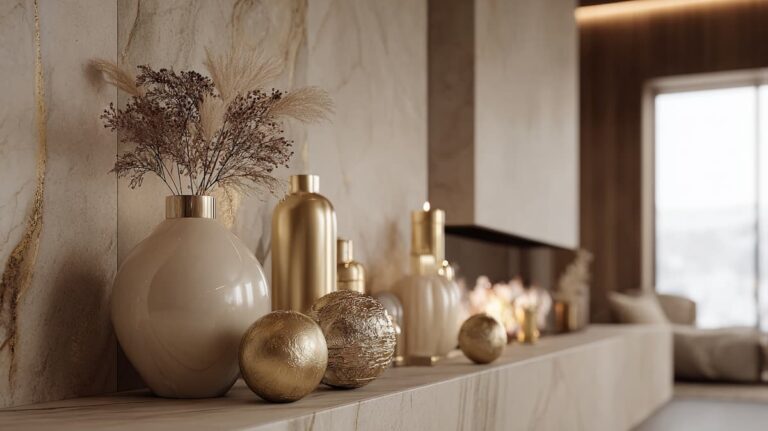
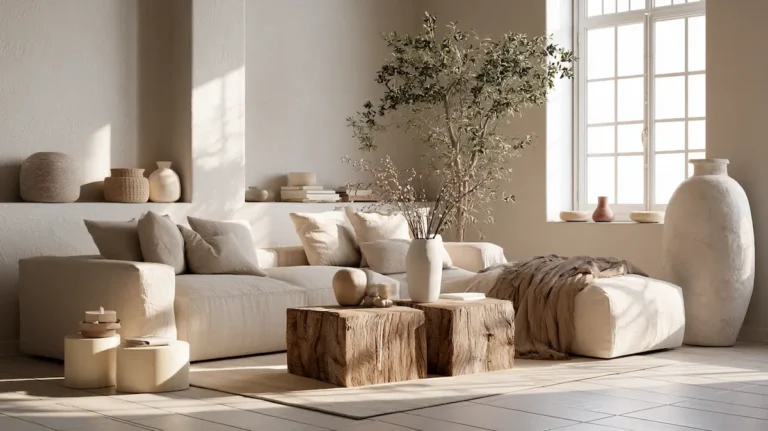
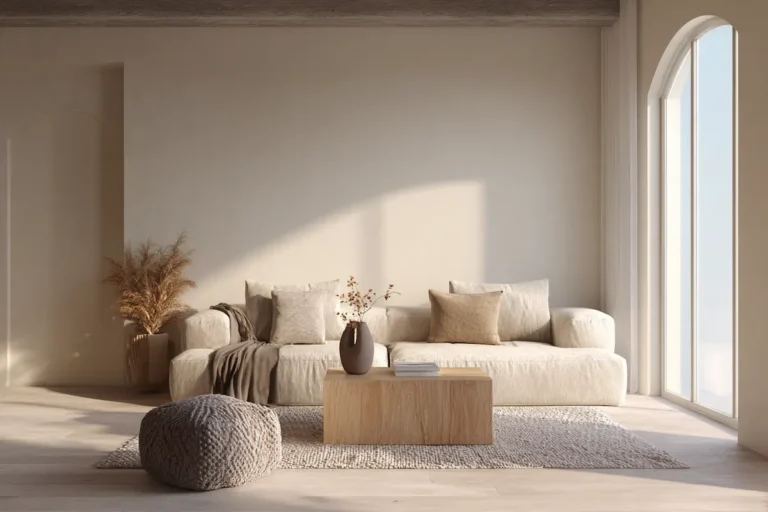
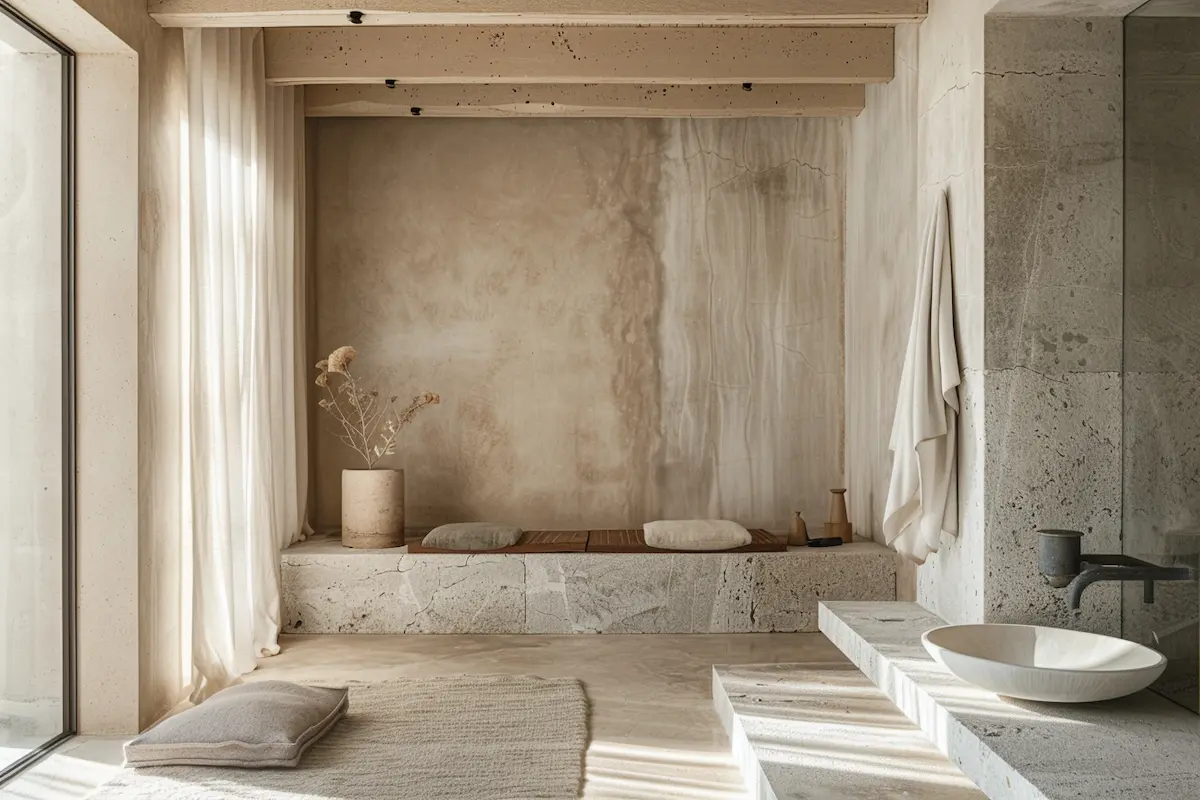
All images featured in this article are AI-generated to illustrate the aesthetic and mood of the interior style. The products linked are carefully selected items that, in our view, most closely match the look and feel of these designs.
As an Etsy affiliate and Amazon Associate, we earn from qualifying purchases. We only recommend products we genuinely believe align with the style and atmosphere presented in our AI-created interiors.
Materials define behavior, not style
Most interiors treat materials as finishes. They are applied at the end of the process, chosen to “match” furniture or color palettes.
Crafted Minimalism reverses this logic.
Here, materials are chosen early because they determine:
- how much visual attention a surface demands
- how forgiving the space is when used
- how quickly wear becomes stress instead of character
- how often something needs to be replaced
When materials are right, the interior settles.
When materials are wrong, even a minimal space feels restless.
This thinking comes directly from the Crafted Minimalism Design Principles, where longevity, restraint, and sensory balance take precedence over aesthetics.
Raw wood: the emotional backbone of Crafted Minimalism
Raw or lightly treated wood is not just common in Crafted Minimalism — it is foundational.
Not because it is “natural” or “warm” in an abstract sense, but because of how it behaves psychologically and visually over time.
Raw wood:
- shows grain variation instead of hiding it
- reacts to light throughout the day
- tolerates touch, impact, and aging
- never looks “broken” when imperfect
Highly finished wood surfaces demand perfection. The moment they scratch, chip, or fade, they introduce visual stress. Raw wood does the opposite: it absorbs wear into its character.
This is why spaces dominated by raw wood often feel calmer with age, not newer.
This logic is explored further in Why Raw Wood Is Essential, but it is worth emphasizing here: raw wood reduces the mental cost of living in a space.
Product idea 1: Solid wood dining table (oak, ash, or walnut)

Why this product fits Crafted Minimalism
A dining table is one of the most used surfaces in a home. It experiences daily wear, movement, impact, and variation. In Crafted Minimalism, this makes it an ideal candidate for raw wood.
A solid wood table:
- anchors the room visually
- introduces natural variation without decoration
- absorbs daily life without looking damaged
- becomes more familiar over time
Compared to veneer or lacquered alternatives, a solid wood table removes the need for constant caution. You stop managing the surface — and start trusting it.
What it does to the space
Visually, a solid wood table introduces weight and grounding. Psychologically, it creates permission to use the space fully. That combination is central to the calm Crafted Minimalism aims to create.
Stone: visual gravity and perceptual calm
Many minimalist interiors feel visually clean but emotionally tense. The reason is often a lack of visual gravity.
Stone introduces gravity.
In Crafted Minimalism, stone is not a luxury material. It is a stabilizing one. Its density slows down how the eye moves through a room and absorbs visual noise.
Stone works because it:
- resists trend associations
- does not reflect light aggressively
- creates stillness through mass
- balances the warmth of wood
Common stone choices include limestone, travertine, soapstone, and honed granite. What matters is not the type, but the finish: matte, textured, and honest.
Product idea 2: Stone side table or coffee table

Why this product fits Crafted Minimalism
A stone table introduces contrast without clutter. Instead of adding decorative objects, the material itself does the work.
A stone side or coffee table:
- anchors seating areas
- reduces the need for accessories
- introduces tactile calm
- adds permanence to the layout
What it does to the space
Stone lowers visual tempo. It makes the room feel quieter without removing anything. Especially in open-plan or small spaces, this effect is significant.
Explore stone dining tables for your Crafted Minimalist interior.
Texture instead of ornament
Crafted Minimalism does not reject richness. It rejects excess signals.
Instead of layering objects, richness is embedded into materials themselves. Texture replaces ornament.
Texture:
- gives the eye somewhere to rest
- creates depth without complexity
- allows warmth without decoration
This approach is central to Using Texture Without Clutter.
A space with three textured materials often feels richer than a space with ten decorative items, because nothing competes for attention.
Artisanal materials: visible process, quiet warmth
Crafted Minimalism favors materials that reveal how they were made. This is not about craftsmanship as status, but about human legibility.
Artisanal materials show:
- slight irregularities
- tool marks
- variation in finish
The brain reads these signals as human presence. This creates warmth without softness and character without decoration.
This distinction is explored in Artisanal Materials in Crafted Minimalism and contrasted in Handmade vs Mass Production.
Product idea 3: Hand-thrown ceramic bowl or vessel

Why this product fits Crafted Minimalism
A ceramic bowl is not chosen as decoration. It is chosen as a surface with presence.
A hand-thrown ceramic piece:
- introduces irregularity without chaos
- breaks mass production uniformity
- adds warmth at a small scale
- replaces multiple decorative objects
What it does to the space
It slows attention. Instead of catching the eye immediately, it reveals itself gradually. This supports the quiet, non-demanding atmosphere of Crafted Minimalism.
Natural fabrics: softness with discipline
Textiles are where many minimal interiors collapse into either sterility or clutter. Crafted Minimalism avoids both by choosing structured natural fabrics.
Preferred materials include:
- linen
- wool
- cotton-linen blends
- hemp
These fabrics:
- breathe and regulate temperature
- age visibly without degrading
- maintain form instead of collapsing
- soften acoustics without visual noise
This balance is explored further in Natural Fabrics for Crafted Minimalist Furniture.
Product idea 4: Linen-upholstered sofa or armchair
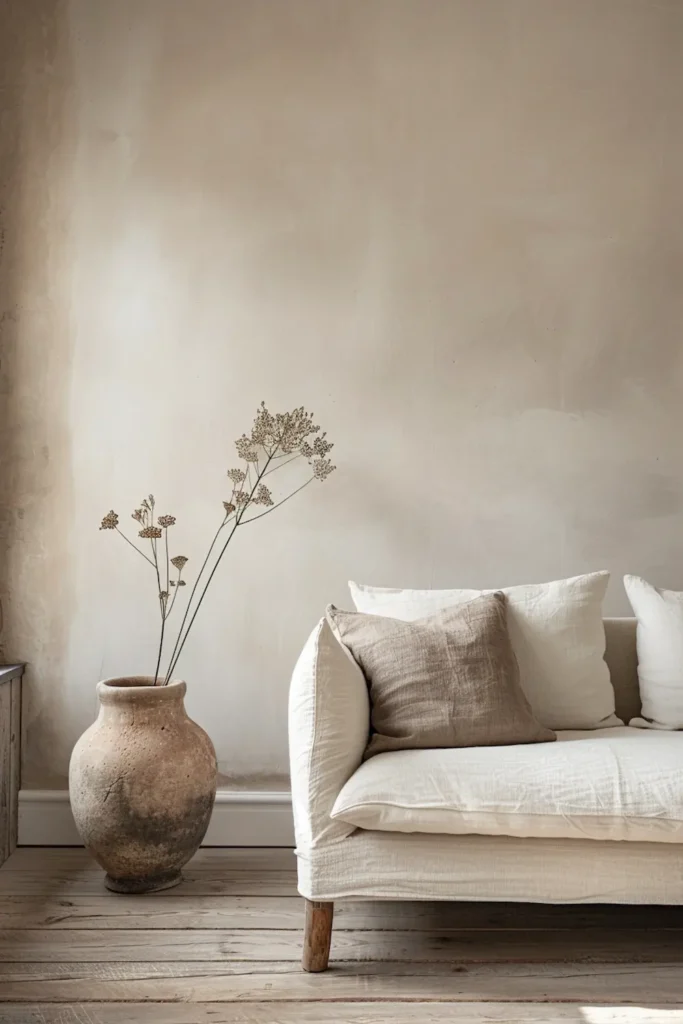
Why this product fits Crafted Minimalism
A sofa is visually dominant. The fabric choice determines whether it feels calm or demanding.
Linen upholstery:
- reflects light softly
- shows wear gradually, not suddenly
- avoids sheen and visual tension
- supports long-term use
What it does to the space
It softens without sweetening. The room feels warmer, but not styled. This is crucial for maintaining restraint.
Discover linen couch covers to recreate this look.
Metal: contrast without reflection
Metal in Crafted Minimalism is structural, not expressive.
It is used to:
- define edges
- support furniture
- introduce quiet contrast
Preferred finishes are brushed, aged, or blackened. Highly reflective metals are avoided because they increase visual activity.
Product idea 5: Brushed metal floor or wall lamp

Why this product fits Crafted Minimalism
Lighting is functional first. A restrained metal fixture:
- defines light without visual dominance
- introduces contrast to wood and fabric
- avoids decorative distraction
What it does to the space
It sharpens structure while keeping the overall tone calm. The lamp supports the room instead of styling it.
Fewer materials, deeper calm
One of the most common mistakes is mixing too many “beautiful” materials.
Crafted Minimalism relies on:
- limitation
- repetition
- consistency
Typically, a space uses:
- 3–5 core materials
- repeated across rooms
This repetition reduces decision fatigue and creates visual continuity.
Calm is not achieved by removing furniture.
It is achieved by removing material conflict.
Budget, value, and replacement logic
Crafted Minimalism is often perceived as expensive because it favors durable materials. But the real cost in interiors is not purchase — it is replacement.
Replacing items every few years:
- increases waste
- increases stress
- increases visual instability
A solid wood table, stone surface, or linen sofa often costs less over ten years than repeatedly replacing cheaper alternatives.
This is not luxury thinking.
It is long-term thinking.
Materials that undermine Crafted Minimalism
Even if they look minimal, some materials work against the framework:
- high-gloss lacquer
- faux textures
- plastic composites
- ultra-uniform finishes
These materials:
- age abruptly
- highlight damage
- demand perfection
Crafted Minimalism avoids materials that turn everyday life into maintenance.
Materials as long-term companions
In Crafted Minimalism, materials are not chosen to impress guests.
They are chosen to:
- tolerate daily life
- absorb wear
- become familiar
When materials behave well, the space stops demanding attention. That is when calm becomes permanent.
Final thoughts
The best materials for Crafted Minimalism are not rare or dramatic.
They are:
- honest
- durable
- tactile
- forgiving
They reduce the need for decoration, styling, and replacement.
You do not decorate calm.
You build it — one material decision at a time.
Where to go next
To deepen your understanding of material-driven calm, continue with: