How to Use Vintage Pieces in Crafted Minimalism (Without Losing Simplicity)
Why Vintage Works in Crafted Minimalism
Crafted Minimalism is often misunderstood as something purely modern or even sterile. Clean lines, neutral palettes, and open space can quickly feel cold when they lack depth. That’s exactly where vintage pieces come in—they add a layer of history, tactility, and quiet character that transforms a space from minimal to meaningful.
In a well-balanced crafted minimalist interior, nothing feels accidental. Every object earns its place. Vintage items naturally fit into this philosophy because they already carry a story. Whether it’s a softly worn wooden bench, a ceramic vase with subtle imperfections, or a piece of stone shaped by time, these elements introduce warmth without adding visual noise. They soften the precision of minimalism and create a more lived-in, grounded atmosphere.
This is also what makes vintage such a powerful tool when you want to apply the principles discussed in How Crafted Minimalism Adds Warmth. Instead of relying on color or decoration, you bring warmth through materials, age, and texture. And when combined with the right foundational pieces—like those highlighted in Must-Have Crafted Minimalist Furniture—vintage elements elevate the entire space rather than compete with it.
But not all vintage works. The difference between a curated interior and a cluttered one lies in intention. Crafted Minimalism isn’t about filling your home with old objects—it’s about selecting the right ones. Pieces that feel calm, sculptural, and aligned with natural materials.
In this article, you’ll discover five distinct vintage styles that seamlessly integrate into crafted minimalist interiors. For each style, I’ll show you exactly which pieces to choose—and why—so you can recreate the look in a way that feels cohesive, warm, and effortlessly refined.
What Makes a Vintage Piece ‘Crafted Minimalist’?
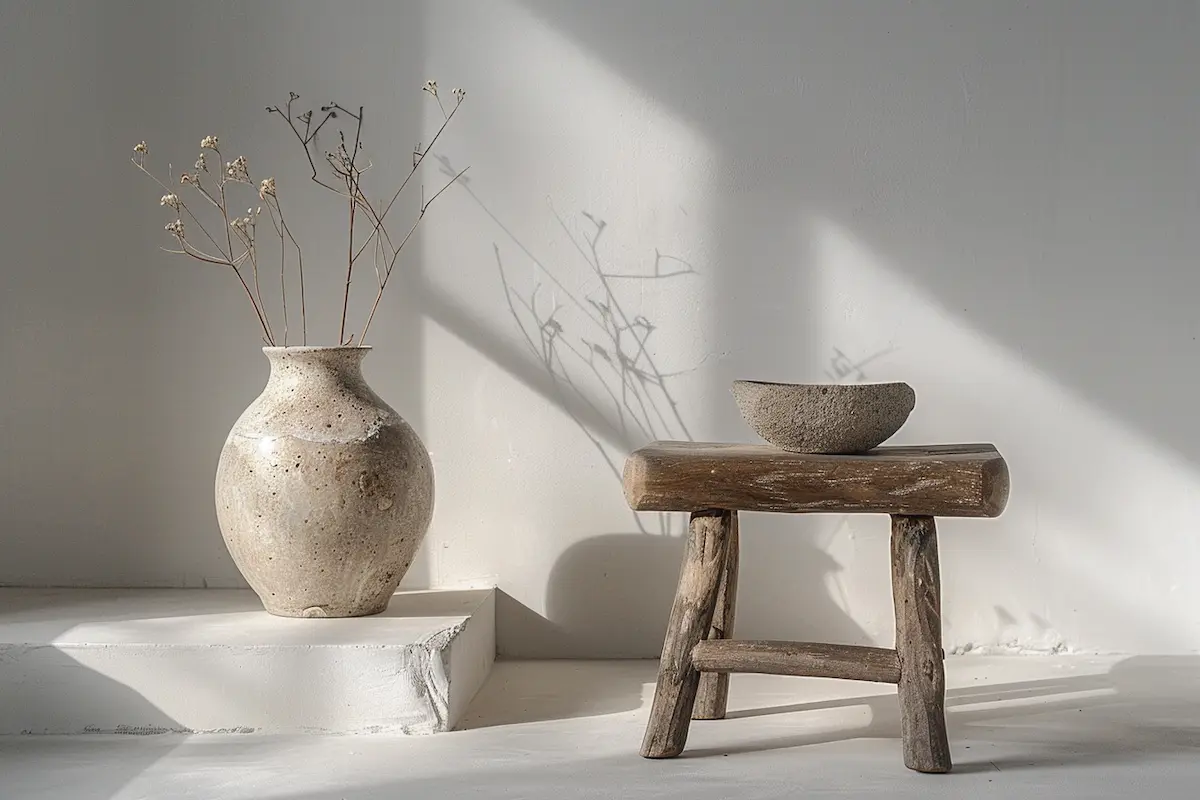
Not every vintage find belongs in a crafted minimalist interior. In fact, most don’t. The key difference lies in how a piece feels within the space. Crafted Minimalism isn’t about age—it’s about intention, material, and visual calm.
The first thing to look at is material authenticity. Pieces made from natural materials like solid wood, stone, ceramic, or linen instantly align with this style. These materials age beautifully, developing subtle variations in color and texture over time. That natural patina is what gives vintage its depth—without needing extra decoration.
Next is patina and imperfection. A slightly uneven glaze on a ceramic vase, softened edges on a wooden table, or faint wear marks on a bench—these are not flaws, but qualities. They add character in a quiet, understated way. This connects closely to the ideas behind wabi-sabi, where imperfection enhances rather than distracts.
Equally important is the shape and silhouette. Crafted Minimalism favors pieces that feel sculptural but restrained. Think simple, grounded forms—low tables, blocky shapes, soft curves. Even vintage items should feel calm in their outline. If something is overly ornate, highly detailed, or visually busy, it will disrupt the balance of the space.
Functionality also plays a role. The best pieces are both useful and aesthetic. A wooden stool that doubles as a side table, or a ceramic bowl that serves as both decor and function—these choices keep the space minimal without sacrificing warmth.
What to avoid?
- Overly decorative antiques with intricate carvings
- Small, fragmented items that create visual clutter
- Pieces that feel stylistically disconnected from natural materials
Ultimately, vintage in Crafted Minimalism acts as a supporting layer, not the main attraction. It enhances the architecture of the space rather than competing with it.
Style 1: Rustic European Vintage
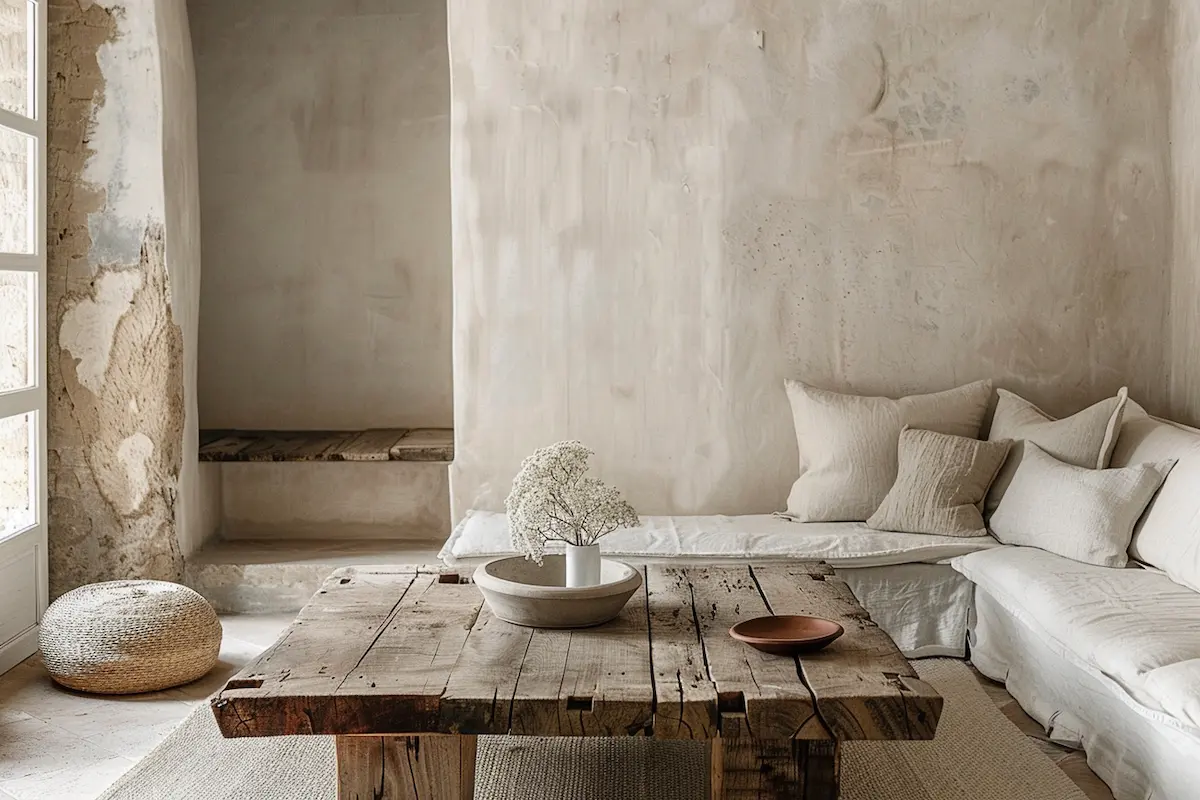
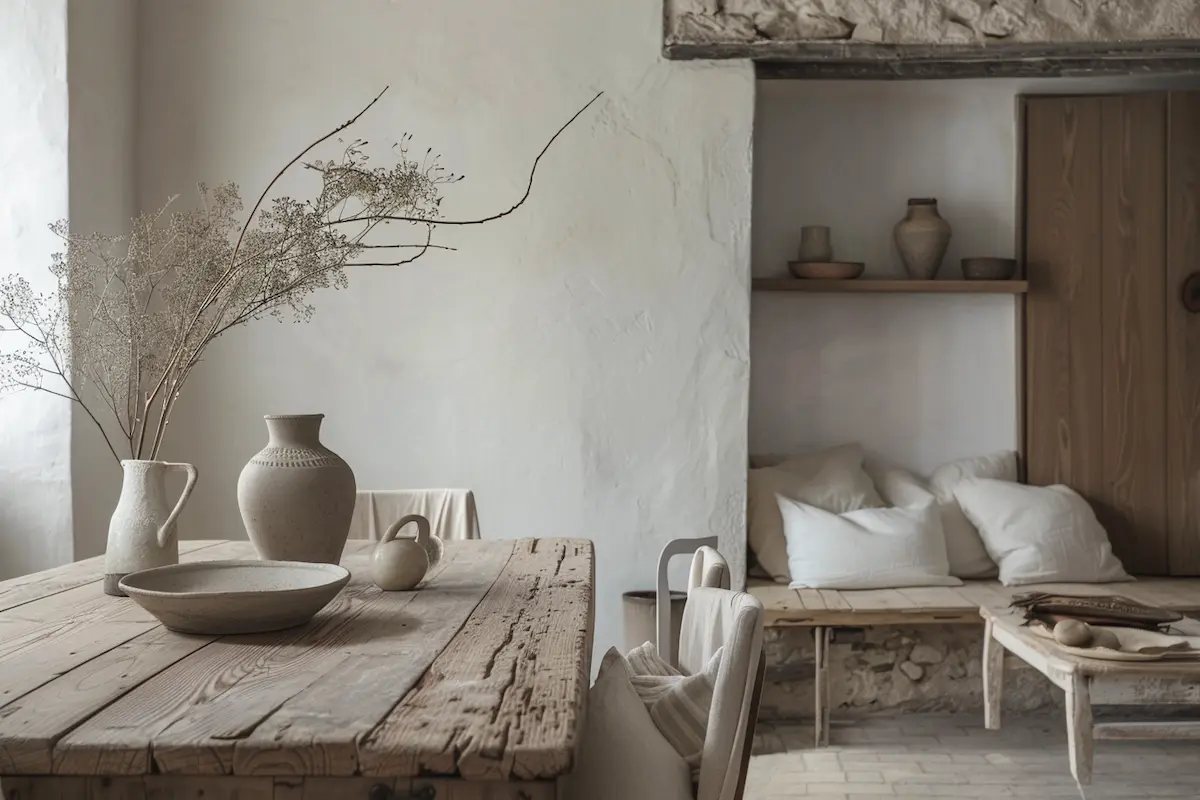
Rustic European vintage is where Crafted Minimalism starts to feel truly alive. This style is rooted in old-world simplicity—think weathered wood, timeworn finishes, and a sense of quiet authenticity. It’s not polished or perfect, and that’s exactly why it works so well. It brings depth and warmth without disrupting the calm, minimal foundation of the space.
What defines this style is the use of aged, solid wood. Pieces often feel heavy, grounded, and slightly imperfect. You’ll see visible grain, tonal variation, and softened edges from years of use. Instead of looking outdated, these elements create a natural richness that new furniture often lacks.
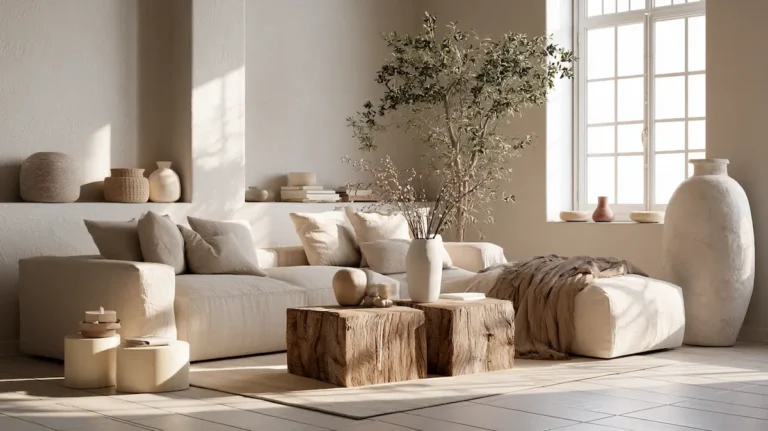
In a crafted minimalist interior, rustic vintage pieces work best when they’re used intentionally as anchor elements. A large wooden coffee table, for example, can instantly ground a living room filled with lighter tones and softer materials. The contrast between raw wood and smooth plaster or linen upholstery creates that layered, editorial look you’re aiming for.
A perfect example of this is a reclaimed elm coffee table. The natural elm wood has a subtle warmth and visible texture, while the slightly imperfect finish keeps it from feeling too polished. This kind of piece doesn’t need styling or decoration—it is the focal point, simply because of its material and presence.
Recommended product:
Why I would choose this piece:
This table adds immediate depth through its grain, tone variation, and aged finish. It anchors the space visually without overwhelming it, and brings exactly the kind of tactile warmth that Crafted Minimalism needs to avoid feeling flat or sterile.
The key is restraint. One strong piece like this is often enough to transform the entire room.
Style 2: Mid-Century Vintage Minimal
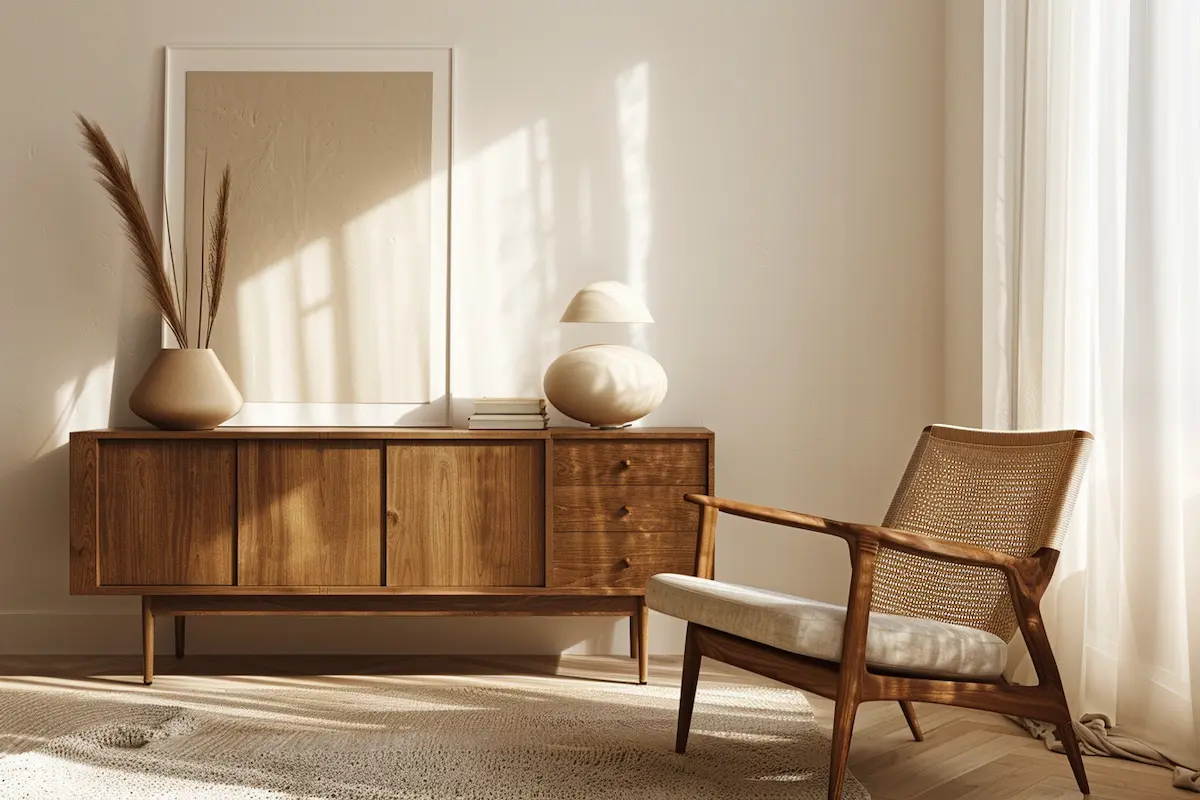
Mid-century vintage is one of the easiest ways to introduce vintage into a crafted minimalist interior without losing that clean, calm aesthetic. Where rustic styles bring raw texture, mid-century pieces offer refined simplicity—clean lines, balanced proportions, and a quiet sense of design intention.
This style is defined by its timeless silhouettes. Think low-profile furniture, tapered legs, and smooth wooden finishes. Unlike more decorative vintage styles, mid-century design already leans toward minimalism, which makes it a natural fit. The beauty lies in its restraint—nothing feels excessive, yet every piece feels considered.
In a crafted minimalist space, mid-century vintage works best when used to create structure and rhythm. A walnut record player stand, for example, brings strong horizontal lines that visually calm a wall while adding warmth through its rich wood tone. It functions as storage, but also as a subtle design anchor that doesn’t require additional styling.
To complement this, a teak lounge chair by Folke Ohlsson for DUX introduces a sculptural seating element. The elegant wooden frame combined with soft upholstery creates a perfect balance between comfort and form. It adds variation in shape without disrupting the overall harmony of the space.
Recommended products:
Why I would choose these pieces:
The record player stand keeps the space visually grounded with its clean, elongated shape, while the walnut wood adds warmth without heaviness. The lounge chair brings a refined, human element into the space—its curves soften the straight lines of the furniture around it. Together, they create a balanced composition that feels both minimal and inviting.
The key with mid-century vintage is to let the form speak for itself. Avoid over-styling—these pieces are strongest when they stand on their own.
Style 3: Wabi-Sabi Vintage Objects
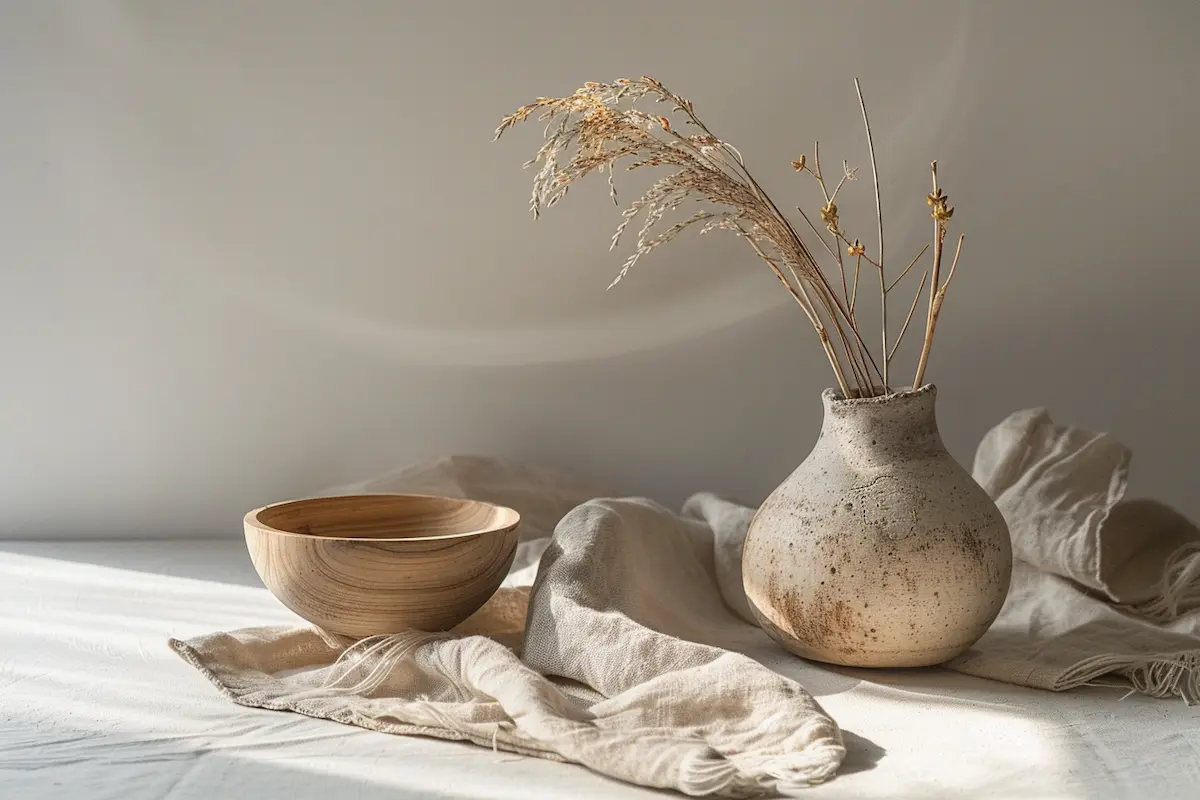
Where mid-century vintage focuses on structure, wabi-sabi vintage is all about subtle imperfection and quiet presence. This style doesn’t rely on large furniture pieces—instead, it works through carefully chosen objects that bring texture, depth, and a sense of calm into the space.
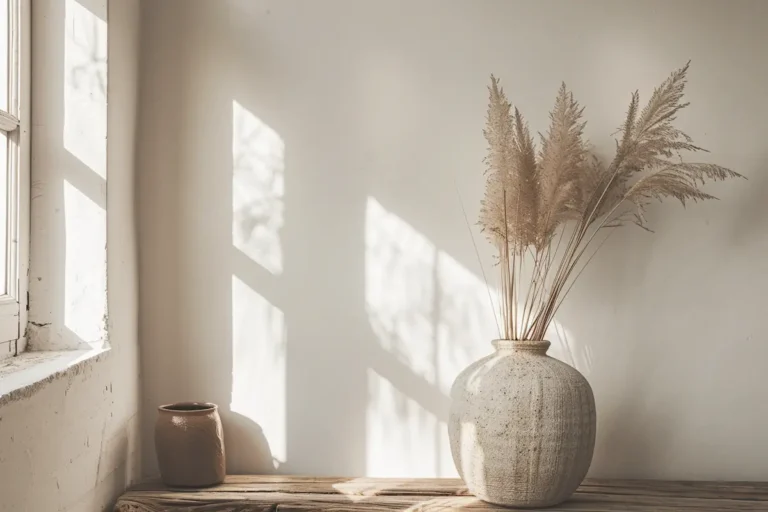
Wabi-sabi is rooted in the appreciation of imperfection. In a crafted minimalist interior, this translates to pieces that feel organic, handmade, and slightly irregular. Think uneven ceramic surfaces, asymmetrical shapes, or wood that shows natural wear. These details don’t stand out loudly, but they create a layered, tactile atmosphere that feels authentic and grounded.
The key here is restraint. Instead of filling a room, you focus on a few meaningful accents. A single object—placed with intention—can completely shift the feeling of a space.
A perfect example is a handcrafted stoneware piece by Tamiko Claire. The subtle variations in glaze, tone, and shape give it a quiet, artistic presence. It doesn’t need styling or decoration—it already functions as a sculptural element within the space.
To complement this, an ash wooden bowl adds a soft, organic layer. Its natural grain and slightly imperfect form introduce warmth in a very understated way. Whether placed on a table or left empty as a decorative object, it creates balance against more structured elements in the room.
Recommended products:
Why I would choose these pieces:
The stoneware brings a refined, imperfect beauty that immediately adds depth without visual noise. The ash wooden bowl complements this with natural warmth and subtle texture. Together, they create a calm, tactile composition that enhances the space without making it feel styled or cluttered.
Wabi-sabi vintage works best when you allow each piece to breathe. Give it space, and it will naturally draw attention in a calm, understated way.
This connection to imperfection runs deeper than just vintage styling. Wabi-Sabi in Crafted Minimalism explores the philosophy behind it.
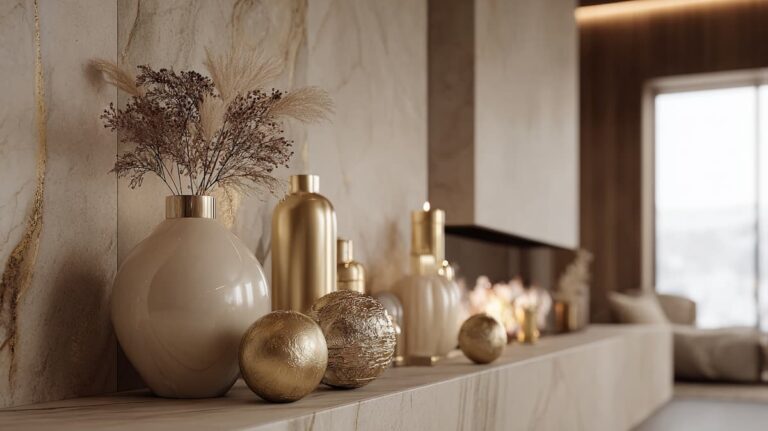
Style 4: Vintage Stone & Marble Accents
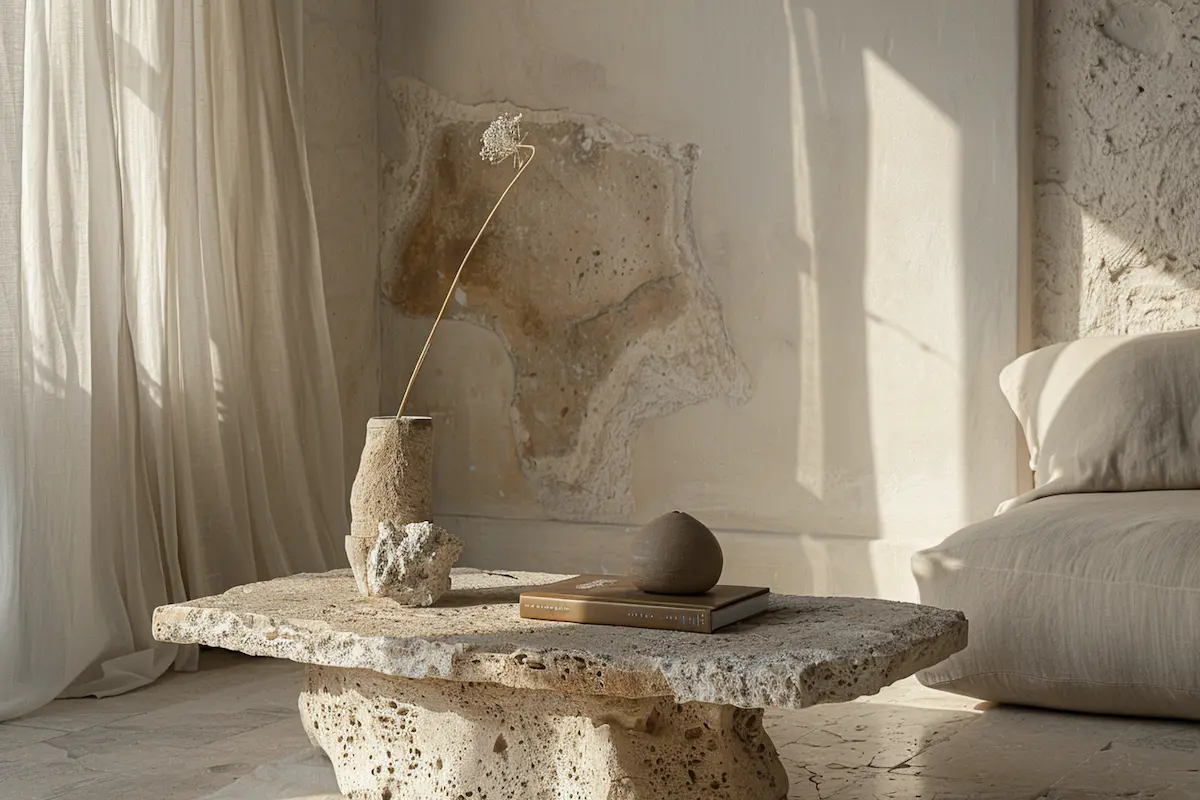
If you want to add a sense of quiet luxury to a crafted minimalist interior, vintage stone pieces are one of the most powerful ways to do it. Unlike wood or textiles, these materials bring weight, permanence, and subtle visual depth—without ever feeling loud.
What makes stone so effective in this style is its natural variation. No two pieces are the same. Soft tonal shifts, porous textures, and imperfect edges create interest in a way that remains calm and understated. It’s texture—but refined and architectural.
In crafted minimalism, stone works best as a grounding element. Larger pieces can define the entire atmosphere of a room, especially when they’re balanced with softer materials like linen, wool, or plaster.
A striking example is the Hispania Magna dining table. This piece feels almost architectural—solid, sculptural, and deeply rooted in natural material. It doesn’t need decoration or styling. Its presence alone creates a sense of calm and permanence within the space.
To complement this, the Reposo Masa low stool introduces a secondary layer of stone in a more subtle, versatile way. Its low, elongated shape keeps the composition grounded while adding variation in scale. It can function as a stool, side table, or purely sculptural object.
Recommended products:
Why I would choose these pieces:
The dining table acts as a central anchor—its weight and materiality define the entire room. The low stool complements this by repeating the stone texture in a lighter, more flexible form. Together, they create a cohesive and grounded look that feels both minimal and elevated.
The key with stone is balance. Pair it with softer elements and give it space—this allows the material to stand out without making the interior feel heavy.
Stone rarely works alone — it’s almost always paired with wood for balance. Combining Wood and Stone explains why that combination works so well.
Style 5: Soft Textile Vintage (Linen & Worn Fabrics)
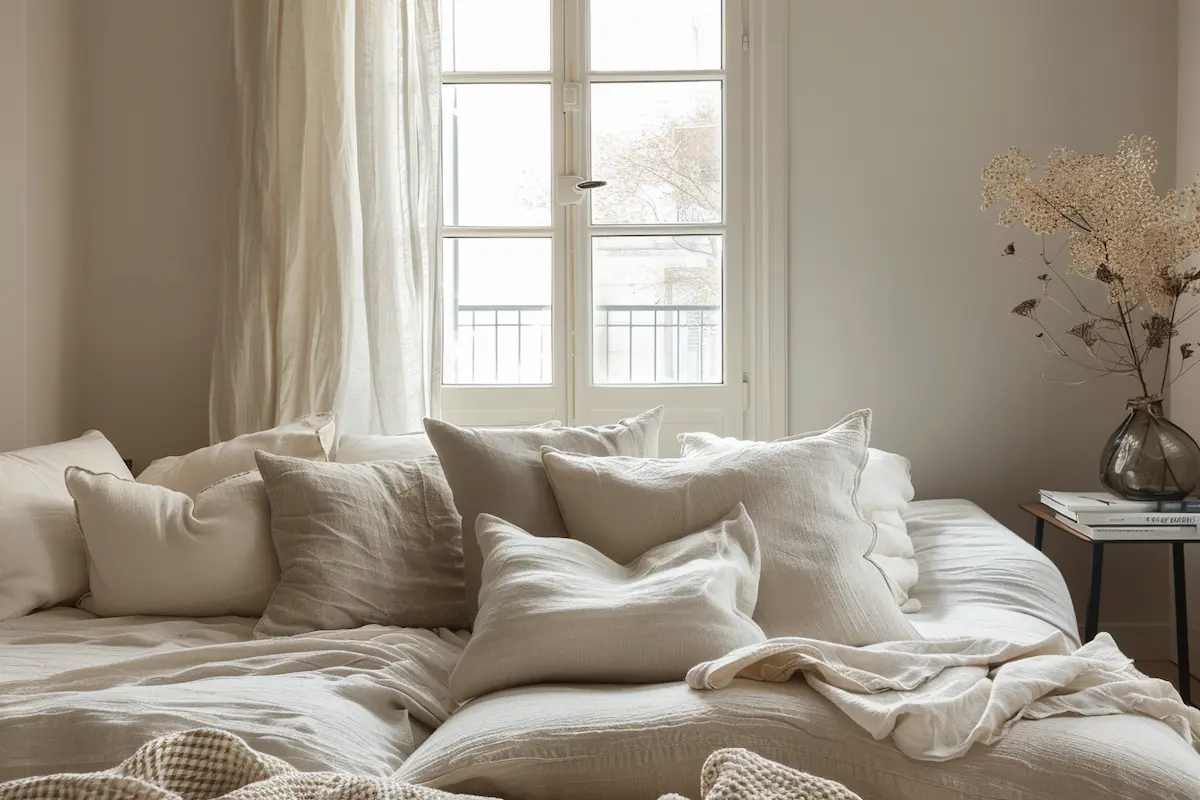
Where stone and wood bring structure, vintage textiles introduce something equally important: softness and comfort. In Crafted Minimalism, this layer is what makes a space feel lived-in rather than styled. It softens edges, absorbs light, and creates a tactile experience that invites you to slow down.
Vintage textiles are defined by their subtle wear and natural texture. Think washed linen, slightly faded tones, and fabrics that feel relaxed rather than crisp. These pieces don’t draw attention through bold color or pattern, but through how they interact with the rest of the space.
In a crafted minimalist interior, textiles work best as a balancing layer. They break up harder materials like wood and stone, preventing the space from feeling too rigid or cold. A linen throw over a sofa, for example, immediately changes the atmosphere—adding warmth without adding visual clutter.
Vintage linen cushions are another powerful addition. Their slightly imperfect finish and soft structure create depth in a very understated way. Instead of perfectly filled, structured pillows, you’re aiming for something more relaxed—pieces that feel natural and effortless.
Recommended products:
Why I would choose these pieces:
These textiles bring warmth in the most subtle way possible. The cushions add softness and variation to seating areas, while the throw introduces movement and layering. Together, they create contrast against harder surfaces, which is essential for achieving that calm, balanced look.
The key with vintage textiles is to keep the palette neutral and cohesive. Let texture do the work, not color or pattern.
How to Combine These Vintage Styles Without Clutter
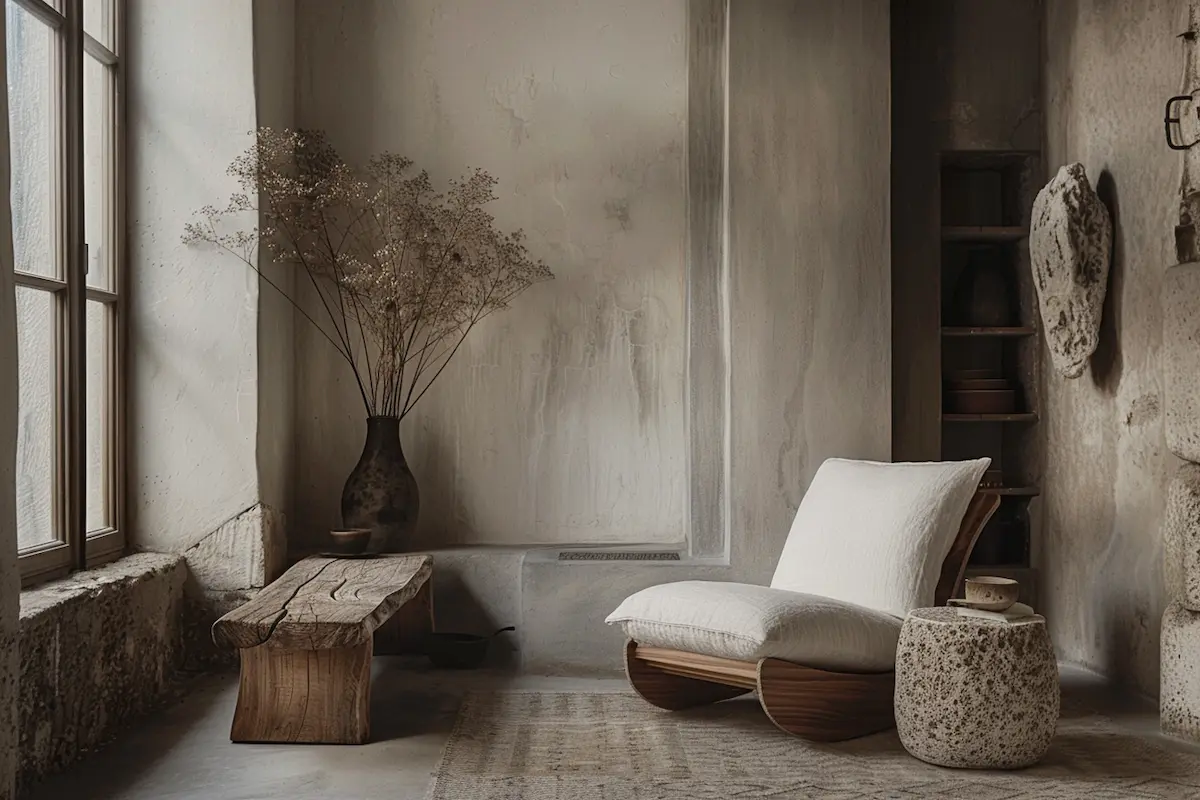
The biggest mistake when working with vintage in a crafted minimalist interior is trying to do too much. Because each piece has character, layering too many styles or objects can quickly turn a calm space into something visually overwhelming. The key is not more—but better choices and intentional combinations.
Start by limiting yourself to one or two vintage styles per space. For example, you might combine rustic wood with soft textiles, or mid-century structure with a few wabi-sabi objects. This keeps the interior cohesive while still allowing for contrast. When everything competes for attention, nothing stands out.
Next, focus on material contrast. This is where the magic happens. Pair hard materials like stone or wood with softer elements like linen or wool. Combine smooth surfaces with rough textures. These subtle contrasts create depth without adding clutter.
Another important principle is repetition. If you introduce a material—like wood or stone—let it return in at least one other place in the room. This creates visual harmony and prevents pieces from feeling random or disconnected.
And maybe the most important rule: protect your negative space. Crafted Minimalism relies on breathing room. Not every surface needs to be filled. In fact, empty space is what allows vintage pieces to stand out and be appreciated.
If you approach it this way, vintage becomes a curated layer, not a collection. Each piece supports the overall atmosphere—calm, warm, and intentional.
Conclusion: Bringing Vintage into Crafted Minimalism
Vintage pieces have the power to completely transform a crafted minimalist interior—but only when they’re chosen with intention. It’s not about filling your space with character, but about selecting a few elements that quietly add to it.
Throughout these five styles, one thing becomes clear: vintage works best as a supporting layer. Whether it’s the weight of stone, the warmth of aged wood, the refinement of mid-century design, or the softness of worn textiles—each element contributes something different. But none of them should overpower the calm foundation of the space.
That’s also why it’s worth revisiting the principles behind How Crafted Minimalism Adds Warmth. Vintage is one of the most natural ways to introduce warmth without relying on color or decoration. And when paired with the right foundational pieces—like those in Must-Have Crafted Minimalist Furniture—you create an interior that feels both minimal and deeply inviting.
If you take one thing from this, let it be this: curation over quantity. One well-chosen vintage piece will always have more impact than a collection of items without direction.
Start small. Choose materials that feel natural. Give each piece space to breathe.
That’s how you create a home that feels calm, layered, and timeless—without ever feeling cluttered.
If vintage pieces feel out of budget, Budget-Friendly Crafted Minimalist Furniture shows how to achieve a similar look for less.