
The Crafted Minimalist Table: 5 Table Styles That Anchor a Calm Interior
Why the Table Is the Quiet Center
In Crafted Minimalism, the table is rarely the most eye-catching piece in a room — and that is exactly why it matters so much. While sofas and chairs communicate comfort, the table sets the rhythm. It connects objects, holds space, and gives an interior its center of gravity without asking for attention.
A well-chosen table functions as an anchor. Not because it is oversized or decorative, but because it carries visual weight. You sense its presence even when nothing is placed on it. This is what separates crafted minimalist tables from many contemporary “minimal” designs that prioritize thin lines and visual lightness over substance.
Crafted Minimalism values presence over restraint for its own sake. Materials are allowed to speak. Surfaces are meant to be touched. Proportions are chosen to calm a space rather than fill it.
In this article, I explore minimalist tables with craft appeal — tables designed with intention, made from honest materials, and chosen for their long-term role in an interior. You’ll discover five distinct table styles, each grounded in craftsmanship. For every style, I show how to recreate the look with one or two carefully selected pieces — and explain why those specific choices work.
Because in Crafted Minimalism, one table with meaning will always outweigh five without a story.
Disclaimer: This post may contain affiliate links. That means if you click and purchase through one of these links, we may earn a small commission — at no extra cost to you. As an Etsy affiliate and Amazon Associate, I earn from qualifying purchases. We only recommend products we truly love or believe fit the style of our AI-generated designs.
What Makes a Table “Crafted Minimalist”?
Not every minimalist table belongs in a Crafted Minimalist interior. The distinction lies not in shape, but in intention. Where many minimalist designs aim to disappear visually, Crafted Minimalism allows a table to have presence — not through ornament, but through material, mass, and construction.
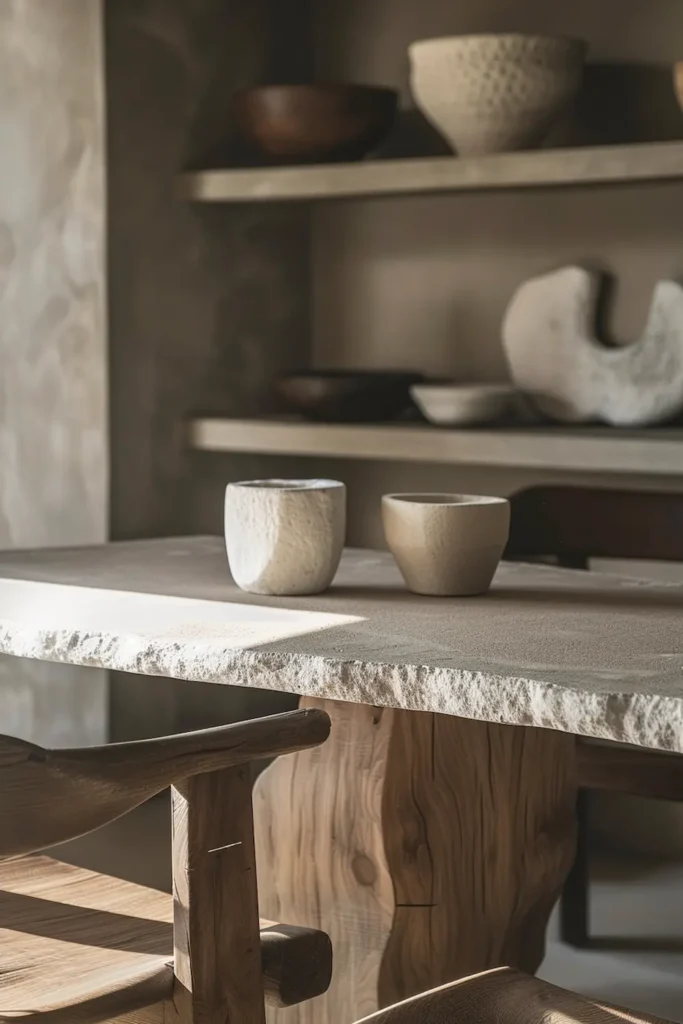
A crafted minimalist table almost always carries visual weight. This can come from solid wood, natural stone, or a sculptural base that reveals how the piece is built rather than hiding it. You can sense the making process. Joints, edges, and surfaces feel deliberate, even when the overall form is simple.
Imperfection plays a quiet but essential role. Visible wood grain, subtle variations in stone, or slightly softened edges add depth and tactility. These elements prevent an interior from feeling overly polished or sterile — a common pitfall in minimalist spaces.
Equally important is restraint in styling. A crafted minimalist table does not rely on decorative objects to justify its presence. In fact, it becomes more powerful when left largely empty. The table supports the room rather than filling it, creating a sense of calm and clarity.
In the sections that follow, you’ll see how these principles translate into five distinct table styles. Each style has its own material language, yet all share the same foundation: simplicity grounded in craftsmanship.
Style 1 – Solid Wood Statement Tables
Style 1 – Solid Wood Statement Tables
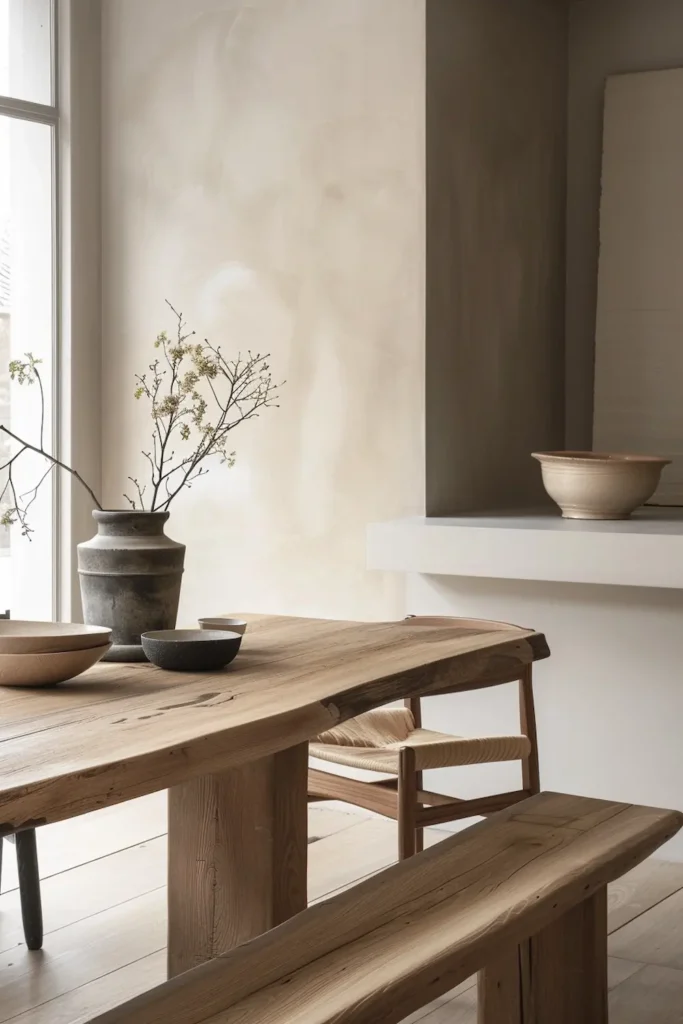
Solid wood tables form the backbone of Crafted Minimalism. They are quiet, grounded, and confident — never decorative, never apologetic. In a minimalist interior, solid wood brings warmth without softness and structure without rigidity. The key is not refinement, but material honesty.
What defines a solid wood statement table is mass. Thick tabletops, sturdy legs, and visible grain patterns give the table visual gravity. This is not furniture that fades into the background. Even in a calm, neutral space, a solid wood table establishes hierarchy. It tells the eye where to rest.
Within Crafted Minimalism, I look for tables made from oak or other solid hardwoods, finished with matte oils rather than glossy coatings. The surface should absorb light, not reflect it. Texture is allowed to be seen — even encouraged — because it adds depth without adding clutter.
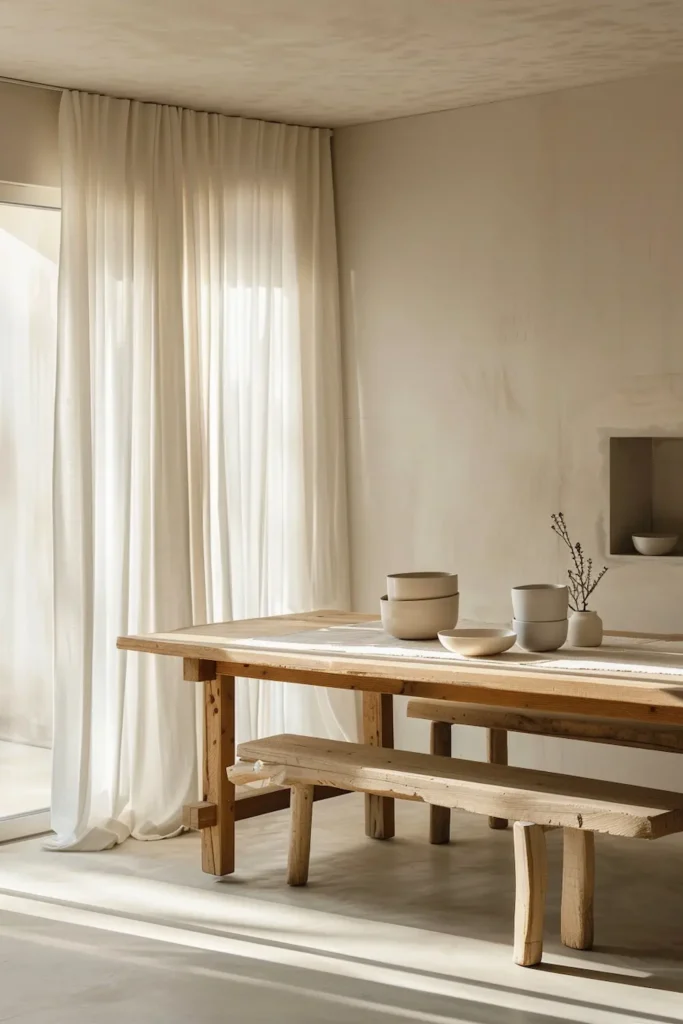
For this style, I deliberately choose tables with simple, architectural geometry. Rectangular forms, trestle bases, and visibly thick legs create a sense of permanence. There is no need for decorative detailing; craftsmanship shows through proportion and construction alone.
Recommended pieces (carefully selected):
- The Calne Dining Table by Soho Home
I chose this table for its calm but authoritative presence. The proportions are generous without feeling heavy, and the solid wood surface has just enough variation to feel tactile and lived-in. It works beautifully in open-plan spaces where the table needs to anchor the room without competing with other furniture. - The Boscobel Solid Oak Trestle Dining Table by Master Plank UK
This table embodies everything I look for in a solid wood statement piece: thick legs, visible construction, and unapologetic mass. The trestle base gives it architectural strength, while the natural oak keeps it grounded and timeless. I recommend this piece when you want the table to feel almost structural — as if the room is built around it.
Both tables succeed because they don’t need styling to justify their presence. Left empty, they feel complete. And that quiet completeness is what defines a true solid wood statement table within Crafted Minimalism.
Solid wood statement tables are not trend-driven. They age well, gain character over time, and quietly reinforce the philosophy of Crafted Minimalism: fewer objects, stronger presence.
Style 2 – Stone & Travertine Tables
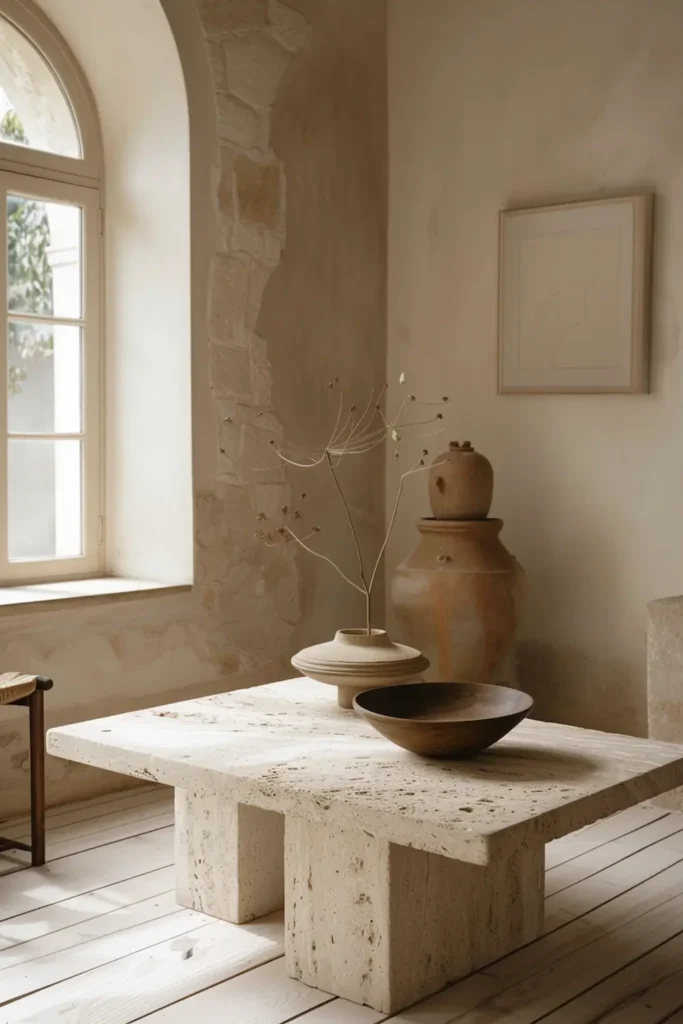
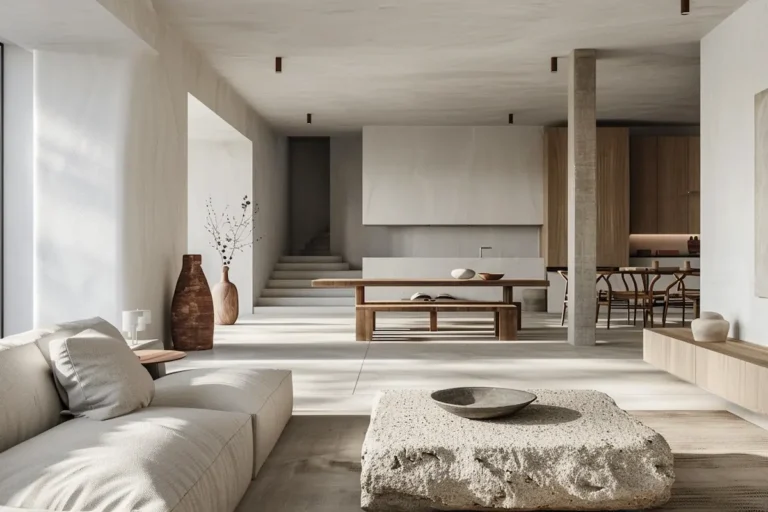
Stone and travertine tables introduce a different kind of weight into a Crafted Minimalist interior. Where solid wood brings warmth and grounding, stone adds stillness. It slows a space down. The surface feels cooler, calmer, and more permanent — almost architectural in character.
Within Crafted Minimalism, stone works best when it is allowed to remain visually quiet. Matte finishes, softened edges, and natural color variation are essential. Highly polished marble or overly graphic veining quickly shifts the table from grounding element to visual distraction. What we’re looking for instead is subtle depth — the kind that only reveals itself when light moves across the surface.
A stone or travertine table functions as a true anchor. Even at a relatively modest size, it carries authority. This is why these tables work especially well in living rooms that already lean toward softness through textiles or rounded seating. The stone introduces balance without sharp contrast.
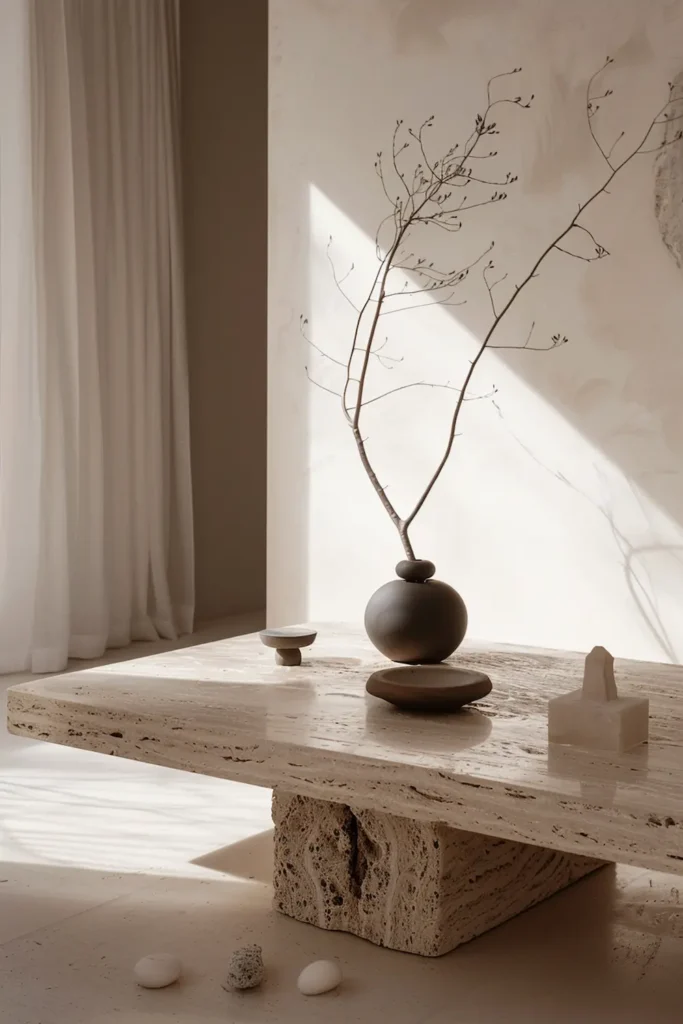
I personally gravitate toward low-profile coffee tables in travertine or marble for this style. Their horizontal emphasis reinforces calm, while the material itself provides enough presence to avoid the need for additional decor. Often, one table is enough to define the entire seating area.
Recommended pieces (carefully selected):
- Travertine Coffee Table by McGee & Co.
I selected this table for its restrained elegance. The travertine surface feels substantial without becoming heavy, and the simple block-like form allows the material to take center stage. It’s ideal for interiors that aim to feel collected and timeless rather than styled. - Vintage Marble Coffee Table by Retrend
This piece brings in a subtle sense of history. I like it specifically for spaces that risk feeling too new or too perfect. The aged marble introduces depth and character, while the overall form remains calm and minimal. It proves that vintage elements can coexist beautifully within Crafted Minimalism when chosen carefully.
Both tables succeed because they don’t compete with their surroundings. They ground the room quietly — and that quiet authority is exactly what stone does best.
Style 3 – Sculptural Minimal Tables
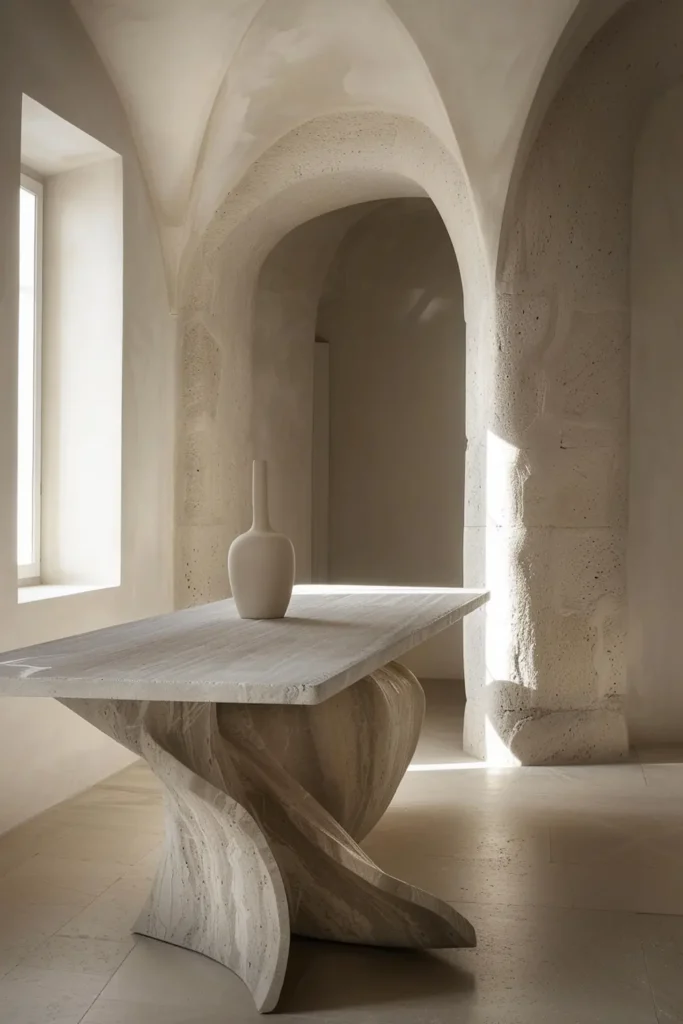
Sculptural minimal tables occupy a special place within Crafted Minimalism. They are not neutral in the traditional sense, yet they never feel decorative. Instead of blending in, they define the room through form alone. When chosen carefully, a sculptural table replaces the need for styling altogether.
The key difference lies in controlled expression. Sculptural does not mean complex. Within Crafted Minimalism, the strongest pieces rely on one clear gesture: a rounded silhouette, a monolithic base, or a continuous curve that feels intentional rather than playful. The material remains calm; the form does the talking.
These tables work best when the surrounding furniture is quieter. Soft seating, neutral textiles, and limited accessories allow the sculptural piece to hold visual focus without competition. Negative space becomes part of the composition, giving the table room to breathe.
I am especially drawn to sculptural tables that feel architectural rather than artistic. Pieces that look as though they could belong to the structure of the room itself. They introduce presence, rhythm, and direction — without breaking the overall calm.
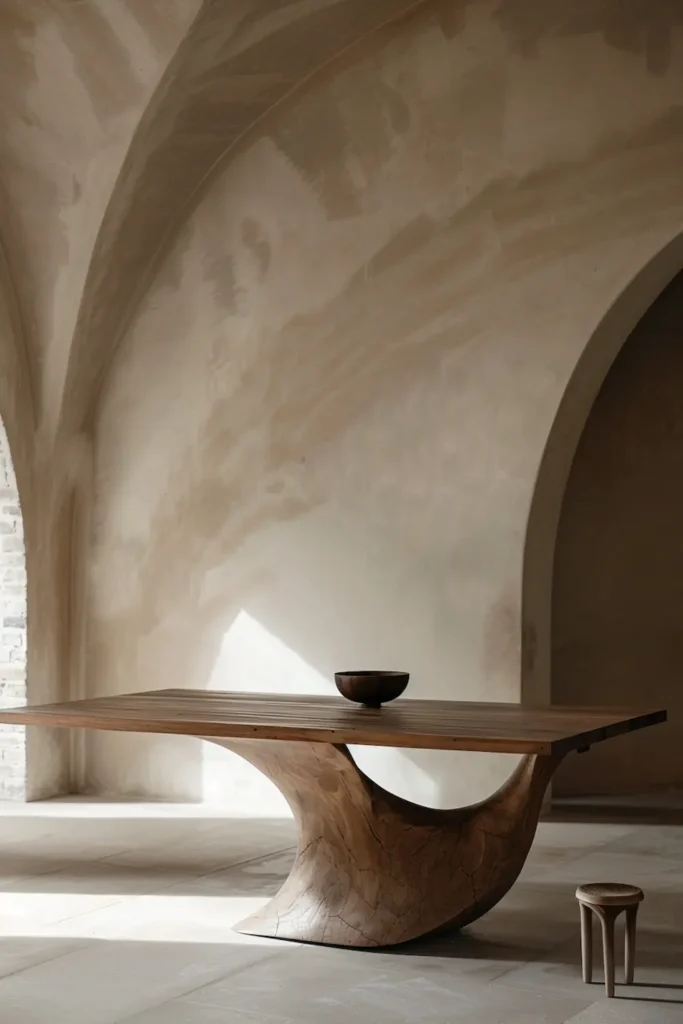
Recommended pieces (carefully selected):
- Nainoa Dawn Table by Garde
I chose this table because of its restrained sculptural language. The rounded form feels soft and grounded at the same time, while the proportions keep it from becoming playful or trendy. It works beautifully as a coffee or side table when you want one strong shape to carry the space. - Mid-Century Wooden Console Table by Spry Interior
This console stands out for its balance between structure and flow. The elongated form introduces direction, making it ideal for hallways or behind seating areas. I selected it for interiors that need a sculptural element without introducing visual heaviness.
Both pieces succeed because they feel intentional even when left completely unstyled. Their form provides enough interest on its own — reinforcing one of the core ideas of Crafted Minimalism: when the object is strong, the room can remain quiet.
Style 4 – Low Profile Japanese-Inspired Tables
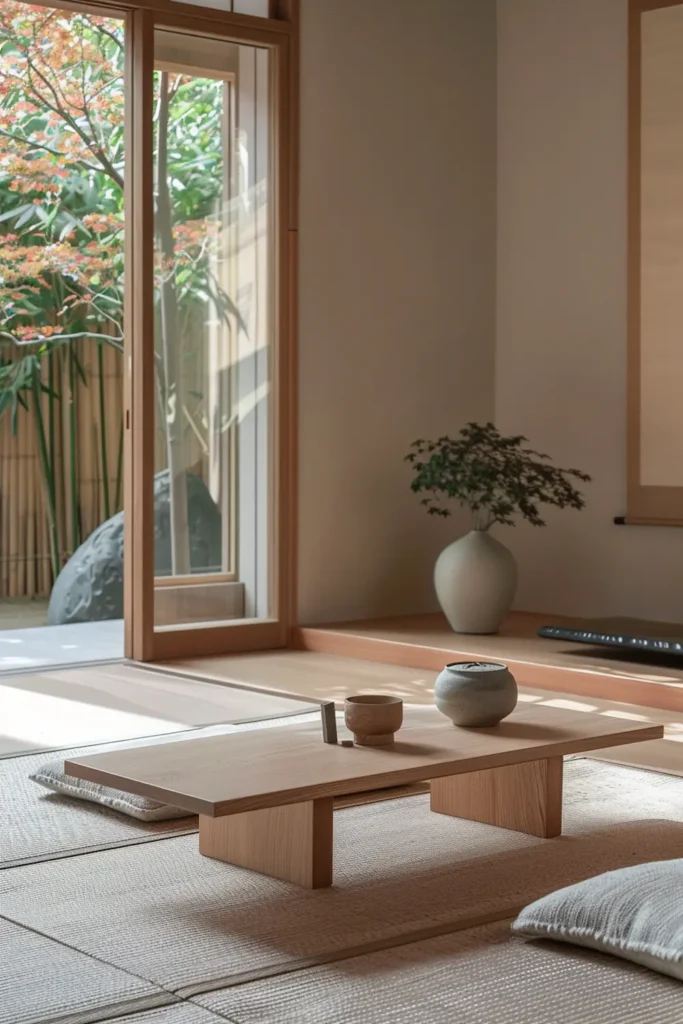
Low profile tables bring a unique sense of calm into a Crafted Minimalist interior. By sitting closer to the floor, they subtly shift how a space is experienced. The room feels more grounded, more horizontal, and noticeably quieter. Instead of pulling the eye upward, these tables invite stillness.
Within Crafted Minimalism, Japanese-inspired low tables are not about tradition or symbolism — they are about proportion and restraint. Lower height reduces visual dominance, while solid construction ensures the table still carries presence. The balance between humility and substance is what makes this style so effective.
Material choice is crucial. Solid or heavy-looking wood works best, ideally with a matte finish that absorbs light. Sharp edges and overly refined details quickly undermine the sense of calm. Instead, softly rounded corners, clean lines, and uninterrupted surfaces allow the table to feel intentional without becoming decorative.
These tables perform especially well in living rooms designed around comfort and openness. They pair naturally with low sofas, floor cushions, or deep seating, reinforcing a slower rhythm within the space. Because of their height, they don’t compete with other furniture — they support it quietly.

Recommended pieces (carefully selected):
- Japanese Rectangular Low Table by Amazon
I selected this table for its clarity. The proportions are honest, the form is simple, and the low height immediately changes how the seating area feels. It’s ideal when you want to introduce Japanese-inspired calm without committing to a fully themed interior. - Minimalist Rectangular Low Coffee Table by Amazon
This piece works well in smaller or more contemporary spaces. I chose it for its clean silhouette and restrained detailing. It delivers the grounded feeling of a low table while remaining flexible and easy to integrate into modern minimalist layouts.
Both tables succeed because they encourage less — less height, less visual noise, less urgency. And that reduction is exactly what makes low profile tables so powerful within Crafted Minimalism.
Style 5 – Vintage-Inspired Crafted Tables
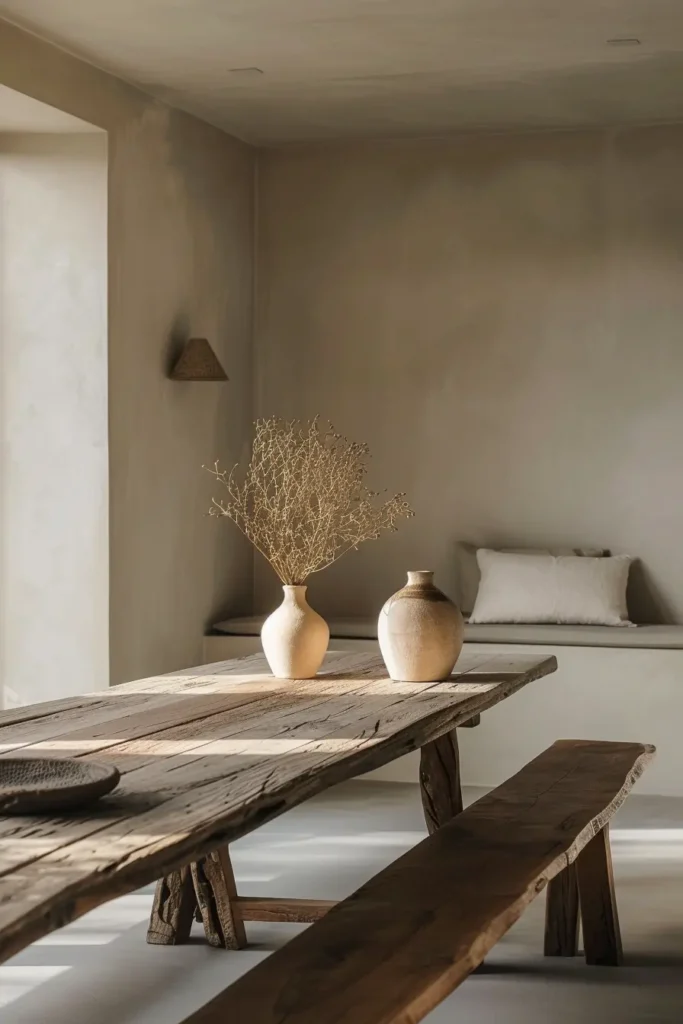
Vintage-inspired tables add something that new furniture often cannot: a sense of time. Within Crafted Minimalism, vintage is not about nostalgia or decoration — it is about patina, restraint, and quiet character. These tables feel grounded because they already exist beyond trends.
What makes vintage pieces work in minimalist interiors is selectivity. Not every old table belongs here. The strongest pieces are simple in form, honest in construction, and marked by use rather than ornament. Wear becomes a texture. Imperfection becomes depth.
In a Crafted Minimalist space, a vintage table often replaces multiple modern elements. Its presence is enough. You don’t style around it; you let it stand. The surrounding furniture stays calm so the table’s history can speak without turning the room into a collection of objects.
Material is key. Solid wood with softened edges, visible joints, and uneven coloration creates warmth without clutter. The table feels lived-in, but never fragile. Instead of adding contrast, it introduces continuity — connecting past and present in a subtle way.
I especially like using vintage tables in dining areas or transitional spaces, where they can act as a grounding element between different zones of the home. They slow the room down and give it a sense of permanence.

Recommended pieces (carefully selected):
- 19th-Century Primitive Wabi-Sabi Dining Table from Pamono
I chose this table for its raw simplicity. The form is humble, almost architectural, and the surface tells a story without becoming decorative. It’s ideal for interiors that want depth and authenticity without visual noise. - Vintage Bench in Weathered Natural Wood by Lily’s Living
While not a table in the strict sense, this bench works beautifully alongside or instead of one. I selected it because it reinforces the same values: patina, restraint, and quiet strength. Used at a dining table or as a low surface, it adds history without clutter.
Together, these pieces show how vintage elements can feel deeply modern when chosen with intention. In Crafted Minimalism, age is not a flaw — it is a form of craftsmanship.
How to Choose the Right Crafted Minimalist Table for Your Space
Choosing the right table within Crafted Minimalism is less about matching a style and more about understanding what role the table needs to play in your space. A well-chosen table doesn’t compete with its surroundings — it clarifies them.
Start by asking yourself what the table should do visually. Is it meant to anchor the room, like a solid wood or stone table that carries weight and presence? Or should it quietly support the layout, as with low-profile or vintage-inspired pieces that reinforce calm rather than draw focus? The answer determines both material and scale.
Next, consider proportion before shape. A table that is too small will feel hesitant, while one that is too light visually will disappear. Crafted Minimalism benefits from furniture that feels slightly more substantial than strictly necessary. Thickness, mass, and footprint matter more than decorative details.
Material choice comes next — and this is where restraint is essential. Choose one dominant material and let it speak. Solid wood, stone, or aged surfaces work best when they are not mixed excessively within the same piece. The table should feel coherent, not layered.
Finally, resist the urge to over-style. A crafted minimalist table should feel complete even when empty. If a table only works once it’s filled with objects, it’s likely not the right one. In Crafted Minimalism, the strongest tables hold space — they don’t need to be filled.
Where Tables Fit Within the Bigger Crafted Minimalist Furniture Story
A table rarely stands alone. Within Crafted Minimalism, it works best as part of a larger furniture hierarchy where each piece has a clear role. The table anchors, while seating, lighting, and storage support that foundation rather than compete with it.
If you want to build a space that feels calm instead of styled, it helps to look at tables in relation to other essential pieces. Seeing how materials, proportions, and visual weight repeat across furniture creates coherence — even when styles subtly differ.
For a broader overview of foundational pieces that support this approach, explore Must-Have Crafted Minimalist Furniture, where tables are placed within the wider context of intentional, long-lasting interior choices.
Conclusion – Fewer Tables, Better Decisions
Crafted Minimalism is not about having less furniture — it’s about choosing better furniture. Tables make this philosophy visible. When selected with intention, a single table can define the atmosphere of an entire room.
Across the five styles in this article, one principle remains constant: material matters more than decoration. Solid wood, stone, sculptural forms, low profiles, and vintage patina all succeed when they are allowed to exist without excess styling. The strongest tables don’t ask for attention. They earn it through presence.
Instead of filling a space with multiple surfaces and accessories, choose one table that feels grounded, complete, and honest. Let it hold space. Let it age. Let it become part of how the room is used, not just how it looks.
Because in Crafted Minimalism, the most powerful interiors are built around a few deliberate decisions — and a table with character is often where that story begins.