Crafted Minimalism Dining Areas: 8 Calm, Characterful Spaces to Gather
Crafted Minimalism Dining Areas: Calm, Characterful Spaces to Gather
The dining area is where Crafted Minimalism truly comes to life. It’s a space designed for slowing down, sharing meals, and appreciating materials that feel honest and tactile. Rather than decorative excess, this approach focuses on natural textures, thoughtful craftsmanship, and a calm atmosphere that still feels warm and lived-in.
In Crafted Minimalist dining spaces, furniture is chosen for longevity, materials are allowed to age gracefully, and subtle imperfections are embraced. These are interiors that feel intentional without being rigid—spaces that support everyday life while maintaining a quiet sense of character.
Below, you’ll find a curated selection of Crafted Minimalism dining area styles. Each one highlights how carefully chosen materials, proportions, and handcrafted elements can transform a dining space into something timeless and grounded.
Disclaimer: This post may contain affiliate links. This means that if you click on one of these links and make a purchase, we may earn a small commission—at no extra cost to you.
All images featured in this article are AI-generated to illustrate the aesthetic and mood of the interior style. The products linked are carefully selected items that, in our view, most closely match the look and feel of these designs.
As an Etsy affiliate and Amazon Associate, we earn from qualifying purchases. We only recommend products we genuinely believe align with the style and atmosphere presented in our AI-created interiors.
1. Earthy Linen & Solid Wood Dining
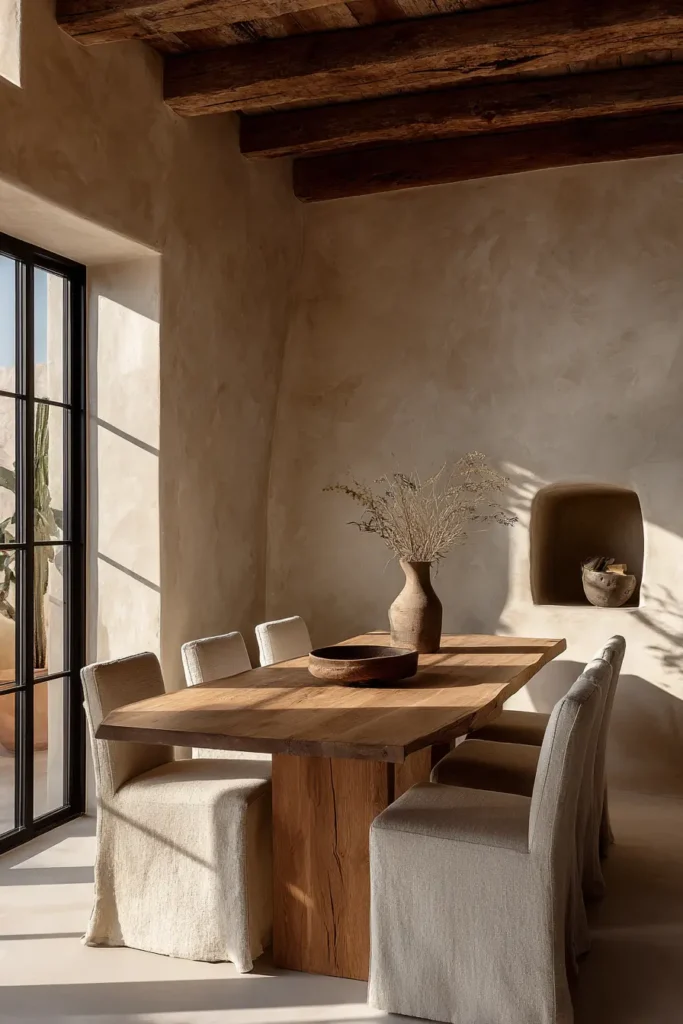
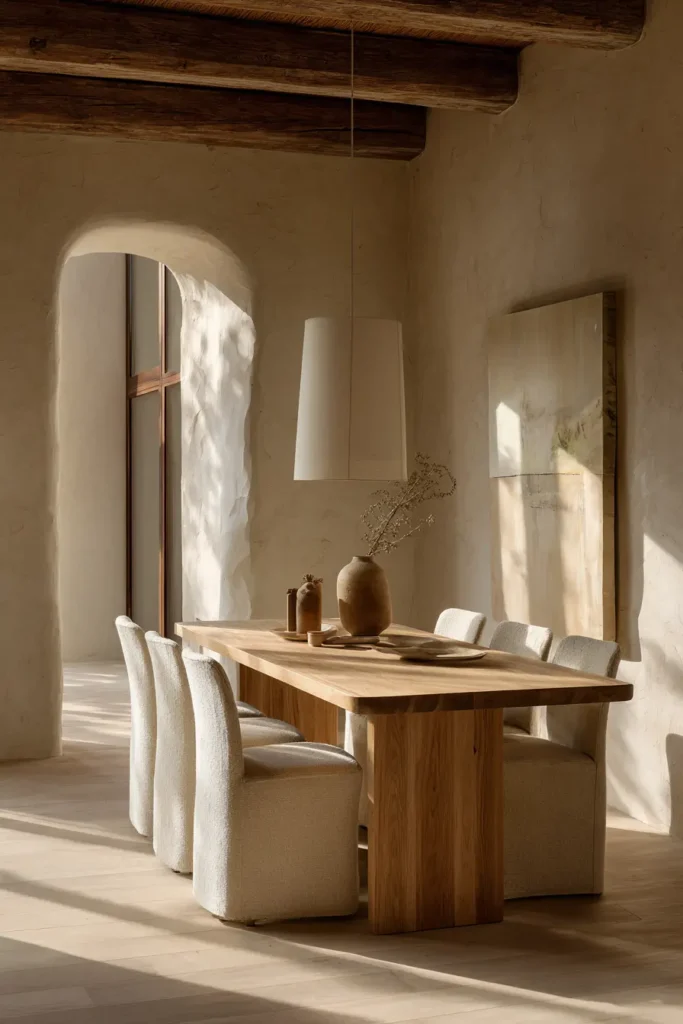
This dining area is rooted in warmth, texture, and material honesty. A solid wood table forms the heart of the space, its visible grain and natural variation adding depth without visual noise. Linen-upholstered seating softens the composition, while a palette of sand, clay, and warm beige creates a calm, grounding atmosphere.
What makes this style work so well is its balance. The materials feel substantial, yet never heavy. Everything is chosen to support long meals, daily use, and quiet moments around the table—without feeling styled or overly curated.
Why solid wood matters here
In Crafted Minimalism, a dining table is not just a surface—it’s an anchor. Solid wood brings visual warmth and physical presence, grounding the room and preventing it from feeling flat or transient. Unlike veneer or composite materials, solid wood ages visibly, developing character over time rather than wearing out.
For this space, tables with clearly visible grain patterns work best. They introduce subtle movement into an otherwise calm interior and connect the dining area to nature in a quiet, understated way.
Explore solid wood dining tables:
| Solid Wood Modern Dining Table | Check prices at Amazon! |
| Solid Oak Woo Dining Table | Check this item at Crate & Barrel |
Linen seating for softness and comfort
Linen-upholstered dining chairs add an essential layer of softness to this otherwise structured space. The slightly relaxed texture of linen prevents the room from feeling too formal, making the dining area more inviting and comfortable for everyday use.
Slipcovered designs are particularly well suited to Crafted Minimalism. They emphasize ease and practicality while still feeling refined. Their understated appearance allows the material itself to take center stage, rather than the silhouette or detailing.
For a deeper look at why linen works so well in this context, Natural Fabrics for Crafted Minimalist Furniture covers the full picture.
Calm lighting with a sculptural presence
Lighting plays a quiet but essential role in this dining space. A simple cone-shaped pendant introduces gentle structure without overpowering the room. Its clean form complements the organic textures below, while focused, warm light creates an intimate dining atmosphere.
In Crafted Minimalist interiors, lighting should feel functional first and decorative second. Sculptural simplicity allows the materials and proportions to speak, rather than drawing attention to the fixture itself.
For a broader look at how lighting shapes the atmosphere of a crafted minimalist space, How Light Shapes Crafted Minimalism is worth reading alongside this.
2. Sculptural Minimal Dining with Soft Contrast
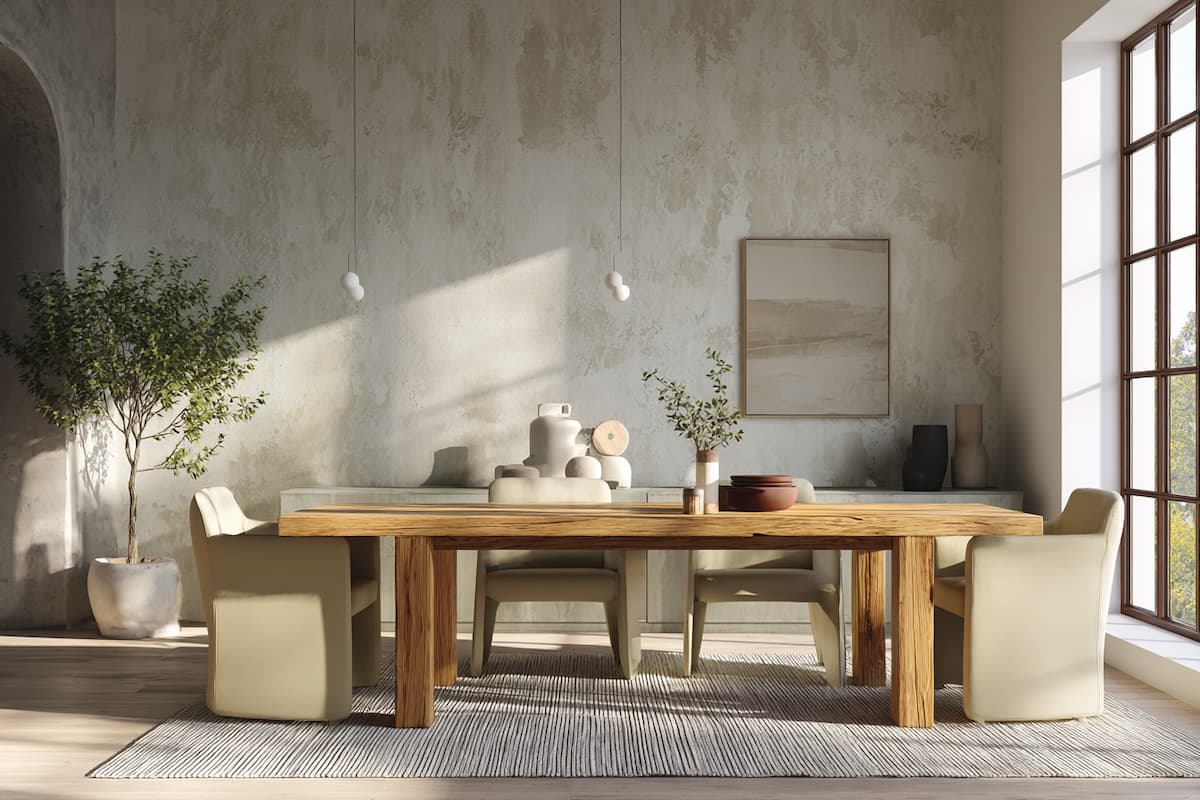
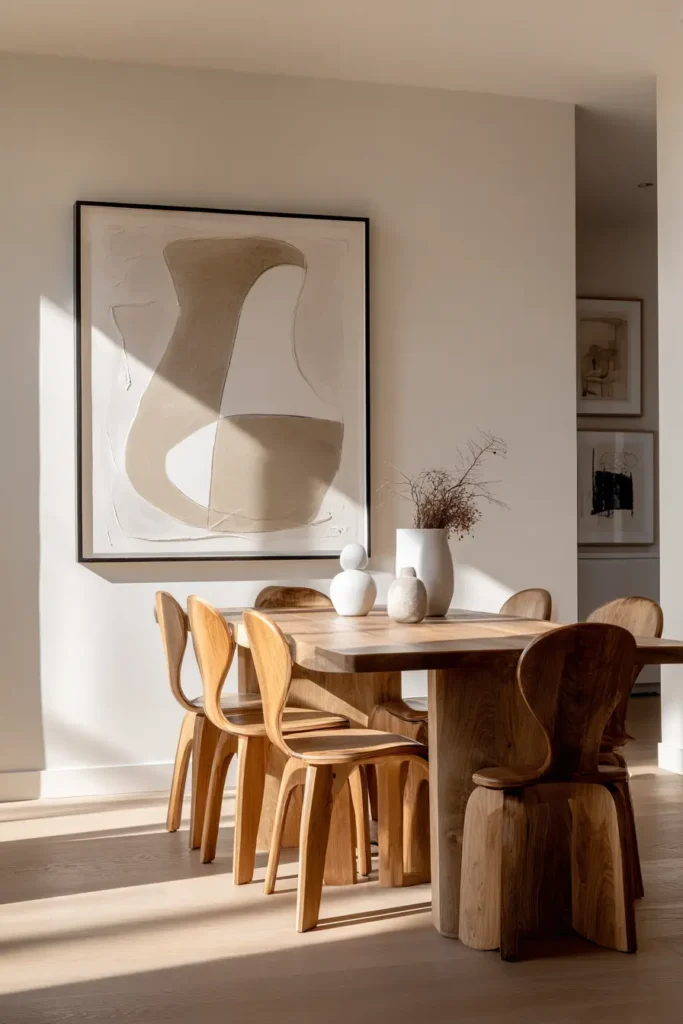
This dining space leans slightly more expressive while staying true to the restraint of Crafted Minimalism. Sculptural forms, rounded edges, and carefully balanced contrasts replace decorative elements, allowing shape and proportion to create visual interest.
Rather than relying on bold color or ornament, this style introduces tension through material pairing—light oak against textured stone, smooth surfaces beside subtle relief. The result is a dining area that feels contemporary yet grounded, expressive without becoming cold or overly styled.

Why sculptural forms work in crafted minimalist dining spaces
In a minimalist dining area, furniture shapes play a much larger role than decorative objects. Rounded edges and sculptural silhouettes soften the room visually, creating a sense of flow and movement. This is especially important in dining spaces, where people gather, move around the table, and spend extended time.
Curved forms also prevent modern interiors from feeling rigid. They introduce quiet dynamism while remaining understated, supporting the calm, balanced atmosphere that defines Crafted Minimalism.
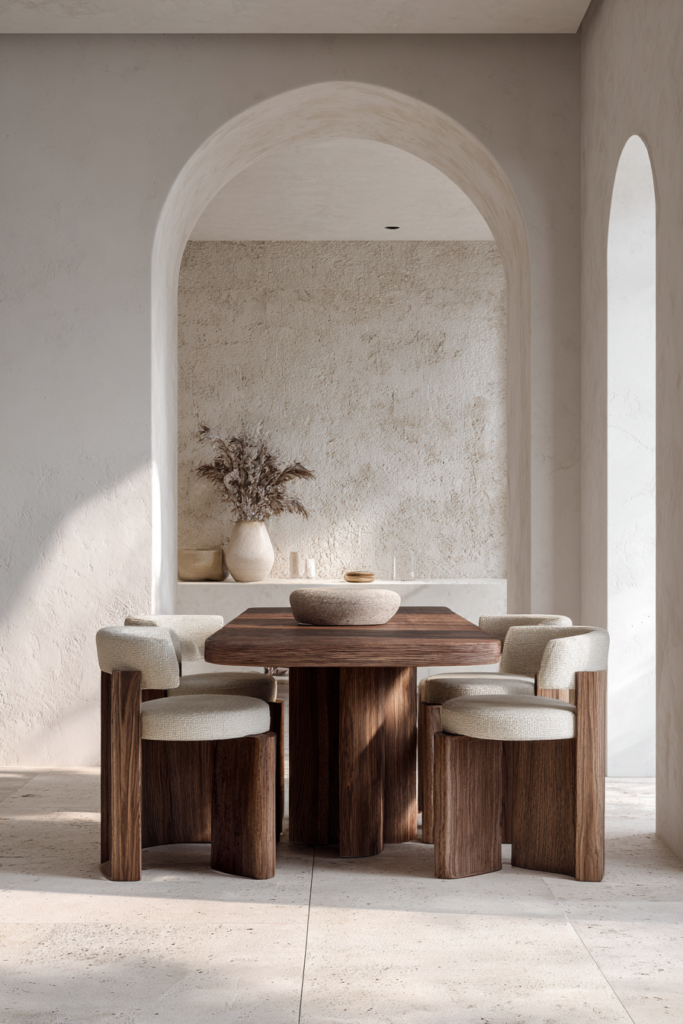
A round oak table as the visual anchor
A round dining table naturally encourages connection and movement, making it an ideal choice for this style. The pedestal base keeps the silhouette clean and sculptural, while solid oak adds warmth and material depth.
In Crafted Minimalism, wood with visible grain is preferred over overly processed finishes. It introduces subtle variation and ensures the table feels tactile rather than purely graphic. Rounded edges further enhance the softness of the space, allowing the form to stand out without overpowering the room.
Explore sculptural oak dining tables on Daal
Ceramic accents for balance and calm
Ceramic objects play a quiet but essential role in this dining space. A large white ceramic vase adds volume without visual heaviness, balancing the sculptural furniture while maintaining a neutral palette.
In minimalist interiors, ceramics help bridge the gap between structure and softness. Their slightly imperfect surfaces catch light gently, preventing the space from feeling flat or sterile. Placed sparingly, they act as anchors rather than decoration.
For a deeper understanding of how ceramics earn their role in a minimal interior, see Ceramics as Statement Pieces.
Textured wall art as subtle expression
Instead of framed prints or graphic artwork, this style benefits from texture-based wall elements. Three-dimensional wall art introduces depth and shadow without introducing color or visual clutter.
These tactile surfaces support the sculptural theme of the space, reinforcing the idea that interest comes from form and material rather than ornament. When used thoughtfully, textured wall art becomes part of the architecture rather than a separate decorative layer.
Explore textured wall art options
Stone surfaces to ground the space
Natural stone adds weight and permanence to an otherwise light, sculptural interior. Splitface limestone wall cladding introduces organic texture and subtle tonal variation, grounding the space without overwhelming it.
Stone works particularly well in dining areas where durability and material honesty are key. Its irregular surface contrasts beautifully with smooth wood and ceramic elements, reinforcing the crafted, intentional nature of the design.
Discover natural stone wall cladding options.
Style summary
Sculptural Minimal Dining with Soft Contrast is defined by form-driven design and thoughtful material pairing. Rounded furniture, tactile surfaces, and subtle contrasts replace decorative excess, creating a dining space that feels modern, calm, and quietly expressive.
3. Japandi-Inspired Dining Calm
This dining area draws from the quiet restraint of Japanese interiors and the warmth of Scandinavian design. Clean lines, low-backed seating, and a muted palette of warm gray, oak, and soft off-white create a space that feels composed and deeply calming.
Japandi-inspired dining rooms are not about visual statements but about balance. Every element feels deliberate, with nothing competing for attention. This makes the style especially well suited for smaller dining areas or open-plan homes, where visual calm is essential.

Low-profile seating for visual lightness
Low-backed dining chairs help keep the space visually open and uncluttered. Their understated silhouettes allow the dining table and surrounding materials to take center stage, supporting the calm, grounded atmosphere that defines Japandi interiors.
Oak is an ideal choice here, offering warmth without heaviness. Its natural grain adds quiet texture, while the clean form ensures the chair blends seamlessly into the overall composition rather than standing out as a focal point.
Find similar oak side chairs here.

Soft, diffused lighting with a handcrafted feel
Lighting in Japandi dining spaces should feel gentle and unobtrusive. A wabi-sabi-inspired pendant light introduces softness through its organic form and diffused glow, creating an intimate atmosphere around the table.
Rather than crisp, directional lighting, this style benefits from fixtures that blur edges slightly and create a sense of warmth. Handcrafted or irregular finishes reinforce the philosophy of embracing imperfection and natural variation.
Ceramic accents for subtle contrast
Ceramic objects are essential in Japandi interiors, where contrast is introduced through texture rather than color. A black ceramic vase adds gentle visual weight, anchoring the dining space without disrupting its calm palette.
Paired with a more rustic ceramic piece, the contrast between refined and raw surfaces becomes part of the composition. These small variations add depth and interest while remaining understated and intentional.
Wall color as a quiet foundation
Wall finishes play a crucial role in Japandi dining spaces. Soft, mineral-based tones create a backdrop that feels calm and breathable, allowing furniture and materials to stand out gently rather than sharply.
A warm gray with subtle undertones supports both the Japanese and Scandinavian influences of this style. Limewash or textured paint finishes enhance depth without introducing visual noise, reinforcing the handcrafted, organic feel of the space.
Explore wall paint color options.
Style summary
Japandi-Inspired Dining Calm is defined by restraint, balance, and material harmony. Low-profile furniture, soft lighting, and subtle ceramic accents create a dining space that feels intentional, serene, and perfectly suited for everyday living.
4. Textured Plaster Dining with Wall Art
This dining area centers on texture rather than form or contrast. Soft plaster walls create a calm, enveloping backdrop, while a single abstract artwork anchors the space without overwhelming it. The result is a dining room that feels tactile, grounded, and quietly expressive.
Rather than relying on multiple decorative elements, this style uses restraint. Each material is chosen for how it interacts with light and surface, allowing subtle variation to bring depth and warmth to the space. It’s an approach that works especially well in dining areas that benefit from a gentle focal point.
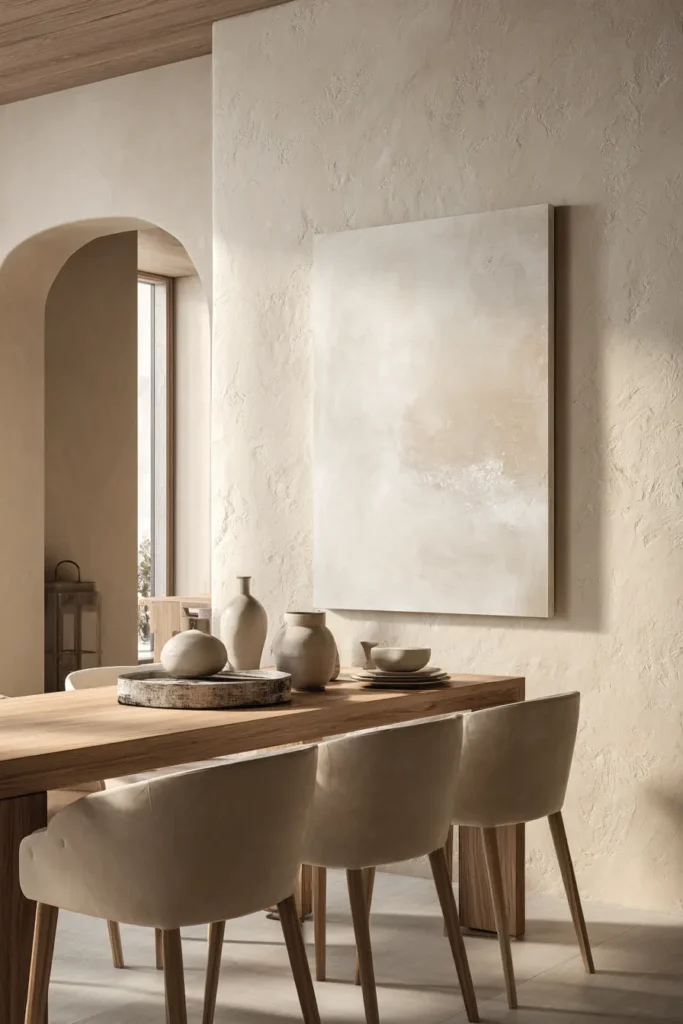
A solid oak table as a grounding element
In a textured plaster setting, furniture needs enough presence to balance the softness of the walls. A solid oak dining table provides that grounding weight, introducing natural grain and structure without disrupting the calm atmosphere.
Solid wood tables age gracefully and develop character over time, making them well suited to crafted minimalist interiors. Their material honesty complements plaster finishes, reinforcing the tactile dialogue between surfaces.
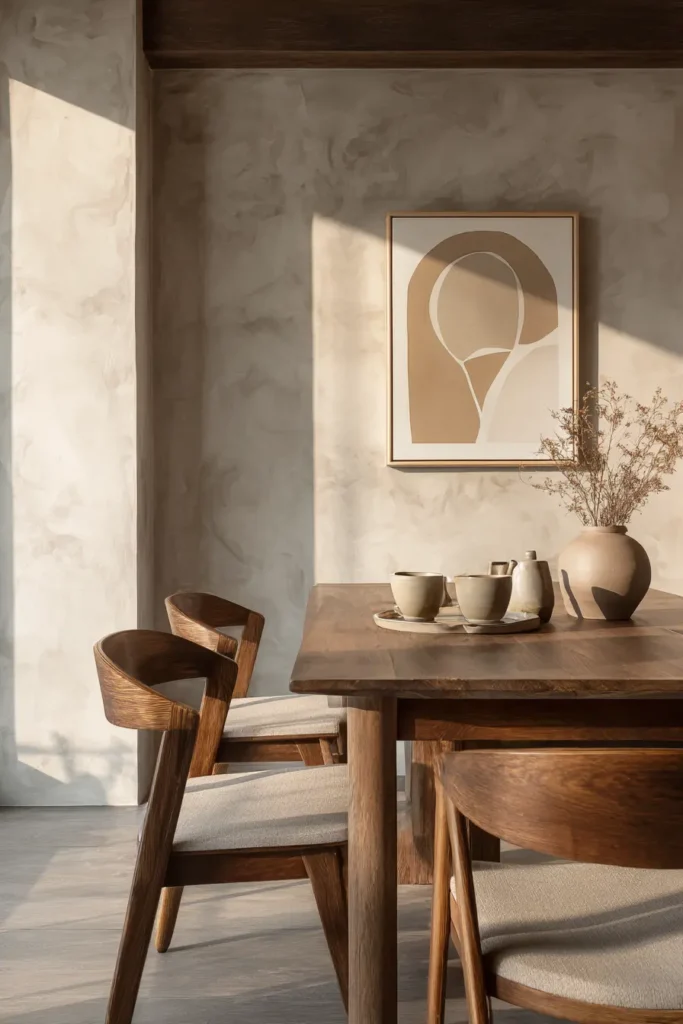
Iconic seating with natural materials
The Wishbone chair brings lightness and craftsmanship to the dining space. Its woven seat introduces texture without visual heaviness, while the curved backrest echoes the soft, organic lines of the plaster walls.
In this context, the chair functions as both seating and subtle design element. Its timeless form ensures it doesn’t compete with the wall art, instead supporting the overall harmony of the room.
Abstract wall art as a quiet focal point
A single abstract artwork is enough to anchor this dining space. Tonal, minimalist prints with subtle texture complement plaster walls by echoing their imperfect surfaces rather than introducing contrast.
In Crafted Minimalism, wall art should feel integrated rather than applied. Soft, neutral compositions allow the piece to exist as part of the architecture, creating focus without visual noise.
Explore abstract wall art options
Stone accents for tactile balance
Small stone objects, such as travertine bowls, add another layer of texture to the space. Their weight and natural irregularities contrast gently with the softness of plaster and the warmth of wood.
Used sparingly, stone accessories reinforce the crafted feel of the interior without tipping into decoration. They work particularly well as functional accents on dining tables or sideboards.
Wall color to enhance depth and warmth
The right wall color amplifies the effect of textured finishes. Mineral-based paint tones with subtle warmth help plaster surfaces catch light softly, enhancing depth rather than flattening the room.
Soft, Mediterranean-inspired hues create a calm foundation that supports both natural materials and artwork, allowing the dining area to feel cohesive and intentional.
Explore wall paint color options.
Natural flooring as a unifying base
Wide plank wooden floors provide continuity and balance in this dining space. Their natural patterning grounds the room and ties together plaster walls, wood furniture, and stone accents.
Choosing solid plank flooring reinforces the long-term, material-focused philosophy behind Crafted Minimalism, ensuring the space feels cohesive from floor to ceiling.
Discover solid plank flooring options
Style summary
Textured Plaster Dining with Wall Art is defined by material depth and thoughtful restraint. Soft plaster walls, natural wood, stone accents, and a single abstract artwork create a dining space that feels calm, grounded, and quietly expressive.
5. Rustic Modern Dining with Natural Patina
This dining space embraces imperfection as a design feature. Rustic Modern Dining balances clean, contemporary lines with materials that show age, texture, and patina. Reclaimed wood, handmade ceramics, and lime-based wall finishes create a room that feels grounded, authentic, and quietly expressive.
Rather than polished perfection, this style celebrates surfaces that tell a story. Subtle variations in tone and texture add warmth and depth, making the dining area feel lived-in rather than styled—an essential quality in Crafted Minimalism.
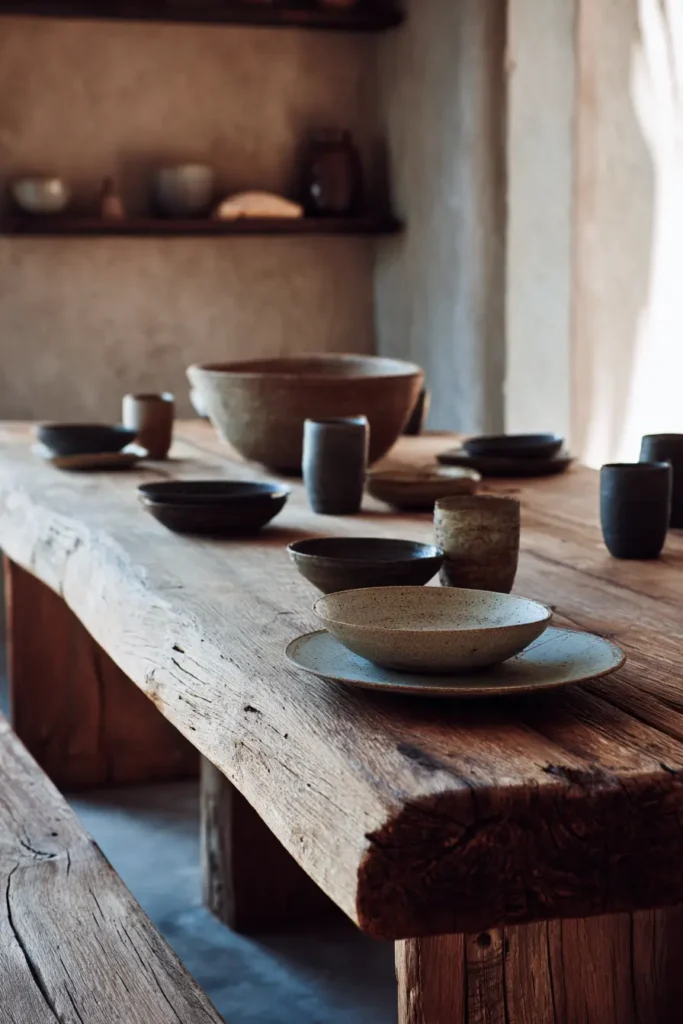
Reclaimed wood as the heart of the space
A rustic wooden dining table anchors the room, introducing visual weight and natural character. Reclaimed or distressed wood brings history into the space, with visible marks and grain variations that prevent the interior from feeling too refined or sterile.
In this context, the table doesn’t compete with other elements—it grounds them. Its imperfect surface becomes a counterpoint to the simplicity of the overall design, reinforcing the idea that minimalism can still feel soulful and warm.
Explore rustic wooden dining tables
Stoneware with tactile detail
Stoneware tableware adds another layer of texture without disrupting the calm palette. Debossed surfaces introduce subtle shadow and relief, creating interest that feels natural rather than decorative.
These pieces work especially well in Rustic Modern interiors because they bridge the gap between refined and raw. Their tactile quality invites everyday use, reinforcing the idea that beautiful objects should also be functional.
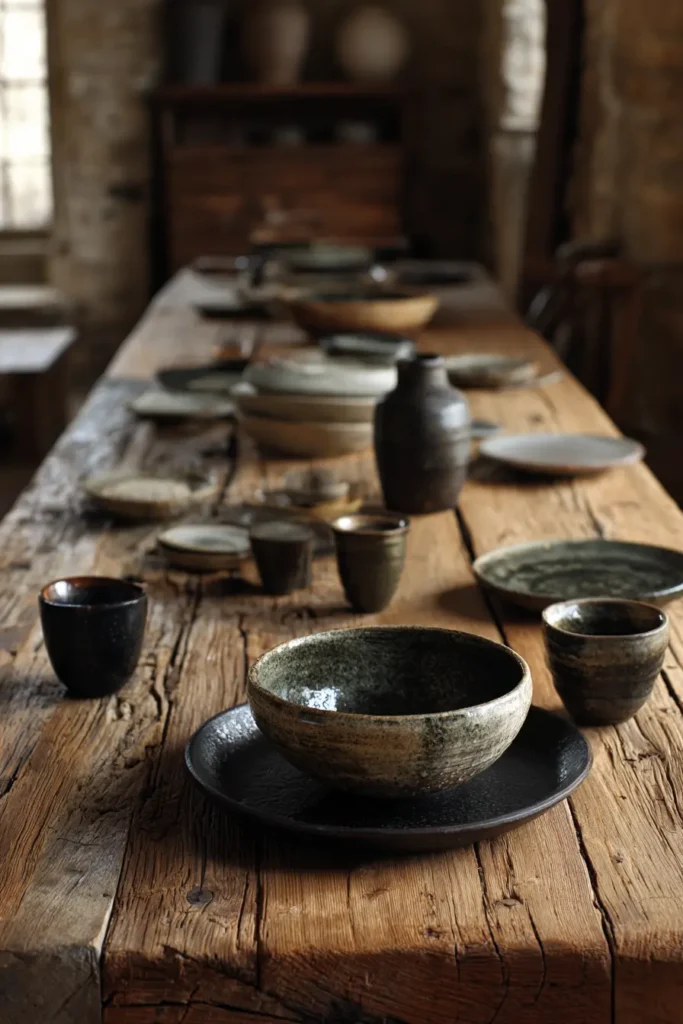
Handmade ceramics for everyday rituals
Handmade ceramic mugs bring intimacy and warmth to the dining experience. Slight differences in shape, glaze, and finish highlight the human touch behind each piece, aligning perfectly with the philosophy of Crafted Minimalism.
Rather than matching sets, this style benefits from gentle variation. A collection of similar—but not identical—mugs adds visual interest while reinforcing the sense of authenticity and ease.
Lime plaster walls for depth and softness
Wall finishes play a crucial role in Rustic Modern dining spaces. Lime plaster introduces depth through its natural, breathable surface, softening the room and enhancing the tactile quality of the materials within it.
Unlike flat paint, lime plaster reflects light unevenly, adding movement and warmth. This makes it an ideal backdrop for rustic wood and ceramic elements, tying the space together without the need for additional decoration.
Discover lime plaster wall finishes
Style summary
Rustic Modern Dining with Natural Patina celebrates material honesty and lived-in beauty. Reclaimed wood, tactile ceramics, and lime plaster walls create a dining space that feels grounded, soulful, and effortlessly calm—proof that minimalism doesn’t have to feel pristine to be intentional.
6. Soft Color Minimal Dining
Crafted Minimalism doesn’t have to rely solely on neutrals. In this dining space, soft, desaturated colors introduce personality without disrupting the calm foundation of the interior. Muted sage, dusty blue, or clay pink appear in small, intentional ways—through seating, ceramics, or subtle wall tones.
The key to this style lies in restraint. Color is treated as a material rather than a statement, adding warmth and depth while maintaining the quiet, composed atmosphere that defines Crafted Minimalism.
Also read: Crafted Minimalism Design Principles
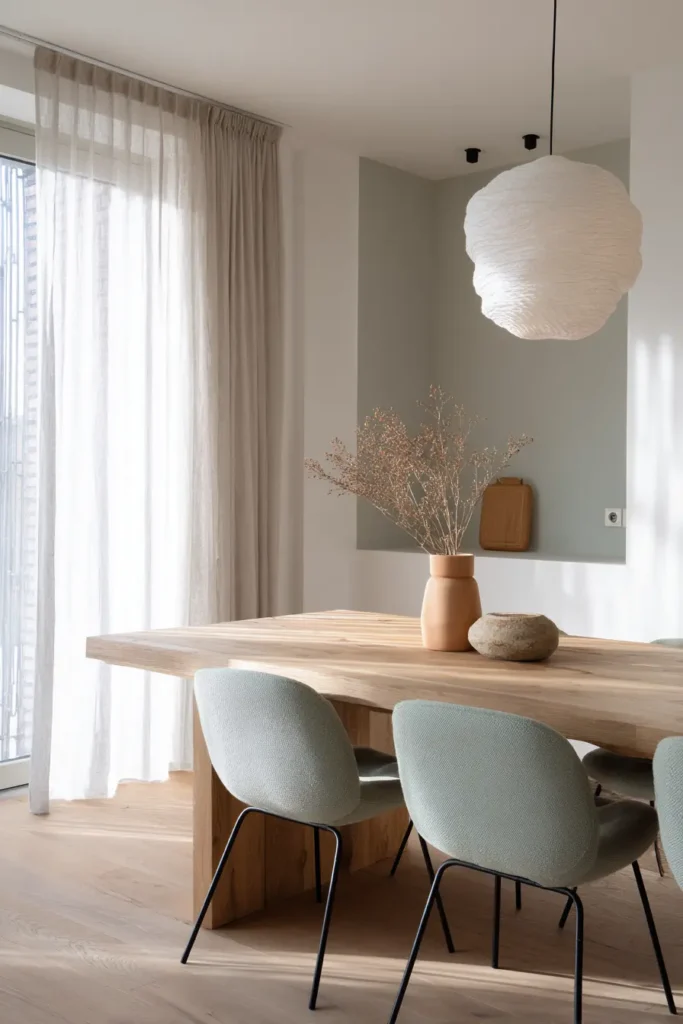
A sculptural table as a neutral anchor
When introducing color, it’s important to ground the space with a strong, neutral foundation. A slab-style dining table does exactly that. Its clean lines and solid presence create visual stability, allowing softer hues around it to feel intentional rather than distracting.
The simplicity of the table’s form ensures it works as a long-term anchor, supporting changing accents or seasonal color shifts without overwhelming the room.
Soft-toned seating for gentle expression
Dining chairs are an ideal place to introduce color in a minimalist interior. Subtle hues applied to clean, sculptural forms add character while keeping the overall look calm and cohesive.
Molded seating with soft curves reinforces comfort and approachability, while desaturated tones ensure the chairs blend harmoniously with natural wood and neutral surfaces.

Ceramic accents to echo color softly
A terracotta vase introduces warmth and earthiness, echoing soft color tones without becoming a focal point. Its natural texture and muted finish help integrate color into the space organically.
In Crafted Minimalism, ceramic accents work best when they feel purposeful and restrained—supporting the palette rather than defining it.
Explore terracotta ceramic accents
Textiles that soften light and tone
Sheer linen curtains help diffuse natural light, softening both shadows and color transitions within the dining space. Their subtle texture adds depth while maintaining visual lightness.
In soft color interiors, textiles play a crucial role in balancing tone and atmosphere. Linen’s natural irregularity complements muted hues and reinforces the handcrafted feel of the space.
Flooring to unify the palette
Light, brushed oak flooring provides continuity and balance in a softly colored dining area. Its pale tone grounds the space without competing with color accents, allowing the palette to feel cohesive rather than fragmented.
Natural wood floors also enhance the warmth of muted colors, ensuring the dining area remains inviting and calm.
Discover brushed oak flooring options
Style summary
Soft Color Minimal Dining demonstrates how gentle hues can coexist with Crafted Minimalism. Through restrained use of color, sculptural forms, and natural materials, this dining space feels calm, personal, and quietly expressive.
7. Gallery-Style Dining with Statement Wall Art
In this dining space, restraint is key. Furniture and finishes are kept intentionally simple so a single piece of statement wall art can take center stage. Rather than feeling decorative, the artwork becomes part of the architecture—adding depth, texture, and personality without visual clutter.
This approach works particularly well in dining rooms that double as social spaces. The art becomes a conversation starter, while the surrounding materials quietly support it, creating a space that feels expressive yet composed.
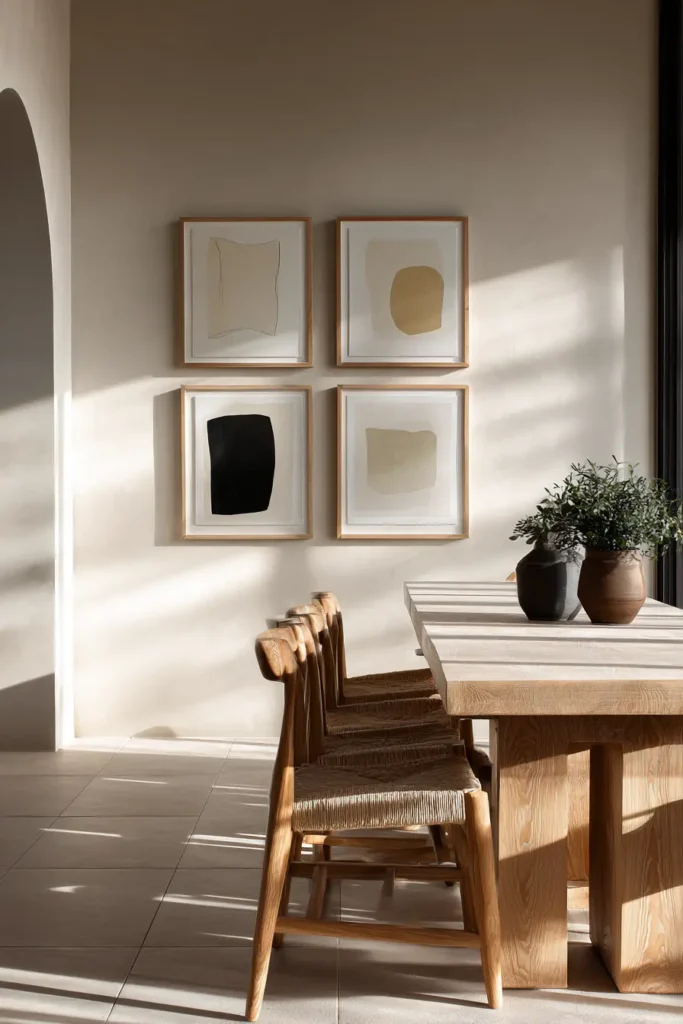
A simple table to support visual balance
When wall art takes the lead, furniture should feel grounded and understated. A farmhouse-style dining table offers exactly that—solid, honest, and visually calm.
Its straightforward construction provides enough presence to anchor the room without competing with the artwork. Natural wood tones and subtle imperfections reinforce the crafted aesthetic, ensuring the table feels authentic rather than ornamental.
Ceramic accents with sculptural weight
A rustic ceramic vase introduces a sculptural element that complements the wall art without drawing attention away from it. Its tactile surface and organic form echo the handcrafted qualities of the artwork, reinforcing material continuity throughout the space.
Placed thoughtfully, ceramic accents add depth at table height, balancing the visual weight of art on the wall.
Flooring that stays visually quiet
Microcement flooring provides a seamless, neutral base that allows art and furniture to stand out. Its subtle texture adds interest underfoot while maintaining a calm, uninterrupted surface across the dining area.
This type of flooring works especially well in gallery-style spaces, where visual flow and material restraint are essential.
Clay-based wall finishes for depth
Clay plaster finishes enhance the gallery effect by adding softness and tonal variation to the walls. Unlike flat paint, these finishes interact with light and shadow, giving the artwork a richer backdrop without distraction.
Warm, mineral-based tones help the art feel integrated rather than applied, reinforcing the idea that walls are part of the design, not just a surface.
Statement wall art as the focal point
The defining element of this dining space is a carefully chosen set of abstract art prints. Tonal compositions and tactile details ensure the artwork feels cohesive with the surrounding materials rather than overpowering them.
In Crafted Minimalism, statement art should feel intentional and grounded—adding character through texture, scale, and composition rather than bold color or excessive contrast.
Style summary
Gallery-Style Dining with Statement Wall Art balances simplicity and expression. By pairing restrained furniture and finishes with a single, thoughtfully chosen artwork, the dining space feels curated, social, and quietly confident.
8. Compact Crafted Dining for Small Spaces
Designed for apartments and smaller homes, this dining area shows that Crafted Minimalism works beautifully at any scale. By focusing on proportion, light-reflective materials, and functional forms, the space remains open and airy without sacrificing character.
Rather than adding more elements, this style refines what’s essential. Every piece earns its place—nothing feels extra, decorative, or oversized. The result is a dining space that feels intentional, calm, and perfectly suited to everyday living in compact interiors.
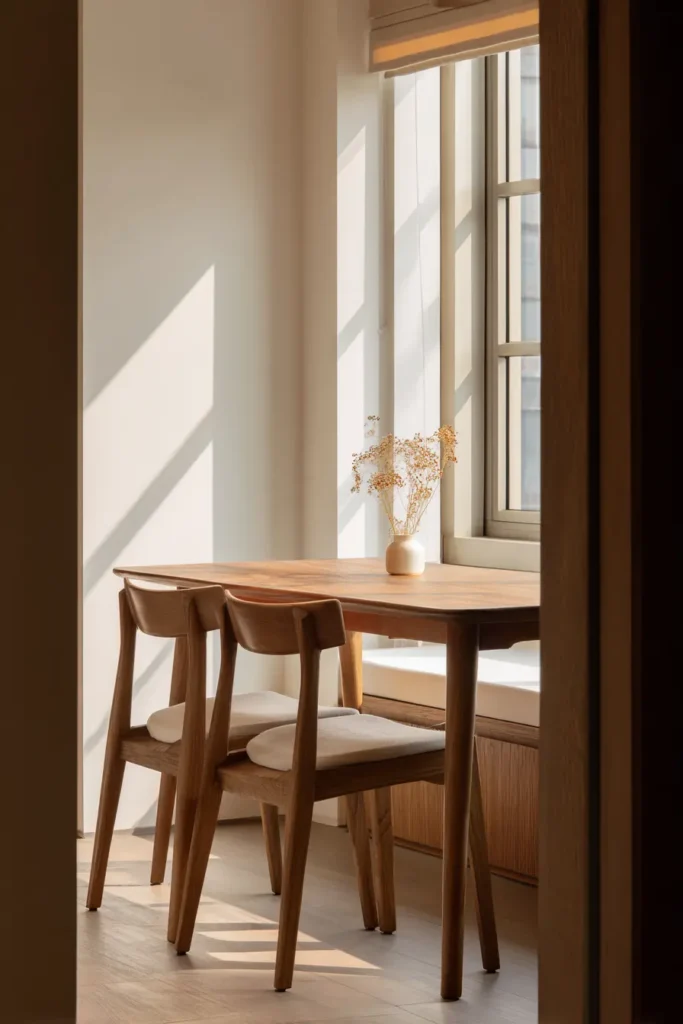
Slim-profile seating to preserve openness
In small dining areas, visual lightness is key. Chairs with slim profiles and open silhouettes prevent the space from feeling crowded, allowing light to move freely around the table.
Oak dining chairs offer warmth without heaviness, while clean lines keep the overall look calm and cohesive. Their simplicity ensures they support the space rather than dominate it.
A compact table with clear geometry
A rectangular dining table works particularly well in smaller spaces, as it can be positioned efficiently against walls or within open-plan layouts. Clean lines and modest proportions help maintain balance, ensuring the table feels practical rather than imposing.
In Crafted Minimalism, compact furniture should still feel substantial. Solid materials and simple geometry ensure the table anchors the space without overwhelming it.
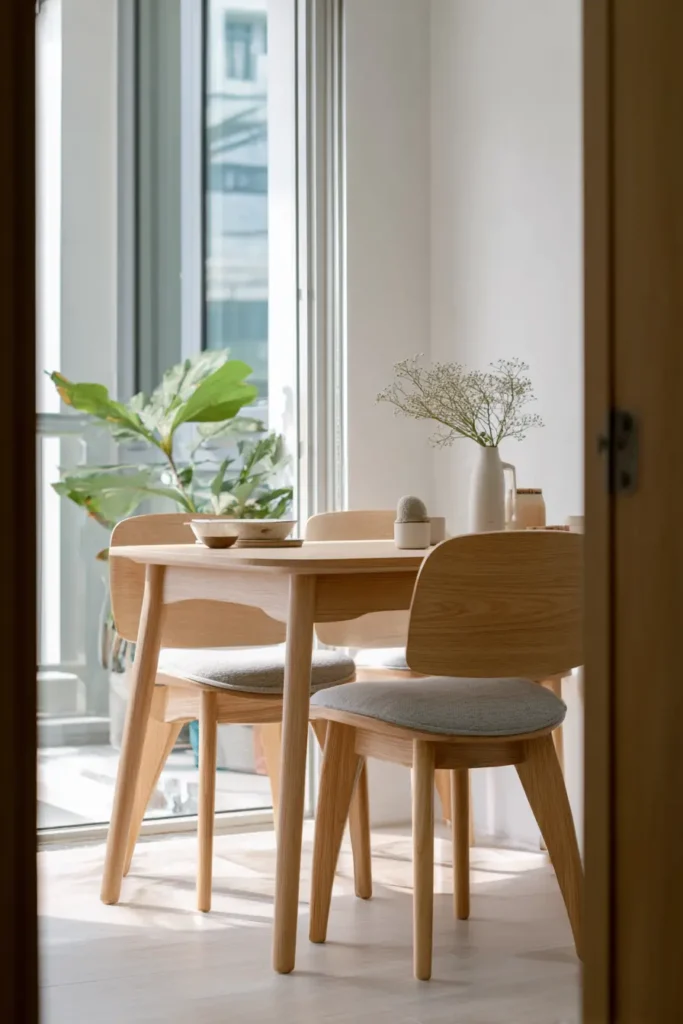
Flooring that reflects light and continuity
Light-toned oak flooring enhances the sense of space by reflecting natural light and visually extending the room. Prefinished solid hardwood provides durability while maintaining the warmth and material honesty central to Crafted Minimalism.
Consistent flooring helps small dining areas feel connected to the rest of the home, reducing visual breaks and creating a sense of flow.
Discover light oak hardwood flooring
Japandi-inspired seating for versatility
Japandi-style dining chairs are especially well suited to compact spaces. Their restrained forms, natural materials, and low visual weight make them easy to integrate without clutter.
These chairs balance comfort and simplicity, supporting everyday use while reinforcing the calm, intentional feel of the dining area.
Style summary
Compact Crafted Dining for Small Spaces proves that minimalism doesn’t require scale to feel complete. Through thoughtful proportions, light materials, and purposeful choices, even the smallest dining areas can feel calm, functional, and beautifully crafted.
Final Thought
A Crafted Minimalism dining area is never about perfection—it’s about balance, material honesty, and creating a space that feels good to spend time in. Whether you lean toward earthy neutrals, subtle color, or quiet statement pieces, these styles offer a foundation you can build on and easily shop to match your own home.