How Light Shapes Crafted Minimalism (and Why It’s Never Just Decorative)
In Crafted Minimalism, light is not an afterthought. It is not something you “add” once the furniture is in place or the walls are painted. Light functions as an invisible material — one that shapes how space is perceived, how objects relate to each other, and how calm a room actually feels.
Unlike decorative styles where lighting is used to attract attention, Crafted Minimalism treats light as a quiet force. It reveals texture instead of flattening it. It creates hierarchy without visual noise. A well-placed shadow can be just as intentional as a carefully chosen table or chair.
This is why lighting choices in this style are never purely functional or trend-driven. They are deliberate, restrained, and deeply connected to material, proportion, and atmosphere. In this article, we’ll look at how light actively shapes Crafted Minimalist interiors — and why selecting the right lighting objects matters just as much as choosing the furniture they illuminate.
Disclaimer: This post may contain affiliate links. That means if you click and purchase through one of these links, we may earn a small commission — at no extra cost to you. As an Etsy affiliate and Amazon Associate, I earn from qualifying purchases. We only recommend products we truly love or believe fit the style of our AI-generated designs.
Crafted Minimalism & Light: A Short Context
Crafted Minimalism is often misunderstood as a style of restraint alone — fewer objects, calmer colors, cleaner lines. But at its core, it is less about reduction and more about intention. Every element that remains is there for a reason, and light is one of the most defining ones.
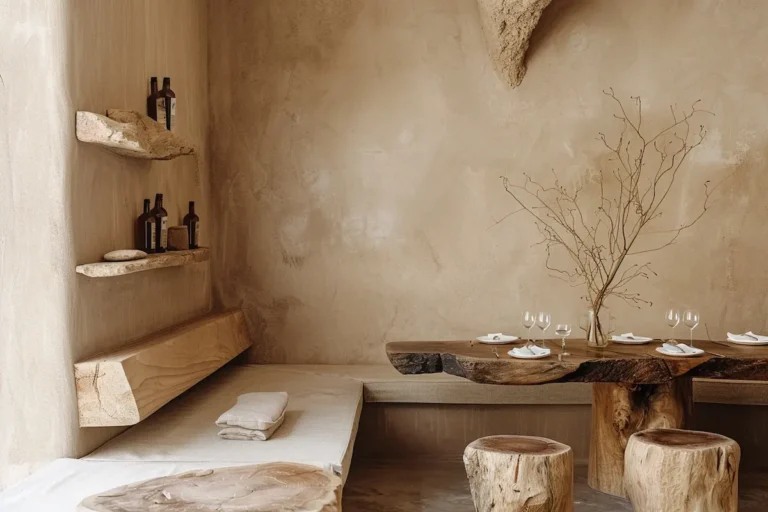
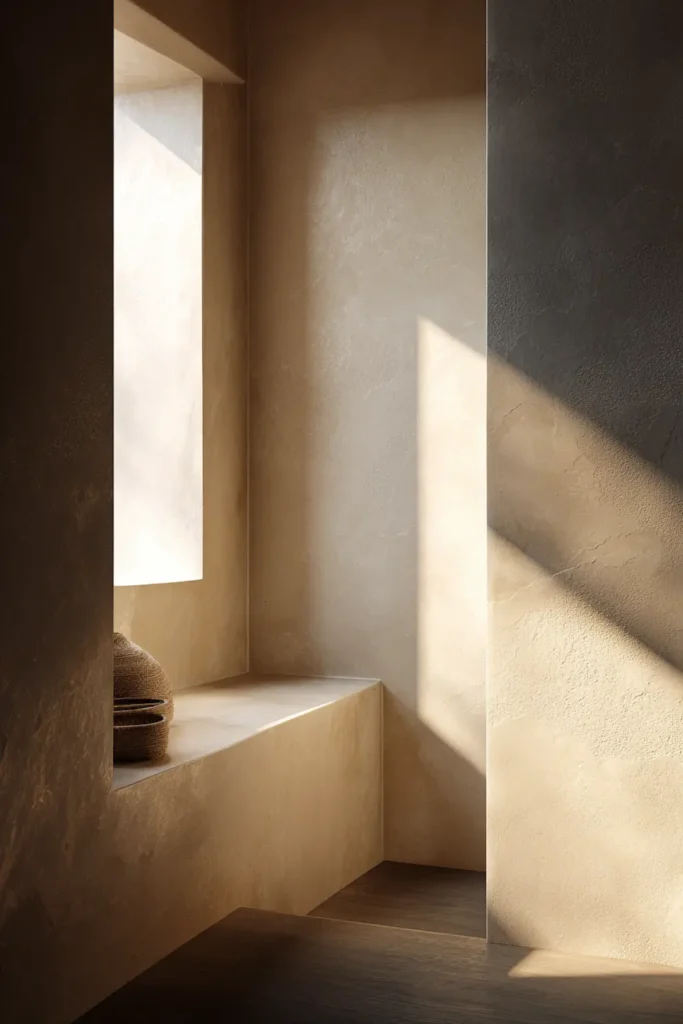
In this style, light is not used to brighten a room uniformly. Instead, it introduces hierarchy. Certain surfaces are allowed to recede, while others quietly come forward. Materials such as wood, stone, plaster, and linen only reveal their depth when light interacts with them at the right angle and intensity. Without this interaction, even the most beautiful materials can appear flat or lifeless.
That is why lighting in Crafted Minimalism is closely tied to material choices and spatial structure. It supports the architecture rather than competing with it. If you want a deeper understanding of the underlying principles — such as layering, temperature, and placement — the article Lighting in Crafted Minimalism explores these foundations in detail.
In this piece, we move one step further: translating those principles into tangible lighting choices that shape the atmosphere of a lived-in space.
Natural Light as the Starting Point
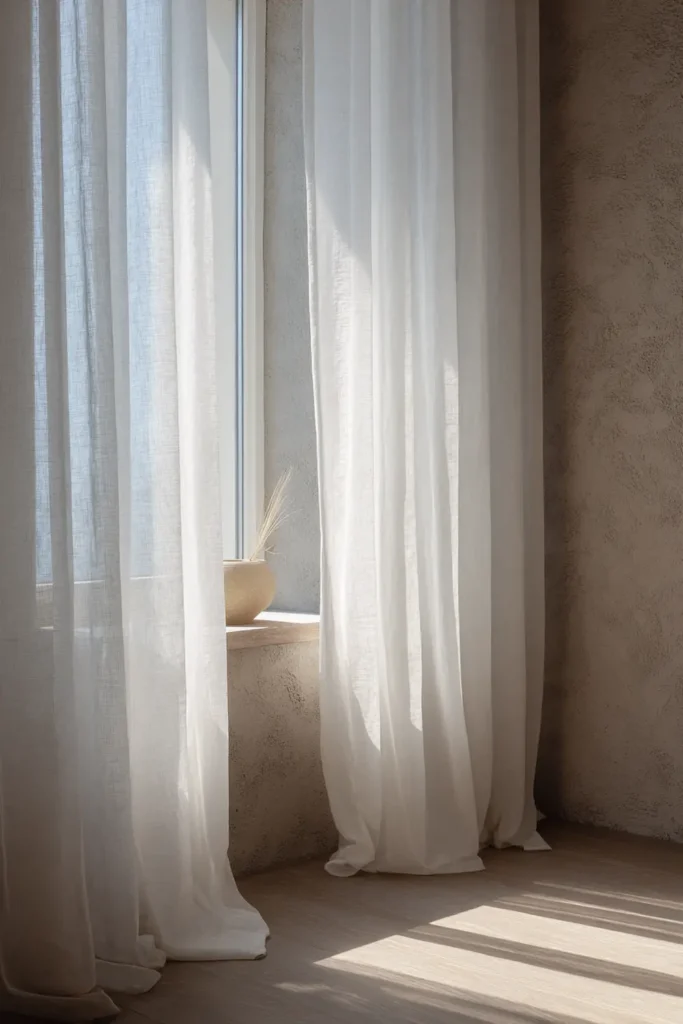
Before any lamp is chosen, Crafted Minimalism begins with observing how natural light moves through a space. Daylight is not treated as a fixed condition, but as a changing element that shifts throughout the day, creating different moods without adding a single object.
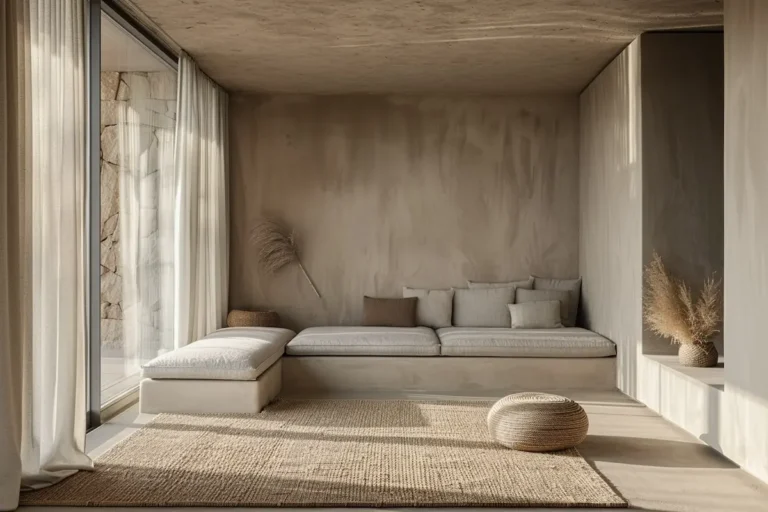
Rather than trying to maximize brightness, this style values direction and softness. Light filtered through linen curtains, reflected off plaster walls, or partially blocked by architectural elements creates depth instead of glare. Even in spaces with limited windows, natural light can be shaped by consciously choosing matte surfaces and warm-toned materials that absorb and diffuse rather than reflect harshly.
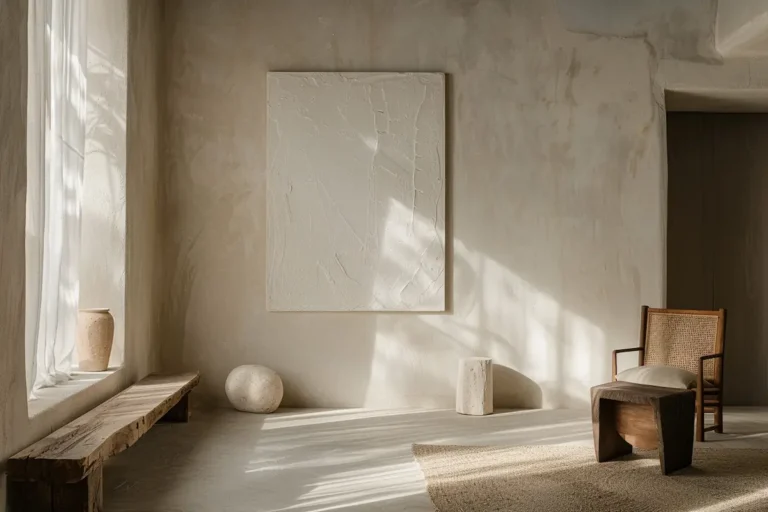
This approach also explains why Crafted Minimalism avoids uniform illumination. When daylight is allowed to create areas of light and shadow, the room gains rhythm. Certain zones feel grounded and intimate, while others remain open and calm. Furniture and objects are placed in response to these natural light patterns, not in spite of them.
Artificial lighting should never compete with daylight in this context. Instead, it extends the same logic into the evening: soft, directional, and restrained. When natural light is treated as the starting point, every lighting decision that follows becomes clearer — and more intentional.
Artificial Light: From Function to Presence

Once daylight fades, artificial light takes over — but in Crafted Minimalism, it does not aim to replace natural light. Instead, it mirrors its behavior. Light becomes directional, selective, and purposeful rather than evenly spread across the room.
This is where many interiors go wrong. Functional lighting often focuses solely on output: more lumens, wider coverage, brighter results. Crafted Minimalism takes the opposite approach. It asks what the light is meant to support. Is it highlighting a material? Anchoring a piece of furniture? Softening a transition between spaces?
Rather than hiding light sources or multiplying them, this style allows lighting objects to have presence. A lamp is not just a tool; it is a spatial element with weight, proportion, and texture. Its form matters even when it is turned off. Shadows cast by the lamp are considered part of the composition, not a byproduct.
This shift — from function to presence — is what makes lighting choices in Crafted Minimalism feel deliberate rather than decorative. The next step is translating this mindset into actual objects: lighting pieces chosen not because they fit a trend, but because they belong in this specific atmosphere.
Product 1 – Sculptural Pendant as a Visual Anchor
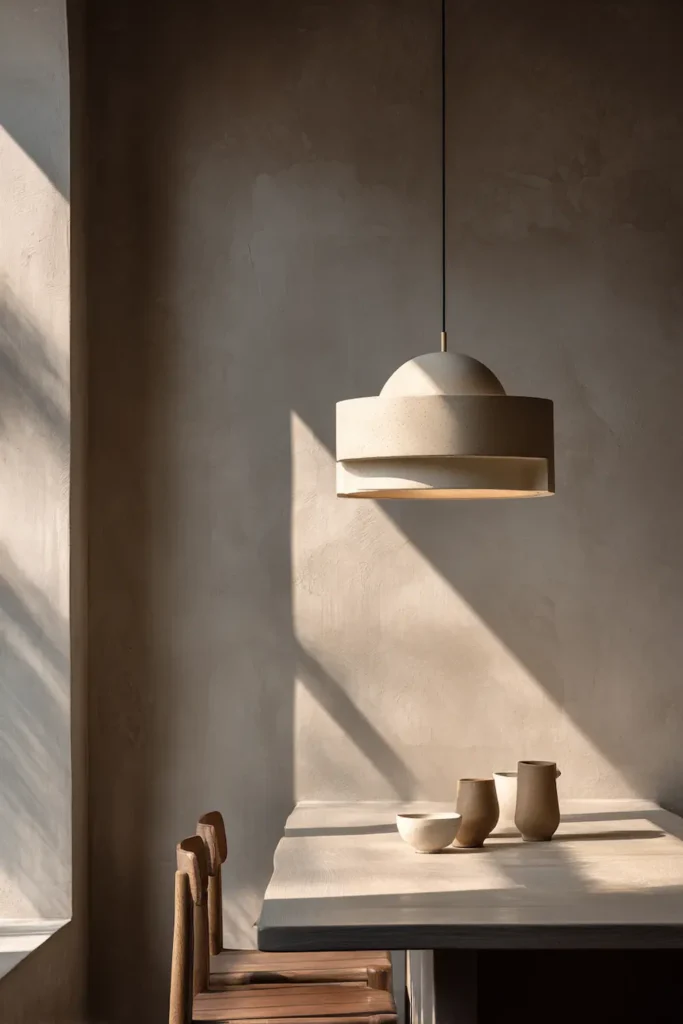
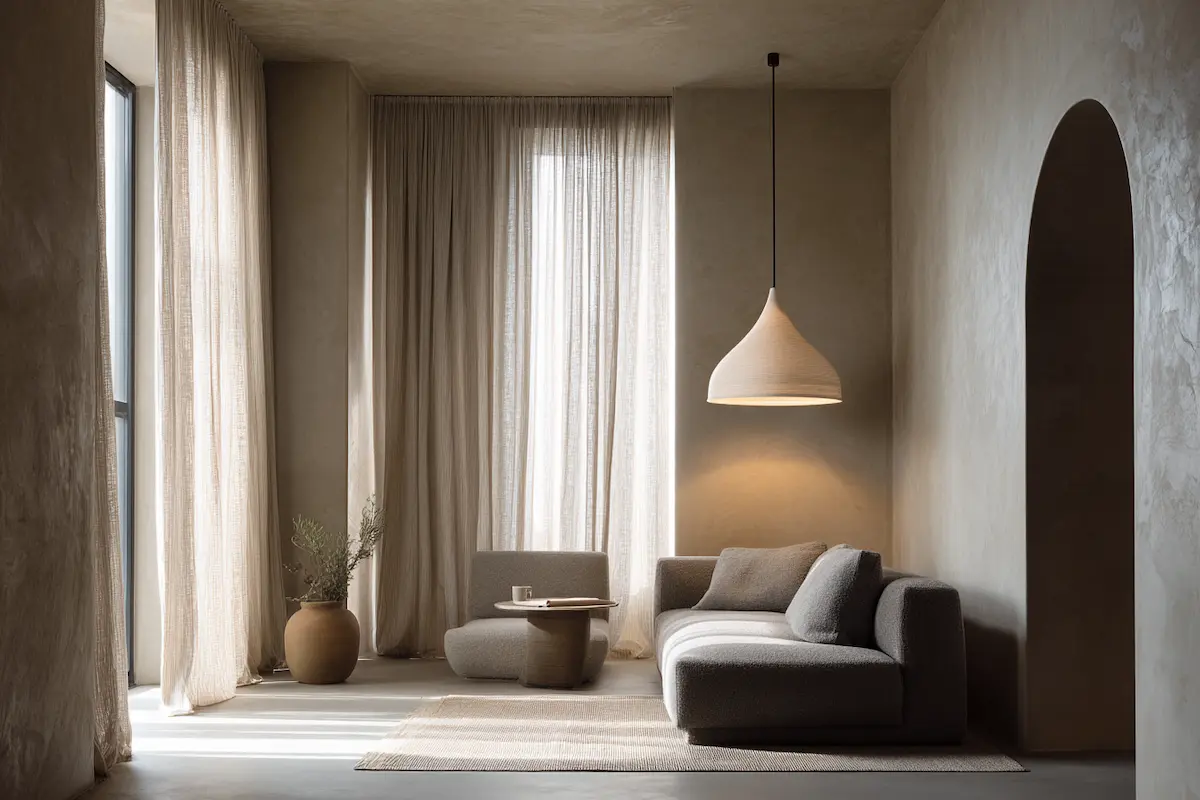
In Crafted Minimalism, a pendant light is rarely just a source of illumination. It often functions as the visual anchor of a space — the element that quietly holds everything together. This is especially true above a dining table, a low coffee table, or in an open living area where architectural boundaries are subtle rather than explicit.
What matters most here is not brightness, but presence. A sculptural pendant introduces weight without bulk. Its scale relates directly to the furniture beneath it, creating a clear vertical relationship that grounds the room. In this style, the lamp does not compete with the space; it stabilizes it.
When selecting a pendant for Crafted Minimalism, I deliberately look for pieces made from materials with depth — ceramic, plaster, hand-finished metal, or textured glass. These materials interact with light in an imperfect way, softening its output and creating gentle tonal variation. Smooth, overly polished finishes tend to feel too precise and can disrupt the calm balance this style relies on.
The pendant I selected for this atmosphere was chosen because it feels substantial even when turned off. Its form reads as an object first, light source second. When lit, it casts controlled, downward light that defines a zone without flooding the room. This makes it ideal for spaces where you want clarity, structure, and quiet visual confidence.
Product 2 – Table Lamp with Material Depth
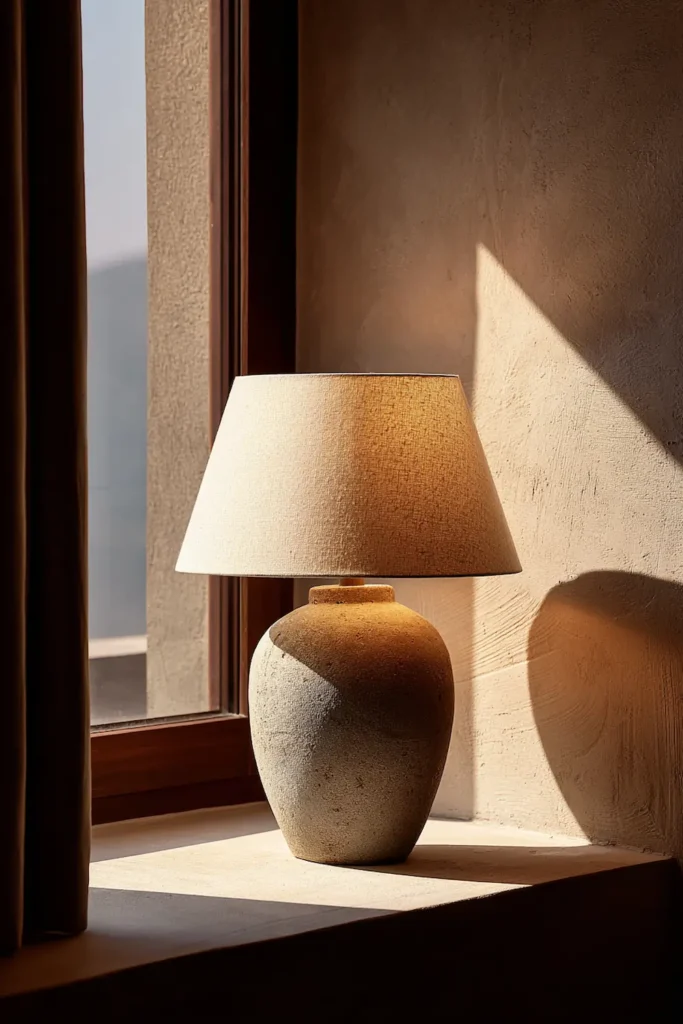
While pendant lights often define a space from above, table lamps operate closer to eye level — making them especially important for atmosphere. In Crafted Minimalism, a table lamp is never a filler object. It is a deliberate layer that adds warmth, depth, and intimacy, particularly in the evening hours.
I am drawn to table lamps made from tactile materials such as ceramic, stone, or hand-finished plaster. These surfaces absorb and diffuse light rather than reflecting it sharply, which helps maintain the softness this style depends on. The goal is not to brighten a corner, but to gently activate it. When light interacts with a textured base, it creates subtle variation instead of a flat glow.
The lamp I selected for this setting was chosen for its grounded presence. Its proportions feel calm and stable, avoiding slender or overly decorative silhouettes. Paired with a simple fabric shade in a warm, neutral tone, it produces a low, ambient light that feels restorative rather than stimulating.
This type of lamp works particularly well on a sideboard, console, or low shelf — places where you want to slow the space down. Instead of pulling attention, it quietly supports the room’s rhythm. In Crafted Minimalism, that restraint is precisely what makes the atmosphere feel intentional and lived-in.
If you’re looking for a table lamp that fits this approach effortlessly, the Aged Ceramic Table Lamp from Zara Home is a strong example of how material can do most of the work. Its subtly weathered ceramic base adds visual depth without decoration, while the neutral shade keeps the light soft and contained. It’s the kind of piece that blends into a Crafted Minimalist interior quietly — and feels intentional even when the lamp is switched off.
→ View the Aged Ceramic Table Lamp at Zara Home
Product 3 – Floor Lamp as Quiet Architecture
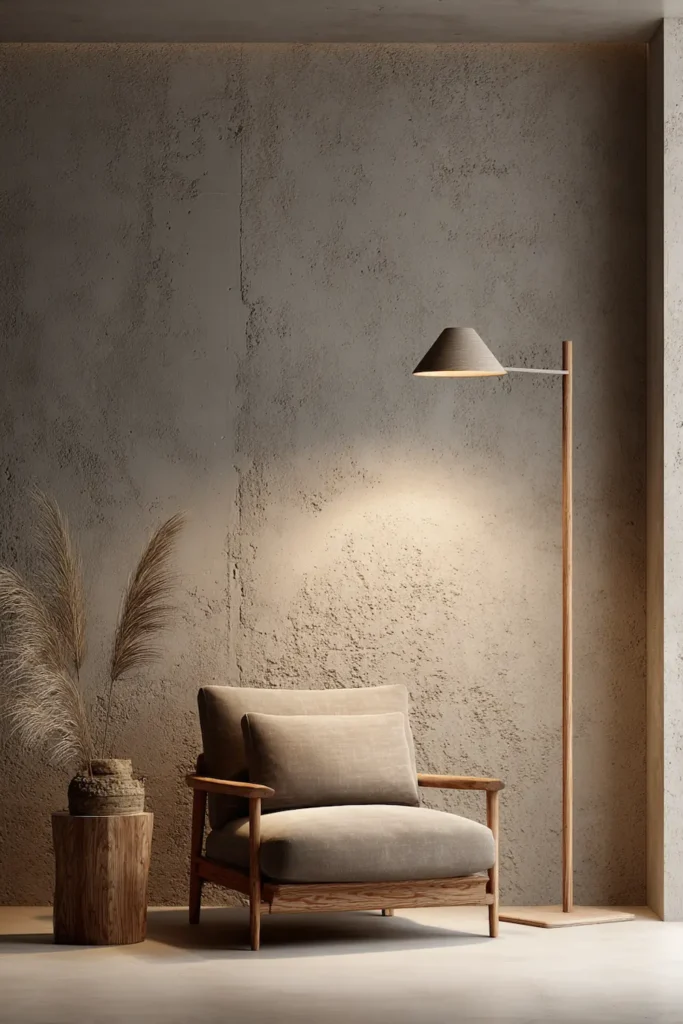
A floor lamp in Crafted Minimalism is rarely decorative and almost never discreet. Instead, it functions as a quiet architectural element — one that introduces vertical structure without adding visual weight. Where pendants define zones from above and table lamps soften eye-level spaces, a floor lamp bridges furniture and architecture.
What I look for in a floor lamp is restraint combined with presence. Slender, overly graphic designs often feel temporary or trend-driven. In contrast, lamps with a solid base, balanced proportions, and a clear material story tend to integrate more naturally into this style. The lamp should feel as if it belongs to the room even when it is switched off.
The model I selected stands out precisely because it does not try to stand out. Its form is calm and grounded, allowing it to echo nearby materials such as wood, stone, or fabric rather than competing with them. The light it produces is directional and contained — ideal for illuminating a reading chair, a textured wall, or a quiet corner without spilling across the entire space.
Placement matters just as much as the object itself. Rather than hiding a floor lamp in a corner, Crafted Minimalism treats it as part of the spatial composition. Positioned with intention, it adds rhythm and depth, reinforcing the room’s structure instead of filling it with excess.
For those seeking a floor lamp that feels architectural without becoming dominant, this beige metal floor lamp with a conical shade is a thoughtful choice. Its restrained silhouette and warm, neutral finish allow it to integrate smoothly with natural materials, while its height gives it just enough presence to structure a corner or seating area. Rather than acting as a statement, it supports the space quietly — exactly what Crafted Minimalism calls for.
→ View the beige metal floor lamp at Licht-Erlebnisse
Product 4 – Wall or Ambient Light as a Subtle Connector
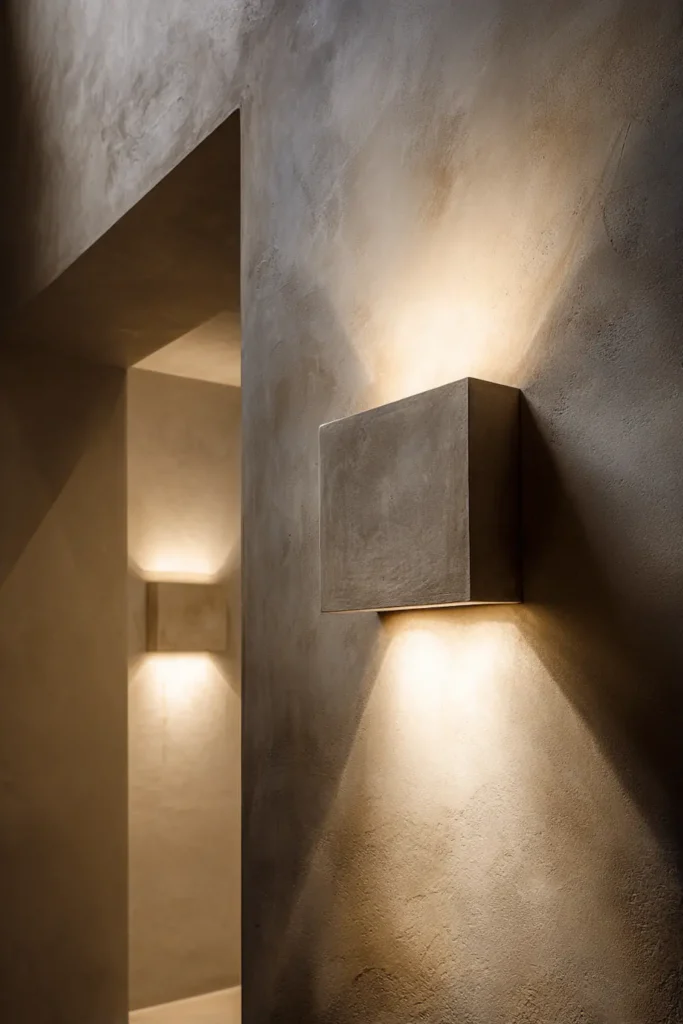
Wall lighting and ambient light elements play a very specific role in Crafted Minimalism. They are not essential in every space — and that is exactly why they need to be chosen with care. This layer exists to soften transitions, not to add visual interest for its own sake.
I only introduce wall or ambient lighting when a space feels structurally complete but slightly unresolved. Think of a long hallway that needs rhythm, a seating area that feels too exposed in the evening, or a textured wall that deserves a quieter form of emphasis. In these cases, light becomes a connector rather than a focal point.
The pieces I gravitate toward are understated and material-driven: plaster wall lights, softly diffused glass, or metal fixtures with a muted, matte finish. Anything too graphic or decorative tends to pull attention away from the furniture and materials — which goes against the logic of this style.
Used sparingly, ambient wall lighting can add depth without clutter. It allows certain areas to recede while others gently come forward. In Crafted Minimalism, that restraint is crucial. If a lighting element doesn’t clearly serve the spatial composition, it’s better left out entirely.
How to Combine These Lights Without Overdoing It
Combining different light sources in Crafted Minimalism is not about layering for effect, but about layering with restraint. The goal is never to make the lighting noticeable — it should feel inevitable, as if the space could not exist without it.
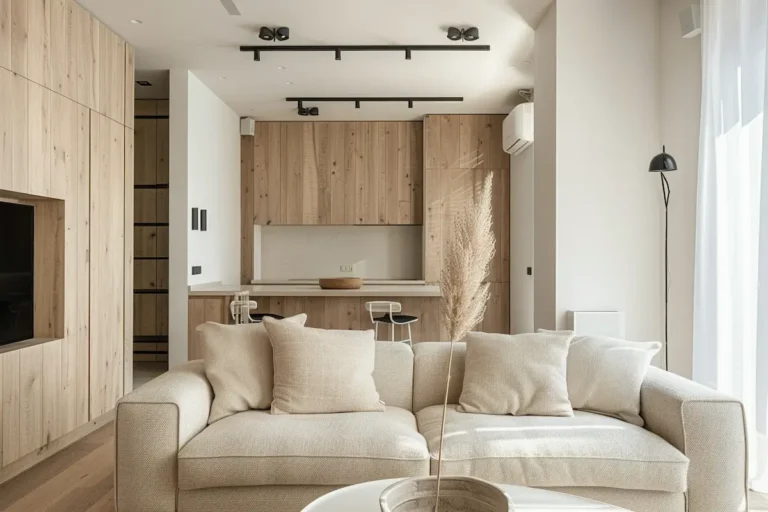
A good rule of thumb is to limit yourself to two or three types of lighting per room. One light acts as the anchor, often a pendant or floor lamp that defines the spatial structure. A second light supports the atmosphere, such as a table lamp that softens the space in the evening. Anything beyond that should only be added if it clearly serves a purpose.
Consistency is key. Materials should relate to each other, not contrast aggressively. A ceramic pendant pairs naturally with a stone or plaster table lamp, while mixing glossy metal with raw textures often disrupts the calm. The same applies to color temperature — warm, diffused light maintains material depth, while cooler tones flatten it.
In Crafted Minimalism, fewer light sources almost always result in more depth, clarity, and quiet presence.
Common Mistakes in Crafted Minimalist Lighting
One of the most common mistakes in Crafted Minimalist interiors is treating lighting as a technical requirement rather than a spatial choice. Uniform ceiling lights that flood a room evenly may seem practical, but they remove all sense of depth and hierarchy. The result is a space that feels flat, no matter how refined the furniture may be.
Another frequent issue is choosing lamps that are too decorative or trend-driven. Sculptural does not mean expressive. When a lamp demands attention, it competes with the furniture instead of supporting it. Similarly, overly cool light temperatures can drain warmth from natural materials, making wood, stone, and plaster appear dull or artificial.
Lighting is also often selected in isolation — without considering the surrounding furniture. In Crafted Minimalism, light should reinforce structure, not float independently within it. When a lamp doesn’t clearly contribute to the spatial composition, it becomes visual noise.
Avoiding these mistakes is less about rules and more about awareness: every light should have a clear reason to exist.
Conclusion: Light as a Crafted Choice
In Crafted Minimalism, lighting is never an accessory added at the end of the process. It is a crafted choice — one that shapes how a space feels long before it is consciously noticed.
When light is selected with the same care as furniture or materials, it brings structure, rhythm, and calm. Shadows become intentional. Surfaces gain depth. Objects relate to each other more naturally. The room feels complete without feeling full.
Rather than filling a space with multiple light sources, this approach encourages fewer, better-considered pieces. A pendant that anchors the room. A table lamp that softens the evening. A floor lamp that quietly supports the architecture. Each element has a role, and none compete for attention.
Ultimately, this is what defines Crafted Minimalism: not the absence of objects, but the presence of intention. Choosing light with restraint allows the space — and the materials within it — to speak for themselves.