The Crafted Minimalist Sofa Guide: How to Choose One That Anchors the Room
In Crafted Minimalism is the sofa never just a place to sit. It is the piece that quietly determines everything else: the scale of the room, the rhythm of materials, and the level of visual calm you experience when you enter the space.
Where many interiors start with styling or accessories, Crafted Minimalism starts with weight. The sofa carries that weight more than any other object in the living room. Its proportions set the tone. Its material language influences every follow-up choice — from tables and lighting to how much empty space is allowed to exist around it.
A well-chosen sofa doesn’t ask for decoration. It anchors the room through presence alone. This is why lightweight, trendy or overly refined sofas often feel “off” in crafted interiors: they lack visual gravity. They disappear instead of grounding the space.
In this guide, we’ll look beyond surface aesthetics and trends. You’ll discover four distinct sofa styles that work exceptionally well within Crafted Minimalism — each rooted in material integrity, proportion, and longevity. For every style, I’ll show how the sofa interacts with its surroundings and why specific accompanying pieces were chosen to complete the look without overloading it.
If you’re building a living space where furniture carries meaning — not noise — the sofa is where that story begins.
Disclaimer: This post may contain affiliate links. That means if you click and purchase through one of these links, we may earn a small commission — at no extra cost to you. As an Etsy affiliate and Amazon Associate, I earn from qualifying purchases. We only recommend products we truly love or believe fit the style of our AI-generated designs.
What Makes a Sofa Right for Crafted Minimalism?
Not every minimalist sofa belongs in a Crafted Minimalist interior. The difference lies not in color or price, but in how the sofa occupies space.
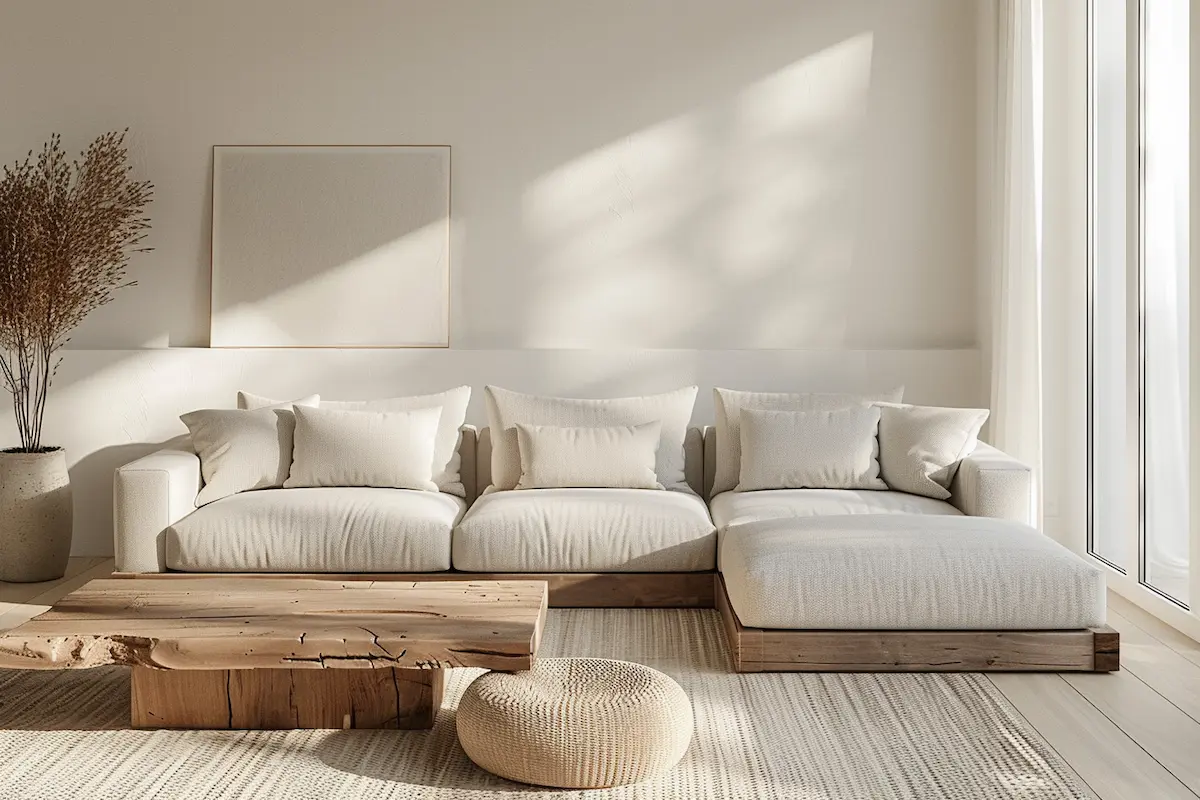
The first key element is visual weight. Crafted Minimalism favors sofas with presence: low seating, generous depth, and volumes that feel grounded rather than delicate. A sofa should visually “sit” in the room, not float within it. Even light-colored sofas can feel heavy when proportions are right.
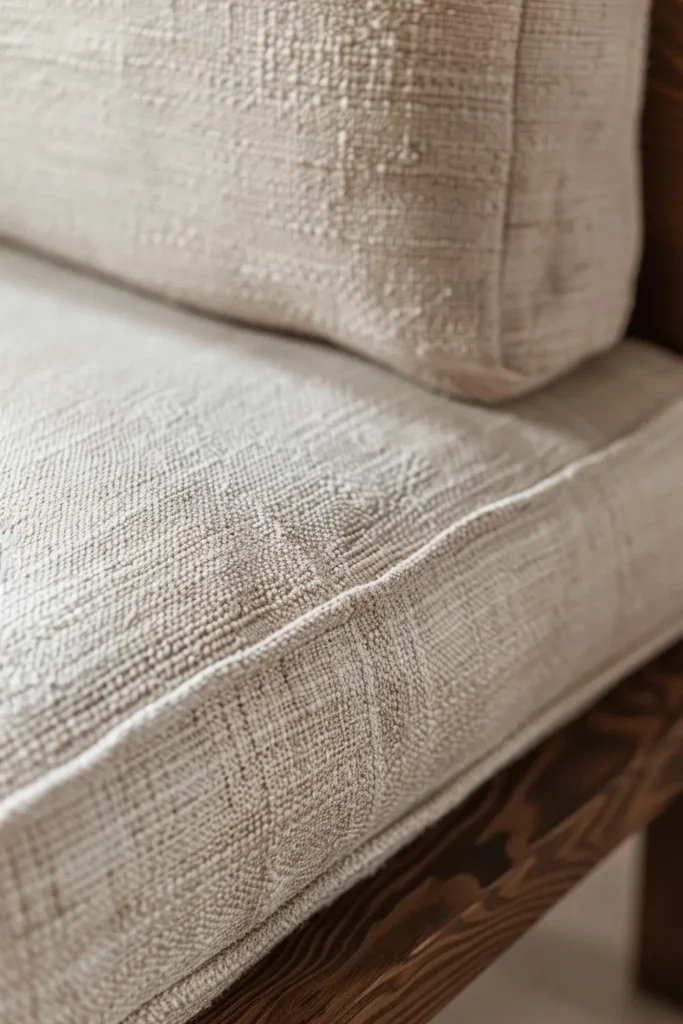
Secondly, material honesty matters more than finish. Natural fabrics like linen, wool blends, canvas, or high-quality leather age visibly over time. This aging process is not a flaw — it’s part of the design. Materials that show wear add depth and character, reinforcing the crafted nature of the space.
Form over trend is another essential principle. Crafted Minimalist sofas tend to rely on archetypal shapes: blocks, platforms, deep cushions, clear horizontal lines. These forms resist trends and remain relevant for decades, making them ideal foundations for a long-term interior.
Finally, there is the concept of restraint. A good sofa reduces the need for accessories. When the sofa has enough weight, texture, and proportion, the room needs less decoration to feel complete. This allows negative space to exist — a defining feature of Crafted Minimalism.
In short, the right sofa doesn’t decorate the room. It structures it.
Style 1 — Sculptural & Grounded

This style represents the purest expression of Crafted Minimalism. Sculptural & Grounded interiors are built around one dominant piece that carries the room — visually, spatially, and emotionally. In almost every case, that piece is the sofa.
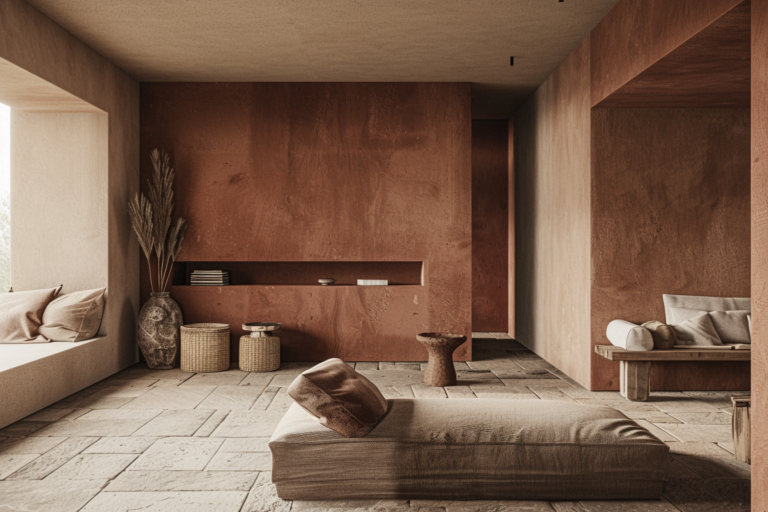
The defining characteristic here is mass and proportion. Sofas in this category are low, wide, and unapologetically present. They don’t rely on decorative details or contrast to stand out. Instead, their power comes from volume, material density, and restraint. Once placed, everything else in the room becomes secondary.
For this style, I deliberately selected two nearly identical sofa models with the same generous proportions but different tonal expressions. This allows the same architectural language to adapt to different spaces without compromising the crafted aesthetic.
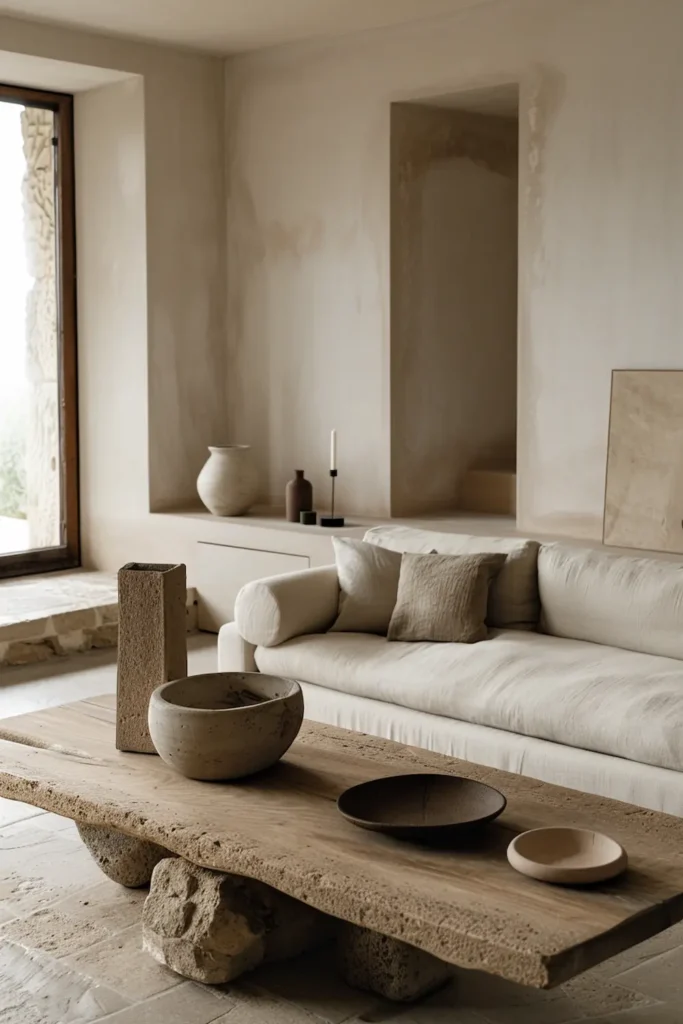
The straight sofa in a warm brown tone (325 × 105 cm) is ideal when you want the sofa to feel almost architectural. Its length and depth create a strong horizontal line that anchors open living spaces. The brown tone adds maturity and warmth, making it particularly suitable for interiors with stone floors, darker wood, or limited decorative elements. This sofa doesn’t ask for pillows or styling — its weight already does the work.
The beige-toned version in the same dimensions offers a softer interpretation of the same sculptural idea. While lighter in color, it remains firmly grounded because the proportions stay unchanged. This is crucial within Crafted Minimalism: light colors are only successful when volume compensates for the loss of visual darkness. The result is calm rather than airy — a space that feels settled, not styled.
Around these sofas, supporting pieces should remain deliberately restrained. A low coffee table in solid stone or thick wood reinforces the grounded feeling. Decorative objects are best kept minimal and tactile: handmade ceramics, rough finishes, and irregular forms that quietly echo the sofa’s solidity.
What makes this style so effective is its clarity. One strong sofa replaces the need for multiple focal points. Instead of layering accessories, the room gains depth through scale, material honesty, and intentional emptiness. This is where Crafted Minimalism feels most confident: when one object carries the space, and everything else simply supports it.
Style 2 — Soft Architectural Linen
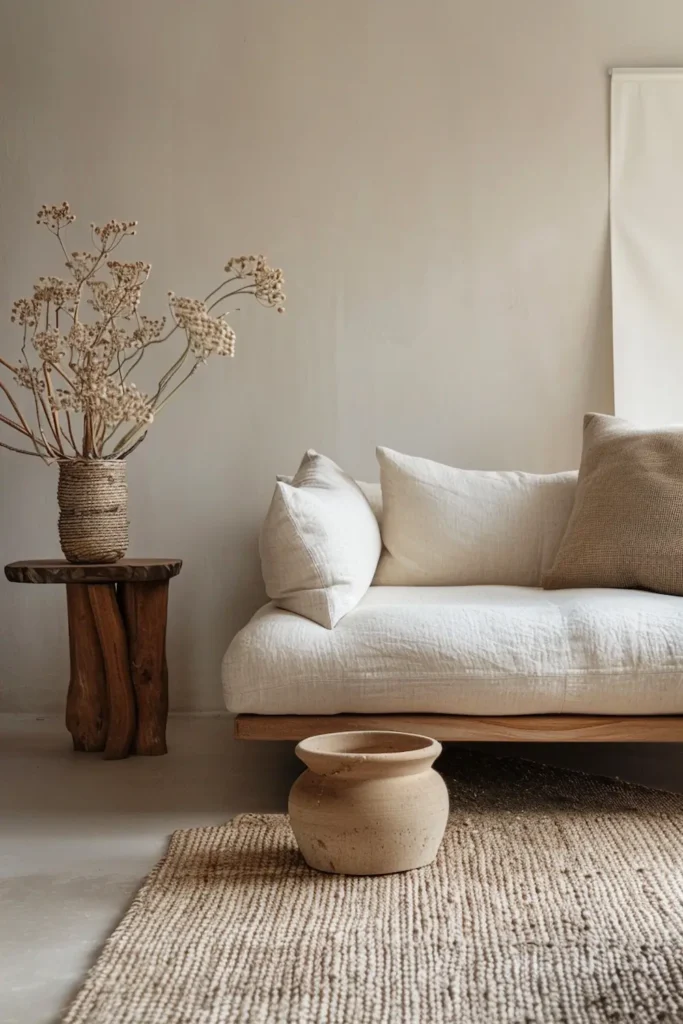
Soft Architectural Linen is the most understated expression of Crafted Minimalism. This style is not about contrast or statements, but about quiet structure. The sofa still anchors the room, yet it does so in a more tactile, human way. Instead of visual heaviness, the weight here comes from texture, depth, and restraint.
At the heart of this style is the idea that softness does not equal fragility. A linen sofa can feel substantial when the form is architectural and the fabric is allowed to behave naturally — wrinkling, folding, and subtly shifting over time. This natural imperfection is precisely what makes the look crafted rather than styled.
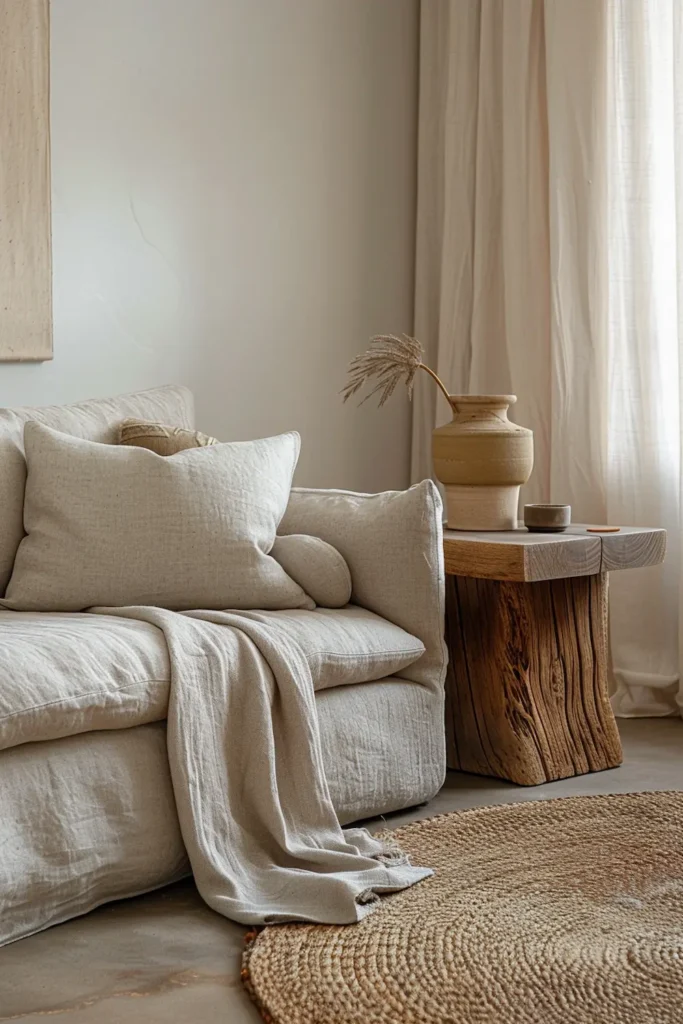
For this style, I intentionally combined two complementary elements: a strongly shaped sofa and a rustic linen cover. The Rugosa Sofa by Kalon Studios provides the architectural backbone. Its proportions are calm and deliberate, with a grounded silhouette that avoids trends or decorative gestures. The design feels almost monolithic, yet never cold — a perfect canvas for tactile materials.
The second key element is the rustic linen couch cover. Linen is one of the most honest materials you can introduce into a Crafted Minimalist interior. It diffuses light instead of reflecting it, softens hard edges, and immediately adds lived-in depth. What makes this particular cover work so well is its texture: slightly irregular, visibly woven, and intentionally relaxed. It transforms a structured sofa into something approachable without losing visual integrity.
Together, these two elements create balance. The sofa supplies structure; the linen adds warmth and movement. This combination is especially effective in spaces with light floors, natural wood, or generous daylight. Instead of filling the room with accessories, the fabric itself becomes the layer that adds richness.
Supporting pieces should stay subtle. A simple wooden side table, a woven wool rug, or a softly diffused floor lamp is more than enough. The goal is not to decorate the sofa, but to let its material presence do the work.
Soft Architectural Linen works best when you resist the urge to over-style. Let folds remain imperfect. Allow surfaces to stay partially empty. In this style, calm is not created by control — but by trust in material and proportion.
Style 3 — Quiet Japanese-European Balance
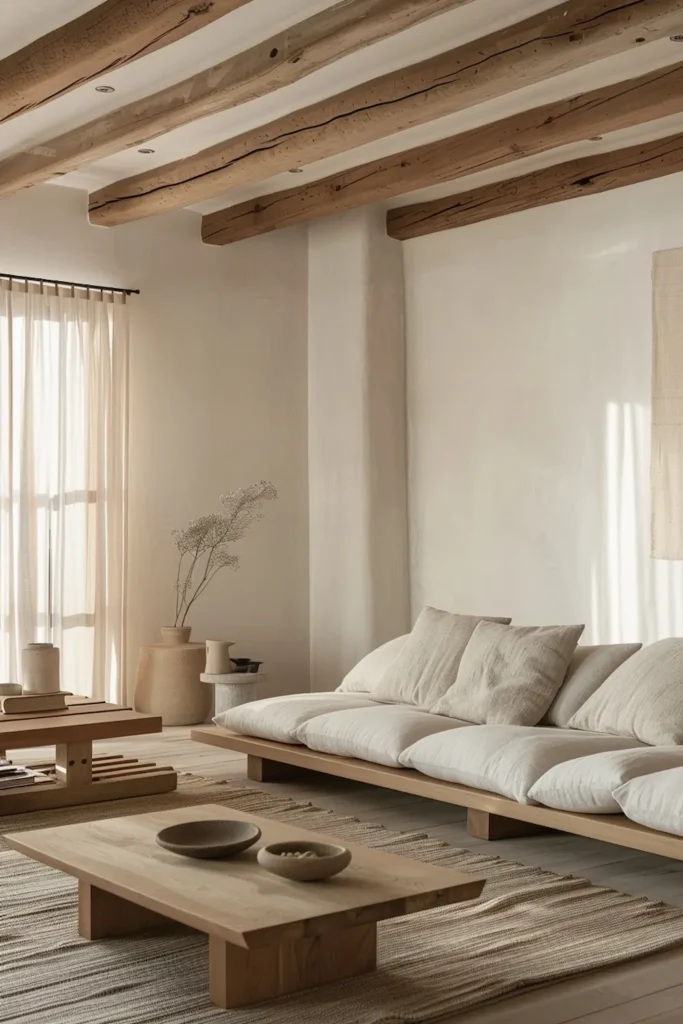
Quiet Japanese-European Balance is the most restrained and spatially aware interpretation of Crafted Minimalism. This style is not about visual statements, but about how furniture behaves in space. The sofa remains the anchor, yet it expresses its presence through horizontality, calm repetition, and intentional emptiness rather than mass alone.
What defines this style is the low profile. Sofas sit closer to the ground, stretching horizontally instead of vertically. This lowers the visual center of gravity of the room and immediately creates a sense of calm. Unlike decorative Japandi interiors, this approach avoids ornamental references and focuses instead on proportion, function, and quiet material contrast.
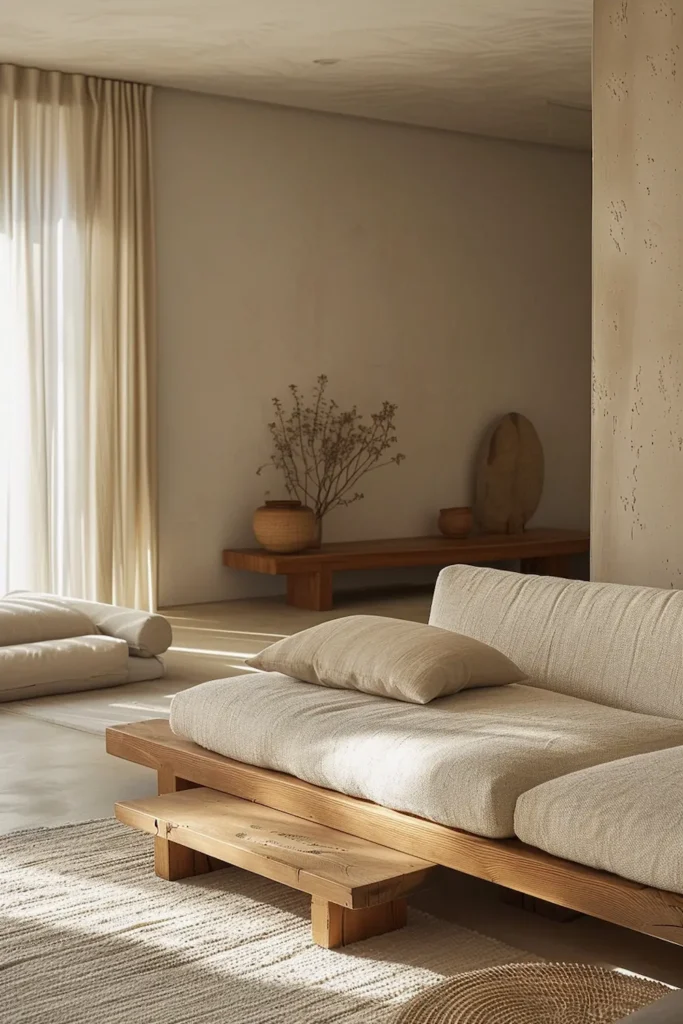
For this style, I selected two sofas that combine Japanese spatial logic with European practicality. The cotton-linen beige sofa with wooden frame and hidden storage offers a perfect balance between softness and structure. Its natural fabric diffuses light gently, while the exposed wood frame adds rhythm and clarity. The storage underneath is not a gimmick — it reinforces the idea that furniture should earn its place by doing more than one thing, without visually announcing it.
The Japanese-style luxury sofa with integrated storage compartments leans even further into this philosophy. Its clean lines and modular feel create a composed, almost architectural presence. Storage is seamlessly integrated into the form, allowing the room to remain visually quiet. In Crafted Minimalism, this kind of restraint is crucial: functionality should support calm, not disrupt it.
Together, these sofas work best in interiors where space is allowed to breathe. Floors are often left partially open, surfaces intentionally empty. A low platform coffee table or a simple wooden bench is enough to complete the composition. Decorative objects, if present at all, should feel purposeful — one ceramic bowl, one textural element — never a collection.
This style rewards discipline. When you resist filling the room, the sofa’s proportions begin to speak. The result is an interior that feels thoughtful rather than styled, calm rather than sparse. Quiet Japanese-European Balance is not about minimalism as an aesthetic, but as a spatial decision — one that prioritizes presence through absence.
How to Choose Between These Sofa Styles
Choosing the right sofa style within Crafted Minimalism is less about taste and more about reading the space you’re working with. Each of the styles you’ve seen can work beautifully — but only when it aligns with the room’s proportions, light, and architectural context.
Start by looking at ceiling height and floor area. Rooms with generous height or open layouts benefit from sculptural or grounded sofas, where volume helps anchor the space. In lower or more compact rooms, softer architectural forms or low-profile designs often feel more balanced, keeping the visual center of gravity calm.
Next, observe light quality. Abundant natural light supports lighter fabrics and linen-heavy styles without making the room feel washed out. Darker spaces often gain warmth and depth from richer tones or materials with visible texture, even when the palette stays neutral.
Also consider what you want the sofa to replace. In Crafted Minimalism, a strong sofa can eliminate the need for extra furniture or decoration. If you prefer fewer objects overall, choose a style with enough presence to stand on its own.
Finally, think in terms of sequence rather than completion. The sofa comes first. Everything else follows its lead — materials, finishes, and spacing. This principle is explored further in the Crafted Minimalism Living Room guide and expanded through essential pieces in Must-Have Crafted Minimalist Furniture.
When the sofa is chosen with intention, the rest of the room no longer needs decisions — only alignment.
Common Mistakes When Choosing a Sofa for Crafted Minimalism
One of the most common mistakes when choosing a sofa for a Crafted Minimalist interior is going too small. Many people associate minimalism with compact furniture, but in this context, undersized sofas often feel lost rather than calm. Crafted Minimalism relies on visual weight, and that weight usually comes from generous proportions.
Another frequent pitfall is choosing a sofa that looks refined but lacks material presence. Overly smooth fabrics, thin cushions, or overly polished finishes can feel flat and anonymous. They may photograph well, but they rarely hold a room together in real life.
A third mistake is overcompensating with accessories. When a sofa doesn’t carry enough presence, the instinct is often to add pillows, throws, side tables, and decor to “fix” the space. This leads to visual noise — the opposite of what Crafted Minimalism aims for. The right sofa reduces the need for styling rather than increasing it.
Finally, many interiors fail because the sofa is chosen too late in the process. In Crafted Minimalism, the sofa should be the starting point, not the finishing touch. When everything else is designed around it, coherence comes naturally.
Conclusion — The Sofa as the Foundation of Crafted Minimalism
In Crafted Minimalism, furniture is not decoration — it is structure. And within that structure, the sofa plays the leading role.
Whether you choose a sculptural, linen-based, or low-profile Japanese-European approach, the principle remains the same: one well-chosen sofa can replace dozens of styling decisions. It defines scale, material language, and how much space is allowed to remain empty.
Rather than filling a room, a crafted sofa grounds it. It creates presence through proportion, honesty through materials, and calm through restraint. This is why investing time — and intention — into choosing the right sofa pays off far beyond aesthetics.
If you take one idea from this guide, let it be this:
choose fewer pieces, but choose them with conviction.
Or, as Crafted Minimalism quietly insists:
One sofa with character is worth more than five without a story.