How to Use Lighting to Create Daily Rhythm
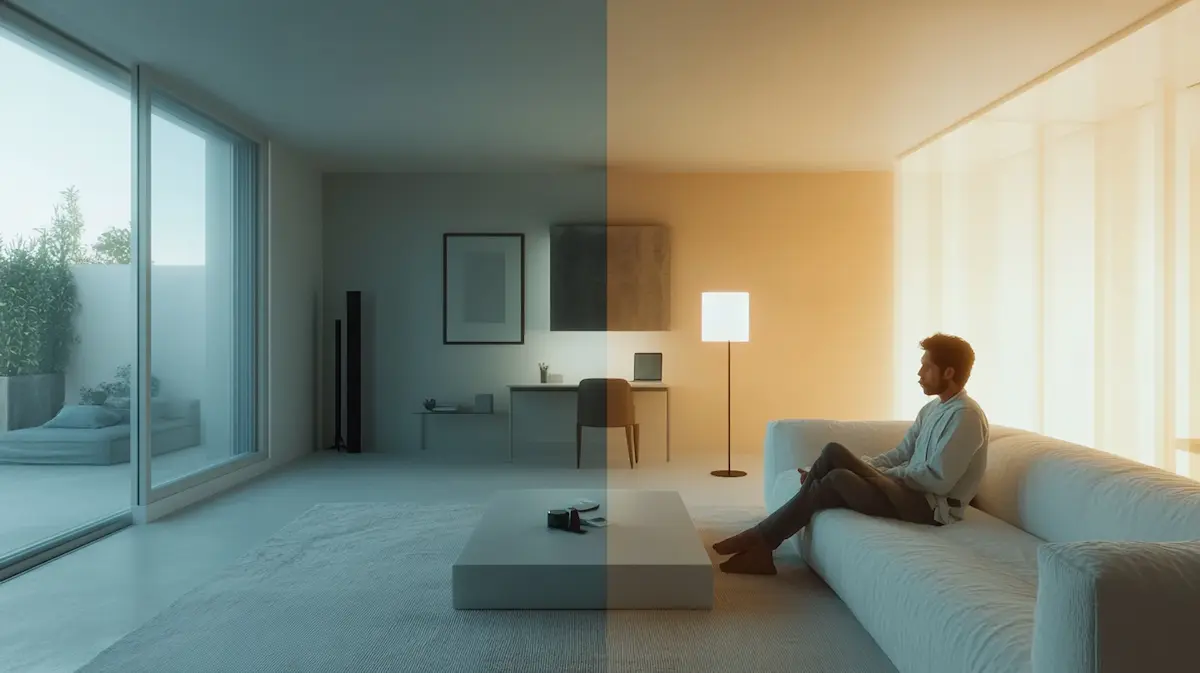
A home lit the same way at 7am, 1pm, and 9pm is a home that does not support the natural rhythm of the day. Bright, clear light belongs to the morning and the working hours; warmer, lower light belongs to the evening. This distinction has been built into human experience since the beginning of outdoor life — the sky is not the same color at noon as it is at sunset — and smart lighting makes it straightforward to bring that distinction inside, automatically, without adjusting anything by hand.
The Concept: Using Light as a Daily Rhythm Tool
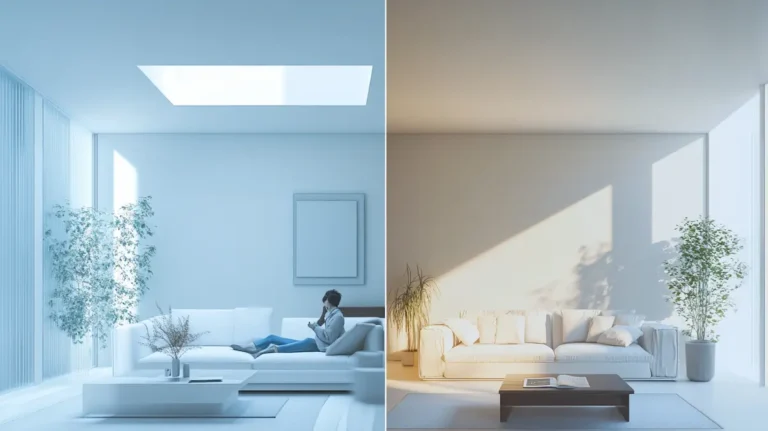
The concept of using lighting to reinforce daily rhythm is based on one observable fact: the quality of natural outdoor light changes significantly through the day. Morning and afternoon light contains more blue-spectrum content and is brighter; evening and nighttime light contains much less blue-spectrum content and is warmer. Indoor artificial light can be matched to this natural arc — or it can ignore it. Most homes currently ignore it, not because anyone decided to, but because the lights were set once and never changed.
Smart tunable-white lighting gives you the ability to match indoor lighting to the natural daily arc automatically. The result is a home where the light supports what you are doing at each part of the day rather than sitting at a neutral compromise that works adequately for all of them and excellently for none.
The three phases of a lighting rhythm
- Morning and active phase (roughly 06:00–18:00): Neutral-to-cool white, high brightness. Supports alertness, focus, and visual acuity for tasks that require it.
- Early evening transition (roughly 18:00–21:00): Warm white, medium brightness. Supports the shift from the active part of the day to a more relaxed pace. The home feels different but still functional.
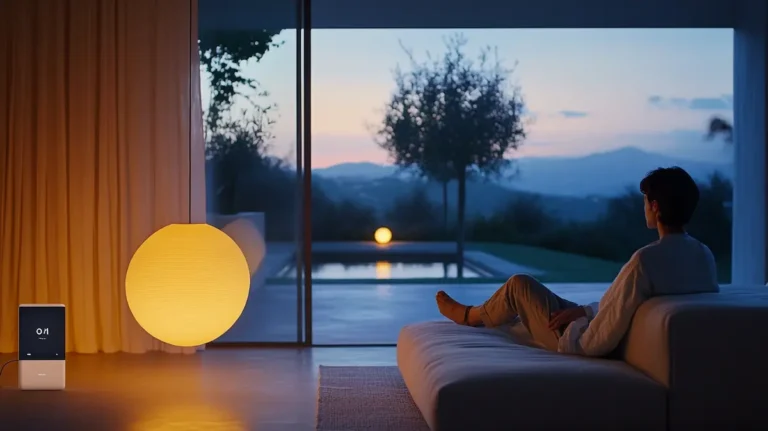
- Late evening and pre-sleep (roughly 21:00 onwards): Deep warm amber, low brightness. The home signals that the day is ending. Activities slow down; the environment actively supports the transition toward rest.
"The home that uses light this way is not managing your time for you. It is simply changing the sensory environment in a way that makes each part of the day feel more like itself."
→ The science behind why different color temperatures feel different — explained simply: → Circadian Lighting Explained (Simple Guide)
The Morning: Wake Light and the Focus Hours
The morning lighting rhythm has two distinct phases: the wake transition (the first 15–30 minutes after the alarm, when light gradually builds from nothing to a functional level) and the active day (from around an hour after waking through to the late afternoon, when the light should be bright enough to support alertness and focused work).
The wake light: gradual and warm-to-neutral
A wake light that begins at a very low warm amber level (2,200K, 5–10% brightness) and shifts gradually over 20 minutes toward a neutral white (3,500K, 50–60% brightness) supports waking more gently than an abrupt switch from dark to full brightness. The visual signal is a gradual brightening that mimics — at a small scale — the pattern of natural dawn. Practically, this means setting a time-based automation that begins 15–20 minutes before the intended wake time and ramps up while the sleeper is still in bed.
The most important detail in this automation is the gradual nature of the transition. An abrupt switch from 0% to 60% at 07:00 is simply a light turning on. A 20-minute ramp from warm amber to neutral white is a light environment that changes slowly enough to not register as a discrete event.
The focus hours: bright and cool
After the wake transition, the home needs to support the active part of the day — which for most people involves some combination of practical tasks (kitchen, getting ready), focused work (for those at home), and social or family time. For all of these, a neutral-to-cool white at high brightness is the right setting: 4,000–4,500K at 80–100% brightness in working areas.
For the morning desk or workspace — a lamp that can shift from the warm wake setting to cool focus-mode in the same fixture:
| → Philips Hue Signe Gradient Table Lamp — Oak (White & Color Ambiance) · Editorial recommendation — no commercial relationship A slender table lamp with a wood-toned oak base and gradient LED technology — the same lamp can produce warm amber at 2,200K for the evening wind-down, cool white at 5,000K for the focus hours, and the gradual warm-to-neutral transition of the morning wake light. Bluetooth enabled (no Bridge required for basic use). Works with Alexa, Apple HomeKit, and Google Assistant. The slim, sculptural design integrates into a minimal desk or bedside setup without visual bulk. Roughly 550 lumens. Why this product: This specific lamp appears in the MJ images for this article — a slender standing lamp with a warm oak base, capable of the full warm-to-cool range needed for both the morning ramp and the focus hours. The gradient feature allows the lamp to produce a warmth gradient along its length, which creates a more natural-looking light environment than a single-point source. ~€130 / £130 / $180 · Via Philips Hue |

The Transition: Afternoon to Evening
The afternoon-to-evening transition is the lighting moment that has the most visible effect on how a home feels as the day ends. Most homes handle it not at all — the lights stay wherever they were during the afternoon until someone notices the room has gone dark and switches on a lamp. A smart lighting rhythm replaces this with a gradual, automatic transition that begins around sunset.
The sunset trigger
Most smart lighting ecosystems allow automations to trigger at sunset — the time calculated for your geographic location on the current date. A sunset-triggered automation is preferable to a fixed time because it automatically adjusts across the year: earlier in winter, later in summer, without requiring any manual update.
The transition itself should be gradual — the recommendation is 15–20 minutes minimum. A living room that shifts from 4,000K neutral white to 2,700K warm white over 20 minutes does so imperceptibly; by the time the transition completes, the room simply feels different, with no specific moment of change to register.
The practical configuration
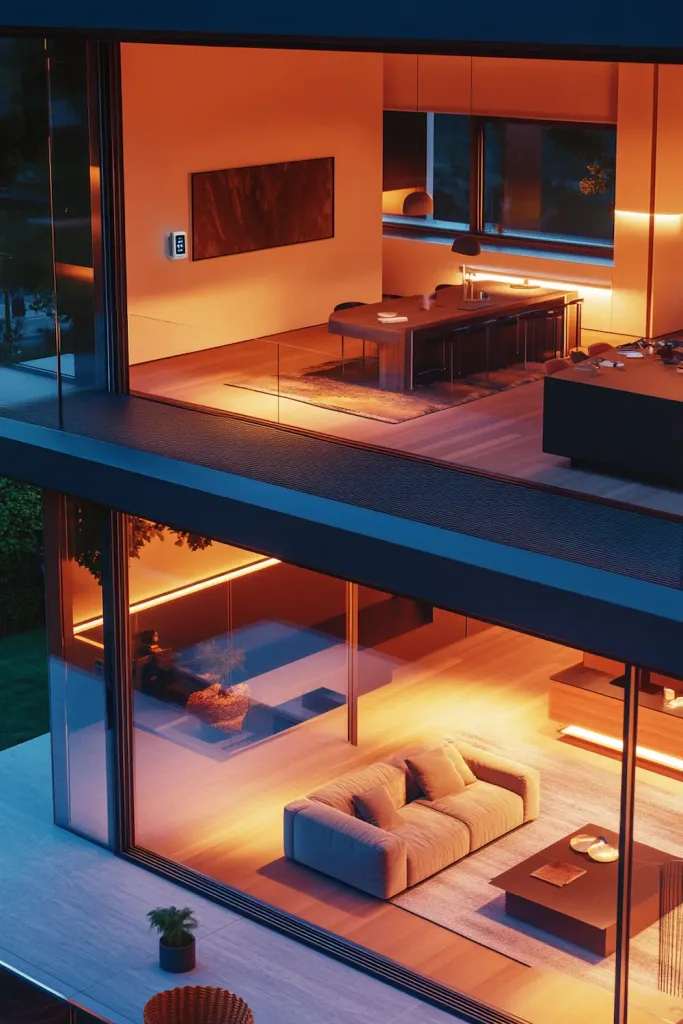
At sunset (or at a fixed time such as 19:30 if you prefer consistency): living room and kitchen lights shift to 2,700K warm white at 50–60% brightness over 20 minutes. This level is still functional — adequate for cooking, conversation, and casual reading — but distinctly warmer and calmer than the daytime setting. It signals, without requiring any action from the occupants, that the active part of the day is complete.

The Evening and Pre-Sleep Phases
After the sunset transition, the lighting rhythm has two further steps: the settled evening (roughly 19:30–21:30) and the pre-sleep wind-down (21:30 onwards). Each requires progressively warmer and lower light, moving toward the candlelight-quality amber that creates genuine rest conditions.
The settled evening: warm and functional
At 2,700K and 40–50% brightness, the living space is appropriately lit for conversation, casual reading, cooking later in the evening, and social time. This is not a dim or uncomfortable setting — it is the equivalent of warm incandescent lighting, which is how most homes were lit before LED replacements shifted the default toward cooler tones. The room functions normally; it simply does not maintain the activating quality of the daytime setting.
The pre-sleep wind-down: deep amber and low
From around 90 minutes before your typical sleep time, a further step down in both color temperature and brightness creates the conditions associated with genuine rest preparation: 2,200–2,500K, 15–30% brightness. At this level and temperature, the room requires no effort to relax in. The light itself communicates that the evening is ending.
For the pre-sleep phase — a portable, rechargeable lamp that can be placed at bedside level for the final hour before sleep:
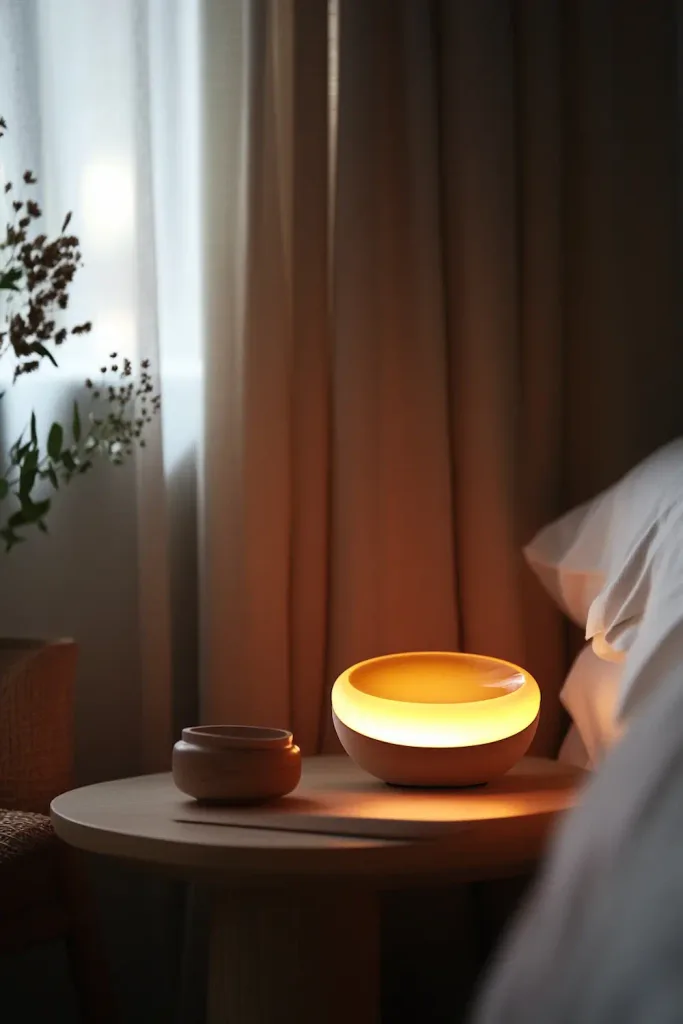
| → Philips Hue Go — Portable Smart Table Lamp (White & Color Ambiance, 2,000K–6,500K) · Editorial recommendation — no commercial relationship A portable, battery-powered smart table lamp from Philips Hue with a wide 2,000K–6,500K color temperature range. Up to 48 hours of battery life; charges on a docking base. The 2,000K lower end is deep warm amber — close to candlelight — making it suitable as the primary light source for the pre-sleep phase. Bluetooth enabled; no Bridge required for basic use. IP54 rated (splash-proof). The rounded, compact form reads as a considered design object rather than a consumer device. Why this product: The portability is what makes this specific lamp relevant to the pre-sleep phase. It can be moved from the living room to the bedside without any installation, and its 2,000K lower end produces the warm amber that standard smart bulbs often cannot reach. Use it as the sole light source for the final 30–60 minutes before sleep. ~€100–120 / $120 · Via Philips Hue (philips-hue.com) |
Automation: Making the Rhythm Run by Itself
The value of a daily lighting rhythm is not in manually adjusting lights several times a day — it is in the automation that makes the transitions happen without any input. A lighting rhythm that requires human action to maintain is a discipline; a lighting rhythm that runs automatically is infrastructure.
The minimum automation set for a complete daily rhythm
| Automation | Trigger | Duration | What it does |
| Wake light | Time-based — 20 min before alarm | 20 min ramp | Bedroom light from 0% 2,200K → 50% 3,500K |
| Morning scene | Voice trigger or time-based (alarm time) | Instant | Living room and kitchen to 80% 4,000K |
| Sunset warm-down | Sunset time for your location | 20 min ramp | All main living area lights to 50% 2,700K |
| Pre-sleep dim | Time-based — 90 min before target sleep | 15 min ramp | Living area to 20% 2,200K |
| Good night | Voice trigger or time-based (sleep time) | Instant | All lights off; bedroom lamp to 10% 2,200K if needed |
This set of five automations covers the complete daily arc — from the wake light through to the final pre-sleep dim — with a total setup time of approximately 45–60 minutes. After that, the rhythm runs automatically every day.
The one configuration mistake to avoid
The most common failure in daily rhythm automation is setting the evening transition too late. If the sunset warm-down does not begin until 21:00, it arrives only 30–60 minutes before the pre-sleep dim that follows — which means the evening has barely had time to register as different from the afternoon before it is already transitioning toward sleep conditions. Set the sunset trigger to fire at sunset (which is well before 21:00 for most of the year in most latitudes) rather than at a fixed late evening time.
→ The specific settings for the focus hours and the relaxation phases: → Smart Lighting for Relaxation and Focus
→ The mistakes most likely to undermine a daily lighting rhythm: → Lighting Mistakes That Ruin a Calm Home
The Hardware Minimum: What You Need to Implement This
The daily lighting rhythm described in this article requires three things: smart tunable-white bulbs in the rooms you occupy most (living area, bedroom, and — if you work from home — office), a smart lighting ecosystem with scheduling capability, and either a smart speaker or a scheduled automation for the morning scene trigger.
The tunable-white specification is non-negotiable
A standard dimmable smart bulb cannot implement the rhythm described in this article because it cannot adjust its color temperature. The key specification to verify is ‘tunable white’, ‘adjustable color temperature’, or a stated Kelvin range. Without this, you can automate brightness but not the warm-to-cool shift that is the functional core of the daily rhythm.
Hub vs no-hub: which is better for rhythm automation?
For a daily lighting rhythm specifically — as opposed to other smart home use cases — a hub-based system is generally more reliable than individual Wi-Fi bulbs because:
- Local processing: hub-based systems (Philips Hue via the Bridge, IKEA via the DIRIGERA) process automations locally, so the daily arc continues correctly even during internet outages.
- Gradual transitions: hub-based systems typically offer better support for the gradual color temperature transitions (15–20 minute ramps) that make the rhythm feel natural. Some Wi-Fi-only bulbs support this; others do not.
- Multiple-room coordination: a hub coordinates all rooms simultaneously in a single automation. Without a hub, each room’s bulb requires a separate automation in its own manufacturer app.
For those building a rhythm across multiple rooms — the IKEA DIRIGERA as a low-cost hub option:
| → IKEA DIRIGERA — Smart Home Hub for TRÅDFRI and SYMFONISK Devices · Editorial recommendation — no commercial relationship IKEA’s current smart home hub, replacing the older TRÅDFRI Gateway. Controls IKEA smart bulbs (TRÅDFRI), smart plugs, and SYMFONISK audio over Zigbee. Works with Alexa, Apple HomeKit, and Google Home. Supports scheduling and gradual color temperature transitions across all connected IKEA bulbs simultaneously. At its price point, it is the lowest-cost entry to a hub-based tunable-white system — pair it with IKEA TRÅDFRI white spectrum bulbs (approximately €8–12 each) for a complete daily rhythm setup at significantly lower cost than the Philips Hue equivalent. Why this product: The DIRIGERA enables the coordinated multi-room automation that makes the daily rhythm work as a whole-home experience. Used with TRÅDFRI white spectrum bulbs in the living area and bedroom, it provides the scheduling and gradual transition support needed for the morning ramp and sunset warm-down without the cost of the Philips Hue Bridge + bulbs combination. ~€35–45 · Via IKEA (ikea.com) Note: Available in IKEA stores and online. Compatible only with IKEA smart home products (TRÅDFRI, SYMFONISK). For integration with non-IKEA devices, choose a universal hub such as SmartThings or Home Assistant instead. |
For the bedroom morning wake light — a tunable white bulb that works in a standard table lamp at budget price point:
| ⟶ TP-Link Tapo L535E — Matter Smart Bulb, Tunable White 2,500K–6,500K, 1,100 lm (2-Pack, E27/A19) · Affiliate link Matter-certified tunable white smart bulb covering 2,500K to 6,500K. At 1,100 lumens and CRI >90. Works with Alexa, Google Home, Apple HomeKit, and SmartThings without a hub. The Tapo app supports time-based schedules with gradual color temperature transitions — suitable for configuring the morning wake ramp described in §2. The 2-pack covers two rooms at a per-bulb cost below most single-unit alternatives. Why this product: This is an affiliate link — a small commission is earned if you purchase through it. The Tapo L535E is included as the budget entry point for the wake light and transition bulb functions described in §2 and §3. The 2,500K lower end is slightly warmer than many budget alternatives and is adequate (though not as warm as the 2,000K of the Hue Go) for evening use. ~€28 for 2-pack · Via Amazon Note: For European homes: the E27 fitting is the same physical size as the listed E26/A19 format and will fit standard E27 lamp sockets. |
The Rhythm Is Already There — You Are Just Making It Visible
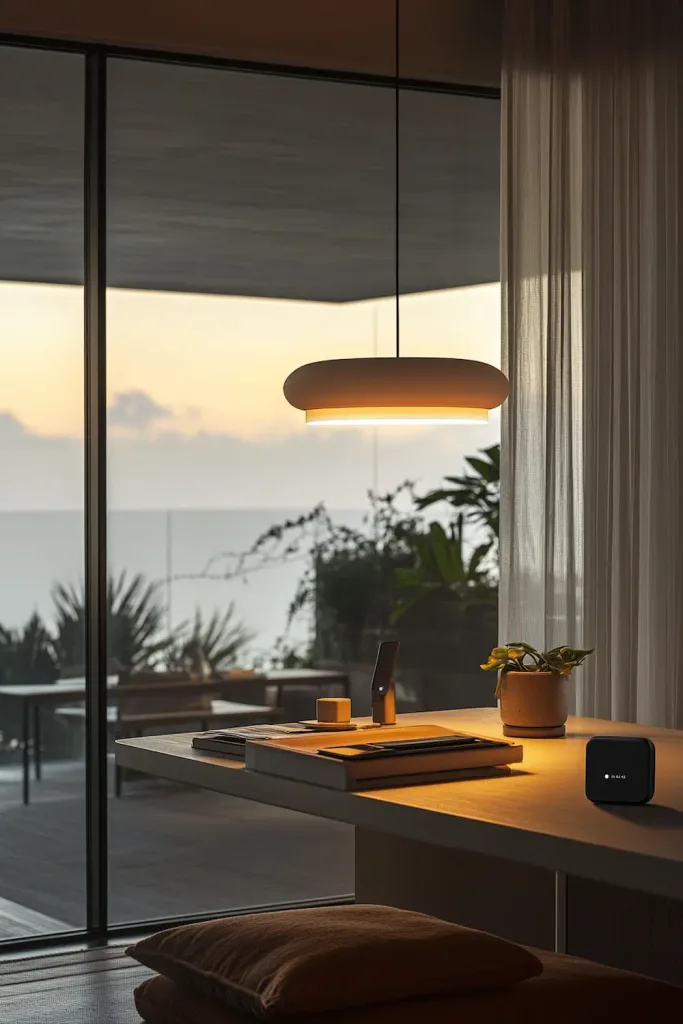
The daily rhythm that smart lighting supports is not invented by the technology. It already exists in the natural day — the different quality of morning and evening light is something the human visual system is adapted to register and respond to. Smart lighting’s role is simply to bring that distinction inside, where artificial light has erased it.
The practical implementation of the rhythm described in this article requires a modest initial investment — tunable-white bulbs in two or three rooms, and a scheduling system to automate the transitions. After that, it runs daily without input. The home feels different in the morning, during the working hours, and in the evening — not because anything was done to it each day, but because it was designed once to match the shape of a day.
⟶ Room-by-room smart lighting setups that put this daily rhythm into practice: Smart Lighting Setups by Room