Smart Lighting for Relaxation and Focus
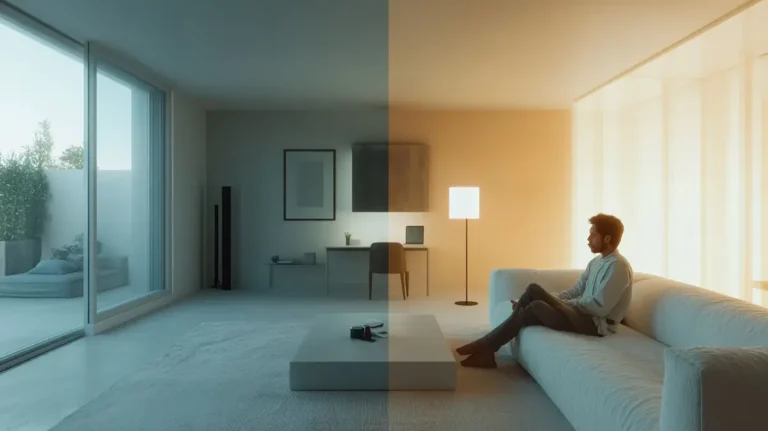
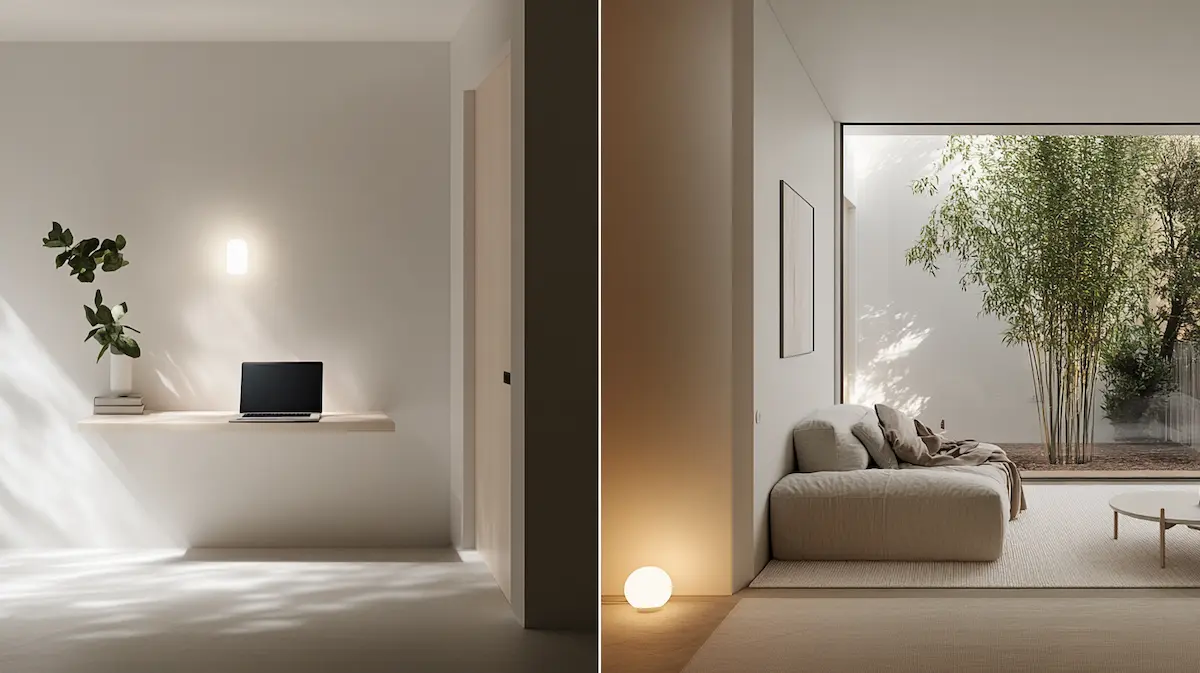
Light is the most immediate and most adjustable quality of any interior space. The same room lit at 5,000K cool white feels entirely different from the same room lit at 2,200K warm amber — not because any furniture moved, but because the light changed how the space registers. Smart lighting makes this adjustability automatic: the right light for focused work in the morning, the right light for calm in the evening, without manually changing anything. This guide covers the specific settings, automations, and devices that make that possible.
Color Temperature: The One Number That Matters Most
Light quality in a smart home context is primarily determined by color temperature — measured in Kelvin (K) and describing how warm or cool the light appears. Lower numbers are warm (amber, candlelight); higher numbers are cool (blue-white, daylight).
Most LED bulbs are manufactured at a fixed color temperature, typically in the middle range that is most commercially versatile. Smart bulbs with tunable white capability can be adjusted across the full range, making them suitable for both focused work and relaxed evenings.
The color temperature spectrum for a calm home
| Color temperature | Appearance | Best use |
| 1,500–2,200K | Very warm amber — candlelight quality | Pre-sleep wind-down; night navigation; creating a cosy atmosphere |
| 2,700–3,000K | Warm white — traditional incandescent quality | Evening relaxation; dining; social areas after 18:00 |
| 3,500–4,000K | Neutral white — balanced, neither warm nor cool | All-day task areas; kitchens; general household lighting |
| 4,500–5,000K | Cool white — approaching daylight quality | Morning alertness; focused work; reading technical content |
| 5,500–6,500K | Daylight — bright, slightly blue-white | High-concentration work; photography; detail tasks |
One practical note before going further: color temperature alone does not determine how a space feels. Brightness (measured in lumens) matters equally. A 2,700K bulb at full brightness produces a very different feeling from the same bulb at 20% brightness. The combination of low color temperature and low brightness is what produces genuine relaxation conditions. The combination of high color temperature and high brightness is what produces focus conditions. This article addresses both dimensions throughout.
→ A straightforward explanation of circadian lighting and color temperature concepts: → Circadian Lighting Explained (Simple Guide)
Disclaimer & transparency
This article was created with the assistance of AI tools and assembled and edited by a human editor. While care has been taken to ensure accuracy, I cannot personally verify every technical detail. The information provided here is intended as a general guide, not as professional or technical advice. Always verify compatibility with your specific devices and systems before purchasing or installing anything described in this article.
Affiliate disclosure: This site participates in the Amazon Associates Programme and the Etsy Affiliate Programme. If you purchase through some of the links, at no extra cost to you, I may earn a small commission. I only recommend products I believe are genuinely suitable for the use case described.
Focus Lighting: The Settings That Support Concentration
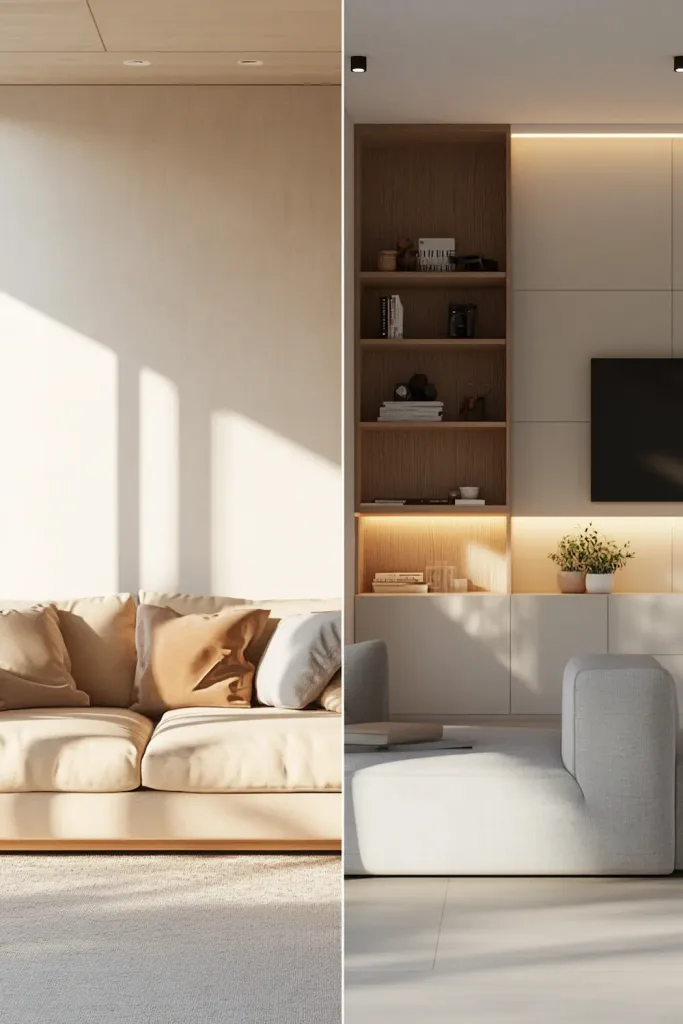
The conditions that support sustained concentration are well-established from how the visual system functions: bright, evenly distributed, cool-spectrum light reduces eye strain, supports alertness, and makes detailed work — reading, writing, code, analysis — easier to sustain over time. Smart lighting can create and maintain these conditions automatically during work hours, without requiring manual adjustment.
The focus lighting configuration
Color temperature: 4,000K–5,000K. This range provides the alerting quality of cooler light without the starkness of very high color temperature LEDs. For most people working on screens, 4,500K is a good starting point: cooler than typical ambient lighting but not so blue-white that it feels clinical.
Brightness: 80–100% of the bulb’s maximum output. For focused work, brightness should be high enough to make the working surface visible without strain. The common mistake is working in a room that is adequately lit for casual use but too dim for sustained focused reading or writing.
Uniformity: Even distribution matters more for focus than for relaxation. A single bright lamp in a dark room creates a high contrast ratio between the lit area and the surroundings, which can cause visual fatigue over extended work sessions. Multiple light sources, or a combination of overhead and desk lighting, reduces this contrast.
Elimination of glare: Position light sources to avoid direct reflections on screens. This is more a positioning question than a product question — even excellent smart bulbs will create eye strain if they are positioned directly in the visual field or behind a screen they are illuminating.
The focus mode automation
A focus mode automation — triggered by a voice command, a physical button, or the opening of a specific app — sets all the above parameters simultaneously without requiring individual adjustment. ‘Focus mode’ as a single trigger: workspace lights to 100% at 4,500K, adjacent areas dim to 20% (reducing visual distraction from the periphery), notifications silenced.
Relaxation Lighting: The Settings That Support Unwinding
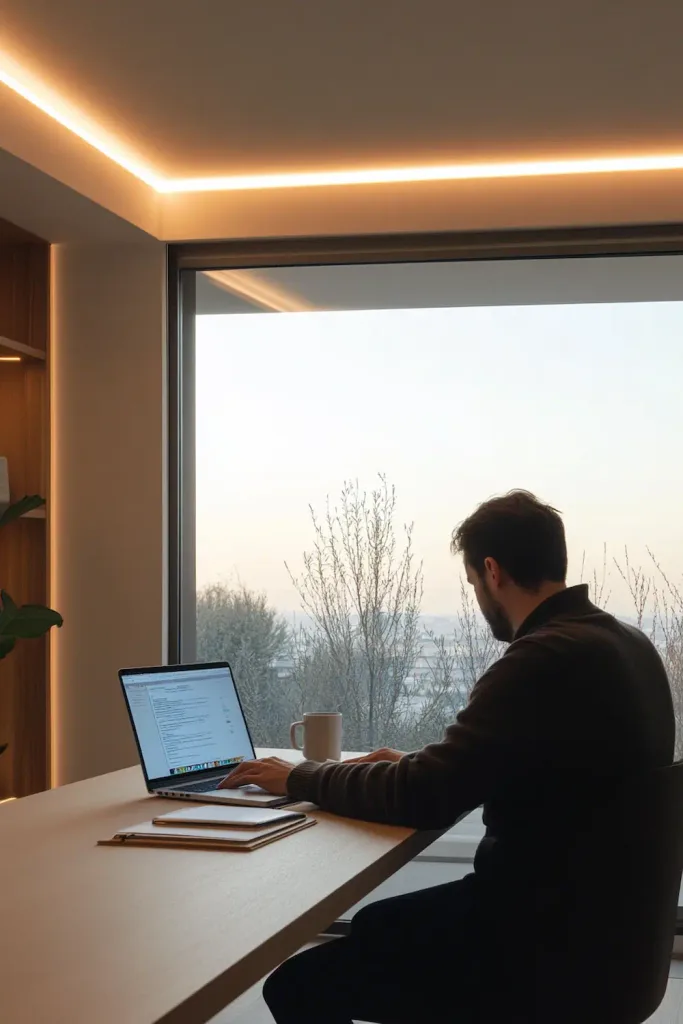
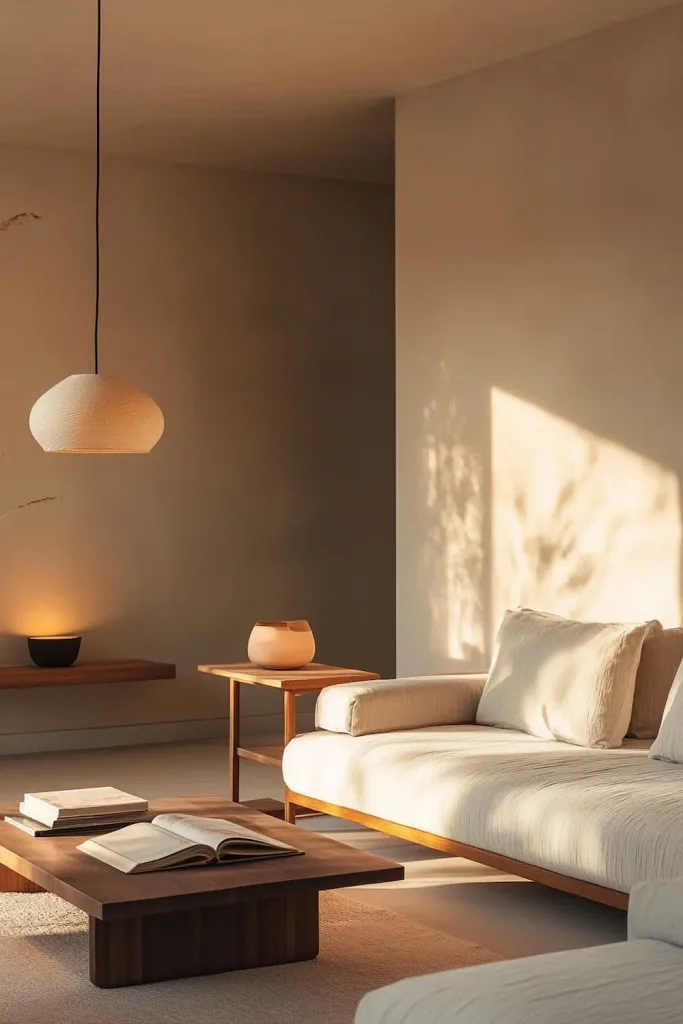
Relaxation lighting operates on different principles from focus lighting. Where focus requires even, bright, cool light, relaxation benefits from warm, directional, low-intensity light. The warm amber of candlelight — around 1,800–2,200K — is what most people instinctively associate with an evening at rest, because it signals, through the visual system, that the active part of the day is over.
Smart lighting’s particular value for relaxation is the ability to implement this shift automatically and gradually. A sudden switch from the bright daylight setting of the afternoon to a dim amber evening mode is jarring. A gradual 20-minute transition, invisible in real time, produces a room that feels qualitatively different in the evening without the specific moment of change being perceptible.
The relaxation lighting configuration
Color temperature: 2,200–2,700K. The lower end (2,200K) is the warm amber associated with rest and late evening. The upper end (2,700K) is appropriate from early evening onward — noticeably warmer than daytime lighting, but not so dim that it impedes reading or social interaction.
Brightness: 20–50%, depending on the activity. Reading a physical book at 30% ambient brightness with a specific reading lamp is appropriate. Social conversation at 40% is comfortable. Activities that require any degree of visual acuity (cooking, close-up tasks) should stay above 50% even in warm mode.
Direction: Indirect and multi-source lighting reduces the overall intensity and increases the warmth of a space. A room lit by two table lamps at low level feels warmer than the same room lit by a single ceiling fixture at the same lumen output, because the multiple, lower sources create less contrast and more visual texture.
The key automation: the sunset warm-down
The most useful relaxation lighting automation is one that triggers at or after sunset and gradually shifts the home’s lighting toward the warm, low-intensity evening configuration over 20 minutes. The 20-minute transition is what makes it invisible — slow enough to be imperceptible while happening, complete by the time the change might be noticed.
→ How to use smart lighting to create a consistent daily light rhythm across the whole day: → How to Use Lighting to Create Daily Rhythm
The Daily Rhythm: Linking Focus and Relaxation Through the Day
The real power of smart lighting for a calm home is not in any individual setting — it is in the sequence of settings across the day. A home where the light shifts automatically through a morning-to-evening arc, supporting each part of the day in turn, provides a consistent sensory rhythm that reinforces the body’s natural daily pattern.
A complete daily lighting arc
| Time | Setting | Color temp | Brightness | Purpose |
| 06:30–07:00 | Wake light — gradual ramp | 2,200K → 3,500K | 0% → 50% | Support natural waking; avoid abrupt onset |
| 07:00–09:00 | Morning — functional | 3,500–4,000K | 70–80% | Kitchen and living areas; morning routines |
| 09:00–17:00 | Work/focus — if at home | 4,000–5,000K | 80–100% | Workspace; concentration-supporting |
| 17:00–19:00 | Transition — early evening | 3,000–3,500K | 60–70% | Cooking; returning from work; social |
| 19:00–21:00 | Evening — relaxed | 2,700–3,000K | 40–50% | Dinner; reading; conversation |
| 21:00–22:30 | Pre-sleep wind-down | 2,200–2,500K | 20–30% | Signaling the end of the active day |
| 22:30–23:00 | Night mode | 2,200K | 10–20% | Low enough to not interfere with sleep preparation |
This arc does not need to be implemented as seven separate automations. Most ecosystems allow a ‘day cycle’ or ‘circadian’ mode that handles the transitions automatically based on time and location. The table is a reference for understanding what the arc should look like — the specific implementation depends on the platform and devices you are using.
"The home that uses light this way stops being something you manage and starts being something that supports you. The rhythm runs in the background. You simply live in it."
Choosing the Right Bulbs: What to Look For
Not all smart bulbs are capable of the full range of settings described in this article. The minimum requirement for implementing the complete relaxation-and-focus system is a smart bulb with
tunable white — the ability to adjust color temperature across a meaningful range, not just adjust brightness. Some smart bulbs are dimming-only, with a fixed color temperature (usually a warm white or a neutral white). These are useful but cannot produce the cool focus light described in §2. Always check the product specification for ‘tunable white’, ‘adjustable color temperature’, or a stated Kelvin range before purchasing.
What to verify before buying
- Tunable white range: For the complete daily arc described in §4, you need a range from at least 2,700K (warm relaxation) to 4,000K (cool focus). A range from 2,200K to 5,000K or greater gives more flexibility. Check the product specifications — not all smart bulbs marketed as ‘tunable’ cover the full range.
- Lumen output: For focus lighting, you need a bulb that produces enough lumens at maximum brightness to illuminate the workspace adequately. 800 lumens is the minimum for general-purpose smart bulbs; 1,000–1,100 lumens gives more headroom for focused-work use.
- Fitting compatibility: E27 (the large standard fitting) and E14 (the small candelabra fitting) are the most common in European homes. E26 is the standard in North America. GU10 is used in most recessed ceiling spots. Check the fitting before purchasing.
- No hub required vs hub required: Bulbs that connect directly to Wi-Fi (no hub needed) are simpler to set up. Bulbs that require a hub (like Philips Hue, which uses the Hue Bridge) are generally more reliable over time and support more advanced automations, but involve an additional purchase. The right choice depends on how many bulbs you plan to install and how central lighting is to your smart home setup.
Two options representing different approaches — no hub and hub-based:
| ⟶ LIFX Smart Light Bulbs A19 E26 — Matter Compatible, Tunable White 1,500K–9,000K (2-Pack) A Matter-certified smart bulb with an unusually wide tunable white range: 1,500K (candlelight) to 9,000K (bright daylight). No hub or bridge required — connects directly via Wi-Fi. At 1,100 lumens with CRI >82, it covers the full daily arc described in this article from relaxation to focus modes. Works with Alexa, Apple HomeKit, Google Home, and SmartThings. The Day & Dusk feature in the LIFX app automates the daily light arc based on your location’s sunrise and sunset times. ~€35–45 for 2-pack · Via Amazon |
| → Philips Hue White Ambiance Starter Kit — 2 Bulbs + Hue Bridge + Dimmer Switch The Philips Hue White Ambiance starter kit includes two A19 tunable white bulbs (2,200K–6,500K), the Hue Bridge (required for full functionality including automations), and a wireless dimmer switch. The Hue ecosystem is among the most mature and reliable available: the Bridge processes automations locally, the app is well-designed, and the broader Hue accessory range (motion sensors, tap switches, gradient strips) allows expansion. The tunable white range covers the full daily arc described in this article. ~€85–100 (includes Bridge) · Via Amazon Note: The Philips Hue ecosystem is included because its local processing via the Bridge makes it among the most reliable options for the invisible, set-and-forget automation described elsewhere in this site. The higher upfront cost includes the Bridge, which is needed to unlock scheduling and full automation features. |
⟶ A curated comparison of the best smart lighting systems for a calm home: Best Smart Lighting Systems for a Calm Home
Lighting Mistakes That Undermine a Calm Home
Smart lighting can significantly improve a home’s atmosphere — but it can also introduce new problems if implemented without attention to the specific failure patterns that affect this category of device.
- Using cool white lighting throughout the evening. The default color temperature of most smart home setups is a neutral-to-cool white that was configured during installation and never changed. A home that is at 4,000K at 22:00 is not a calm home, regardless of how well-designed everything else is. The single highest-impact change most people can make to the atmosphere of their home is shifting their evening lighting to below 3,000K.
- Smart bulbs in overhead fixtures with accessible wall switches. When a smart bulb is installed in a ceiling fixture and the wall switch is turned off, the bulb loses power and becomes unresponsive to app commands. In a shared household, this happens constantly. The result is a lighting system that does not reliably work. Use smart bulbs in floor and table lamps where possible — lamps whose switches can be left permanently on. For ceiling fixtures, replace the wall switch with a smart switch rather than the bulb.
- Too many color-changing features, not enough warm white. Full-color smart bulbs are marketed with their color range as the main feature, and many buyers default to color effects (blue for focus, green for calm) based on this marketing. In practice, a warm-to-cool white range is more useful for daily living than a full color spectrum. Color effects for specific moments are a nice addition; they should not be the primary reason to buy.
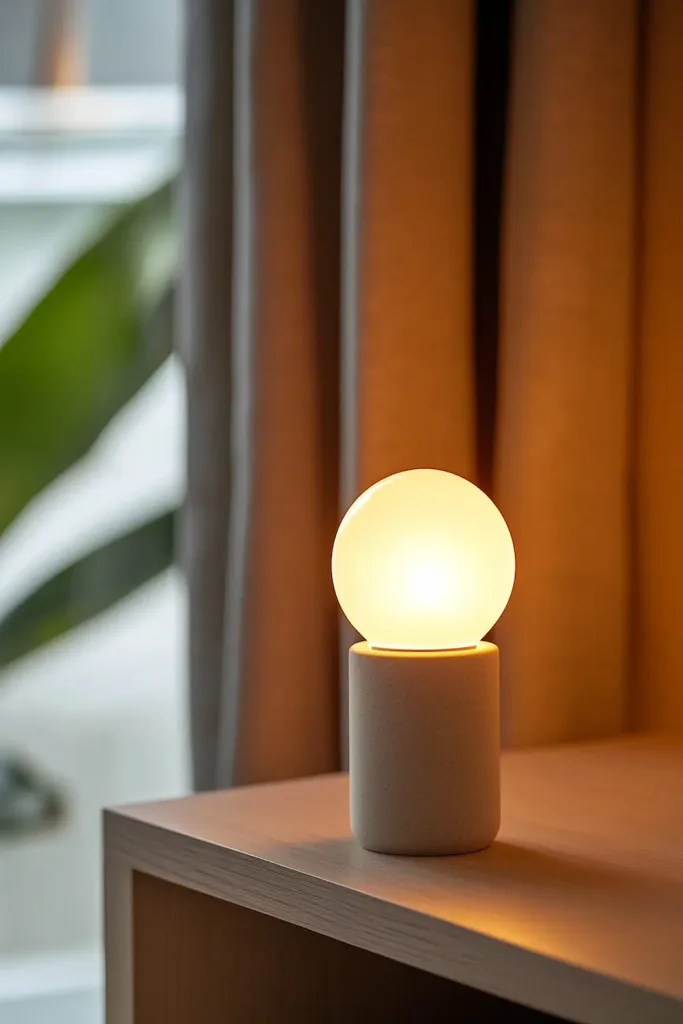
- Bright overhead lighting in the evening with no alternative. A room lit only by overhead fixtures is difficult to dim comfortably. Even at low levels, a ceiling-height light source produces a flat, institutional quality of light that lacks the warmth of lower, more directional sources. Add floor and table lamps to rooms where you spend evenings, and use these as the primary source for evening lighting.
→ The complete guide to lighting mistakes that undermine a calm home environment: → Lighting Mistakes That Ruin a Calm Home
A budget-first tunable white option for those adding warm evening lighting via table and floor lamps:
| ⟶ TP-Link Tapo L535E — Matter Smart Bulb, Tunable White + Full Color (2-Pack) Matter-certified smart bulb with tunable white from 2,500K warm amber to 6,500K cool daylight, plus full color. At 1,100 lumens and CRI >90. Works with Alexa, Google Home, Apple HomeKit, and SmartThings. The 2-pack format means the per-bulb cost is lower than single-unit alternatives. Suitable for the floor lamp and table lamp strategy described in this article — used in lamps where the physical switch can be left on permanently, allowing full automation control. ~€28 for 2-pack · Via Amazon |
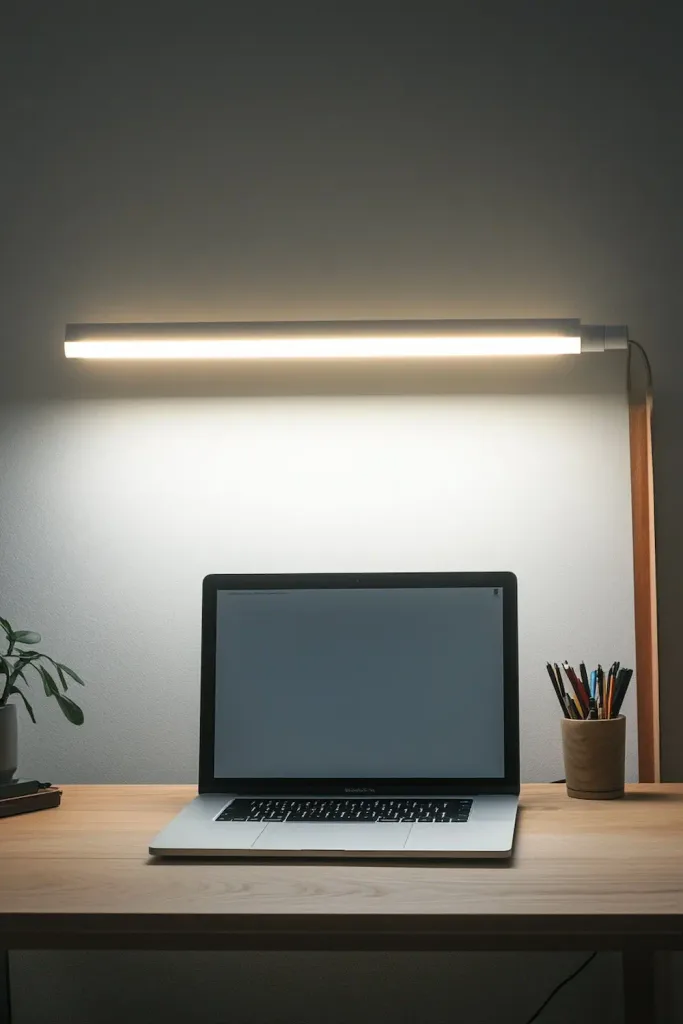
For dedicated focus lighting at a desk — a professional desk light with precise color temperature control:
| → Elgato Key Light — Professional Desk Light, Adjustable Color Temperature, Wi-Fi · A professional-grade desk panel light with precise adjustable color temperature (2,900K–7,000K) and brightness (0–100%) controlled via the Elgato Stream Deck software or a companion app. Designed for video production but used widely as a desk focus light because of its even, large-area illumination that eliminates shadows on the working surface. Can be controlled via HomeKit or integrated into ecosystem automations. Works as a physical expression of the ‘focus mode’ described in §2 — a single, large, adjustable source positioned to illuminate the desk without glare. ~€80–100 · Via Amazon |
⟶ Room-by-room smart lighting setups that implement the principles in this article: Smart Lighting Setups by Room
Light as Infrastructure
The lighting in a home is not decoration. It is the primary environmental variable that determines how the space feels at any given moment — and it is the variable most easily adjusted through smart home technology. A home with good lighting automation does not require you to think about light. It simply provides the right quality of light for whatever you are doing, when you need it, without asking for anything in return.
The principles in this article — cool and bright for focus, warm and dim for relaxation, a gradual daily arc connecting the two — are not complex. They describe a system that can be built with two or three smart bulbs and a few scheduled automations. The result is a home that supports both the concentration required by the working part of the day and the rest required by the part of the day that follows it.
For the broader context of calm living with smart home technology: Smart Calm Living: How Smart Homes Create Calm, Not Chaos. For the circadian science behind the settings in this article: Circadian Lighting Explained (Simple Guide).