Best Parisian Vintage Artwork & Prints for Your Walls
The walls of a Parisian interior are not decorated — they are accumulated. There is a fundamental difference between a wall that has been styled with a curated art print collection and a wall that has been lived with over time: pieces arriving from different sources, at different moments, for different reasons, and finding their positions through a process of gradual arrangement rather than a single intentional installation.
This article covers the artwork categories most consistent with the Parisian aesthetic, the arrangement logic that makes a wall read as accumulated rather than designed, and specific sourcing options for each type. All observations are based on directly observable qualities of the wall arrangements described.
The Principle: Accumulated, Not Designed
The defining quality of a Parisian wall arrangement is the evidence of time. Each piece arrived separately, from a different source, at a different point. The frames are different materials and sizes. The scales vary. Some pieces are hung; others lean. The arrangement as a whole reads as the residue of a life spent looking at and collecting things, rather than as a decorating decision.
This is the quality that distinguishes the Parisian wall from the gallery wall — the contemporary decorating format in which a set of prints in matching frames are hung in a deliberate geometric arrangement. The gallery wall reads as designed from the outside. The Parisian arrangement reads as if no one stood back and designed it; it simply became what it is.
The practical implication
Building a Parisian wall arrangement means resisting the impulse to buy pieces as a set, to match frames, or to plan the wall in advance as a composition. Instead: acquire pieces individually from different sources, begin with one piece and add others over time, vary the frames deliberately, and allow some pieces to lean rather than hang. The wall will develop over months and years rather than being installed in an afternoon. The patience is the method.
What does not work
Matching print sets in identical frames, all the same size. Geometric gallery wall arrangements where all frames are the same gap apart. Art prints purchased specifically because they ‘match’ the colour scheme. Frames that are clearly from the same retailer and the same production run. These approaches produce walls that read as installed rather than accumulated, which is the precise opposite of the Parisian quality.
“The Parisian wall is not a wall of art. It is a wall of things that were found, kept, and eventually placed. The difference is visible at a glance.”
→ How wall art fits within the complete Parisian vintage wall treatment approach: → Wall Treatments That Define Parisian Vintage Style
Category 1: Botanical Prints — The Most Consistently Parisian
The antique or vintage botanical print — a detailed illustration of a plant, flower, or leaf from an 18th- or 19th-century scientific atlas, on aged ivory paper with the specific quality of an engraved or lithographed plate — is the most consistently present artwork type in documented Parisian interiors across all periods and all price points. It appears in grand Haussmann apartments and in small Left Bank studios. It appears framed and unframed, large and small, alone and in groups.
The botanical print works in a Parisian interior for several reasons that are directly observable: its paper tone (the warm ivory-yellow of aged paper) is consistent with the room’s warm palette; its subject matter (nature, plants, scientific observation) is specific and intelligent without being pictorially complex; and its engraved or lithographed line quality has an authority that no contemporary reproduction captures in the same way.
Genuine vs. reproduction: the observable difference
A genuine antique botanical print — an original page from a 19th-century plant atlas, printed at the time of publication — has observable qualities that a reproduction does not: the specific ivory-yellow of paper that has aged over 150 years, a slight texture where the printing plate pressed into the paper, and minor imperfections (small foxing spots, slight irregularity of line) that are the evidence of age rather than defects. A reproduction on modern paper, however accurate in subject matter, has the flat white of contemporary paper and the uniformity of digital printing.
Both genuine and reproduction prints are appropriate for a Parisian interior — the genuine piece adds the specific quality of age, the reproduction provides accessibility and size options. The distinction is presented here not to privilege one over the other but to allow an informed choice.
Display: framed, unframed, or pinned
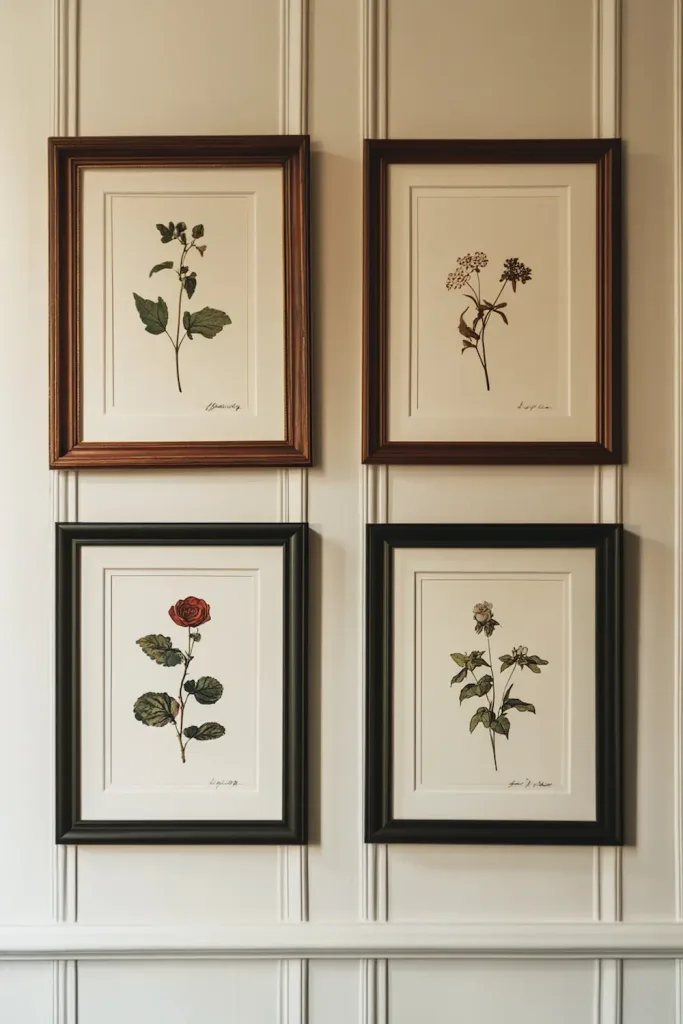
Botanical prints in a Parisian interior appear in all three display formats. A small antique botanical in a simple narrow dark frame reads as a considered object; the same print pinned directly to the wall with a single brass pin reads as casual and personal. A larger botanical in a gilt frame above a console reads as architectural. All three are correct in different positions within the same room.
| ➶ Original 1862 Botanical Print — Genuine Vintage Engraving, Ships from France (Etsy) |
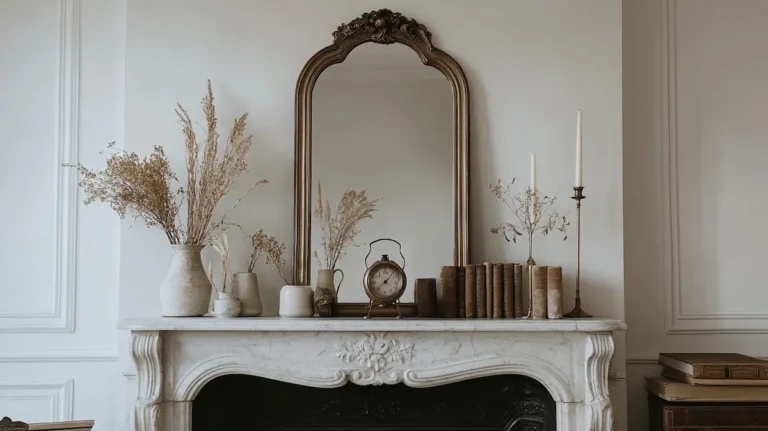
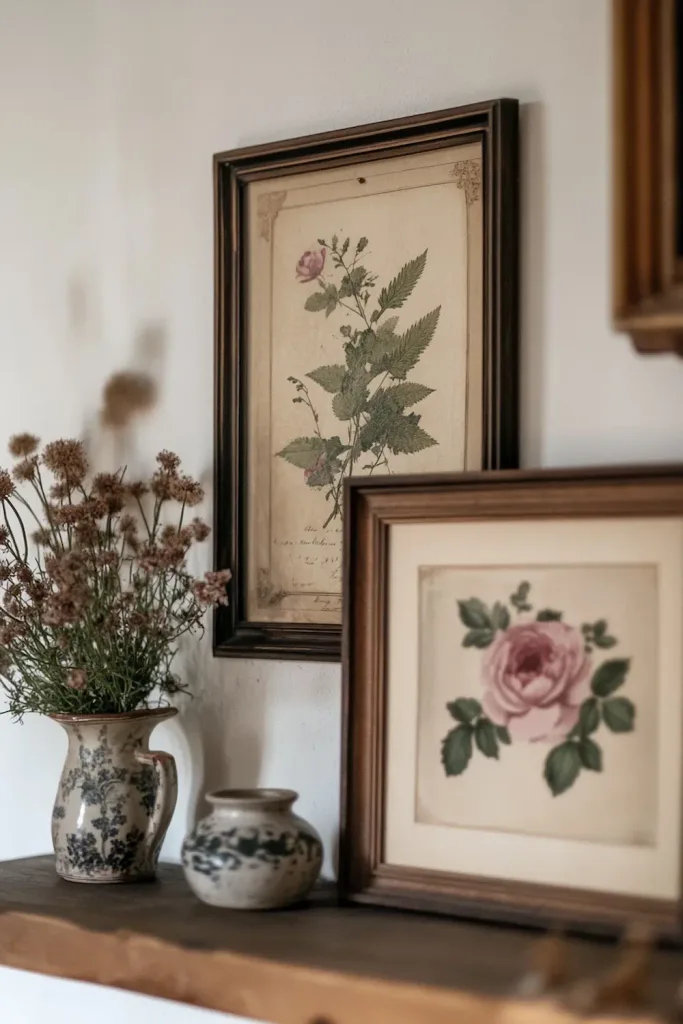
| A genuine original botanical print from 1862, taken from a rare plant atlas of the same year — not a reproduction. Listed by LittleSweetVintage, an Etsy seller based in France who personally sources original vintage prints. Dimensions: approximately 5 in × 8.27 in (12.7 × 21 cm). Beautiful ivory paper. Blank back. Signs of age consistent with a print that is over 160 years old. Shipped in a cellophane sleeve and semi-rigid envelope with tracking. The seller offers multiple genuine botanical prints from the same 1862 atlas and from other 19th-century sources. Multiple buyers confirm the seller is kind, responsive, and packages with care. This is the specific type of unframed vintage botanical print shown in Image 1 — small scale, genuine paper, aged tone. Price listed in the Etsy shop — check current listing · Etsy · LittleSweetVintage · ships from France Editorial note: This is the genuine original antique botanical print type shown in Image 1. The small format (approx. 13 × 21 cm) is appropriate for pinning directly to a wall with a single brass pin, leaning against a shelf, or framing in a simple narrow frame. Buy two or three from the same seller — they can be combined for shipping — for the varied botanical grouping shown in the image. |
| ➶ 1867 Antique Botanical Engraving, Printed in Paris — Star Seller (Etsy) |
| A genuine original antique botanical engraving from 1867, printed in Paris. Star Seller with consistently 5-star reviews, on-time shipping, and quick replies. Described by the seller as an original, more than 150 years old — not a reproduction or copy. Dimensions: 6.7 × 10.2 inches (17 × 26 cm). Ships from Prague with priority airmail and tracking number. Available as individual prints or in sets of 5 (10% discount) or 10+ (20% discount). Multiple prints can be combined for shipping. This is the medium-format botanical engraving type most suited to framing in a simple dark wood frame as shown at left in Image 1. Price listed in the Etsy shop — check current listing · Etsy · Star Seller · genuine 1867 original · printed in Paris Editorial note: The medium format (17 × 26 cm) of this print is the right scale for framing in a simple narrow dark wood or slim gilt frame — the two frame types shown alongside the unframed botanical in Image 1. The Star Seller status confirms reliable quality and delivery. Buy multiples for combined shipping savings; a set of three from the same series reads as a considered botanical grouping on a Parisian wall. |
Category 2: The Antique Map or Plan — Scale and Specificity
The antique map or architectural plan — a large-format reproduction or genuine print showing a city, a region, or a building in the detailed cartographic or architectural style of the 18th or 19th century — is the artwork type that most effectively anchors a wall in a Parisian interior. Its visual quality is specific: the sepia or warm black ink on aged-tone paper, the dense information of a detailed engraved cartography, and the combination of usefulness and beauty that is one of the most Parisian aesthetic qualities available.
The map works in a study, a library, a salon, or a hallway. Its scale can be large — a map of 60–80 cm wide reads as architectural and provides the primary visual element of a wall. A smaller map of 30–40 cm wide reads as an object among other objects in a mixed wall arrangement. Both are correct in different positions.
What kind of map is specifically Parisian
Maps of France, of Paris itself, of French regions, of European cities, or of broader geographic areas from the 18th or early 19th century are the most specifically Parisian of all map types. The cartographic tradition of French geographic publishing is directly relevant here: maps published in Paris in the 18th and 19th centuries have a specific style of engraving, lettering, and border decoration that reads as period and French in a way that maps from other traditions do not. A reproduced antique map of Paris from an 1823 city plan is as much a document of Parisian history as it is a piece of artwork.
Framing a large map
A large antique-style map works best in a simple flat frame of minimal profile — a dark wood frame of 2–3 cm width, or a flat black frame of 1–2 cm. The frame should not compete with the map’s cartographic detail. Alternatively, a large map can be mounted on a backing board and hung without a frame, allowing the paper’s edge to be visible — this is the more casual, contemporary Parisian approach. Matting under glass is appropriate for smaller maps where the scale of the map within the frame allows for it.
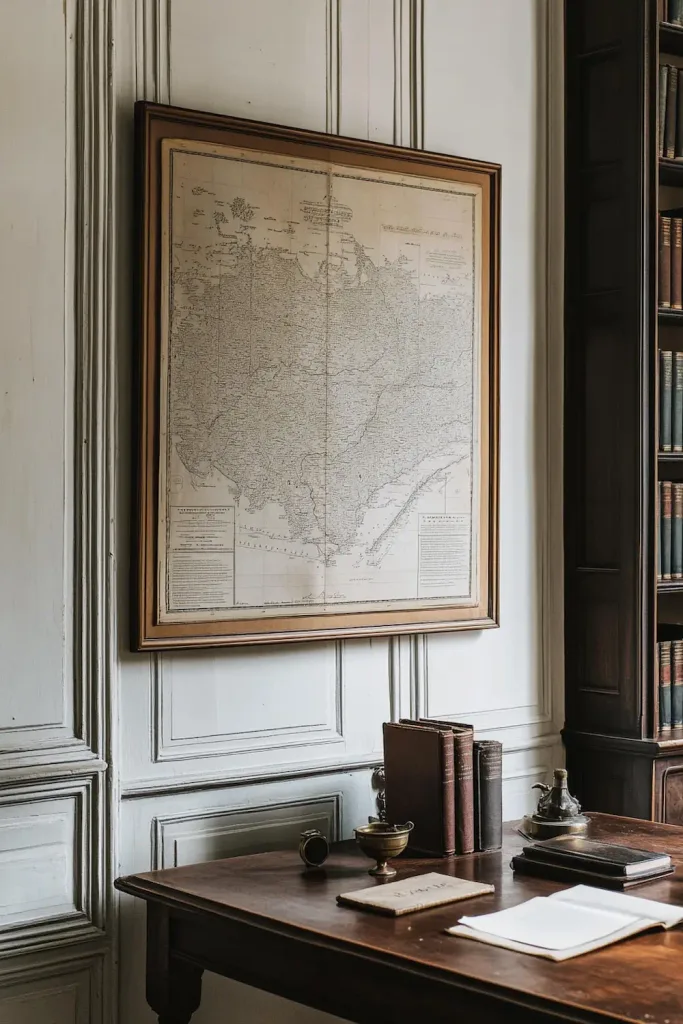
| ➶ Old Paris Map Art Print, 1823 — Archival Reproduction, Set of 6 (Etsy) |
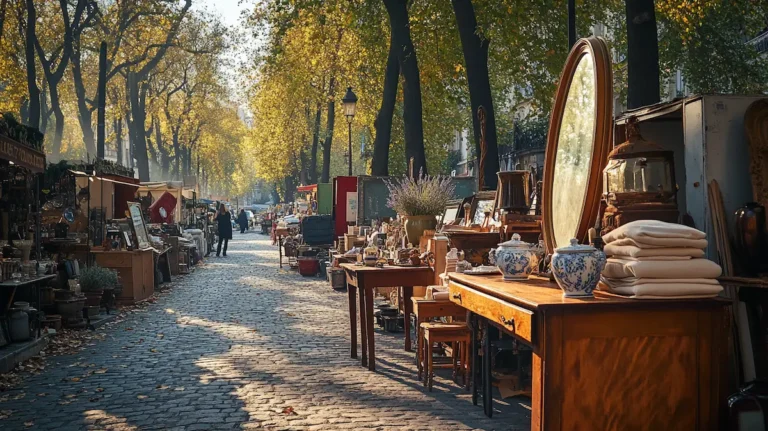
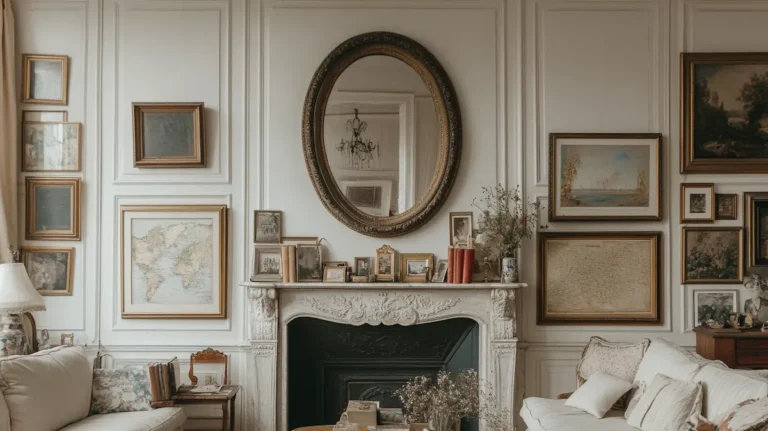
| An archival reproduction of a detailed antique map of Paris from 1823, printed as a set of six individual prints on 100% cotton, museum-quality, acid-free heavyweight matte paper. Each print: 12×12 or 16×16 inches. The map shows all streets and most major buildings and parks labelled, with an index of streets and an inset chart of the 12 arrondissements and 48 quartiers. Star Seller with consistently 5-star reviews. Frames not included. The six-print format allows the map to be displayed at large scale as a tiled installation, or individual sections to be selected for single-print display. Buyers confirm fast shipping and high quality. Price listed in the Etsy shop — check current listing · Etsy · Star Seller · archival cotton paper · set of 6 Editorial note: This is the large-format antique Paris map type shown in Image 2. Display as a single section for a focused cartographic object, or tile all six for a large-scale architectural wall installation. The archival cotton paper and acid-free specification mean the prints will not yellow over time in the way of standard inkjet paper. Frame each section in a simple flat dark wood or black frame of minimal profile. |
Category 3: Unframed Art — The Personal Parisian Register
The unframed print — attached to the wall with a single brass pin, or leaning against a shelf, or tucked into the edge of a mirror frame — is one of the most specific visual signatures of the inhabited Parisian apartment. It reads as personal in a way that a framed piece does not: it is a piece that someone put up because they wanted to look at it, without the commitment of framing it, and without the institutional formality of a hung artwork.
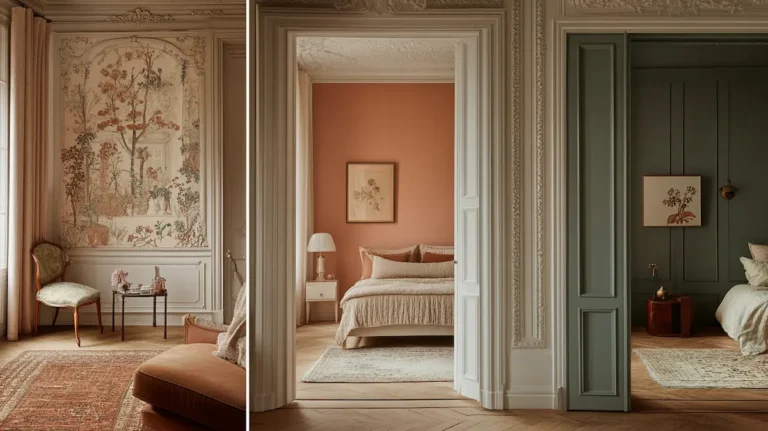
This is the display mode shown in Image 3: a life drawing or charcoal study attached with four small brass pins; a smaller watercolour leaning on a shelf; a postcard tucked into the edge of a mirror. None of these pieces is installed — all of them are placed. The wall reads as a living surface rather than a fixed display.
What kinds of images work unframed
The content that reads correctly when displayed unframed in a Parisian context: figure studies and life drawings (charcoal, sanguine, graphite — the academic tradition of drawing the figure), small watercolours (landscape, interior, botanical), postcards from museums or specific places, found images torn from books or periodicals, and photographs. The unframed mode suits smaller pieces more than larger ones; an unframed print of A3 size or larger begins to read as a temporary installation rather than as a placed piece.
Free sources for unframed prints
The collections of major museums whose images are in the public domain and available for free download provide an effectively unlimited source of artwork for unframed display. The Rijksmuseum’s Rijksstudio and The Metropolitan Museum of Art’s Open Access collection both allow high-resolution downloads of works from their collections. Printing a downloaded image on heavyweight textured paper at a print shop and attaching it with a brass pin produces the specific unframed botanical or figure study shown in Image 3 at minimal cost.
| → Rijksstudio & The Met Open Access — Free High-Resolution Museum Art Downloads |
| Both the Rijksmuseum (Amsterdam) via Rijksstudio and The Metropolitan Museum of Art (New York) via their Open Access collection make high-resolution digital images of works from their collections available for free download, for non-commercial personal use. The collections include thousands of botanical illustrations, figure studies, landscape prints, maps, and decorative art images from the 17th through 20th centuries. Downloaded images can be printed at a local print shop on heavyweight matte or textured paper and displayed unframed. No cost beyond printing. No affiliate relationship — included because these two sources provide the most accessible route to the specific unframed artwork quality described in this section. Free download — printing costs only · Via Rijksstudio (Rijksmuseum) & Met Open Access Editorial note: For botanical prints: search ‘botanical’ or the Latin name of a plant in Rijksstudio to find 18th and 19th-century botanical illustrations from Dutch and European collections. For figure studies: search ‘figure study’ or ‘academic drawing’ in the Met Open Access. Download in the highest available resolution and print on Hahnemühle Photo Rag or similar heavyweight matte paper at a local print shop for the specific quality of the unframed image. |
Category 4: The Original Oil Painting
The original oil painting — a genuine painted work on canvas or board, not a print or reproduction — is the artwork type that most profoundly changes the character of a Parisian interior when it is present. An original painting introduces a quality of surface, of material, and of specific human attention that no print or reproduction replicates: the texture of painted canvas, the depth of oil layers, the evidence of a hand. One genuine oil painting in a room changes the register of everything around it.
In a Parisian interior, the oil painting is most commonly found in one of three positions: leaning against the wall on the mantelpiece shelf (as shown in Image 5), hung as the primary object on the wall above the fireplace or on a significant wall, or leaning against the baseboard as part of a mixed wall arrangement. The leaning position is specifically Parisian in character: it reads as placed and provisional, as if the painting arrived and has not yet found its permanent position. This quality of provisionality is more consistent with the Parisian aesthetic than a formally hung and levelled installation.
What to look for in a small original
For a first original oil painting for a Parisian interior, the most accessible sourcing channel is Chairish, which carries a consistently strong selection of small-to-medium original oil paintings, including landscapes, still lifes, and figurative works, across a range of periods and price points. Paintings of 20–40 cm in one dimension — small enough to lean on a mantelpiece or carry in a bag from a market — are the most versatile scale for the Parisian context.
→ How to style the mantelpiece around an oil painting: → How to Style a Mantelpiece the Parisian Way
| → Chairish — Original Oil Paintings (Small-to-Medium Scale) |
| Chairish is a curated US vintage and antique marketplace with a consistently strong selection of original oil paintings across styles, periods, and sizes. The Oil Paintings category covers landscapes, still lifes, figurative works, and abstract paintings from the 19th and 20th centuries. Filter by size (small: under 20”) and by price range. Detailed condition notes and multiple photographs per listing. Offer system allows negotiation. Ships within the US; international shipping from selected sellers. No affiliate relationship — included because Chairish provides the most accessible curated access to genuine small-scale original oil paintings at a range of price points for a Parisian interior context. Variable — approx. $80 – $800 for small-scale originals · Via Chairish Editorial note: For a first original oil painting: filter Chairish by ‘small’ size and by landscape or still life subject. A small landscape in a dark wood or ebonised frame, leaning on the mantelpiece rather than hung, introduces the specific quality of an original painted surface at a modest price point. The offer system is standard practice — an opening offer of 10–15% below the listed price is normal and frequently accepted. |
The Mixed Wall Arrangement: How to Build One
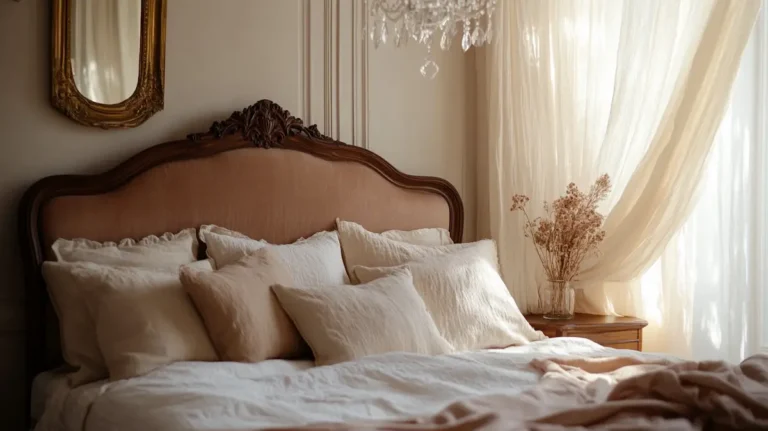
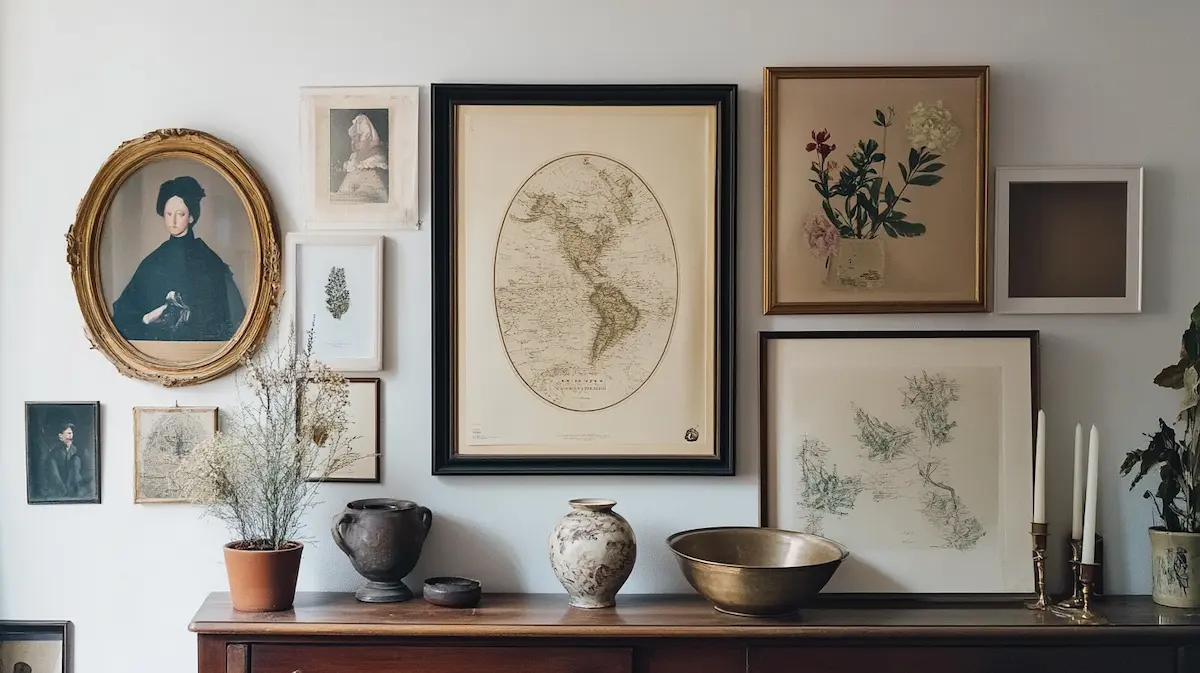
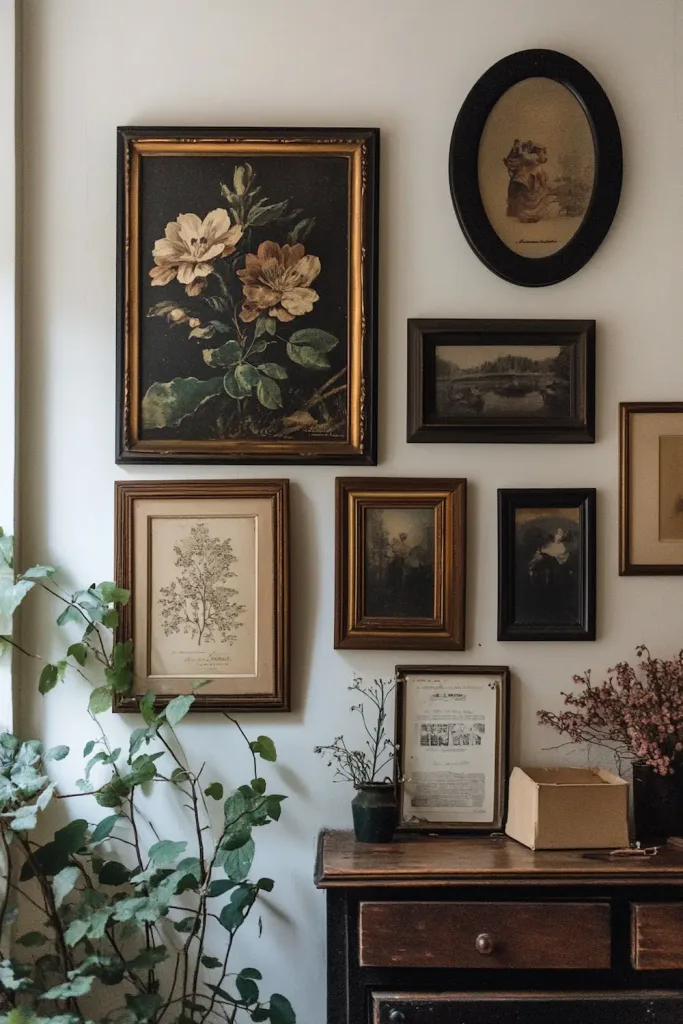
The mixed wall arrangement — a group of seven or eight pieces of varying sizes, frame types, and artwork categories, arranged on a wall in a way that reads as accumulated — is the most specifically Parisian of all wall display formats. It is shown in Image 4 of this article. Building one requires specific restraint: the arrangement should look as though it was not planned.
The starting point: one piece
Begin with one piece — the piece you already have, or the piece you found first. Place it at a position that makes sense for the wall: typically slightly above eye level when standing, or at the level where it will be seen most often. Do not plan around it; simply place it and live with it.
Adding the second piece
The second piece should be in a different frame type from the first. If the first is in a gilt frame, the second should be in a dark wood or plain frame. If the first is a botanical print, the second should be something different — a small oil painting, a postcard, a map fragment. Place the second piece in a position that relates to the first without being symmetrical with it: at a slightly different height, at a different distance from the edge of the first piece than feels ‘correct’.
The rule of varied distances
In a genuinely accumulated Parisian wall arrangement, the distances between pieces are not uniform. Some pieces are close — overlapping slightly in visual terms, their frames nearly touching. Others have a larger gap between them. This variation of distance is the quality that makes the arrangement read as accumulated rather than designed: in a designed arrangement, the gaps are uniform; in an accumulated one, they are whatever they happened to be when the pieces were placed.
Leaning and pinning: the third dimension
Once two or three pieces are hung, introduce a piece that leans rather than hangs: a small painting or print leaning against the baseboard beneath the hung pieces, or a postcard leaning against a shelf edge below the arrangement. This introduces the ‘third dimension’ of the accumulated wall — the depth that occurs when pieces are at different distances from the wall surface.
| → Artful Walls — Curated Art Prints in Natural and Muted Tones |
| Artful Walls is an Irish art platform offering curated art prints by independent artists, with a strong selection of works in the muted, warm, natural tones most consistent with the Parisian interior palette. The nature, botanical, and abstract categories are the most applicable. Prints are available in multiple sizes, printed on heavyweight matte paper. Ships internationally. No affiliate relationship — included because Artful Walls provides the most aesthetically curated selection of contemporary art prints in the Parisian register at accessible price points, with a clear editorial point of view rather than a broad marketplace approach. From approx. €35 per print · Via Artful Walls Editorial note: Use Artful Walls to fill the gaps in a mixed wall arrangement where a specific type of image (landscape, figure, abstract form in warm tones) is needed but a genuine antique is not available. The muted, natural palette of the Artful Walls selection reads as consistent with the Parisian wall context when printed on the heavyweight matte option and displayed in a simple narrow frame. |
Frames: What Works and What Reads Wrong
The frame is the object’s architectural context. An antique botanical print in a perfect, uniformly bright gilt frame reads differently from the same print in a worn gilt frame with areas of visible red bole beneath. An oil painting in a flat dark frame of 2 cm width reads differently in a contemporary platinum frame. The frame choice determines the register of the piece within the room as much as the artwork itself.
Aged gilt: the most period-correct
A gilt frame with visible wear — areas where the gilding has been removed by handling, showing the warm red-gold of the base coat beneath — is the frame type most consistent with the Parisian period aesthetic. It reads as old and as placed rather than as recently purchased. Genuine antique frames in this condition are available from brocantes, Selency, and Chairish. Reproduction aged gilt frames are available from specialist frame makers; the quality varies considerably, and the difference between a well-made reproduction and a genuine piece is observable.
Simple dark wood: the most versatile
A flat dark wood frame of 1.5–3 cm width — in walnut, ebony, or dark-stained oak — is the most versatile frame type for a Parisian interior. It works with botanical prints, oil paintings, figure studies, maps, and photographs equally. It reads as serious without being formal, and it recedes behind the artwork rather than competing with it. This is the frame type to default to when in doubt.
The unframed option
As described in Section 4, not every piece in a Parisian wall arrangement needs to be framed. Smaller pieces — postcards, single prints, small drawings — read as more personal and more accumulated when pinned directly to the wall or leaning against a shelf without a frame. The combination of some framed and some unframed pieces is one of the visual signatures of the genuine Parisian wall.
→ How art fits into the complete Parisian living room: → Complete Parisian Vintage Living Room Makeover Guide
→ The Parisian bookshelf arrangement — how books and art interact: → The Parisian Bookshelf: How to Style It Like a Local
Practical Notes: Sourcing and Buying Safely
A few practical notes about sourcing artwork for a Parisian interior that are worth stating explicitly:
On reproduction vs. genuine prints
When a seller describes a print as a ‘reproduction’, ‘fine art print’, or ‘archival reproduction’, this means a contemporary print made from a digital scan of a historical original. This is distinct from the original print made at the time of the historical publication. Neither is wrong; they serve different purposes. For the unframed, casual display of a botanical image, a reproduction is entirely appropriate. For a piece that is intended to introduce the specific quality of genuine age into the room, an original is preferable. The Etsy listings in Sections 2 describe both types clearly — the LittleSweetVintage and 1867 listings are described as genuine originals; the Paris map listing is described as an archival reproduction.
On copyright and public domain
Artwork published before a certain date is in the public domain in most jurisdictions and can be downloaded, printed, and displayed without restriction. The specific cutoff date varies by country. The Rijksstudio and Met Open Access collections described in Section 4 make this accessible with clear documentation of what is and is not available for download. For artwork created after this cutoff — particularly contemporary prints sold on Etsy by living artists — standard purchase terms apply. This article does not constitute legal advice on copyright; for any specific question about the use of an image, the relevant institution or rights holder should be consulted.
Condition and framing costs
When buying genuine antique prints, factor the cost of framing into the total purchase decision. A genuine 1867 botanical engraving at a modest price point may cost more when framed than when purchased. A simple dark frame at a standard size (17 × 26 cm in this case is a non-standard size; a mat cut to size within a standard A4 frame is the most practical solution) at a local framer is the most cost-effective approach. Many Parisian-looking frames are available from IKEA and similar retailers at very low cost in standard sizes.
“The most Parisian wall is the one that was never designed. It grew, piece by piece, print by print, over years. Start with one thing you want to look at. The rest follows.”
→ The complete Parisian Vintage Chic Interior guide: → Parisian Vintage Chic Interior: The Complete Style Guide